Connect with us

Business

Trump isn’t canceling travel, golf, or his ballroom, even with the government shuttered and 750,000 furloughed federal employees

Published

on


In shutdowns past — including during Trump’s first term — presidents normally scaled back their schedules. With staffers deemed “non-essential” sent home, the White House often sought to appear sympathetic to Americans affected by disruptions to health care, veterans benefits and other key services.

The current shutdown has left around 750,000 federal employees furloughed and others working without pay. Funding for the Supplemental Nutrition Assistance Program, or SNAP, is lapsing after Friday — affecting 1 in 8 Americans who rely it to help buy groceries.

Nonetheless, it’s been mostly business as usual for Trump over the past 29 days.

“It’s like that country song: ‘Sometimes falling feels like flying for a little while,’” said Paul Begala, a Democratic strategist and former adviser to President Bill Clinton, who presided over two shutdowns between 1995 and 1996. “They seem to be like, ‘So far, so good, man.’”

Ballroom building, golf, fundraisers and trips

Trump is on a six-day swing through Asia, after a recent, whirlwind Middle East visit to celebrate a U.S.-brokered ceasefire deal in Israel’s war with Hamas in Gaza. He hosted a White House fundraiser for major donors to his $300 million ballroom that has seen construction crews tear down the East Wing, and held another fundraiser at his Mar-a-Lago estate in Florida.

Members of the Cabinet have similarly hit the road. Vice President JD Vance traveled to Israel, Homeland Security Secretary Kristi Noem went to Portland, Oregon, to decry protests there, and Defense Secretary Pete Hegseth got a firsthand look at TOPGUN, the U.S. Navy’s elite fighter weapons school in Nevada.

Only 32% of the staff in the Executive Office of the President were set to be furloughed during the current shutdown, according to data in a contingency report from the White House budget office. That’s down from 61% during the last shutdown in 2018-19, during Trump’s first term. About half of the Executive Mansion’s team of housekeepers, ushers, valets and butlers are currently working. Last time, more than 70% were furloughed.

It’s often been hard to tell a shutdown is happening with so many staffers remaining at their desks.

“I don’t even know if they’re supposed to be working, but they wouldn’t miss a day,” Trump said during an event last week.

It’s a departure from Trump’s first term, when he cut out weekend golf games and canceled a planned trip to Mar-a-Lago for Christmas during the 2018 shutdown, which stretched into the new year. He made a surprise visit to visit troops in Iraq then, but nixed plans to go to the Swiss alps for the World Economic Forum.

When hosting Clemson University football players to celebrate their NCAA football championship, Trump brought in burgers and fries from McDonald’s, Burger King and Wendy’s and pizza from Domino’s because of White House staff furloughs.

This time, the president had Republican senators over for a lunch that featured burgers, too. But staff made them. “They do great food at the White House,” Trump said.

‘A smarter approach’

Barreling ahead like there’s no shutdown has some political advantages for Trump, allies say: It allows him to look presidential while avoiding congressional bickering.

“It’s a much smarter approach,” said Marc Short, chief of staff to former Vice President Mike Pence.

In Trump’s first-term shutdown, he rejected a congressional compromise to force the government to close — an attempt to win funding for a wall along the U.S.-Mexico border. Then, he named Pence as lead negotiator to end the shutdown while involving his son-in-law Jared Kushner — creating the visual of the pair having to go to Capitol Hill.

“The first go-around, he was pretty clear with cameras rolling: He said he wanted the shutdown. He claimed ownership,” Short said. This time? “The White House has been clear about not owning it.”

Back in 1995, Begala recalled talking strategy with Clinton during a sweaty summer run at Fort McNair in Washington, and telling the president that Republican House Speaker Newt Gingrich and his party “think they can roll you” to make cuts to Medicare by threatening a shutdown.

Clinton responded: “‘My favorite movie’s ‘High Noon,’” Begala recalled, referring to the 1952 Western in which a marshal stands up to outlaws. ”‘They do that — then I just have a Gary Cooper, High Noon moment. That’s easy.’”

When Gingrich later came to the White House to negotiate, Begala said Clinton refused to budge, even though some advisers urged him to cut a deal. Voters ultimately blamed congressional Republicans more than the White House for the government closing, and Clinton was easily reelected in 1996.

“That could have really gone badly for Clinton,” Begala said. “But he did understand that standing strong and having a Gary Cooper moment would be really good for him.”

Past White Houses highlighted shutdown effects

During the 16-day government shutdown of 2013, President Barack Obama scrapped a four-country Asia trip and skipped the swanky Congressional Hispanic Caucus gala. His schedule featured events meant to show the effects of the shutdown, including visiting a Maryland construction firm that benefited from the kind of federal business loans being jeopardized with the government shuttered.

In 2019, as that shutdown dragged on, Trump’s White House officials acknowledged feeling pressure to end it, worried that Trump’s polling numbers could suffer. This time, the administration’s public messaging has been to blame the Democrats while signaling that it’s prepared to wait — even warning of coming travel delays during the Thanksgiving holidays.

“President Trump is continuing to work night and day on behalf of American people,” White House spokesperson Abigail Jackson said in a statement. “The entire administration, including the president, will continue highlighting the workers and families who are suffering because of the Democrats’ decision to shut down the government.”

Bill Daley, a White House chief of staff to Obama in the years prior to the 2013 shutdown, said Trump isn’t acting like he’s feeling political heat to reopen the government, even before next Tuesday’s gubernatorial elections in Virginia and New Jersey — both home to sizable federal workforces.

“My guess is, he thinks it helps him,” Daley said, “until — and I don’t know if it will — the bottom falls out.”

Democrats are demanding an extension of expiring tax credits that have helped millions of people afford health insurance, while Republicans have refused to negotiate until the government is reopened.

Trump has said the government must reopen, but also used the shutdown to cut federal positions and target programs Democrats favor, while redirecting funds to his own priorities — like covering military paychecks. The president has even said of closed museums, “We should probably just open them,” though that hasn’t yet happened.

Americans, meanwhile, are divided on who’s to blame.

Roughly 6 in 10 say Trump and congressional Republicans have “a great deal” or “quite a bit” of responsibility for the shutdown, while 54% say the same about Democrats in Congress, according to a recent poll from The Associated Press-NORC Center for Public Affairs Research.

Mike McCurry, a White House press secretary under Clinton, said Democrats have yet to settle on a clear shutdown message that has resonated. Trump has the presidency to deliver his take, but McCurry noted he has been “mercurial.”

“It is not likely we’re going to have clear winners or losers after this,” McCurry said. “It’s going to be a bit of a muddle.”




Source link

Continue Reading

Business

At Davos, AI hype gives way to focus on ROI

Published

on


Hello and welcome to Eye on AI. In this edition….a dispatch from Davos…OpenAI ‘on track’ for device launch in 2026…Anthropic CEO on China chip sales…and is Claude Code Anthropic’s ChatGPT moment?

Hi. I’m in Davos, Switzerland, this week for the World Economic Forum. Tomorrow’s visit of U.S. President Donald Trump is dominating conversations here. But when people aren’t talking about Trump and his imposition of tariffs on European allies that oppose his attempt to wrest control of  Greenland from Denmark, they are talking a lot about AI.

The promenade in this ski town turns into a tech trade show floor at WEF time, with the logos of prominent software companies and consulting firms plastered to shopfronts and signage touting various AI products. But while last year’s Davos was dominated by hype around AI agents and overwrought hand-wringing that the debut of DeepSeek’s R1 model, which happened during 2025’s WEF, could mean the capital-intensive plans of the U.S. AI companies were for naught, this year’s AI discussions seem more sober and grounded.

The business leaders I’ve spoken to here at Davos are more focused than ever on how to drive business returns from their AI spending. The age of pilots and experimentation seems to be ending. So too is the era of imagining what AI can do. Many CEOs now realize that implementing AI at scale is not easy or cheap. Now there is much more attention on practical advice for using AI to drive enterprise-wide impact. (But there’s still a tinge of idealism here too as you’ll see.) Here’s a taste of some of the things I’ve heard in conversations so far:

CEOs take control of AI deployment

There’s a consensus that the bottom-up approaches—giving every employee access to ChatGPT or Microsoft Copilot, say—popular in many companies two years ago, in the initial days of the generative AI boom, are a thing of the past. Back then, CEOs assumed front line workers, closest to the business processes, would know how best to deploy AI to make them more efficient. This turned out to be wrong—or, perhaps more accurately, the gains from doing this tended to be hard to quantify and rarely added up to big changes in either the top or bottom line.

Instead, top-down, CEO-led initiatives aimed at transforming core business processes are now seen as essential for deriving ROI from AI. Jim Hagemann Snabe, the chairman of Siemens and former co-CEO at SAP, told a group of fellow executives at a breakfast discussion I moderated here in Davos today that CEOs need to be “dictators” in identifying where their businesses would deploy AI and pushing those initiatives forward. Similarly, both Christina Kosmowski, the CEO of IT and business data analytics company LogicMonitor, and Bastian Nominacher, the cofounder and co-CEO of process mining software company Celonis, told me that board and CEO sponsorship was an essential component to enterprise AI success.

Nominacher had a few other interesting lessons, including how, in research Celonis commissioned, establishing a center of excellence for figuring out how to optimize work processes with AI resulted in an 8x better return than for companies that failed to set up such a center. He also said that having data in the right place was essential to running process optimization successfully.

The race to become the orchestration layer for enterprise AI agents

There is clearly a race on among SaaS companies to become the new interface layer for AI agents that work in companies. Carl Eschenbach, Workday’s CEO, told me that he thinks his company is well-positioned to become “the front door to work” not only because it sits on key human resources and financial data, but because the company already handled onboarding, data access and permissioning, and performance management for human workers. Now it can do the same for AI agents.

But others are eyeing this prize too. Srini Tallapragada, Salesforce’s chief engineering and customer success officer, told me how his company is using “forward deployed engineers” at 120 of Salesforce’s largest customers to close the gap between customer pain points and product development, learning the best way to create agents for specific industry verticals and functions that it can then offer to Salesforce’s wider customer base. Judson Althof, Microsoft’s commercial CEO, said that his company’s Data Fabric and Agent 365 products were gaining traction among big companies that need an orchestration layer for AI agents and a unified way to access data stored in different systems and silos without having to migrate that data to a single platform. Snowflake CEO Sridhar Ramaswamy meanwhile thinks the deep expertise his company has is maintaining cloud-based data pools and controlling access to that data combined with newfound expertise in creating its own AI coding agents, make his company ideally suited to win the race to be the AI agent orchestrator. Ramaswamy told me his biggest fear is whether Snowflake can keep moving fast enough to realize this vision before OpenAI or Anthropic move down the stack—from AI agents into the data storage—potentially displacing Snowflake.

A couple more insights from Davos so far: while there is still a lot of fear about AI leading to widespread job displacement, it hasn’t shown up yet in economic data. In fact, Svenja Gudell, the chief economist at recruiting site Indeed, told me that while the tech sector has seen a huge decline in jobs since 2022, that trend predates the generative AI boom and is likely due to companies “right sizing” after the massive pandemic-era hiring boom rather than AI. And while many industries are not hiring much at the moment, Gudell says global macroeconomic and geopolitical uncertainty are to blame, not AI.

Finally, in a comment relevant to one of this week’s bigger AI news stories—that OpenAI is introducing ads to ChatGPT—Snabe, the Siemens chairman had an interesting answer to a question about how AI should be regulated. He said that rather than trying to regulate AI use cases—as the EU AI Act has done—governments should mandate more broadly that AI adhere to human values. And the one piece of regulation that would do more than anything to ensure this, he said, would be to ban AI business models based on advertising. Ad-based AI models will lead companies to optimize for user engagement with all of the negative consequences for mental health and democratic consensus that we’ve seen from social media, only far worse. 

With that, here’s more AI news.

Jeremy Kahn
jeremy.kahn@fortune.com
@jeremyakahn

Beatice Nolan wrote the news and sub-sections of Eye on AI.

FORTUNE ON AI

Wave of defections from former OpenAI CTO Mira Murati’s $12 billion startup Thinking Machines shows cutthroat struggle for AI talent–by Jeremy Kahn and Sharon Goldman

ChatGPT tests ads as a new era of AI begins—by Sharon Goldman

A filmmaker deepfaked Sam Altman for his movie about AI. Then things got personal—by Beatrice Nolan

PwC’s global chairman says most leaders have forgotten ‘the basics’ as 56% are still getting ‘nothing’ out of AI adoption–by Diane Brady and Nick Lichtenberg

AI IN THE NEWS

EYE ON AI RESEARCH

Researchers say ChatGPT has a “silicon gaze” that amplifies global inequalities. A new study from the Oxford Internet Institute and the University of Kentucky analyzed over 20 million ChatGPT queries and found the AI systematically favors wealthier, Western regions, rating them as “smarter” and “more innovative” than poorer countries in the Global South. The researchers coined the term “silicon gaze” to describe how AI systems view the world through the lens of biased training data, mirroring historical power imbalances rather than providing objective answers. They argue these biases aren’t errors to be corrected, but structural features of AI systems that learn from data shaped by centuries of uneven information production, privileging places with extensive English-language coverage and strong digital visibility. The team has created a website–inequalities.ai–where people can explore how ChatGPT ranks their own neighborhood, city, or country across different lifestyle factors.

AI CALENDAR

Jan. 19-23: World Economic Forum, Davos, Switzerland.

Jan. 20-27: AAAI Conference on Artificial Intelligence, Singapore.

Feb. 10-11: AI Action Summit, New Delhi, India.

March 2-5: Mobile World Congress, Barcelona, Spain.

March 16-19: Nvidia GTC, San Jose, Calif.

BRAIN FOOD

Is Claude Code Anthropic’s ChatGPT moment? Anthropic has started the year with a viral moment most labs dream of. Despite Claude Code’s technical interface, the product has captured attention beyond the developer pool, with users building personal websites, analyzing health data, managing emails, and even monitoring tomato plants—all without writing a line of actual code. After several users pointed out that the product was much more of a general-use agent than the marketing and name suggested, the company launched Cowork—a more user-friendly version with a graphical interface built for non-developers.

Both Claude Code and Cowork’s ability to autonomously access, manipulate, and analyze files on a user’s computer has given many people a first taste of an AI agent that can actually take actions on their behalf, rather than just provide advice. Anthropic also saw a traffic lift as a result. Claude’s total web audience has more than doubled from December 2024, and its daily unique visitors on desktop are up 12% globally year-to-date compared with last month, according to data from market intelligence companies Similarweb and Sensor Tower published by The Wall Street Journal. But while some have hailed the products as the first step to getting a true AI personal assistant, the launch has also sparked concerns about job displacement and appears to put pressure on a few dozen startups that have built similar file management and automation tools.

FORTUNE AIQ: THE YEAR IN AI—AND WHAT’S AHEAD

Businesses took big steps forward on the AI journey in 2025, from hiring Chief AI Officers to experimenting with AI agents. The lessons learned—both good and bad–combined with the technology’s latest innovations will make 2026 another decisive year. Explore all of Fortune AIQ, and read the latest playbook below: 

The 3 trends that dominated companies’ AI rollouts in 2025.

2025 was the year of agentic AI. How did we do?

AI coding tools exploded in 2025. The first security exploits show what could go wrong.

The big AI New Year’s resolution for businesses in 2026: ROI.

Businesses face a confusing patchwork of AI policy and rules. Is clarity on the horizon?


Source link

Continue Reading

Business

European leaders’ text messages to Trump reveal a very different tone than their Greenland saber-rattling

Published

on


While Europe is pushing back publicly against U.S. President Donald Trump over Greenland, the language appears softer behind the scenes.

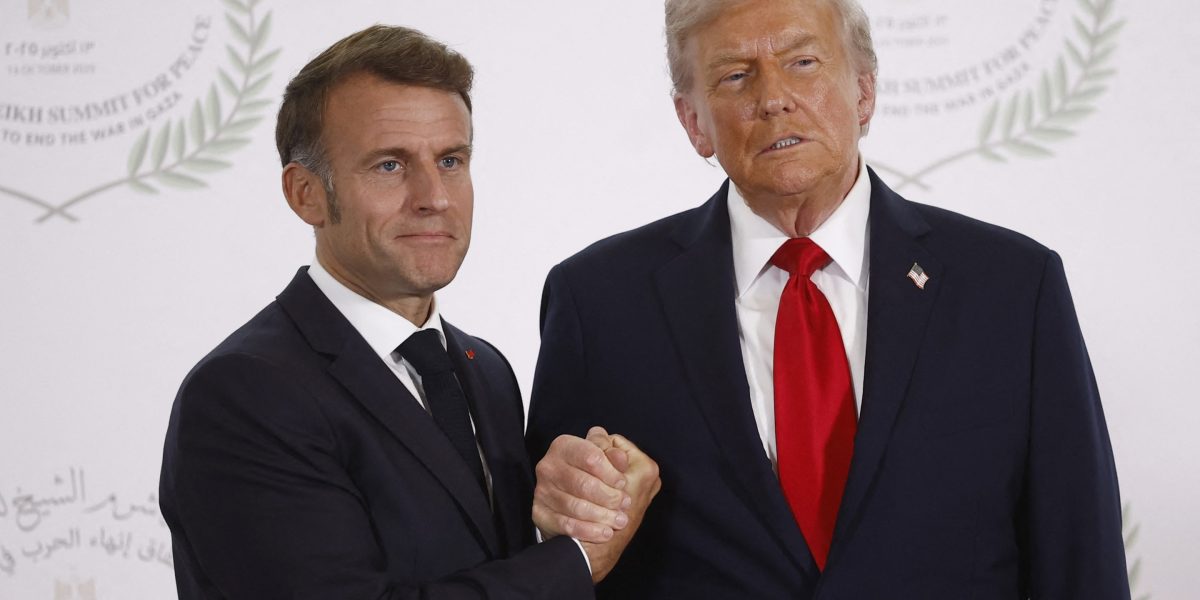
Trump published a text message on Tuesday that he received from French President Emmanuel Macron, confirmed as genuine by Macron’s office.

Starting with “My friend,” Macron’s tone was more deferential than the criticism that France and some of its European partner nations are openly voicing against Trump’s push to wrest Greenland from NATO ally Denmark.

Before broaching the Greenland dispute, Macron opted in his message to first talk about other issues where he and Trump seem roughly on the same page.

“We are totally in line on Syria. We can do great things on Iran,” the French leader wrote in English.

Then, he added: “I do not understand what you are doing on Greenland,” immediately followed by: “Let us try to build great things.”

That was the only mention that Macron made of the semi-autonomous Danish territory in the two sections of message that Trump published. It wasn’t immediately clear from Trump’s post when he received the message.

Trump breaks with tradition

World leaders’ private messages to each other rarely make it verbatim into the public domain — enabling them to project one face publicly and another to each other.

But Trump — as is his wont across multiple domains — is casting traditions and diplomatic niceties to the wind and, in the process, lifting back the curtain on goings-on that usually aren’t seen.

This week, a text message that Trump sent to Norway’s prime minister also became public, released by the Norwegian government and confirmed by the White House.

In it, Trump linked his aggressive stance on Greenland to last year’s decision not to award him the Nobel Peace Prize.

“Considering your Country decided not to give me the Nobel Peace Prize for having stopped 8 Wars PLUS, I no longer feel an obligation to think purely of Peace,” the message read.

It concluded, “The World is not secure unless we have Complete and Total Control of Greenland.”

On Tuesday, Trump also published a flattering message from Mark Rutte, secretary general of NATO, which the alliance also confirmed as authentic.

“I am committed to finding a way forward on Greenland,” Rutte wrote. “Can’t wait to see you. Yours, Mark.”

Rutte has declined to speak publicly about Greenland despite growing concern about Trump’s threats to “acquire” the island and what that would mean for the territorial integrity of NATO ally Denmark. Pressed last week about Trump’s designs on Greenland and warnings from Denmark that any U.S. military action might mean the end of NATO, Rutte said: “I can never comment on that. That’s impossible in public.”

Macron’s relationship with Trump

Macron likes to say that he can get Trump on the phone any time he wants. He proved it last September by making a show of calling up the president from a street in New York, to tell Trump that police officers were blocking him to let a VIP motorcade pass.

Guess what? I’m waiting in the street because everything is frozen for you!” Macron said as cameras filmed the scene.

It’s a safe bet that Macron must know by now — a year into Trump’s second spell in office — that there’s always a risk that a private message to Trump could be made public.

Macron said Tuesday that he had “no particular reaction” to the message’s publication when a journalist asked him about it.

“I take responsibility for everything that I do. It’s my habit to be coherent between what I say on the outside and what I do in a private manner. That’s all.”

Still, the difference between Macron’s public and private personas was striking.

Hosting Russia and Ukraine together

Most remarkably, the French leader told Trump in his message that he would be willing to invite representatives from both Ukraine and Russia to a meeting later this week in Paris — an idea that Macron has not voiced publicly.

The Russians could be hosted “in the margins,” Macron suggested, hinting at the potential awkwardness of inviting Moscow representatives while France is also backing Ukraine with military and other support against Russian President Vladimir Putin’s invasion.

Macron wrote that the meeting could also include “the danish, the syrians” and the G7 nations — which include the United States.

The French president added: “let us have a dinner together in Paris together on thursday before you go back to the us.”

He then signed off simply with “Emmanuel.”

Making nice only goes so far

Despite Macron’s persistent efforts, in both of Trump’s terms, not to ruffle his feathers, any payback has been mixed, at best.

Trump bristled on Monday, threatening punitive tariffs, when told that Macron has no plans to join Trump’s new Board of Peace that will supervise the next phase of the Gaza peace plan, despite receiving an invitation.

“Well, nobody wants him because he’s going to be out of office very soon,” Trump told reporters, even through the French leader has more than a year left in office before the end of his second and last term in 2027.

“I’ll put a 200% tariff on his wines and champagnes and he’ll join,” Trump said.

___

Lorne Cook in Brussels, Sylvie Corbet in Paris and Kostya Manenkov in Davos contributed.


Source link

Continue Reading

Business

Billionaire Marc Andreessen spends 3 hours a day listening to podcasts and audiobooks—that’s nearly an entire 24-hour day each week

Published

on


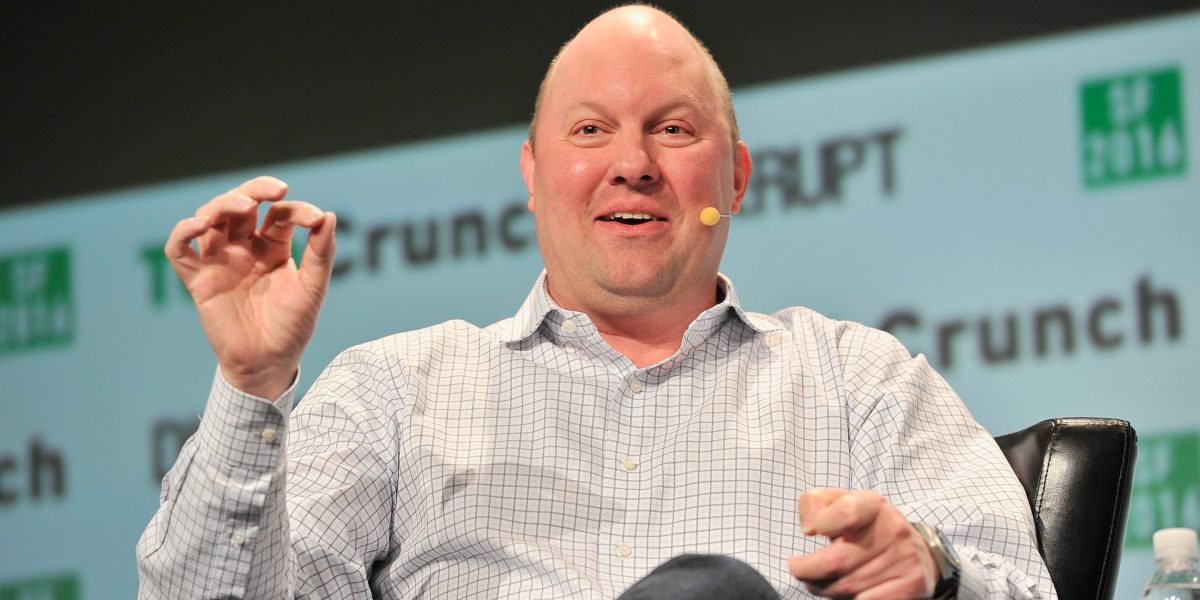
If you want to think like a billionaire, you might want to stop scrolling on TikTok and pick up a book. For venture capitalist Marc Andreessen, it’s not just a habit—it’s how he makes sense of the world and continually reshapes his thinking about business.

“I’ve always been like this, I’m reading basically every spare minute that I have,” Andreessen told the How I Write podcast in 2023.

The billionaire previously carved out two hours of reading time on most weekdays, according to a detailed version of his weekly schedule he published in 2020. However, with the business world only becoming more pressurized, he’s ramped up his knowledge intake—something made possible from “the single biggest technological leap” in his life: AirPods. 

Andreessen now spends two to three hours a day glued to audiobooks—typically alternating between histories, biographies, and material in new subject areas like artificial intelligence. Collectively, his practice amounts to nearly an entire 24-hour day dedicated to learning, each week.

Research suggests that listeners retain roughly the same amount of information from audiobooks as they do from reading text, making Andreessen’s shift in format less a compromise than an optimization.

“If nothing else is going on,” Andreessen added. “I’m always listening to something.”

Andreessen didn’t respond to Fortune’s request for further comment.

Mark Cuban and Bill Gates agree: reading will drive you to success

Andreessen’s approach is far from unusual among the ultra-wealthy. Reading ranks as the most commonly cited behavior tied to long-term success, according to a JPMorgan report that surveyed more than 100 billionaires with a combined net worth exceeding $500 billion.

Bill Gates, for example, has long championed reading—often finishing 50 books a year and releasing annual lists to encourage others to do the same.

“Reading fuels a sense of curiosity about the world, which I think helped drive me forward in my career and in the work that I do now with my foundation,” he told TIME in 2017.

Former Shark Tank star Mark Cuban has similarly cited reading as a critical habit that helped set him apart—and put him on the billionaire path.

 “I read more than three hours almost every day,” Cuban wrote on his blog in 2011.

“Everything I read was public,” the now 67-year-old added. “Anyone could buy the same books and magazines. The same information was available to anyone who wanted it. Turns out most people didn’t want it.”

Reading, as a whole, remains a cornerstone of nuanced thinking and communication—skills that are increasingly critical for business leaders, according to Brooke Vuckovic, a professor at Northwestern’s Kellogg School of Management.

“Reading long-form fiction, biography, and history demands focused attention, tolerance with ambiguity and unanswered questions or unrevealed nuance in characters and situations, and a willingness to have our preconceptions upended,” Vuckovic previously told Fortune. “All of these qualities are requirements of strong leadership [and] they are in increasingly short supply.”


Source link

Continue Reading

Trending

Copyright © Miami Select.