Connect with us

Business

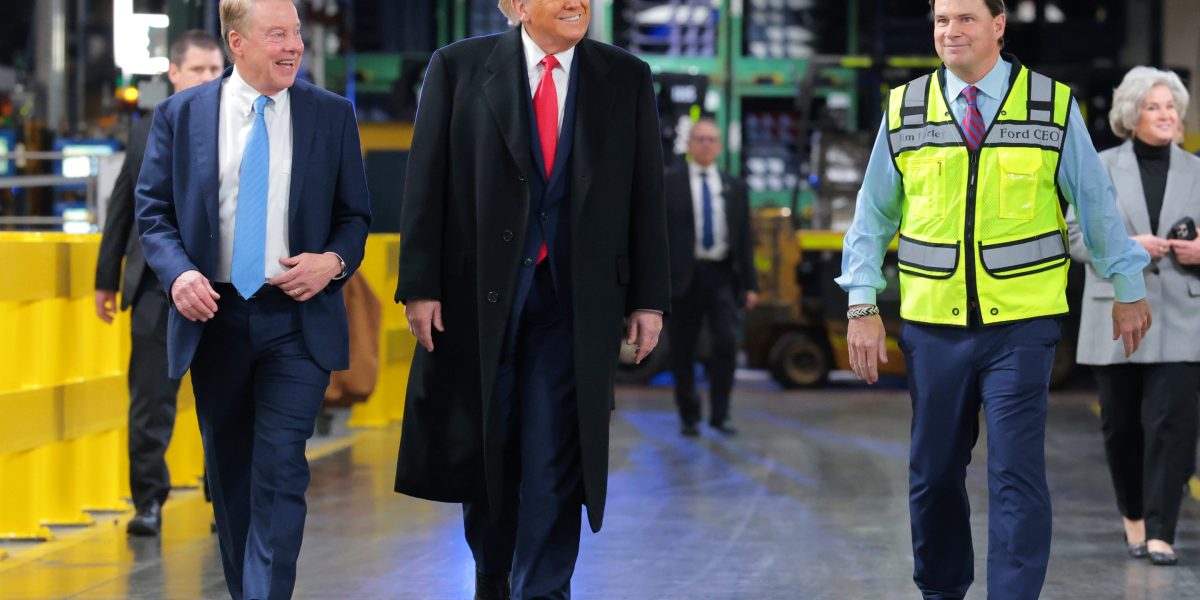
Trump hails ‘booming investment’ in Detroit while auto manufacturing jobs have fallen every month since Liberation Day

Published

on


The current story in U.S. manufacturing shows that an economy can look strong and remain so without adding workers. 

President Donald Trump arrived in Detroit on Tuesday to celebrate what he called a historic manufacturing revival, boasting that “investment is booming” and turbocharging growth. But the auto industry’s supposed recovery has yet to show up where it matters most for workers: payrolls. Manufacturing jobs, including in the automotive sector, have declined every month since Liberation Day, according to labor data.

Standing in the car-making capital of the world, the President spent nearly an hour detailing an $18 trillion global investment surge and a stock market that has set 48 records in eleven months.

“Growth is exploding, productivity is soaring, investment is booming,” the President claimed. “We have quickly gone from the worst numbers on record to the best and strongest.”

The President’s speech leaned heavily on commitments: $5 billion from Ford, $13 billion from Stellantis, and another, massive re-shoring effort from General Motors. “U.S. auto factories are now seeing more than $70 billion of new investment,” Trump noted. “Now they’re pouring back…nobody’s ever seen anything like it.”

While the capital is indeed pouring in, investment is not translating into payrolls. The manufacturing sector has shed approximately 72,000 jobs since the April tariff announcements, with auto manufacturing bearing the brunt of the losses. This disconnect defined much of the economic narrative around 2025 and is set to become the defining paradox of the 2026 economy: a “jobless boom” in which GDP growth—projected by the Atlanta Fed at a robust 5.4% for the fourth quarter—is decoupling from blue-collar employment.

“Manufacturing has been soft for a while,” said Skanda Amarnath, executive director of Employ America. “If you look across the business surveys, the anecdotes are basically the same everywhere: this is a really uncertain environment. That’s not one you want to be hiring into.”

Part of the pressure is structural: tariffs have raised input costs while injecting uncertainty into investment decisions that typically unfold over years, not quarters. The primary issue is a “stacking” effect: tariffs on motor vehicle parts, layered on top of aluminum and steel duties, have made it more expensive for some producers to build a car in Michigan than to import one from abroad. Many U.S. manufacturers still rely on specialized foreign components in their supply chains, so even when production moves back onshore, it tends to arrive far more automated than the factories it replaces.

Amarnath told Fortune the political rhetoric around reshoring often obscures the reality facing manufacturers operating in the present tense. “Whatever the talk is about re-industrialization and onshoring, there’s just a limit to what that actually means for manufacturers who exist in the here and now,” he said. 

‘Manufacturing will suffer’

Even when production returns onshore, it increasingly arrives in a highly automated form. The automotive industry has gone all in on robotics, accounting for a third of all consumer robot installations in 2024, according to a survey by the International Federation of Robotics. The U.S. has the fifth-highest ratio of robots to factory workers in the world, on par with Japan and Germany and ahead of China, according to the same survey. 

While automation is often framed as a cost-cutting measure, automakers increasingly describe it as a response to labor scarcity. Tighter immigration policies and deportations have narrowed the available workforce while younger generations continue to shun the blue-collar industry, even when wages measurably increase. Ford CEO Jim Farley has said the company has thousands of unfilled mechanic jobs despite offering six-figure pay, calling it a warning sign for the country at large: “we are in trouble in this country.” 

“This is about production, not jobs,” said Mark Zandi, chief economist at Moody’s Analytics. “Whatever manufacturing comes back will be highly mechanized. There just won’t be many jobs attached to it.”

The strain is visible in survey data. The ISM Manufacturing PMI fell to 47.9 in December—its lowest reading of 2025—indicating a sector in its tenth consecutive month of contraction. Businesses surveyed consistently cited tariff-induced uncertainty and high intermediate costs as the primary drivers of hiring freezes, along with the instability of weak consumer spending from middle- and lower-class consumers, while upper-class consumers drive most of the spending.

That weakness has emerged even as vehicle sales outperformed most analysts’ expectations in 2025, rising 2% from the previous year. Analysts suggest that consumers rushed the market in the first half of the year, as auto sales popped as consumers anticipated tariff challenges. Much of these sales were driven by wealthy consumers, buoyed by a record-breaking stock market; households earning more than $150,000 annually accounted for 43% of the new cars sold last year, according to analysts at legal firm Foley. Meanwhile, households earning less than $75,000 accounted for 10% less of the market share than last year. 

Looking ahead, analysts see a milder but steady 2026 for automobile manufacturing, buoyed by lower interest rates and potential tax refunds, but still hampered by lower consumer spending on the wrong side of the “K.” More broadly, Zandi told Fortune he sees the current manufacturing slump as a byproduct of a world pulling apart.

 “The economy is de-globalizing, and manufacturing will suffer as a result,” he said. “We saw this in Trump’s first term during the trade war. Manufacturing went into recession then, and the same dynamic is playing out again.”

This story was originally featured on Fortune.com


Source link

Continue Reading

Business

Highway 1 along Big Sur reopens after 3 years of closures amid tourism-destroyin landslide

Published

on


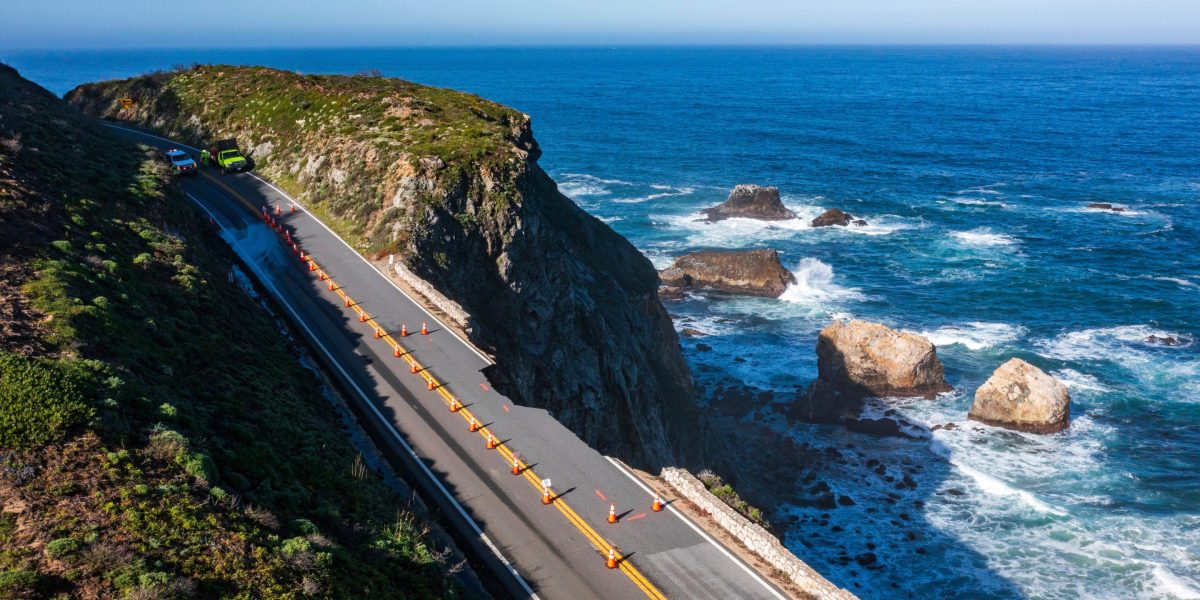
A 90-mile (145-kilometer) section of California’s Highway 1 along the famous Big Sur coast finally reopened Wednesday after three years of closures and repairs following a series of landslides and a roadway collapse that hampered tourism on the scenic route.

The reopening around midday came three months ahead of schedule, and business owners say that should give travelers plenty of time to plan their spring and summer road trips.

“Today is a monumental milestone for us,” said a relieved Colin Twohig, general manager of the Big Sur River Inn. “We’re hitting the light at the end of the tunnel after three long years.”

The first shutdown came in January 2023 when a series of powerful atmospheric rivers triggered a major landslide. The highway was buried again the following year during another wet winter, when a lane also collapsed down a cliff near the Rocky Creek Bridge.

The traffic stoppage between Carmel and Cambria cut off access to Big Sur, an isolated stretch of the state’s central coast where misty, forested mountains rise up from the ocean. What used to be a short drive between the southern and northern sections — with tiny Big Sur Village roughly in the middle — became an eight-hour trek inland and then back toward the seashore.

The isolated area, home to fewer than 2,000 residents, is known for its panoramic hiking trails along high cliffs and craggy beaches where seals and sea lions sometimes sprawl out. The late “Tropic of Cancer” author Henry Miller lived there for nearly two decades starting in the 1940s, and there’s now a library devoted to his work.

Highway 1 is famously a must for California visitors traveling between Los Angeles and San Francisco, and Twohig said he looks forward to seeing tourists in cars and motorhomes back on the road.

Twohig estimated that his inn, with 22 guest rooms, a large restaurant and a general store, saw a 20% drop in business. He said the road closure directly following COVID-19 restrictions was a one-two punch. The inn spent the down time making improvements and marketing heavily to entice California residents to visit during the off-seasons.

“When you have a hospitality business, you really rely on the busy season, and when there is no busy season, it can be a hard pill to swallow,” he said. “Having that lifeline back is huge.”

There were multiple closures at various locations throughout the past three years, and the last stretch that remained shut was a 7-mile (11-kilometer) span near Lucia, according to the California Department of Transportation, or Caltrans.

Gov. Gavin Newsom announced the opening on social media, thanking Caltrans for the speedy work in “reviving a vital economic lifeline for local business owners and residents affected by the closure.”

Caltrans, which has called Highway 1 the jewel of the state highway system, placed steel and concrete to shore up the collapsed cliffside.


Source link

Continue Reading

Business

If your phone is on SOS (and you can see this), yes, Verizon is having a major outage across the U.S.

Published

on


Many Verizon customers encountered a widespread outage on Wednesday, disrupting calling and other cellular services across the U.S.

The carrier acknowledged that there was an “issue impacting wireless voice and data services.” Verizon didn’t specify what was causing the disruptions, but said in an update shared on social media that it had deployed its engineering teams.

“We understand the impact this has on your day and remain committed to resolving this as quickly as possible,” the New York-based company wrote.

Outage tracker Downdetector showed that Verizon customers began to report issues with their service around noon E.T. Reports appeared to peak at more than 175,000 by 12:30 p.m. ET — but still remained elevated later into the afternoon, sitting at nearly 57,000 as of 3:30 p.m. ET.

Impacted users said their phones were in “SOS” mode or had other no signal messages. In cities like New York, alerts were sent out warning that the outage may disrupt 911 calls — urging residents to try landlines and devices from other carriers, if available, or visit a local police or fire station in-person in case of an emergency.

Per Downdetector, other major hubs impacted by Verizon’s outage included Washington D.C., Chicago, Houston, Los Angeles and Portland, Oregon. But consumers across the country said they were experiencing disruptions.

A handful of outage reports for other carriers also bubbled up on Wednesday — but companies like T-Mobile and AT&T quickly confirmed online that their services were operating normally. Both suggested that their customers may be encountering issues contacting people with Verizon’s service, however.

When cellular outages happen, some phone companies also urge consumers to try to connect to Wi-Fi and use internet calling. If Wi-Fi is still unavailable, there can be a limited number of other options — including sending messages via satellite on newer iPhones.

This story was originally featured on Fortune.com


Source link

Continue Reading

Business

California’s wealth tax doesn’t fix the real problem: Billionaires who borrow money, tax-free

Published

on


California’s proposed wealth tax aims to go after billionaires’ balance sheets, but it largely sidesteps the way many ultrawealthy people actually generate spendable cash: they borrow against their assets, tax‑free, and never “realize” income in the first place. As long as that borrowing model stays intact, a one‑time levy on wealth may raise money once, but it does little to change the system that lets cash‑poor billionaires live richly while reporting very little taxable income.​

California is weighing a ballot measure, the Billionaire Tax Act, that would impose a one‑time 5% tax on the total assets of state residents worth $1 billion or more. The tax would apply to anyone who was a California resident on January 1, 2026, with payment due in 2027 and the option to stretch it over five years for an additional charge.​

Supporters, led by a major healthcare workers’ union, pitch the measure as a way to raise roughly $100 billion to backfill expected federal healthcare cuts and force the wealthy to pay what they call their fair share. Gov. Gavin Newsom has warned that the levy could backfire by accelerating a departure of high‑net‑worth residents, even as he continues to defend the state’s broader progressive tax system.​

To take this example from the abstract into the practical, consider the examples of Elon Musk, the world’s richest man, and Mr. Beast, the world’s most popular YouTuber. Musk does not live on a normal “salary” the way most people do, with most of his wealth tied up in shares of his companies such as Tesla and SpaceX, and he typically finances his spending by borrowing against those holdings and occasionally selling stock. In that sense, he is extremely asset‑rich but comparatively low on ordinary cash income, using large credit lines backed by his equity to pay for homes, jets, and other expenses instead of taking regular paychecks.

Mr. Beast, meanwhile, told The Wall Street Journal just days ago that he has “negative money right now … “I’m borrowing money right now — that’s how little money I have.” While he isn’t the CEO of a publicly traded company like many of the California billionaires being targeted by this proposed tax, Mr. Beast, or Jimmy Donaldson, is always reinvesting in his content, he explained, leaving very little in his bank account.

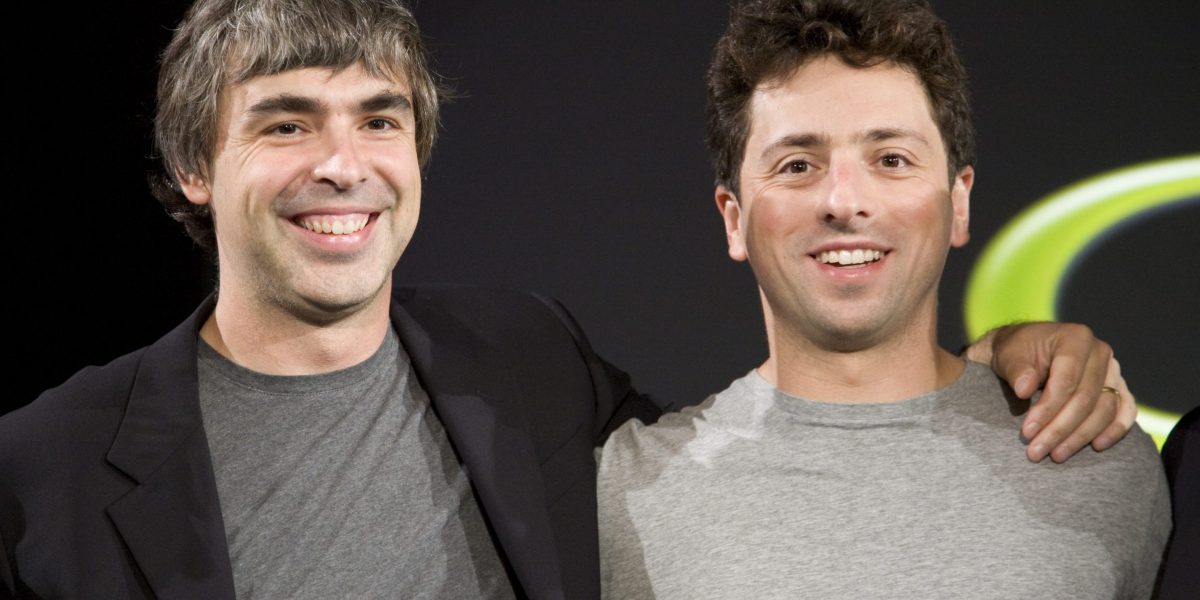
Anduril founder Palmer Luckey pointed out this tension in a heated social media exchange with Rep. Ro Khanna, who supports the billionaire tax. “You are fighting to force founders like me to sell huge chunks of our companies to pay for fraud, waste, and political favors for the organizations pushing this ballot initiative,” Luckey wrote, noting that the tax would create more problems than it would solve. Other executives voted with their feet, with the Google guys saying goodbye to California, The New York Times reported, as Larry Page and Sergey Brin both moved to sever ties, Page with a very Bezosian playbook centered on trophy properties in Miami. Here’s why Luckey has a point that this tax is going after the wrong things, and the strange reason these billionaires don’t actually have that much cash on hand.

The ‘Buy‑Borrow‑Die’ reality

The deeper problem lies in how modern billionaires convert paper wealth into cash without ever showing much taxable income. Rather than selling stock or private‑company shares and realizing capital gains, they pledge those assets as collateral, borrow against them, and use the loan proceeds to fund everything from yachts and mansions to new investments.​​

Because U.S. tax law does not treat borrowed money as income, these loans incur no income‑tax bill, even when they finance lavish lifestyles. Policy analysts often describe this as the “buy, borrow, die” strategy: buy appreciating assets, borrow against them to live, then let heirs inherit those assets with stepped‑up basis after death, erasing much of the embedded tax liability.​

Under U.S. tax law, loan proceeds are not treated as income because they must be repaid, so they are not taxed when received.​ If a billionaire borrows against appreciated stock or real estate instead of selling it, there is no sale, so no capital gain is realized and no capital gains tax is triggered.​

It works like this:

  • Step 1 – Buy: They acquire assets expected to appreciate over time (founder stock, real estate, private businesses) and hold them for decades, letting gains build up untaxed as “unrealized” gains.​
  • Step 2 – Borrow: They pledge those assets as collateral for large credit lines or loans (e.g., margin loans, securities‑backed lines of credit, loans against real estate) and live or invest using that borrowed cash instead of selling.​
  • Step 3 – Die: When they die, heirs get a “step‑up in basis,” meaning the tax cost basis resets to current market value, wiping out the built‑up unrealized gain for income‑tax purposes.

Why a One‑Time Wealth Tax Misses

California’s own fiscal watchdogs have noted that many top earners already avoid large state income taxes by borrowing against appreciated stock instead of selling it. A one‑time 5% charge on net worth would hit that accumulated wealth once, but wouldn’t touch the ongoing flow of tax‑free cash that comes from asset‑backed borrowing.​ As Luckey notes, it would force these billionaires to liquidate assets to come up with the cash that the law would require, making a move out of California an easier alternative for those with the means to do it—and billionaires have the means.

Critics warn the proposal could encourage more billionaires to leave without permanently changing their incentives to realize income or pay taxes where they actually live. Venture capitalist Chamath Palihapitiya estimates that about $1 trillion in billionaire wealth has already left California amid the tax fight, raising the risk that the state loses future income‑tax revenue while capturing only a single extraordinary haul.​

Solving the real problem

Tax experts argue that if policymakers want to reach the cash‑poor, asset‑rich class, they must tax the proceeds of wealth, not just the stock of it at a moment in time. Proposals include state‑level “wealth proceeds” taxes that more comprehensively tax capital gains and investment income, and reforms to reduce the bias that favors borrowing over selling appreciated assets.​ Edward Fox and Zachary Liscow, law professors at the University of Michigan and Yale, respectively, have suggested a way to close the “billionaire borrowing loophole” by changing the law so that borrowing is treated as income.

Without such structural changes, California’s wealth tax risks being a dramatic, politically appealing gesture that leaves the core architecture of billionaire tax avoidance—and the tax‑free loans that underpin it—largely intact.​ And it would seemingly leave California with a lot fewer billionaires.

For this story, Fortune journalists used generative AI as a research tool. An editor verified the accuracy of the information before publishing.


Source link

Continue Reading

Trending

Copyright © Miami Select.