Connect with us

Business

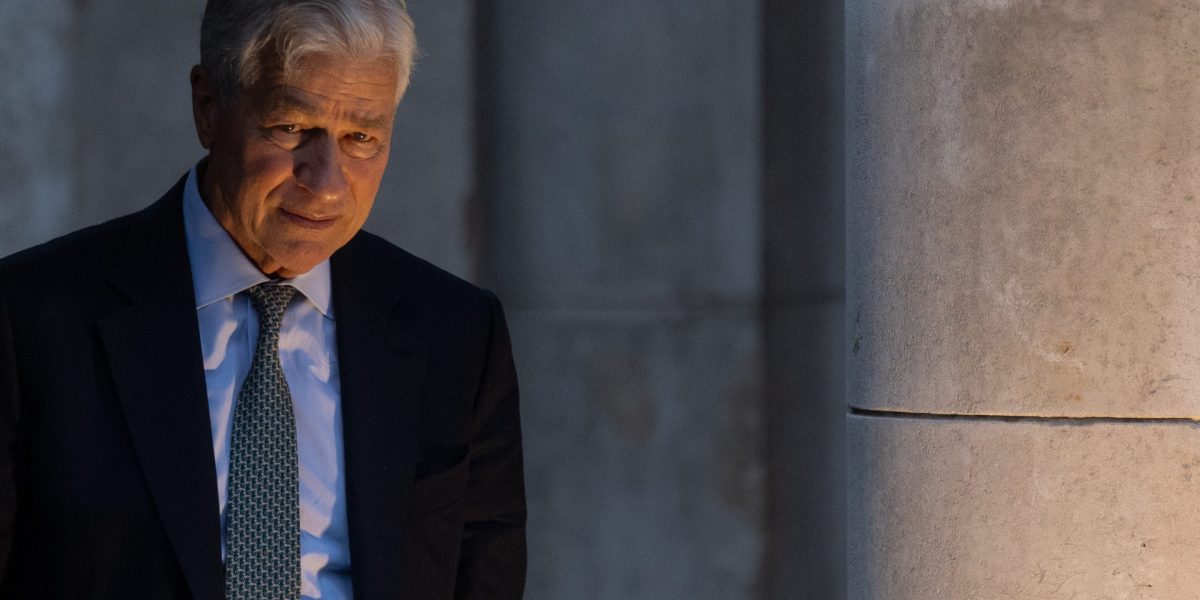
Trump blasts Dimon, threatens to sue JPMorgan over debanking

Published

on


President Donald Trump railed against JPMorgan Chase & Co. and its leader Jamie Dimon, threatening to sue the banking giant over his claim that he was debanked after the Jan. 6, 2021, Capitol riot.

In a post Saturday, Trump responded to a Wall Street Journal story that said Trump offered Dimon the role of Federal Reserve chief several months ago in a way that Dimon interpreted as a joke. 

“There was never such an offer and, in fact, I’ll be suing JPMorgan Chase over the next two weeks for incorrectly and inappropriately DEBANKING me after the January 6th Protest,” Trump wrote. 

He didn’t elaborate. JPMorgan didn’t immediately respond to a weekend request for comment.

Trump claimed in August that JPMorgan “discriminated against me very badly” when he alleged the bank asked him to close accounts he held for decades, an action he believes was connected to his supporters stormed the Capitol to stop the 2021 certification of President Joe Biden’s victory. The bank later said it’s facing reviews, investigations and legal proceedings tied to the Trump administration’s fight against “debanking.”

Dimon said earlier this week he wouldn’t consider being the Fed chair.

In response to a question Thursday at a US Chamber of Commerce event about whether he’d consider taking over the central bank, Dimon said, “Chairman of the Fed, I’d put in the absolutely, positively no chance, no way, no how, for any reason.” 

As for running the Treasury, “I would take the call,” he said.

Trump has not yet said who he will nominate to succeed Fed Chair Jerome Powell, whose term as Chair ends in May. Trump said Friday he has a pick in his mind but declined to identify them.

Read More: Trump Voices Reluctance at Nominating Hassett as Fed Chair

Dimon’s comments follow a public back-and-forth between Dimon and Trump earlier this week over the president’s attacks on the Fed, including criminal subpoenas issued by the Justice Department over the renovation of the Fed’s headquarters. Dimon said Tuesday that chipping away at Fed independence is “not a great idea,” and could lead to higher inflation and interest rates over time.

Dimon has pushed back in the past against attempts by Trump’s allies to suggest that the bank’s customer decisions are biased.

“We do not debank people’s religious or political affiliations,” Dimon told Fox Business in December.


Source link

Continue Reading

Business

Trump wants nations to pay $1 billion to stay on his peace board

Published

on


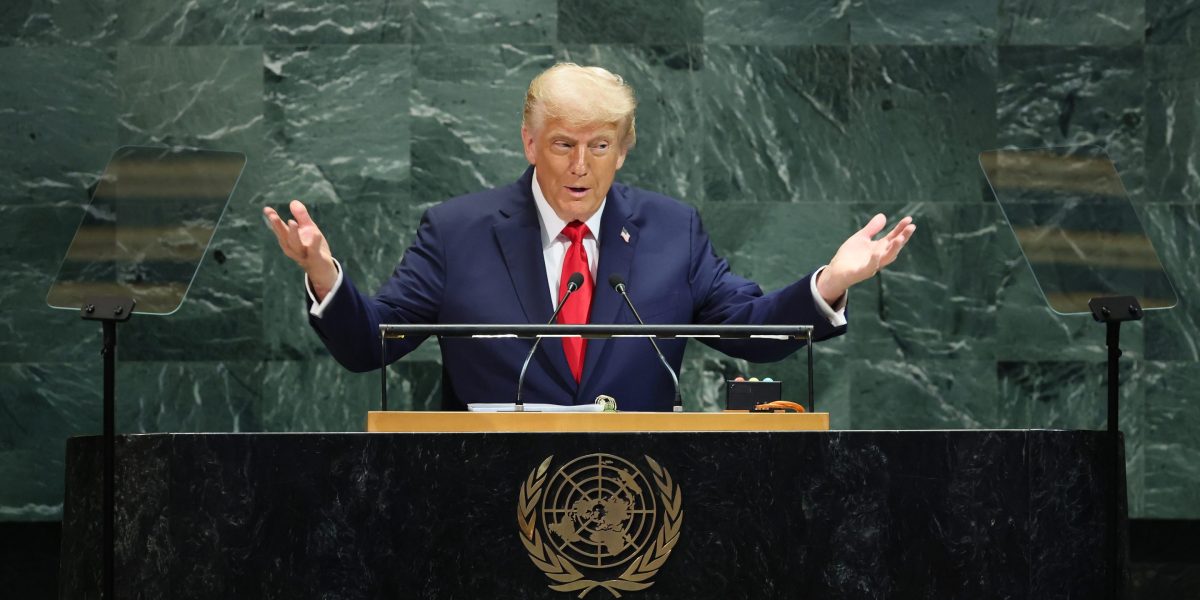
The Trump administration is asking countries that want a permanent spot on his new Board of Peace to contribute at least $1 billion.

According to a draft charter for the proposed group seen by Bloomberg, President Donald Trump would serve as its inaugural chairman and would decide on who is invited to be members. Decisions would be taken by a majority, with each member state present getting one vote, but all would be subject to the chairman’s approval.

“Each Member State shall serve a term of no more than three years from this Charter’s entry into force, subject to renewal by the Chairman. The three-year membership term shall not apply to Member States that contribute more than USD $1,000,000,000 in cash funds to the Board of Peace within the first year of the Charter’s entry into force,” the draft says.

Critics are worried that Trump is trying to build an alternative, or rival, to the United Nations, which he has long criticized.

The board is described in the charter as “an international organization that seeks to promote stability, restore dependable and lawful governance, and secure enduring peace in areas affected or threatened by conflict.” It would become official once three member states agree to the charter.

Trump would also be responsible for approving the group’s official seal, the document says.

White House officials didn’t immediately reply to a request for comment. 

Trump has invited a number of world leaders, including Argentina’s Javier Milei and Canada’s Mark Carney, to be part of a Board of Peace for Gaza, which would be formed under the broader umbrella of his new Board of Peace.

That plan attracted swift criticism from Israeli Prime Minister Benjamin Netanyahu, who said the details hadn’t been coordinated with his country.

Read More: Gaza ‘Board of Peace’ Takes Shape as Israel Raises Concern

Several European nations have been invited to join the peace board, according to people familiar with the matter. The draft appears to suggest Trump himself would control the money, something that would be considered unacceptable to most countries who could have potentially joined the board, said the people, who spoke on condition of anonymity to discuss private matters.

Several nations strongly oppose the draft of Trump’s charter and are working on collectively pushing back against the proposals, the people added.

The Board of Peace would convene voting meetings at least annually and “at such additional times and locations as the Chairman deems appropriate,” the draft charter says. The agenda would be subject to approval by the chairman. The peace board would hold regular non-voting meetings with its executive board. Such meetings would be convened on at least a quarterly basis.

Read More: Trump Pulls US From 31 Bodies in UN, Already in Fiscal Peril

Trump would also have the power to remove a member, subject to a veto by a two-thirds majority of member states. “The Chairman shall at all times designate a successor for the role of Chairman,” the charter says.

On Friday, the White House announced a first executive panel that would include Secretary of State Marco Rubio, Middle East envoy Steve Witkoff, Trump’s son-in-law Jared Kushner and former UK Prime Minister Tony Blair before the formation of the overall board.


Source link

Continue Reading

Business

Just when Wall Street and Corporate America were looking forward to a year without trade fears, the ‘Tariff King’ strikes again

Published

on


After a turbulent 2025 that shocked global trade and financial markets, 2026 was shaping up to be a time for the U.S. economy to look past President Donald Trump’s tariffs.

Not so fast.

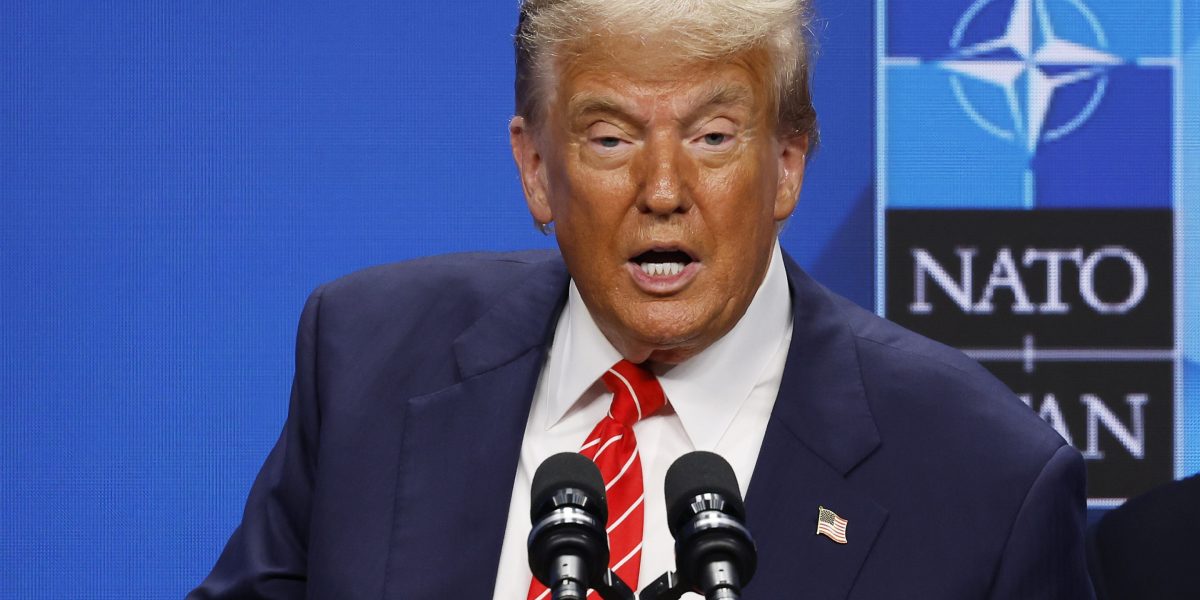
Tariffs are back on the agenda again only a few weeks into the new year. On Saturday, Trump announced eight NATO allies would be hit with 10% tariffs next month that will rise to 25% by June until a “Deal is reached for the Complete and Total purchase of Greenland.”

While not all the targeted countries are members of the European Union, the new levies come despite a trade deal reached in July that set a 15% tariff on most EU products and obligated it to invest hundreds of billions of dollars in the U.S.

And on Monday, Trump said countries that do business with Iran would be hit with a 25% duty on trade with the U.S., threatening to blow up a fragile tariff cease-fire with China, which is a top importer of Iranian oil.

Now, the U.S. faces the prospect of a new cycle of retaliation and escalation. On Saturday, French President Emmanuel Macron hinted at what comes next.

“Tariff threats are unacceptable and have no place in this context. Europeans will respond in a united and coordinated manner should they be confirmed,” he posted on X. “We will ensure that European sovereignty is upheld.”

It wasn’t supposed to be like this. Wall Street, Corporate America, and consumers were looking ahead to an economic boost from tax cuts in Trump’s One Big Beautiful Bill Act as well as more calm on the trade front.

On Friday, analysts at Bank of America highlighted an exceptionally upbeat forecast for 2026 GDP growth, putting it a 2.8%—well ahead of the consensus for 2.1%.

“The key drivers are easier fiscal and monetary policy, and our expectation of more growth-friendly trade policy,” BofA said in a note.

Meanwhile, the Federal Reserve was also anticipating continued moderation in inflation this year as policymakers assumed that tariffs would deliver a one-time jolt to prices instead of sustained upward pressure.

A new flurry of import taxes could put that expectation at risk and jeopardize future rate cuts if inflation remains stubbornly above the Fed’s 2% target.

The Fed’s most recent Beige Book survey of economic and business conditions around the country was also filled with hope that tariff anxiety was finally easing:

  • “The outlook improved on balance, with more optimism and a bit less caution than in the last report, boosted in part by reduced uncertainty from tariffs.”
  • “Retail and tourism contacts were cautiously optimistic heading into 2026, based on recent stability in consumer spending, greater clarity on tariffs, and Boston’s 2026 World Cup soccer events.”
  • “Firms reported an abatement of tariff-related uncertainty from a combination of stabilized tariff policy and their own adjustments, such as the completion of a new production facility by a frozen foods manufacturer.”

Trump’s new tariffs represent a sharp reversal from late last year, when the administration rolled back some levies on food imports and delayed hikes on furniture as voters demanded more affordability and relief from higher prices.

Trade-exposed sectors of the economy have already suffered a heavy toll from the tariffs. For example, manufacturers have shed 70,000 jobs since Trump unveiled his “Liberation Day” duties in April 2025.

And the Institute for Supply Management’s manufacturing index has been in negative territory for 10 consecutive months, meaning activity has been contracting.

Some relief might be ahead. The Supreme Court is due to issue a ruling soon on Trump’s ability to impose tariffs under the International Emergency Economic Powers Act.

A decision against the administration could limit his powers on trade. But depending on how nuanced a ruling is, Trump could retain some leeway. He also has vowed to use other laws to invoke fresh tariffs if he loses in court.

That shouldn’t be a surprise given that Trump based his re-election campaign on tariffs and has called himself “Tariff King,” “Tariff Man” and “Mr. Tariff” over the years.

Considering his instincts to quickly pull the trigger on tariffs across a broad range of situations, Wall Street may need a new playbook.

“Most economic models don’t quantify the geopolitical and relational damage caused by erratic tariffs on allies,” Erica York, vice president of tax policy at the Tax Foundation, said on X. “Trump’s tariff policies impose real costs that go far beyond higher taxes and slower GDP growth.”

This story was originally featured on Fortune.com


Source link

Continue Reading

Business

EU and Mercosur bloc of South American nations sign trade deal to end quarter-century of talks

Published

on


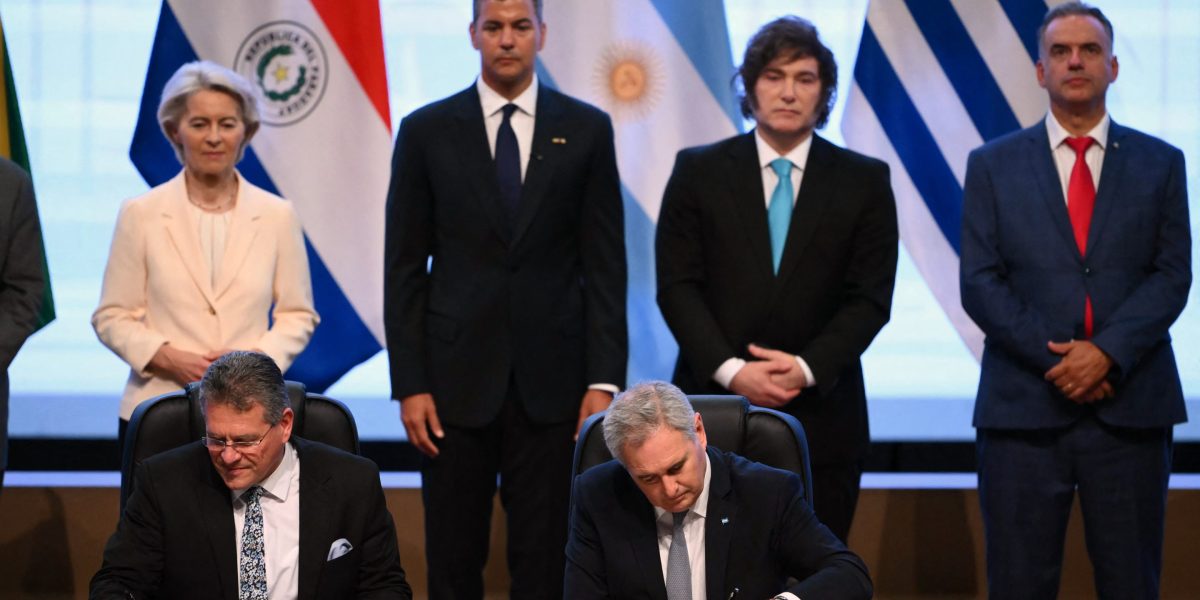
The European Union and the Mercosur bloc of South American countries formally signed a long-sought landmark free trade agreement on Saturday, capping more than a quarter-century of torturous negotiations to strengthen commercial ties in the face of rising protectionism and trade tensions around the world.

The signing ceremony in Paraguay’s capital, Asunción, marks a major geopolitical victory for the EU in an age of American tariffs and surging Chinese exports, expanding the bloc’s foothold in a resource-rich region increasingly contested by Washington and Beijing.

It also sends a message that South America keeps diverse trade and diplomatic relations even as U.S. President Donald Trump makes an aggressive push for geopolitical dominance across the Western Hemisphere.

Mercosur consists of the region’s two biggest economies, Argentina and Brazil, as well as Paraguay and Uruguay. Bolivia, the bloc’s newest member, can join the trade deal in the coming years. Venezuela has been suspended from the bloc and isn’t included in the agreement.

Promoted by South America’s renowned grass-fed cattle-raising countries and Europe’s industrial interests, the accord’s gradual elimination of more than 90% of tariffs creates one of the world’s largest free trade zones and makes shopping cheaper for more than 700 million consumers.

Geopolitical undertones

European Commission President Ursula von der Leyen, who heads the EU’s executive branch, portrayed the deal as a bulwark against the disruptive policies of the Trump administration.

“It reflects a clear and deliberate choice: We choose fair trade over tariffs. We choose a productive long-term partnership over isolation,” von der Leyen declared in an veiled rebuke to Trump’s trade policies at the ceremony, which got underway as Trump announced 10% tariffs on eight European nations over their opposition to American control of Greenland.

“We will join forces like never before, because we believe that this is the best way to make our people and our countries prosper.”

Brazilian President Luiz Inácio Lula da Silva, a long-time advocate for the EU-Mercocsur deal as negotiations lumbered through his three nonconsecutive presidential terms, hailed the agreement as symbol of global cooperation.

“At a time when unilateralism isolates markets and protectionism inhibits global growth, two regions that share democratic values and a commitment to multilateralism choose a different path,” Lula said in an X post.

Lula’s decision to skip the ceremony signaled that tensions simmered between the trading blocs.

European farmers

Brazil, which held the rotating presidency of Mercosur last year, had been gearing up to host the signing ceremony in the country’s capital, Brasília, last month, when European countries called it off, demanding more concessions to farmers scared of the possible dumping of cheap South American agricultural imports.

Lula, robbed of his spotlight, was outraged at what was widely seen in South America as the latest example of the EU’s bureaucratic intrusiveness. One of the main reasons the deal took so long to clinch was Brussels’ attempts to manage South America’s agricultural production processes, from standards on plastic packaging to deforestation regulation.

“The EU’s maximalist wish lists of demands from developing economies willing to sign free trade agreements are often perceived as patronizing,” said Agathe Demarais, a senior policy fellow with the European Council on Foreign Relations.

After imposing environmental and animal welfare regulations, strict quotas on farm products like beef and sugar and staggered timelines for tariff reductions, the EU sweetened the deal even more for its farmers with a promise of hefty subsidies. That pushed agricultural powerhouse Italy across the line earlier this month.

But even as the ink dried on Saturday, powerful protectionist lobbies in Europe were still hoping to prevent the agreement from clearing its one final hurdle: ratification by the European Parliament.

France remains opposed to the accord, with President Emmanuel Macron worrying that farmers’ frustration with the EU could drive more voters to the country’s far right in the 2027 presidential election.

“Everything will depend on the political appetite of the European Parliament,” said João Paulo Cavalcanti, a Brazilian lawyer specializing in international trade. “That could clearly create an obstacle to approval.”


Source link

Continue Reading

Trending

Copyright © Miami Select.