Connect with us

Business

Trump admits the GOP was blindsided by economy fears as Democrats sweep key races: ‘Republicans don’t talk about the word affordability’

Published

on


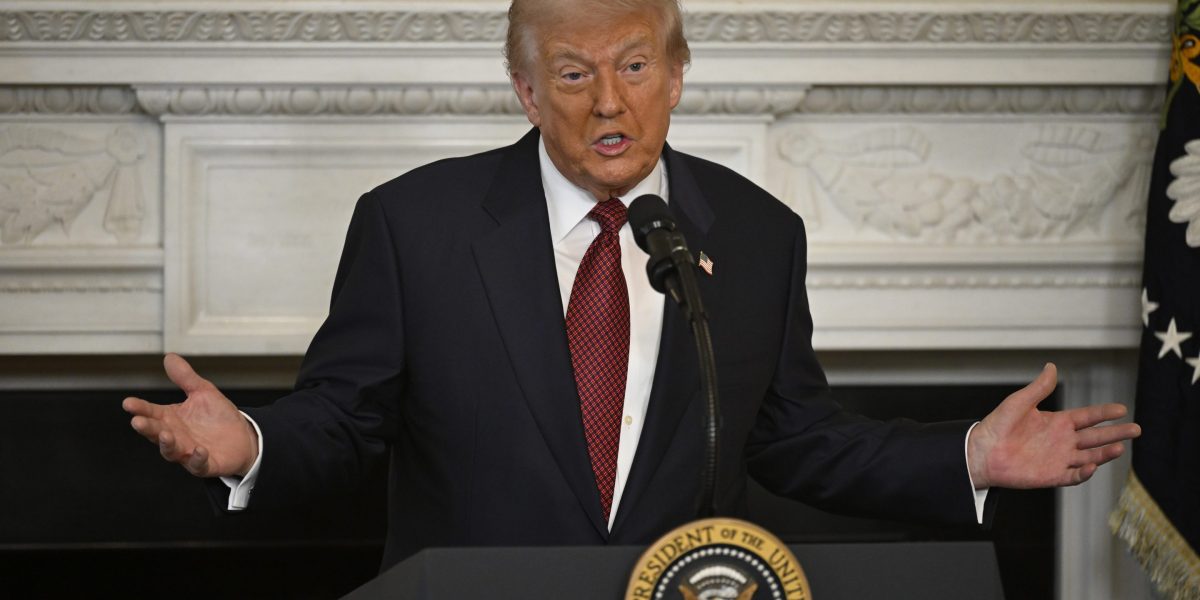
President Donald Trump got a serious warning from voters that he’s out of touch with their fears about a deteriorating U.S. economy.

Democrats cruised in key races across the country Tuesday by harnessing some of the same populist fervor that helped get Trump reelected a year ago — but also by focusing on the kitchen table issues the Republican had vowed to fix. Now, as the incumbent, fears about the economy have made Trump the face of much of the public’s discontent.

“We learned a lot.” Trump acknowledged Wednesday. In a Fox News Channel interview, he said his party wasn’t doing enough to spread the word about the country’s economic progress.

“Republicans don’t talk about it,” he said. “They don’t talk about the word affordability.”

Voters in the Virginia and New Jersey governor races, the New York City mayoral contest and the California ballot proposition all citied economic concerns as the top issue. Democrats swept those elections, and it was difficult to point to any major race, anywhere, where Republicans had a key victory.

The reversal of fortune from a year ago was stark.

Back then, voters returned Trump to the White House on the promise that he could quickly bring down inflation, jump-start factory hiring and shower the country in newfound wealth from steep tariffs he imposed on U.S. allies the world over.

Instead, voters now are expressing concerns that high prices for groceries, electricity bills and housing are draining their bank accounts. Trump has been defiant in insisting that he’s strengthened the economy, so — his early reactions aside — it’s not clear he’ll internalize the need to take on the same inflationary challenges that became a drag for his Democratic predecessor, Joe Biden.

The elections were largely in areas that have recently favored Democrats, so there are limits to interpreting what the results could mean for next year’s broader midterm races. But the size of Democratic margins indicated the degree of frustration with economic conditions under Trump.

‘People have 401(k)s’

There are few signs that the public is putting much confidence in Trump’s claims about an American “golden age,” nor his assertion that inflation has been tamped down into submission. Recently pressed on Americans still worried about high grocery prices, Trump pointed to the stock market.

“Look, 401(k)s. People have 401(k)s,” the president said in an interview with CBS News’ “60 Minutes” that was broadcast Sunday. Trump said grocery prices are falling, but the most recent inflation report shows they’re up 2.7% from a year ago.

Overall consumer prices have risen 3% over the past 12 months, which is higher than the rate going into Trump’s 2024 election win. The Federal Reserve targets inflation at 2%.

A top Trump political aide told Politico on Wednesday that the election showed the importance of focusing on the cost of living. “Why does Zohran Mamdani do so well last night? He relentlessly focused on affordability,” James Blair said in the interview, adding that Trump planned to focus on prices in his messaging, too.

While the stock market is surging and life looks good for tech executives with artificial intelligence investments, hiring slowed sharply this summer in the wake of Trump rolling out his tariffs.

The AP Voter Poll showed that anxiety about the economy helped the Democrats on Tuesday.

Roughly half of Virginia voters said “the economy” was the top issue, and about 6 in 10 of these voters picked Democrat Abigail Spanberger for governor, powering her to a decisive win.

In New Jersey, Democrat Mikie Sherrill won about two-thirds of voters who called “the economy” the top issue facing the state. Republican Jack Ciattarelli secured about 6 in 10 New Jersey voters who said the top issue was “taxes.”

More than half of New York City voters said the cost of living was the top issue facing the city, and Democrat Zohran Mamdani won about two-thirds of this group.

Slightly fewer than half of California voters said “the economy” was the top issue facing the state, and roughly two-thirds of those voters backed Prop 50. The measure’s approval allows Democrats to redraw congressional maps more favorable to their party in the nation’s largest state and keep up with Republicans who have moved to add potential new red House seats in Texas and elsewhere.

‘I don’t think it was good for Republicans’

In the run-up to Tuesday’s elections, Trump focused his messaging on mass deportations of immigrants in the country illegally and a push to reduce crime by deploying National Guard troops to cities with Democratic leadership. But the AP Voter Poll found that few of those casting their ballots considered crime or immigration a top priority.

Trump did not actively campaign for his party ahead of Election Day 2025. With votes still being counted, he was already ducking blame, posting that he “WASN’T ON THE BALLOT.”

The morning after, while hosting Senate Republicans at the White House, Trump was more reflective. “Last night, it was not expected to be a victory,” he said.

“I don’t think it was good for Republicans,” Trump said. “I’m not sure it was good for anybody, but we had an interesting evening, and we learned a lot.”

Later in Florida, Trump laid out his economic successes for an audience of business leaders and athletes, saying: “We have the greatest economy right now. A lot of people don’t see that.”

He suggested his supporters simply needed to talk more about favorable economic statistics and voters would see the economy as improving. That strategy is similar to what the Biden administration deployed without ever turning around public sentiment.

“It’s really easy to win elections when you talk about the facts,” Trump said.

Instead of offering new ideas, however, Trump hit the familiar themes of combating crime, opposing transgender rights and imposing tough immigration policies in his Miami speech. He even added, “We lost a little bit of sovereignty last night in New York” because of Mamdani’s victory.

Reprising his political greatest hits despite Tuesday’s results wasn’t consistent with what Vice President JD Vance suggested might be coming post-election. “We’re going to keep on working to make a decent life affordable in this country, and that’s the metric by which we’ll ultimately be judged in 2026 and beyond,” Vance posted on X.

Offering similar advice to his own party was Vivek Ramaswamy, a former Republican presidential candidate and Trump ally now running for Ohio governor in 2026.

“Our side needs to focus on affordability,” Ramaswamy said in a video posted online. “Make the American dream affordable. Bring down costs, electric costs, grocery costs, health care costs and housing costs. And lay out how we’re going to do it.”


Source link

Continue Reading

Business

Nvidia’s CEO says AI adoption will be gradual, but we still may all end up making robot clothing

Published

on


Nvidia CEO Jensen Huang doesn’t foresee a sudden spike of AI-related layoffs, but that doesn’t mean the technology won’t drastically change the job market—or even create new roles like robot tailors.

The jobs that will be the most resistant to AI’s creeping effect will be those that consist of more than just routine tasks, Huang said during an interview with podcast host Joe Rogan this week. 

“If your job is just to chop vegetables, Cuisinart’s gonna replace you,” Huang said.

On the other hand, some jobs, such as radiologists, may be safe because their role isn’t just about taking scans, but rather interpreting those images to diagnose people.

“The image studying is simply a task in service of diagnosing the disease,” he said.

Huang allowed that some jobs will indeed go away, although he stopped short of using the drastic language from others like Geoffrey Hinton a.k.a. “the Godfather of AI” and Anthropic CEO Dario Amodei, both of whom have previously predicted massive unemployment thanks to the improvement of AI tools.

Yet, the potential, AI-dominated job market Huang imagines may also add some new jobs, he theorized. This includes the possibility that there will be a newfound demand for technicians to help build and maintain future AI assistants, Huang said, but also other industries that are harder to imagine.

“You’re gonna have robot apparel, so a whole industry of—isn’t that right? Because I want my robot to look different than your robot,” Huang said. “So you’re gonna have a whole apparel industry for robots.”

The idea of AI-powered robots dominating jobs once held by humans may sound like science fiction, and yet some of the world’s most important tech companies are already trying to make it a reality. 

Tesla CEO Elon Musk has made the company’s Optimus robot a central tenet of its future business strategy. Just last month, Musk predicted money will no longer exist in the future and work will be optional within the next 10 to 20 years thanks to a fully fledged robotic workforce. 

AI is also advancing so rapidly that it already has the potential to replace millions of jobs. AI can adequately complete work equating to about 12% of U.S. jobs, according to a Massachusetts Institute of Technology (MIT) report from last month. This represents about 151 million workers representing more than $1 trillion in pay, which is on the hook thanks to potential AI disruption, according to the study.

Even Huang’s potentially new job of AI robot clothesmaker may not last. When asked by Rogan whether robots could eventually make apparel for other robots, Huang replied: “Eventually. And then there’ll be something else.”


Source link

Continue Reading

Business

The ‘Mister Rogers’ of Corporate America shows Gen Z how to handle toxic bosses

Published

on


After two decades of climbing the corporate ladder at companies ranging from ABC, ESPN, and Charter Communications (commonly known as Spectrum), Timm Chiusano quit it all to become a content creator. 

He wasn’t just walking away from high titles, but a high salary, too. In his peak years, Chiusano made $600,000 to $800,000 annually. But in June of 2024, after giving a 12-week notice, he “responsibility fired himself” from his corporate job as VP of production and creative services at Charter.

He did it all to help others navigate the challenges of a workplace, and appreciate the most mundane parts of life on TikTok.

@timmchiusano

most people are posting their 2024 recaps; these are a few of my favorite moments from the year that was, but i need to start reintroducing myself too i dont have a college degree, no one in my life knew that until i was 35 when i eventually got my foot in the door in my early 20’s after a few years of substitute teaching and part time jobs, i thought for sure i had found the career path of my dreams in live sports production i didn’t think i had a chance of surviving that first college football season but i busted my ass, stuck around and got promoted 5 times in 5 years then i met a girl in Las Vegas, got married in 7 months, and freaked out about my career that had me travelling 36 weeks a year i had to find a more stable “desk job”, i was scared shitless that i was pigeonholed and the travel would eventually destroy my marriage i crafted a narative for espn arguing they needed me on their marketing team because of my unique perspective coming from the production side i got rejected, but kept trying and a year i got that job the 7 years with espn were incredible, but also exhausting and raised all kinds of questions about corporate america, toxic situations, and capitalism in general why was i borderline heart attack stressed so often when i could see that my ideas were literally generating 2,000 times the money that i was getting paid? in 2012 i had a kid and in 2013 i got the biggest job of my career to reinvent how to produce 20,000 commercials a year for small business it took 12 rounds of interviews, a drug test i somehow passed, and a background check that finally made me tell my wife of 8 years that i didnt have a college degree they brought me in the thursday before my first day and told me what i told grace in that clip the next decade was an insane blur; i saw everything one would ever see in their career from the perspective of an executive at a fortune 100 i started making tiktoks, kinda blacked out at some point in 2019 and responsibly fired myself in 2024 to see what i might be capable of on my own with all the skills i picked up along my career journey now the mission is pay what i know forward, and see if i can become the mr rogers of corporate america cc: @grace beverley @Ryan Holiday @Subway Oracle

♬ original sound – timm chiusano

What started as short-video vlogs on just about anything in 2020 (reviews on protein bars, sushi, and sneakers) later transitioned to videos on growing up, and dealing with life’s challenges, like coming to terms when you have a toxic boss. Today, his platform on TikTok has over 1 million followers

With the help of going viral from his “loop” format where videos end and seamlessly circle back to the beginning, he began making more videos as a side-hustle on top of his day-to-day tasks in the office.

“How can I get people to be smarter and more comfortable about their careers in ways that are gonna help on a day-to-day basis?” Chiusano told Fortune.

Today, he could go by many titles: former vice president at a Fortune 100 company, motivational speaker, dad, content creator, or as he labels himself, the Mister Rogers of Corporate America. 

Just as the late public television icon helped kids navigate the complexities of childhood, Chiusano wants to help young adults think about how to approach their careers and their potential to make an impact. 

“Mister Rogers is the greatest of all time in his space. I will never get to that level of impact. But it’s an easy way to describe what I’m trying to do, and it consistently gives me a goal to strive for,” he said. “There are some parallels here with the quirkiness.”

Firing himself after 25 years in the corporate world

Even with years in corporate, Chiusano doesn’t resemble the look of a typical buttoned-up executive. Today, he has more of a relaxed Brooklyn dad attire, with a sleeve of tattoos and a confidence to blend in with any trendy middle aged man in Soho. During our interview, he showed off one of the first tattoos he got: two businessmen shaking hands, a reference to Radiohead’s OK Computer album.

“This is a dope ass Monday in your 40s,” began one of his videos.

It consisted of Chiusano doing everyday things such as eating leftovers, going to the gym, training for the NYC marathon, taking out the trash, dropping his daughter off at school, a rehearsal for a Ted Talk, eating lunch with his wife, and brand deal meetings. Though the content sounds pretty normal, that’s the point. 

“The reason why I fired myself in the first place was to be here,” he says in the video while picking his daughter up from school.

Today, Chiusano spends his days making content on navigating workplace culture, public speaking, brand deals, brand partnerships, executive coaching, writing a book, and the most important job: being a dad to his 13-year-old daughter Evelyn.

“I’m basically flat [in salary] to where I was, and this is everything I could ever want in the world,” he said. “The ability to send my kid to the school she’s been going to, eat sushi takeout almost as much as I’d like, and do nice things for my wife.”

In fact, when sitting inside one of his favorite New York City spots, Lure Fishbar, he keeps getting stopped by regulars who know him by name. He points out that one of his favorite interviews he filmed here was with legendary filmmaker Ken Burns.

Advice to Gen Z

In a time where Gen Z has been steering to more unconventional paths, like content creation or skill trades rather than just a 9-to-5 office job, Chiusano opens up a lens to what life looks like when deciding to be present rather than always looking for what’s next—a mistake he said he made in his 20s. 

Instead, he wants to teach the younger generation to build skills for as long as you can, but “if you are unhappy, that’s a very different conversation.”

“I think some people will make themselves more unhappy because they feel like that’s what’s expected of a situation,” he said.

“I would love to be able to empower your generation more, to be like somebody’s gonna have to be the head of HR at that super random company to put cool standards and practices in place for better work-life balance for the employees.” 


Source link

Continue Reading

Business

Mark Zuckerberg says the ‘most important thing’ he built at Harvard was a prank website

Published

on


For Mark Zuckerberg, the most significant creation from his two years at Harvard University wasn’t the precursor to a global social network, but a prank website that nearly got him expelled.

The Meta CEO said in a 2017 commencement address at his alma mater that the controversial site, Facemash, was “the most important thing I built in my time here” for one simple reason: it led him to his wife, Priscilla Chan.

“Without Facemash I wouldn’t have met Priscilla, and she’s the most important person in my life,” Zuckerberg said during the speech.

In 2003, Zuckerberg, then a sophomore, created Facemash by hacking into Harvard’s online student directories and using the photos to create a site where users could rank students’ attractiveness. The site went viral, but it was quickly shut down by the university. Zuckerberg was called before Harvard’s Administrative Board, facing accusations of breaching security, violating copyrights, and infringing on individual privacy.

“Everyone thought I was going to get kicked out,” Zuckerberg recalled in his speech. “My parents came to help me pack. My friends threw me a going-away party.”

It was at this party, thrown by friends who believed his expulsion was imminent, where he met Chan, another Harvard undergraduate. “We met in line for the bathroom in the Pfoho Belltower, and in what must be one of the all time romantic lines, I said: ‘I’m going to get kicked out in three days, so we need to go on a date quickly,’” Zuckerberg said.

Chan, who described her now-husband to The New Yorker as “this nerdy guy who was just a little bit out there,” went on the date with him. Zuckerberg did not get expelled from Harvard after all, but he did famously drop out the following year to focus on building Facebook.

While the 2010 film The Social Network portrayed Facemash as a critical stepping stone to the creation of Facebook, Zuckerberg himself has downplayed its technical or conceptual importance.

“And, you know, that movie made it seem like Facemash was so important to creating Facebook. It wasn’t,” he said during his commencement speech. But he did confirm that the series of events it set in motion—the administrative hearing, the “going-away” party, the line for the bathroom—ultimately connected him with the mother of his three children.

Chan, for her part, went on to graduate from Harvard in 2007, taught science, and then attended medical school at the University of California, San Francisco, becoming a pediatrician.

She and Zuckerberg got married in 2012, and in 2015, they co-founded the Chan Zuckerberg Initiative, a philanthropic organization focused on leveraging technology to address major world challenges in health, education, and science. Chan serves as co-CEO of the initiative, which has pledged to give away 99% of the couple’s shares in Meta Platforms to fund its work.

You can watch the entirety of Zuckerberg’s Harvard commencement speech below:

For this story, Fortune journalists used generative AI as a research tool. An editor verified the accuracy of the information before publishing. 


Source link

Continue Reading

Trending

Copyright © Miami Select.