Connect with us

Business

‘Trump Accounts’ for kids get funding boost from Dalio and BlackRock

Published

on


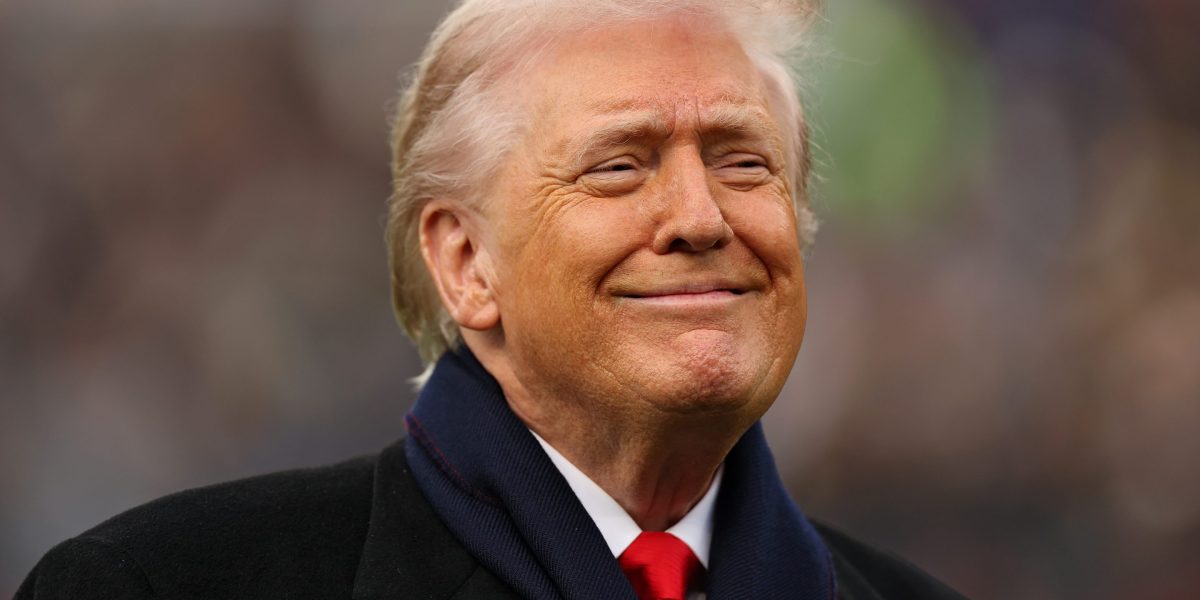
A new savings vehicle, dubbed “Trump accounts,” is designed to help the rising generation of American children build wealth into adulthood. 

Under the multitrillion-dollar tax and spending bill signed by President Donald Trump in July, the federal government will contribute $1,000 to accounts set up for every American baby born in the next few years. 

The initiative got a boost on Dec. 2 when billionaires Michael and Susan Dell announced a $6.25 billion gift to seed accounts for millions of older children as well. Other big names in business and finance, including Bridgewater Associates founder Ray Dalio and BlackRock Inc., soon followed with smaller pledges of their own.

Lawmakers significantly scaled back the flexibility and tax benefits of the program since the initial proposal. While the accounts could serve as a springboard for long-term savings, there are other investment vehicles, especially 529 plans, that offer greater tax advantages.

Here’s how the accounts are supposed to work and how the new infusion of money might affect the program.

How will Trump accounts work?

For each account, annual contributions would be capped at $5,000, an amount that would be adjusted for inflation. The idea is for parents, relatives and even the employers of caregivers to pitch in money over time. The federal government, as well as state, local or tribal governments, could also contribute and aren’t subject to the cap.

The accounts would be locked up until the child turns 18. At that point, Trump accounts essentially become individual retirement accounts, which can be used penalty-free for certain expenses such as higher education or first-time home purchases. 

Only one account is allowed per person. The US Treasury will issue regulations requiring the funds be invested in mutual or exchange-traded index funds (ETFs) that “primarily” hold US stocks. Funds must charge low fees and not use leverage, according to the law signed in July.

Another exception to the contribution limit applies to nonprofits, including 501(c)(3) and 501(c)(4) organizations, which could give to recipients based on where they live. 

Parents, relatives, employers or philanthropists can contribute to a designated recipient’s Trump account through the year they turn 17. The Internal Revenue Service has said parents will be allowed to start contributing on behalf of children starting on July 4, 2026. 

Also, through a pilot program, the US government would contribute $1,000 to accounts for babies born from the beginning of 2025 through the end of 2028. Caregivers will be able to sign up children for an account through an online portal administered by the IRS.

What’s the significance of the contributions by business leaders? 

The commitments from corporations and well-heeled donors demonstrate how companies and business leaders are eager to demonstrate public support for a program that Trump views as part of his presidential legacy.

Dalio said his foundation would donate $250 each to roughly 300,000 “Trump accounts” for children in Connecticut. BlackRock said it would match the federal government’s contributions to the accounts for employees’ children, seeding them with $1,000 each.

Those pledges follow the Dells’ announcement in early December of a $6.25 billion gift aimed at seeding accounts for 25 million American children age 10 and under who were too old to be eligible for the initial government funding. The donation targets kids living in ZIP Codes with median incomes below $150,000.

Each eligible account would receive $250 from the Dells. While that amount is unlikely to grow into a significant nest egg even over a couple decades, Michael Dell, founder of Dell Technologies Inc., said when he disclosed the gift that he hoped to inspire others to give as well. 

What will beneficiaries be able to do with their money? 

Trump accounts can’t be touched until age 18. At that point, they’re essentially treated like traditional individual retirement accounts. As with IRAs, money can be withdrawn early for certain qualified expenses, including higher education, up to $10,000 toward first-time home purchases and $5,000 per child for birth or adoption expenses. Other distributions trigger a 10% penalty.

What are the tax advantages of Trump accounts?  

The accounts grow tax-free, and wouldn’t be taxed until money is withdrawn. Those taxes are complicated, and the US Treasury hasn’t yet issued rules on how exactly they will work. The law says recipients don’t pay taxes on any post-tax contributions to their accounts, such as those from parents and relatives. But any gains or tax-free contributions from government, philanthropists or employers will be taxed like ordinary income upon withdrawal. On top of that, beneficiaries would also face the 10% IRA withdrawal penalty if money is used for non-qualifying expenses. 

What changed about the proposal before it became law in July? 

Lawmakers tweaked the Trump accounts so that distributions will be taxed as ordinary income. Early versions of the bill said distributions would be taxed at long-term capital gains rates, which are much lower than those on ordinary income. The accounts also were changed so that they follow IRA withdrawal rules, meaning a recipient’s small business startup costs no longer qualify for penalty-free distributions.

How would Trump accounts compare with 529 college savings plans?

Trump accounts have far fewer tax benefits than 529 college savings plans, which also have far higher contribution limits. 

With a 529 plan, withdrawals are tax-free for qualified educational expenses, and contributions are often eligible for state income tax deductions. Trump account holders would still pay taxes on withdrawals. 

How much would the plan cost the federal government?  

The Trump accounts program will cost about $15 billion over the next decade, according to the Congressional Budget Office, a tiny fraction of the overall tax and spending package approved in July.

Where did the idea come from? What do supporters and skeptics say?

An idea for government-funded “baby bonds” was first proposed by economist Darrick Hamilton, a professor at the New School for Social Research in New York, as a way to help poor Americans build assets and narrow the racial wealth gap. Several states, including Connecticut, have set up baby bond programs or are in the process of doing so. Hamilton has been skeptical of Trump accounts, calling them an idea to “address wealth inequality on the cheap.” 

One impetus for the overall approach appears to have come from Kevin Hassett, director of the White House National Economic Council, who along with economist Robert Shapiro last year began promoting the idea of accounts seeded with $1,000 for newborns. It’s a “simple solution to help people be connected to financial markets so everybody in the country shares in the wealth,” Hassett said at a presentation to the Aspen Institute in 2024.

Greg Leiserson, an economist who served in the Biden and Obama administrations, warned “tax-preferred accounts primarily benefit families that already have spare time and money, not the families that need the most help.”


Source link

Continue Reading

Business

Walmart’s women truckers surge thanks to $115,000 starting pay and other perks bringing in nontraditional candidates

Published

on


While the rest of the trucking industry faces a driver shortage, Walmart has managed to boost its driver numbers with six-figure starting pay and other perks that are catching the eye of even non-traditional applicants.

The mega retailer, which has claimed the top spot on the Fortune 500 for the past 13 years, has increased its number of in-house truck drivers by 33% over the past three years in part thanks to better wages and benefits.

In 2022, it boosted drivers’ starting pay to around $115,000 from an average salary of $87,000 previously. At the high end, drivers can make $135,000 per year, according to a Walmart spokesperson. The 2024 median pay for heavy and tractor-trailer truck drivers was $57,440 per year, according to the Bureau of Labor Statistics

Apart from a pay increase, Walmart also uses technology that allows for more reliable schedules compared to other companies. While some in the trucking industry are away for weeks at a time, Walmart gives its drivers consecutive days off of work and assigns them regional delivery territories to allow them to be home every week, a Walmart spokesperson told Fortune.

These perks, along with the better-than-average pay, have increasingly helped the company expand its pool of drivers and include more women. Just 9.5% of truck drivers in the U.S. are women as of 2024, according to the Women in Trucking Index—that’s compared to an estimated 18% of drivers at Walmart, according to a study by workforce intelligence company Revelio Labs that was viewed by Fortune. Bloomberg first reported on the study.

Through a 12-week training program that helps store associates transition to the trucking industry, Walmart has also increased its number of women drivers, a spokesperson said. Around 1,000 people have gone through the program, Bloomberg reported, representing about half of the company’s new drivers.

Possibly due to its efforts, Walmart has a five percentage point oversupply of truck drivers compared to its demand, according to the study by Revelio Labs. 

Walmart’s efforts to bring in more drivers, including those with less experience, is pivotal as the broader trucking industry faces a driver shortage that is expected to bring a shortfall of 160,000 drivers by 2028, according to the American Trucking Association. The broader category of U.S. retail, currently faces a shortfall of drivers, with demand for drivers exceeding supply by seven percentage points, according to Revelio Labs.

Older truck drivers are retiring and younger people aren’t keen to jump into trucking partly due to the long hours and time away from home. A 1,000-person survey from heavy-duty truck parts company FinditParts found that a quarter of Americans would not become truck drivers no matter what pay they were offered. 

For Walmart, any disadvantage in its supply chain, including a driver shortfall, could put it at a disadvantage with Amazon, with which it has been increasingly competing with in recent years, especially with its Walmart+ membership.

Without enough drivers, supply chains are delayed and prices go up. Finding and retaining drivers is thus of the utmost importance for companies like Walmart, Paul Bingham, a director of transportation consulting at S&P Global Market Intelligence, told Bloomberg.

“Trucking companies will need more drivers,” he said. “and they’ll have to attract them from the non-traditional population cohorts.”


Source link

Continue Reading

Business

Trump was wrong about tariffs funding the ‘Warrior Dividend’ of $1,776—troops were already set to get the money

Published

on


The “Warrior Dividend” that President Donald Trump announced during his televised address to the nation Wednesday is not a Christmas bonus made possible by tariff revenues, as the president suggested.

Instead, the $1,776 payments to troops are coming from a congressionally-approved housing supplement — money they were already set to receive — that was a part of tax cut extensions and expansions bill signed into law in July. Trump’s administration identified the source of the “dividend” payments Thursday.

In his remarks, Trump alluded to his “One Big Beautiful Bill Act” playing a role, but suggested that tariffs were largely responsible for the payments already on the way to 1.45 million members of the military.

“We made a lot more money than anybody thought because of tariffs and the bill helped us along. Nobody deserves it more than our military,” he said in announcing what he described as a “dividend.”

Trump has teased the idea of using his sweeping tariffs on imports to give Americans dividends ever since he imposed them in April. But these new payments are being disbursed by the Pentagon from a $2.9 billion military housing supplement that was part of Trump’s “One Big Beautiful Bill Act” to augment existing housing allowances, according to a senior administration official who requested anonymity to describe the payments.

The amount of the payments is a nod to next year’s 250th anniversary of the signing of the Declaration of Independence in 1776. In total, the measure is expected to cost $2.6 billion.

Trump’s announcement comes as he’s faced pressure to show he’s working to address rising costs for Americans, with prices remaining stubbornly high as the president has imposed double-digit tariffs on imports from almost every country. Trump has promised to lower prices, but he has struggled to do so. Inflation hit a four-decade high in June 2022 during Joe Biden’s presidency and then began to fall. But inflation has stayed elevated under Trump in part because of his tariffs.

Separately, members of the U.S. Coast Guard will be getting a similar one-time payment, the Department of Homeland Security announced Thursday. The “Devotion to Duty” payments, authorized by Secretary Kristi Noem a day earlier, will be $2,000 because, unlike the “Warrior Dividend,” they are subject to taxes. The amount Coast Guard members take home will be closer to $1,776.

The payments, according to the Coast Guard, will be classified as “special duty pay.” They will be paid for with money in a measure Trump signed in November, after a 43-day shutdown, that funds the government through January.

It’s not the first time Trump has brandished ‘dividends’

Sending money to voters is a timeworn tool for politicians and one that Trump has repeatedly tried to use, including this year.

Trump has for months suggested every American could receive a $2,000 dividend from the import taxes — an effort that seemed designed to try to shore up support for tariffs, which the president has said protect American industries and will lure manufacturing back from overseas.

But that particular pledge appeared to exceed the revenues being generated by his tariffs, according to a November analysis by the right-leaning Tax Foundation. The analysis estimated that the $2,000 payments being promised to taxpayers could add up to between $279.8 billion and $606.8 billion, depending on how they were structured.

The analysis estimated that Trump’s import taxes would produce $158.4 billion in total revenue during 2025 and another $207.5 billion in 2026. That’s not enough money to provide the payments as well as reduce the budget deficit, which Trump has also claimed his tariffs are doing.

Earlier this year, as his Department of Government Efficiency was slashing the U.S. government and its workforce, Trump had briefly proposed sending a DOGE “dividend” back to U.S. citizens.

Neither the tariff dividend or DOGE dividend has come to fruition, and members of Trump’s own party as well as officials in his administration have expressed some skepticism about the idea. There is also the risk that the payments being promised by Trump could push up inflation, as they would likely spur greater consumer spending. Republican lawmakers argued in 2021 that the pandemic relief package from then-President Biden — which included direct payments — helped trigger the run-up in inflation.

___

Associated Press writers Rebecca Santana, Konstantin Toropin and Lisa Mascaro contributed to this report.


Source link

Continue Reading

Business

House Democrats release more Epstein photos, including Bill Gates and a dinner full of wealthy philanthropists

Published

on


House Democrats released several dozen more photos Thursday from the estate of the convicted sex offender Jeffrey Epstein, showing his associations with the rich and famous, as the Department of Justice faces a deadline to release many of its case files on the late financier by the end of the week.

The photos released Thursday were among more than 95,000 that the House Oversight Committee has received after issuing a subpoena for the photos that Epstein had in his possession before he died in a New York jail cell in 2019. Congress has also passed, and President Donald Trump has signed, a law requiring the Justice Department to release its case files on Epstein, and his longtime girlfriend and confidante Ghislaine Maxwell, by Friday. Anticipation about what those files will show is running high after they have been the subject of conspiracy theories and speculation about his friendships with Trump, former President Bill Clinton, the former Prince Andrew, and others.

House Democrats have already released dozens of photos from Epstein’s estate showing Trump, Clinton and Andrew, who lost his royal title and privileges this year amid scrutiny of his relationship with the wealthy financier. The photos released Thursday showed Epstein cooking with Sultan Ahmed bin Sulayem, an Emirati businessman. The photos also include the billionaire Bill Gates and images of a 2011 dinner of notable people and wealthy philanthropists hosted by a nonprofit group. The committee made no accusations of wrongdoing by the men in the photos.

There were also images of passports, visas and identification cards from Russia, the Czech Republic, Ukraine, South Africa and Lithuania with personally identifying information redacted, as well as photos of Epstein with women or girls whose faces were blacked out. The committee has said it is redacting information from the photos that may lead to the identity of victims being revealed.

Rep. Robert Garcia, the top Democrat on the oversight panel, said in a statement that the “new images raise more questions about what exactly the Department of Justice has in its possession. We must end this White House cover-up, and the DOJ must release the Epstein files now.”

Join us at the Fortune Workplace Innovation Summit May 19–20, 2026, in Atlanta. The next era of workplace innovation is here—and the old playbook is being rewritten. At this exclusive, high-energy event, the world’s most innovative leaders will convene to explore how AI, humanity, and strategy converge to redefine, again, the future of work. Register now.


Source link

Continue Reading

Trending

Copyright © Miami Select.