Connect with us

Politics

Tropical Storm Imelda forms and is expected to become hurricane off the US East Coast in coming days
Published

on


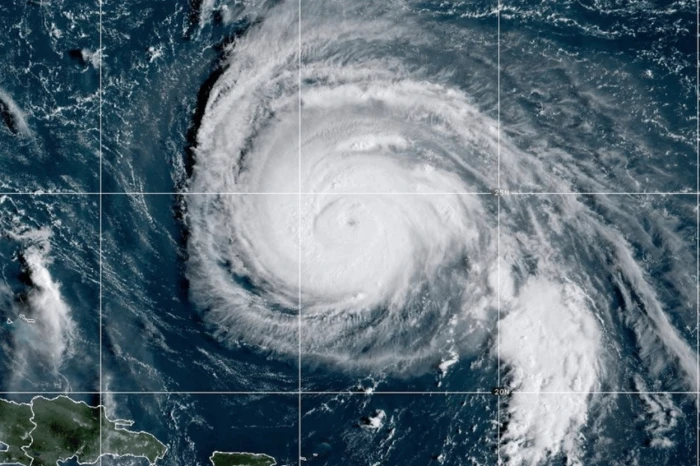
Tropical Storm Imelda formed Sunday and is expected to become a hurricane on a forecast track that could take it away from the U.S. East Coast early this week. The storm was causing disruption in the Bahamas and Cuba on Sunday, and a tropical storm watch was posted in parts of Florida.

Meanwhile, Hurricane Humberto weakened very slightly but remained a strong Category 4 storm in the Atlantic, threatening Bermuda.

At about 2 p.m. EDT, Imelda was located about 95 miles (152.89 kilometers) west-northwest of the Central Bahamas and about 370 miles (595.46 kilometers) southeast of Cape Canaveral in Brevard County, Florida, the National Hurricane Center in Miami said. It was headed north at 7 mph (11 kph) and its maximum sustained winds were 40 mph (65 kph).

The center said the system was expected to move across the central and northwestern Bahamas Sunday and Sunday night and turn east-northeastward, away from the southeastern U.S., by the middle of the week.

A tropical storm watch was in effect for the east coast of Florida from the Palm Beach-Martin County Line to the Flagler-Volusia County Line, the center said, urging residents along the southeast U.S. coast to monitor the system. A tropical storm watch means tropical storm conditions are possible within 48 hours.

South Carolina Gov. Henry McMaster urged people to monitor the weather closely and stay alert, although coastal Georgetown County said it was returning to normal operations with an improved forecast for the area. And in North Carolina, Gov. Josh Stein declared a state of emergency before Tropical Storm Imelda formed.

“What we learn every time is we never know where they are going to go,” McMaster said during a news conference to discuss the storm. “This storm is deadly serious. Not just serious. Deadly serious.”

The storm could bring high winds and heavy rain, which could produce flooding, he said. The state was prepositioning search and rescue crews over the weekend.

Humberto weakened slightly on Sunday but still had maximum powerful sustained winds of 150 mph (240 kph), according to the hurricane center, making it a Category 4 hurricane. It was located about 535 miles (861 kilometers) south of Bermuda and was moving west-northwest at 13 mph (20 kph).

A tropical storm watch could be required in Bermuda later in the day, forecasters said, and swells could reach the U.S. East Coast on Monday.

Alison Dagostino moved to Myrtle Beach, South Carolina, six years ago with her four children and husband. She experienced her first hurricane within days of moving into the area.

She said that other than basic storm preparation — like buying batteries and storm-proofing windows — people in the area were living life as normal on Sunday.

“People are still out and about. People are still walking on the beach,” Dagostino said, adding that school and sporting events haven’t been canceled.

Imelda was threatening parts of Cuba and the Bahamas with heavy rainfall and flash flooding, with portions of the Bahamas under a tropical storm warning.

The Bahamas’ Department of Meteorology said moderate to heavy rains would continue over the northwest and central islands, which include Nassau, Andros Island, San Salvador and Long Island. Rainfall could reach between 6 inches (15 centimeters) and 12 inches (30 centimeters), with some isolated areas seeing up to 10 inches (25 centimeters).

“Residents in low-lying areas should take actions to mitigate property damages due to flooding,” the department said in a statement.

Sunday’s storm surge was expected to raise water levels up to 3 feet (.9 meters) above normal tide along the coasts of the Abaco Islands, the north and east coasts of Grand Bahama, and all nearby cays.

The National Weather Service in Puerto Rico warned inexperienced mariners and those operating smaller boats against navigating the hazardous waters on Sunday, with swells from Humberto forecast to reach between 7 feet (2 meters) and 8 feet (2.4 meters) in Atlantic waters.

In the Dominican Republic, where weather conditions on Friday forced the evacuation of hundreds of people, meteorologists on Sunday expected moderate showers, thunderstorms and gusts in some inland areas. The Dominican Institute of Meteorology said in a statement that other areas including the capital, Santo Domingo, would only see scattered showers.

The agency added that while Humberto was not threatening the country Sunday, fragile and small- to medium-sized vessels should only “operate near the coastal perimeter, avoiding venturing out to sea due to abnormal waves.”

___

Republished with permission of The Associated Press.


Post Views: 0


Source link

Continue Reading

Politics

Florida Council of 100 recommends major upgrades in state severe weather prep

Published

on


A new report on Florida’s resilience to natural disasters concludes there are key challenges ahead for the state, as well as opportunities to modernize infrastructure to help streamline recovery after an emergency.

The Florida Council of 100 (FC 100), made up of of business leaders who analyze some of the biggest challenges facing the state, published a report called “Resilience Reimagined: Modern Policy and Innovation for a Stronger Florida.”

The document analyzes how long-term economic competitiveness can expand in the face of severe weather endemic to the state. The report concludes that even as hurricanes, flooding and other severe weather events are part of Florida living, resilience can become an economic component as well as an environmental effort.

“Florida’s future will be defined by how well we prepare for and respond to storms and flooding,” said George S. LeMieux, Chair of FC 100. “Resilience is not just about repairing damage. It is about protecting our economy, safeguarding communities, and ensuring Florida remains one of the most competitive places in the world to live and do business.”

Some of the key findings in the report, published Tuesday, include warnings that failure to invest in storm preparedness will result in lost economic activity, business closings and disruption to the job market, while insurance costs could rise. Long-term investments in recovery plans can reduce losses and accelerate recovery after major weather events.

Beyond outlining the issues that could damage Florida’s business sector, the FC 100 report provides several recommendations, including:

— Streamlining post-disaster recovery and permitting to reduce delays and uncertainty

— Hardening infrastructure and utilities to limit outages and economic disruption

— Modernizing Florida’s building code to reflect evolving flood, wind, and energy risks

— Incentivizing resilience investments by homeowners and communities

— Supporting resilience innovation and commercialization to grow new industries and jobs

“The choices we make now will shape Florida’s quality of life and economic strength for generations,” said Michael Simas, President and CEO of the FC 100. “This report offers a clear path forward and an opportunity for Florida to define itself not by its exposure to storms, but by its ability to thrive despite them.”

The FC 100 has more than 200 companies in its membership that represent more than 1.3 million workers in the state.


Source link

Continue Reading

Politics

House panel OKs bill to restore the Ocklawaha River

Published

on


A House subcommittee unanimously approved a bill to restore the Ocklawaha River that drew strong praise from environmentalists and fierce opposition from local officials in Putnam County.

The mixed public feedback on HB 981 makes it clear that the legislation to remove the river’s dam remains controversial after Gov. Ron DeSantis vetoed $6.25 million in funding for Ocklawaha River restoration during the 2025 Session.

“It’s a local decision. It’s a local issue. It needs to stay local,” said Putnam County Commissioner Larry Harvey, who voiced concerns about West Putnam lakes drying up. 

“Putnam County wasn’t considered locally. We’ve never been asked about this. We don’t want this.”

Rep. Wyman Duggan, a Jacksonville Republican, defended his bill and argued the restoration project carries a greater importance since the Ocklawaha is the primary tributary running into the St. Johns River.

“This is, at a minimum, a regional issue. The Ocklawaha River touches 12 counties, but I submit it’s a state level issue. The St. Johns River is the longest river in the state and it’s the most significant,” Duggan said.

Lawmakers on the House Natural Resources and Disasters Subcommittee were not swayed by the bill’s opponents.

Behind the Everglades and the Kissimmee River Basin restoration projects, the Ocklawaha River will become “the third-greatest restoration in the state of Florida’s history,” said Rep. Jim Mooney Jr., an Islamorada Republican.

Rep. Lindsay Cross called the bill “a big lift.”

“I will be a strong supporter of it, and hope we can get this across the finish line this year,” said Cross, a St. Petersburg Democrat.

Duggan added that the Department of Environmental Protection (DEP) will oversee the river restoration and will take into account local residents’ concerns with water level impacts.

Duggan’s bill would require the DEP to develop a plan to restore the Ocklawaha River by Jan. 1, 2027, then finish the work by Dec. 31, 2032.

What made the bill necessary, Duggan said, was the U.S. Army Corps of Engineers designating the dam as a high hazard.

Living beyond its 50-year life span, the 58-year-old Rodman Dam doesn’t perform any flood control or generate electricity, Duggan said. 

“There is no alarm system in place to warn the downstream communities in the event of a dam failure,” Duggan said. “It’s not even clear that if we try to reconstruct the dam, bring it up to code, that the Army Corps of Engineers would permit that effort.”

The dam is also known as the Kirkpatrick Dam.

Restoring the Ocklawaha would put 21 billion gallons of water into the St. Johns River, which environmentalists said will improve the water and help the fisheries and the manatees, Duggan explained.

Environmentalists also said removing the dam would bring back 20 lost springs.

Another major component of Duggan’s bill is to beef up economic development in Clay, Marion, Putnam and St. Johns counties to promote water and nature activities from swimming to fishing and wildlife viewing. The bill would create the Northeast Florida River and Springs Recreation and Economic Development Council and create a grant program to fund the council’s outdoor recreation plan.

“The bill shows people what they gain and not what they lose,” said Chip Laibl, Vice President of the Great Florida Riverway Trust. “It’s time to quit kicking this issue down the road for a vocal minority and consider the safety, economic needs, and recreation facilities for all of Putnam County and beyond.”

Laibl argued that HB 981 will make “Putnam County the outdoor recreation hub of the state.”


Source link

Continue Reading

Politics

Consumer protections for Hispanics, veterans, seniors, and retirees are smart policy

Published

on


Hispanic Floridians have played a pivotal role in building our state, and today their impact is stronger than ever. Increasing numbers of Hispanic families, business owners, seniors, retirees, and veterans call Florida home.

As our community grows, public policy must keep pace in protecting those most at risk.

Florida has a longstanding record of defending seniors, veterans, and retirees — from expanded homestead exemptions to laws guarding against elder abuse and financial exploitation. HB 427 and SB 266 build on that tradition by addressing a pressing problem: predatory public adjuster contracts targeting vulnerable residents after home damage.

When fires, plumbing disasters, or storms strike, seniors, retirees, and veterans often face pressure to sign complicated contracts quickly — sometimes while recovering from hospitalization or other emergencies.

Many Hispanic seniors face an additional hurdle: English is not their primary language, yet contracts are not required to be available in Spanish or other easy-to-understand formats.

Too often, elderly Hispanic residents are navigating these high-stakes decisions alone. Adult children may live far away and cannot assist immediately. Contracts must be reviewed and signed quickly, leaving residents exposed to confusing terms or high-pressure tactics.

HB 427 and SB 266 provide common sense relief. They allow seniors, retirees, and veterans to cancel public adjuster agreements — without penalty — if they are unable to fully understand the contract. This safeguard is especially important for Spanish-speaking residents and others facing language or comprehension challenges.

Ethical public adjusters have nothing to worry about. The bills target exploitative practices, not responsible business operations. They strike a balance: protecting Floridians while leaving legitimate professionals free to do their work.

At its core, this legislation is about fairness, clarity, and respect. It ensures that those who have contributed to Florida — Hispanics, seniors, retirees, and veterans alike — are not taken advantage of in moments of vulnerability.

Florida can once again demonstrate leadership in consumer protection. HB 427 and SB 266 offer practical, balanced reforms that reflect our values and protect those who need it most.

On behalf of Hispanic seniors, and all of Florida’s retirees and veterans, I urge lawmakers to act in support of these commonsense protections.

___

Julio A. Fuentes is president and CEO of the Florida State Hispanic Chamber of Commerce (FSHCC).


Source link

Continue Reading

Trending

Copyright © Miami Select.