Connect with us

Business

Tricolor paid CEO $30 million in year before alleged fraud

Published

on


Tricolor Holdings founder Daniel Chu collected nearly $30 million in compensation in the year leading up to the subprime auto lender’s collapse amid alleged fraud, according to a lawsuit filed by the trustee overseeing the company’s liquidation.

Chu “defrauded Tricolor by using corporate funds to pay for lavish personal expenses and by forcing the company into paying him tens of millions of dollars in bonuses (on top of his executive salary),” trustee Anne Burns said in a court filing last week. That compensation was “premised on his ability to deliver exceptional financial results — results that were the product of the fraud.”

The payments helped finance what the trustee described as an extravagant lifestyle, including luxury homes in Dallas, Beverly Hills and Miami worth about $38 million combined, as well as private-jet travel and European vacations.

“Many of the allegations that have been made against Mr. Chu in recent days are inaccurate and seriously misguided, as will be clear when the real facts come out,” Matthew Schwartz, an attorney for Chu, said in a statement. “We look forward to a full and fair hearing in the courtroom.” 

US prosecutors charged Chu and the company’s former chief operating officer last week with running Tricolor through “systemic fraud.” Two other former executives have pleaded guilty to fraud charges.

Read More: Tricolor’s Excel Guy Failed to Fix Numbers in Alleged Fraud

Chu charged millions of dollars to his business American Express card over the years, the trustee alleged, including for skin revitalization treatment, vitamin infusions and dental work. He also frequented high-end restaurants including Nobu in New York and Carbone in Dallas, according to the filing.

He continued using corporate funds to pay for personal expenses even after it was clear to him the company was in financial distress, the trustee alleged. For instance, as late as August 2025 Chu charged $18,000 to his American Express card to pay for membership to Core Club, a social club in New York, according to the suit. 

In emails attached to the suit, Chu told an auditor and board members in 2023 that he was experiencing “over the top” stress, when questions arose over his personal spending. “So with respect to expenses for my family to accompany me on travel, household expenses like a nanny, or IV treatments, this is some of my context,” Chu wrote in one email.

“I do feel like I’ve exercised good judgment on these expenses,” Chu said in another email cited in the suit.

Compensation Fight

Chu pitched the board on compensation increases for years, citing the company’s revenue and sales growth since 2018, the trustee alleged.

In 2022, a consultancy retained by Tricolor’s board found Chu’s compensation to be in line with the average for private US companies. But Chu wanted to be paid on par with the 10th percentile of public companies, even though Tricolor wasn’t one.

The board pushed back, according to emails cited in the lawsuit. Chu called the compensation committee process “grossly mismanaged” and referred to one board member as a “top imbecile” for challenging the pay package, filings show.

Chu used his role as the sole manager of Tricolor’s majority shareholder to remove three board members that opposed his compensation requests, the trustee alleged.

Days after the board approved his compensation in February, Chu agreed to buy a ski chalet in Aspen, Colorado, for $25 million, according to the lawsuit. The deal collapsed after Tricolor filed to liquidate, with Chu forfeiting a $1.75 million deposit.

(Updates with detail on Core Club in seventh paragraph.)


Source link

Continue Reading

Business

Most Americans decide 2025 isn’t the year for charity, poll says

Published

on


Most Americans aren’t making end-of-year charitable giving plans, according to the results of a new AP-NORC poll, despite the many fundraising appeals made by nonprofits that rely on donation surges in the calendar’s final month to reach budget targets.

The survey, which was conducted in early December by The Associated Press-NORC Center for Public Affairs Research, found that about half of U.S. adults say they’ve already made their charitable contributions for 2025. Just 18% say they’ve donated and will donate again before the year is over. Only 6% report they haven’t given yet but will do so by December’s end. The rest, 30%, haven’t donated and don’t plan to.

Everyday donors faced competing priorities this year. President Donald Trump’s social services grant cutssevere foreign aid rollbacks and November SNAP benefits freeze — plus natural disasters like Los Angeles’ historically destructive wildfires — left no shortage of urgent causes in need of heightened support. But weaker income gains and steep price inflation meant lower-income households had less money to redistribute. Other surveys have also found a yearslong decline in the number of individuals who give.

Trump’s tax and spending legislation offered an extra incentive to give more starting in January; most filers will see new charitable deductions next tax year of up to $1,000 for individuals and $2,000 for married couples. Some itemizers may make more gifts this year, though, ahead of a new floor for donation write-offs that takes effect in 2026.

December still serves as a “very important deadline” for donors, according to Dianne Chipps Bailey, managing director of Bank of America’s Philanthropic Solutions division. She cited estimates from the National Philanthropic Trust that nearly one-third of annual giving happens in the final month.

“December 31 does provide a target to make sure that they’ve given what they intended to give before the year is over,” Bailey said.

Few donate on GivingTuesday

Perhaps no day is more consequential for fundraisers than GivingTuesday. The well-known celebration of generosity sees many nonprofits leverage the attention to solicit donations on the Tuesday after Thanksgiving. Americans donated an estimated $4 billion to nonprofits this most recent GivingTuesday.

But Americans were much more likely to make a Black Friday purchase than a GivingTuesday gift this year. Just under half say they bought something for Black Friday, according to the poll, compared to about 1 in 10 who say they donated to a charity for GivingTuesday.

“Black Friday gets the lion’s share of things,” said Oakley Graham, a 32-year-old from Missouri. “And then you’ve got GivingTuesday a couple days later. Most people have probably spent all their spending money at that point.”

Graham said his family has “definitely tightened the financial belt” in recent years. He and his wife are dealing with student loan debts now that the Trump administration suspended their repayment plan. Their two young children are always growing out of their clothes. It’s good if there’s anything left for savings.

He still tries to help out his neighbors — from handiwork to Salvation Army clothing donations.

“Not that I’m not willing to give here and there,” he said. “But it seems like it’s pretty tough to find the extra funds.”

Checkout charity proves more popular

Another avenue for nudging Americans to give is more widely used, even if individual donations are small. The AP-NORC poll found that about 4 in 10 U.S. adults say they donated to a charity when checking out at a store this year.

Among them is Graham. As an outdoorsy person who enjoys hunting and fishing when he can, he said he is “always susceptible to giving for conservation” — likely rounding up once or twice at Bass Pro Shops for that reason.

“With the finances, I don’t do a lot of buying these days. But a couple cents here or there is like — I can do that,” he said. “It doesn’t sound like much. But I know if everybody did it would make a difference.”

The poll found that older adults — those over 60 — are more likely than Americans overall to donate at store checkouts.

One Texas architect’s unusual process for year-end donations

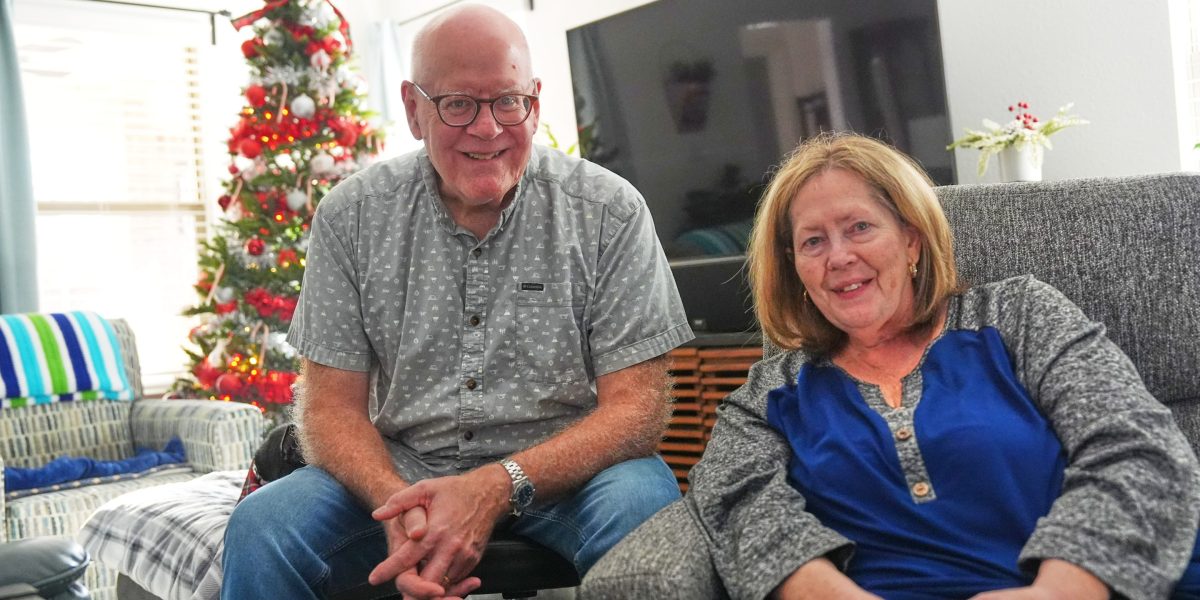
About one-quarter of Americans plan to donate in the last weeks of the year, and Chuck Dietrick is one of them. The 69-year-old architect applies what he calls a “shotgun approach” as the year comes to a close.

He and his wife give monthly to Valley Hope, a nonprofit addiction services provider where their son did inpatient rehab. And then there are eight or so organizations that they support with end-of-the-year gifts.

“We’re doing our own thing,” he said. “I don’t do Black Friday or Cyber Monday, either … So, I don’t do the GivingTuesday thing.”

Dietrick estimates their household donated somewhere between $501 and $2,500. The Dallas-Fort Worth area couple mostly contributes to organizations that touched their lives or the lives of their friends.

There’s the Florida hospice that Dietrick said did a “super job” caring for his mother. He has relatives and friends who served in the military, so he also gives to the Disabled American Veterans and the Wounded Warrior Project.

“I would rather give a smaller amount of money to a variety of institutions that I care about rather than giving a big chunk of money to one,” he explained.

Giving plans went unaffected by federal funding cuts or the shutdown

Most 2025 donors say the amount they gave wasn’t affected much by this year’s federal funding cuts or the government shutdown, according to the AP-NORC poll, although about 3 in 10 say those situations did impact the charities they chose to support.

The survey suggests that, while private donors mobilized millions to fill funding gaps and hunger relief groups saw donation totals spike last month, many Americans did not respond with their pocketbooks to the nonprofit sector’s newfound pressures this year.

The cuts did compel Jeannine Disviscour to give more.

“I did not donate on GivingTuesday,” the 63-year-old Baltimore teacher said. “But I did donate that week because I was feeling the need to support organizations that I felt might not continue to get the support they needed to get to be successful.”

She estimates her household gave between $501 and $2,500. That included support for National Public Radio. Congress eliminated $1.1 billion allocated to public broadcasting this summer, leaving hundreds of NPR stations with some sort of budget hole. She said she wanted to ensure journalism reached news deserts where residents have few media options.

Living in an area that is home to many refugees, Disviscour also donated her time and money to the Asylee Women Enterprise. She said the local nonprofit helps asylum-seekers and other forced migrants find food, shelter, clothing, transportation and language classes.

“There is a gap in funding and there’s more need than ever,” she said. “And I wanted to step up. And it’s in my community.”

___

Sanders reported from Washington.

___

Associated Press coverage of philanthropy and nonprofits receives support through the AP’s collaboration with The Conversation US, with funding from Lilly Endowment Inc. The AP is solely responsible for this content. For all of AP’s philanthropy coverage, visit https://apnews.com/hub/philanthropy.

___

The AP-NORC poll of 1,146 adults was conducted Dec. 4-8 using a sample drawn from NORC’s probability-based AmeriSpeak Panel, which is designed to be representative of the U.S. population. The margin of sampling error for adults overall is plus or minus 4 percentage points.


Source link

Continue Reading

Business

Tesla faces NHTSA probe over Model 3 emergency door handles

Published

on


Tesla Inc.’s door handles are facing renewed scrutiny in the US after federal auto safety regulators opened a probe into the emergency releases in certain Model 3 vehicles.

The National Highway Traffic Safety Administration said it’s evaluating claims that the mechanical door release “is hidden, unlabeled, and not intuitive to locate during an emergency,” according to a filing on the agency’s website. The move stems from a petition filed by Kevin Clouse, a Tesla owner in Georgia who says he was trapped in his vehicle in 2023 and requested a defect investigation. NHTSA said it hasn’t decided whether to grant or deny the petition.

Read More: Tesla Doors Can Trap People Desperate to Escape

The probe covers an estimated 179,071 Model 3 sedans from the 2022 model year.

Tesla and NHTSA didn’t immediately respond to requests for comment.

The move expands on the federal examination of Tesla door problems following a monthslong investigation into the issue by Bloomberg, which uncovered a series of incidents in which people were severely injured or died after becoming trapped in their Teslas. In September, NHTSA opened an investigation into whether the doors are defective in certain Model Y SUVs amid reports of children stuck in vehicles when the 12-volt battery dies. The Model 3 and Model Y are by far Tesla’s top-selling vehicles.

The automaker was a pioneer of electrically powered handles, which can stop functioning without warning, particularly after a crash. A Bloomberg analysis this week found at least 15 deaths in a dozen incidents over the past decade in which occupants or rescuers were unable to open the doors of a Tesla that had crashed and caught fire. 

Bloomberg separately reported that potential safety issues with electric handles were raised with Chief Executive Officer Elon Musk during the development of the Model 3, and that he insisted on the futuristic design, which would include manual releases to mitigate power-loss problems.

Read More: Elon Musk Demanded Tesla’s Electric Doors Despite Safety Worries

Clouse filed a petition last month over a 2023 incident in which he says he had to kick his way out of his burning Model 3 when the doors wouldn’t open. Bloomberg previously cited details of Clouse’s case.

“I was unaware of the location of the hidden mechanical emergency door release because it is not visibly labeled, not explained upon delivery, and not intuitive in an emergency,” he said in a complaint filed with NHTSA. “I was forced to climb to the back seat and break the rear passenger window with my legs to escape while the interior was burning.”

Tesla shares fell 0.7% as of 11:41 a.m. Wednesday in New York.

This story was originally featured on Fortune.com


Source link

Continue Reading

Business

Trump administration bars Europeans from U.S. for pressuring tech firms to ‘censor’ American speech

Published

on


The Trump administration has barred five Europeans from entering the U.S., accusing them of pressuring American tech companies to censor or suppress American speech online. The individuals—Thierry Breton, Imran Ahmed, Josephine Ballon, Anna-Lena von Hodenberg, and Clare Melford—are all leading figures in European efforts to regulate harmful or illegal content on social media platforms.

The five were barred under a May policy targeting foreign nationals deemed responsible for suppressing speech protected under U.S. law.

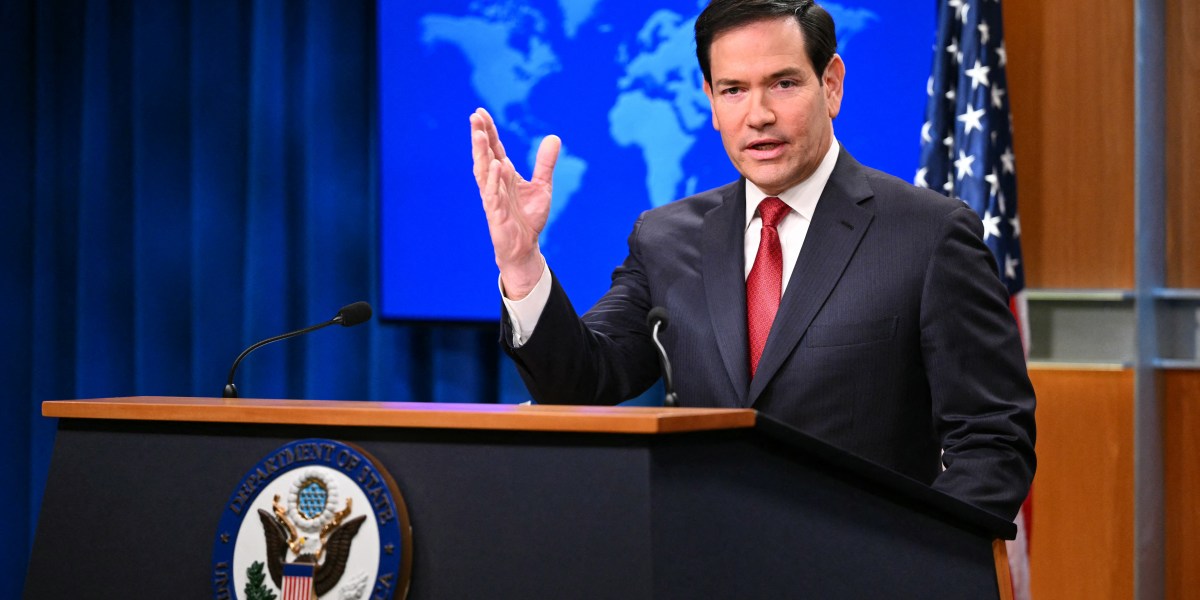
“For far too long, ideologues in Europe have led organized efforts to coerce American platforms to punish American viewpoints they oppose,” Secretary of State Marco Rubio posted on X. “The Trump administration will no longer tolerate these egregious acts of extraterritorial censorship.

“We stand ready and willing to expand this list if others do not reverse course,” he added.

The EU’s Digital Services Act, which came into force across the European Union in 2023, appears to be a significant flash point for tensions. In a series of social media posts, Sarah Rogers, the U.S. undersecretary of state for public diplomacy, referred to former European Commissioner for Internal Market Thierry Breton as the “mastermind” of the Digital Services Act. 

The act requires that large online platforms such as Meta’s Facebook and Elon Musk’s X take greater responsibility for content posted on their services, mandating that companies remove illegal content such as hate speech and child sexual abuse imagery. It also prohibits platforms from targeting users with advertising based on sensitive personal data including race, religion, gender, or age, and bans targeting children with ads. And it requires platforms to be more transparent about their content moderation decisions and algorithmic recommendations. 

Critics—particularly in the U.S. tech industry—have long claimed the act gives governments too much power to define what constitutes illegal speech and forces American companies to comply with European standards.

Rogers also accused Breton of using the act to “threaten” Musk before an interview with President Trump. In response to the visa ban, Breton shared a message on X, stating: “To our American friends: Censorship isn’t where you think it is.”

Also banned were Von Hodenberg and Ballon of HateAid, a German organization that the State Department said helped enforce the DSA. In a joint statement shared with Fortune, they said: “We are not surprised. It is an act of repression by a government that is increasingly disregarding the rule of law and trying to silence its critics by any means necessary. This marks a new escalation: The U.S. government is clearly questioning European sovereignty.

“We will not be intimidated by a government that uses accusations of censorship to silence those who stand up for human rights and freedom of expression,” they added.

Melford, who leads the U.K.-based Global Disinformation Index (GDI), along with Ahmed, CEO of the Center for Countering Digital Hate, a nonprofit that works to counter hate and misinformation online, were similarly handed bans.

A GDI spokesperson told Fortune: “The visa sanctions announced today are an authoritarian attack on free speech and an egregious act of government censorship … GDI exists so that the public can understand and evaluate the information they find online. We fight speech with more speech. If only the federal government were brave enough to do the same.”

The move has also sparked a diplomatic backlash across Europe. German Foreign Minister Johann Wadephul said on X that the sanctions were “not acceptable.” French Foreign Minister Jean-Noël Barrot condemned the visa restrictions and defended the DSA, stating that it ensures “what is illegal offline is also illegal online.”

Emmanuel Macron, the president of France, said in a post on X that “France condemns the visa restriction measures taken by the United States against Thierry Breton and four other European figures.” He called the bans “intimidation and coercion aimed at undermining European digital sovereignty.”

The European Commission said in a statement that it had requested “clarifications” from the U.S. and warned: “If needed, we will respond swiftly and decisively to defend our regulatory autonomy against unjustified measures.”

Representatives for Breton and Ahmed did not immediately respond to Fortune’s request for comment.


Source link

Continue Reading

Trending

Copyright © Miami Select.