
Politics
Trade tensions appear to have cooled after talks between U.S. and China, setting up a Trump-Xi meeting

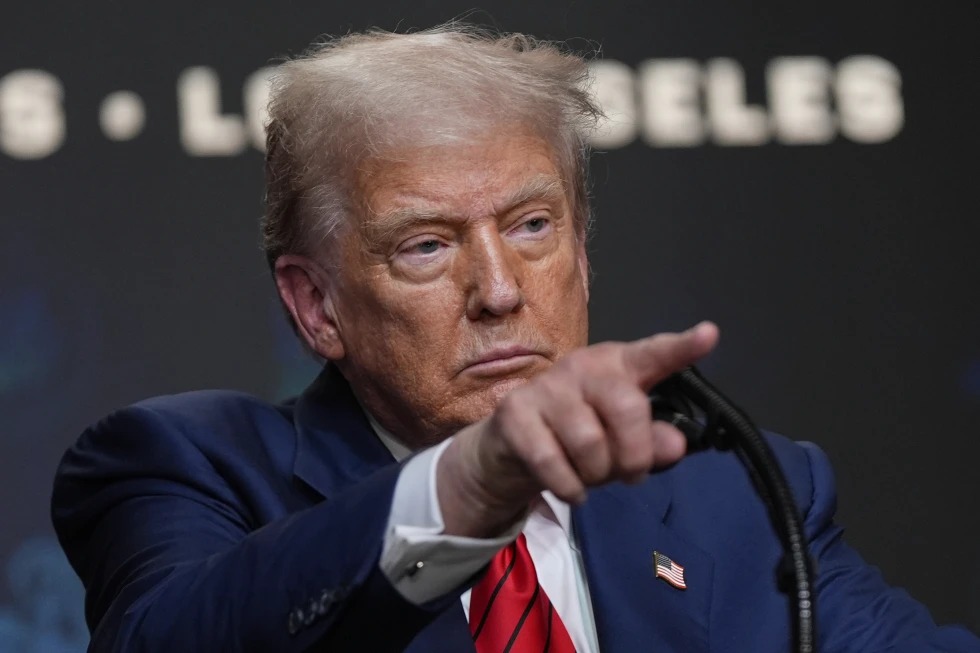
Trade tensions between the United States and China appeared to cool on Sunday ahead of a meeting between President Donald Trump and Chinese leader Xi Jinping, with the Chinese government suggesting that a mutual understanding had been reached between the world’s two largest economies.
The talks followed China placing limits on the exporting of rare earth elements needed for advanced technologies and Trump’s threat of an additional 100% tariffs on Chinese goods. The conflict has been poised to weaken economic growth worldwide.
China’s top trade negotiator, Li Chenggang, told reporters that the two sides had reached a “preliminary consensus” on areas of dispute and would seek to further stabilize the relationship. Trump also expressed confidence that an agreement was at hand.
“They want to make a deal and we want to make a deal,” he said. Trump reiterated his plan to visit China in the future and suggested that Xi could come to Washington or Mar-a-Lago, his private club in Florida.
The announcement came at the annual summit of the Association of Southeast Asian Nations, hosted in Kuala Lumpur, with Trump seeking to burnish his reputation as an international dealmaker.
Yet the path to those deals has involved serious disruptions at home and abroad, with his tariff hikes scrambling the global economy and a U.S. government shutdown that has him feuding with Democrats.
At the summit, Thailand and Cambodia signed an expanded ceasefire agreement on Sunday during a ceremony attended by Trump, whose threats of economic pressure prodded the two nations to halt skirmishes along their disputed border earlier this year.
Thailand will release Cambodian prisoners and Cambodia will begin withdrawing heavy artillery as part of the first phase of the deal. Regional observers will monitor the situation to ensure fighting doesn’t restart.
“We did something that a lot of people said couldn’t be done,” Trump said. Cambodian Prime Minister Hun Manet called it a “historic day,” and Thai Prime Minister Anutin Charnvirakul said the agreement creates “the building blocks for a lasting peace.”
Trump touched down in the Malaysian capital shortly before 0200 GMT, where he performed his trademark campaign trail dance with local performers and waved an American flag in one hand and a Malaysian flag in the other. His trip will also include visits to Japan and South Korea and a planned meeting with Xi.

The president signed economic agreements with Cambodia, Thailand and Malaysia, some of them aimed at increasing trade involving critical minerals. The U.S. wants to rely less on China, which has limited exports of key components in technology manufacturing.
“It’s very important that we cooperate as willing partners with each other to ensure that we can have smooth supply chains, secure supply chains, for the quality of life, for our people and security,” said U.S. Trade Representative Jamieson Greer.
The president attended this summit only once during his first term, and Defense Secretary Pete Hegseth seemed unfamiliar with ASEAN during his confirmation hearing in January.
But this year’s event was a chance for Trump to reengage with a collection of nations that have a combined $3.8 trillion economy and 680 million people.
“The United States is with you 100%, and we intend to be a strong partner and friend for many generations to come,” Trump said. He described his counterparts as “spectacular leaders” and said, “everything you touch turns to gold.”
The summit also allowed Trump to play global peacemaker with Thailand and Cambodia, which have competing territorial claims that result in periodic violence along their border. Some of the worst modern fighting between the two countries took place over five days in July, killing dozens and displacing hundreds of thousands of people, some of the worst modern fighting between the two countries.
Trump threatened, at the time, to withhold trade agreements unless the fighting stopped in a display of economic leverage credited with spurring negotiations. A shaky truce has persisted since then.
“The fact that Trump was holding the tariff card was actually very, very significant,” said Ou Virak, president of Phnom Penh’s Future Forum think tank. “That’s probably the main reason, if not the only reason, but definitely the main reason why the two sides agreed immediately to the ceasefire.”
Now, he said, “there’s a ceremony for Trump to be in front of cameras” so he can be “seen as the champion that brings an end to wars and conflicts,” giving him ”more ammunition for his bid for Nobel Peace Prize.”
Trump has explicitly campaigned for the honor, continuously adding to a list of conflicts that he either helped resolve or claims to have ended.
Malaysian Prime Minister Anwar Ibrahim praised the agreement between Thailand and Cambodia during opening remarks at the summit, saying, “it reminds us that reconciliation is not concession, but an act of courage.”
Trump sat down with Brazilian President Luiz Inácio Lula da Silva in Kuala Lumpur, who was also attending the summit. There has been friction between the two leaders over the Brazilian prosecution of Jair Bolsonaro, the country’s former president, who has been close to Trump. Bolsonaro was convicted of attempting a coup in his country earlier this week.
During his meeting with Lula on Sunday, Trump said he could reduce tariffs on Brazil that he enacted in a push for leniency for Bolsonaro.
“I think we should be able to make some good deals for both countries,” he said.
While Trump was warming to Lula, he avoided Canadian Prime Minister Mark Carney. The president is angry with Canada because of a television advertisement protesting his trade policies, and on his way to the summit, announced on social media he would hike tariffs on Canada because of it.
Trump has expressed confidence about reaching deals during the rest of his trip, including with China. Fentanyl trafficking and soybean sales are among Trump’s priorities.
“I think we have a really good chance of making a very comprehensive deal,” Trump said.
It remains to be seen whether Trump’s dealmaking addresses longstanding issues or puts them off for another day.
U.S. Treasury Secretary Scott Bessent suggested Sunday that Washington and Beijing could step back from their confrontation instead of pushing forward with higher tariffs by America and export restrictions on rare earth elements by China.
When asked if the two countries could extend the trade truce from earlier this year, Bessent said: “I would say yes.” However, he emphasized that the final decision would be up to Trump.
One leader who was absent from the summit in Kuala Lumpur is Indian Prime Minister Narendra Modi. Although he was close with Trump during his first term, the relationship has been more tense lately. Trump caused irritation by boasting that he settled a recent conflict between India and Pakistan, and he has increased tariffs on India for its purchase of Russian oil.
___
Republished with permission of The Associated Press.
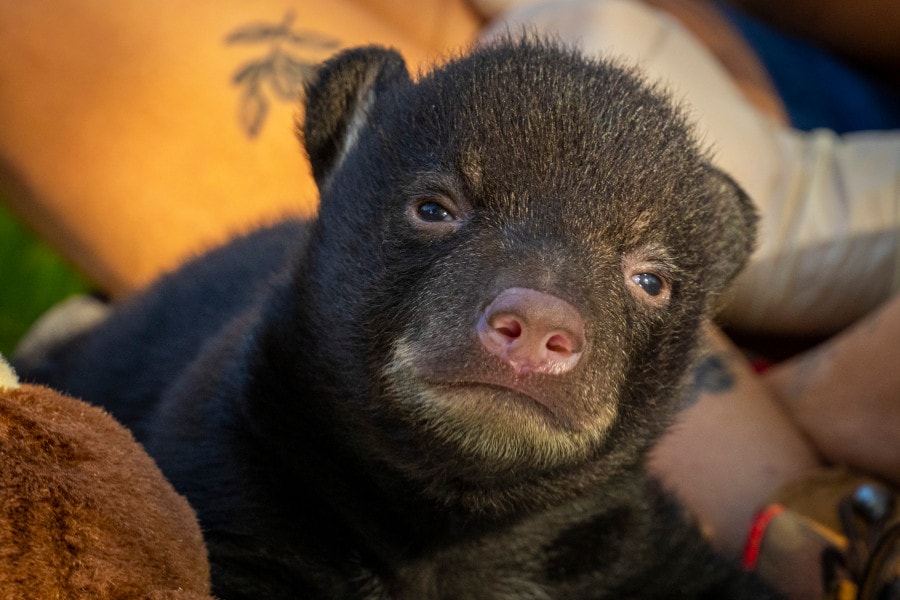
For the first time in a decade, hunters armed with rifles and crossbows are fanning out across Florida’s swamps and flatwoods to legally hunt the Florida black bear, over the vocal opposition of critics.
The state-sanctioned hunt began Saturday, after drawing more than 160,000 applications for a far more limited number of hunting permits, including from opponents who are trying to reduce the number of bears killed in this year’s hunt, the state’s first since 2015.
The Florida Fish and Wildlife Conservation Commission awarded 172 bear hunt permits by random lottery for this year’s season, allowing hunters to kill one bear each in areas where the population is deemed large enough. At least 43 of the permits went to opponents of the hunt who never intend to use them, according to the Florida chapter of the Sierra Club, which encouraged critics to apply in the hopes of saving bears.
The Florida black bear population is considered one of the state’s conservation success stories, having grown from just several hundred bears in the 1970s to an estimated more than 4,000 today.
The 172 people who were awarded a permit through a random lottery will be able to kill one bear each during the 2025 season, which runs from Dec. 6 to Dec. 28. The permits are specific to one of the state’s four designated bear hunting zones, each of which have a hunting quota set by state officials based on the bear population in each region.
In order to participate, hunters must hold a valid hunting license and a bear harvest permit, which costs $100 for residents and $300 for nonresidents, plus fees. Applications for the permits cost $5 each.
The regulated hunt will help incentivize maintaining healthy bear populations, and help fund the work that is needed, according to Mark Barton of the Florida chapter of Backcountry Hunters and Anglers, an advocacy group that supported the hunt.
Having an annual hunt will help guarantee funding to “keep moving conservation for bears forward,” Barton said.
According to state wildlife officials, the bear population has grown enough to support a regulated hunt and warrant population management. The state agency sees hunting as an effective tool that is used to manage wildlife populations around the world, and allows the state to monetize conservation efforts through permit and application fees.
“While we have enough suitable bear habitat to support our current bear population levels, if the four largest subpopulations continue to grow at current rates, we will not have enough habitat at some point in the future,” reads a bear hunting guide published by the state wildlife commission.

___
Republished with permission of the Associated Press.


Buccaneers host rival Saints in key NFC South game

BIG Ten and SEC may not expand in the next TV cycle

Tucker Wetmore’s Song ‘Proving Me Right’ is About Model Bryana Ferringer
-

 Politics8 years ago
Congress rolls out ‘Better Deal,’ new economic agenda
-
Entertainment8 years ago
New Season 8 Walking Dead trailer flashes forward in time
-
Politics8 years ago
Poll: Virginia governor’s race in dead heat
-
Entertainment8 years ago
The final 6 ‘Game of Thrones’ episodes might feel like a full season
-
Entertainment8 years ago
Meet Superman’s grandfather in new trailer for Krypton
-
Politics8 years ago
Illinois’ financial crisis could bring the state to a halt
-
Business8 years ago
6 Stunning new co-working spaces around the globe
-
Tech8 years ago
Hulu hires Google marketing veteran Kelly Campbell as CMO