They’re the internet’s latest obsession—beauty dupes that promise luxury looks for a fraction of the price. But behind the viral appeal lies a growing health concern.
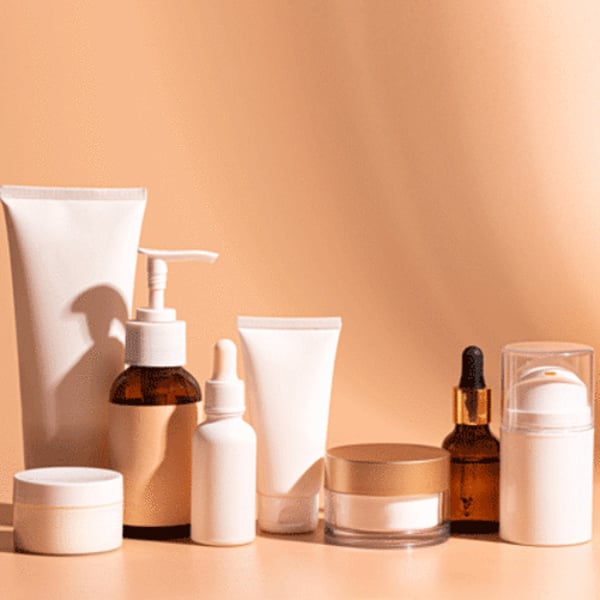
Dupe cosmetics see rising popularity among French consumers. – Shutterstock
Imitation skincare and makeup products, designed to mimic high-end brands, are now under scrutiny from toxicologists and regulators who warn they may contain hazardous—and sometimes banned—ingredients.
Online marketplaces like Temu, Shein and AliExpress are awash with low-cost cosmetics marketed as “dupes”—from foundations and sunscreens to serums and lipsticks. While not always counterfeits, these products often closely resemble high-end originals, and their ultra-low prices make them especially tempting—particularly for younger shoppers on TikTok.
The trend is spreading fast across Europe. On TikTok alone, hundreds of thousands of videos feature users showing off these bargain beauty buys. Influencers hype them as affordable alternatives that “deliver the same results.” But experts warn that’s where the similarities stop.
“This isn’t traditional counterfeiting—it’s more discreet and far harder to monitor,” says Xavier Guéant, head of legal affairs at France’s Federation of Beauty Companies (Febea), which issued a public warning on World Anti-Counterfeiting Day.
Guéant warns that many beauty dupes circulating online bypass all regulatory oversight and safety checks. “These products exist completely outside any safety framework,” he explains. “They’re untested, they ignore European standards—and that poses a real public health risk.”
A recent consumer survey by C-Ways for Febea revealed that nearly one in three French shoppers bought a beauty dupe in the past year—yet 96% had no idea those products could carry serious health risks.
Toxic ingredients and no real protection
Cheap cosmetics from unregulated sites can come with hidden dangers, warns Dr. Stéphane Pirnay, toxicologist and director at Expertox Laboratory. Many contain toxic chemicals—including substances banned under European law.
“In France, products go through strict safety testing,” he says. “But on these platforms, there are no rules. We’ve seen everything from heavy metals and phthalates to contaminants that should never touch human skin.”
Some tested products even contained traces of soil, stones, bird feathers—and in some cases, feces.
At the University of Nantes, pharmacy professor Laurence Coiffard has analyzed counterfeit and dupe sunscreens purchased online. Her findings are alarming: fake SPF 50+ creams provided no actual UV protection.
“These products offer zero sun protection,” Coiffard says. “That’s extremely dangerous, especially given the direct link between UV exposure and skin cancer.”
She identifies marketplaces such as AliExpress and Temu as major sources of both counterfeit and unregulated dupe products—calling them “a blind spot for consumer safety.”
A fast-growing threat and overwhelmed system
The issue isn’t marginal—and regulators are struggling to keep pace.
A February 2025 report by the European Consumer Organization (BEUC) found that over 80% of products tested from Temu failed to meet EU safety standards. In cosmetics, common violations included missing or inaccurate ingredient labels—leaving consumers unaware of what they’re applying to their skin.
“When something costs just a few euros, you can bet no one’s paying for proper testing,” says Guéant. “That’s the tradeoff—low price, no safety.”
With TikTok Shop now allowing users to purchase directly within the app, experts fear the spread of unregulated dupes could accelerate.
Febea is calling for stronger regulation, clearer legal definitions, and increased oversight to ensure product safety. Without intervention, they warn, the public health risk will continue to grow.
“It’s not about blaming consumers,” says Guéant. “It’s about protecting them—and making sure they have clear, honest information about what they’re buying.”
This article is an automatic translation. Click here to read the original article.
The demerger of Unilever‘s ice cream division, to be named ‘The Magnum Ice Cream Company,’ which had been delayed in recent months by the US government shutdown, will finally go ahead on Saturday, the British group announced.
Reuters
Unilever said in a statement on Friday that the admission of the new entity’s shares to listing and trading in Amsterdam, London, and New York, as well as the commencement of trading… is expected to take place on Monday, December 8.
The longest federal government shutdown in US history, from October 1 to November 12, fully or partially affected many parts of the federal government, including the securities regulator, after weeks without an agreement between Donald Trump‘s Republicans and the Democratic opposition.
Unilever, which had previously aimed to complete the demerger by mid-November, warned in October that the US securities regulator (SEC) was “not in a position to declare effective” the registration of the new company’s shares. However, the group said it was “determined to implement in 2025” the separation of a division that also includes the Ben & Jerry’s and Cornetto brands, and which will have its primary listing in Amsterdam.
“The registration statement” for the shares in the US “became effective on Thursday, December 4,” Unilever said in its statement. Known for Dove soaps, Axe deodorants and Knorr soups, the group reported a slight decline in third-quarter sales at the end of October, but beat market expectations.
Under pressure from investors, including the activist fund Trian of US billionaire Nelson Peltz, to improve performance, the group last year unveiled a strategic plan to focus on 30 power brands. It then announced the demerger of its ice cream division and, to boost margins, launched a cost-saving plan involving 7,500 job cuts, nearly 6% of the workforce. Unilever’s shares on the London Stock Exchange were steady on Friday shortly after the market opened, at 4,429 pence.
This article is an automatic translation. Click here to read the original article.
Burberry has named a new chief operating and supply chain officer as well as a new chief customer officer. They’re both key roles at the recovering luxury giant and both are being promoted from within.
Matteo Calonaci becomes chief operating and supply chain officer, moving from his role as senior vice-president of strategy and transformation at the firm.
In his new role, he’ll be oversee supply chain and planning, strategy and transformation, and data and analytics. He succeeds Klaus Bierbrauer, who’s currently Burberry supply chain and industrial officer. Bierbrauer will be leaving the company following its winter show and a transition period.
Matteo Calonaci – Burberry
Meanwhile, Johnattan Leon steps up as chief customer officer. He’s currently currently Burberry’s senior vice-president of commercial and chief of staff. In his new role he’ll be leading Burberry’s customer, client engagement, customer service and retail excellence teams, while also overseeing its digital, outlet and commercial operations.
Both Calonaci and Leon will join the executive committee, reporting to Company CEO Joshua Schulman.
JohnattanLeon – Burberry
Schulman said of the two execs that the appointments “reflect the exceptional talent and leadership we have at Burberry. Both Matteo and Johnattan have been instrumental in strengthening our focus on executional excellence and elevating our customer experience. Their deep understanding of our business, our people, and our customers gives me full confidence that their leadership will help drive [our strategy] Burberry Forward”.
Traditional and occasion wear designer Puneet Gupta has stepped into the world of fine jewellery with the launch of ‘Deco Luméaura,’ a collection designed to blend heritage and contemporary aesthetics while taking inspiration from the dramatic landscapes of Ladakh.
Hints of Ladakh’s heritage can be seen in this sculptural evening bag – Puneet Gupta
“For me, Deco Luméaura is an exploration of transformation- of material, of story, of self,” said Puneet Gupta in a press release. “True luxury isn’t perfect; it is intentional. Every piece is crafted to be lived with and passed on.”
The jewellery collection features cocktail rings, bangles, chokers, necklaces, and statement evening bags made in recycled brass and finished with 24 carat gold. The stones used have been kept natural to highlight their imperfect and unique forms and each piece in the collection has been hammered, polished, and engraved by hand.
An eclectic mix of jewels from the collection – Puneet Gupta
Designed to function as wearable art pieces, the colourful jewellery echoes the geometry of Art Deco while incorporating distinctly South Asian imagery such as camels, butterflies, and tassels. Gupta divides his time between his stores in Hyderabad and Delhi and aims to bring Indian artistry to a global audience while crafting a dialogue between designer and artisan.