Jim Williams – Senior Columnist – Capital Sports Network
The 2025 World Series arrives in Los Angeles knotted at one game apiece, with the Dodgers and Blue Jays trading haymakers in Toronto. Game 1 saw Toronto erupt for a nine-run sixth inning en route to an 11-4 victory, powered by Alejandro Kirk’s two-run blast and Addison Barger’s historic pinch-hit grand slam2. The Dodgers responded in Game 2 behind Yoshinobu Yamamoto’s complete-game gem, silencing Toronto’s bats in a 5-1 win4.
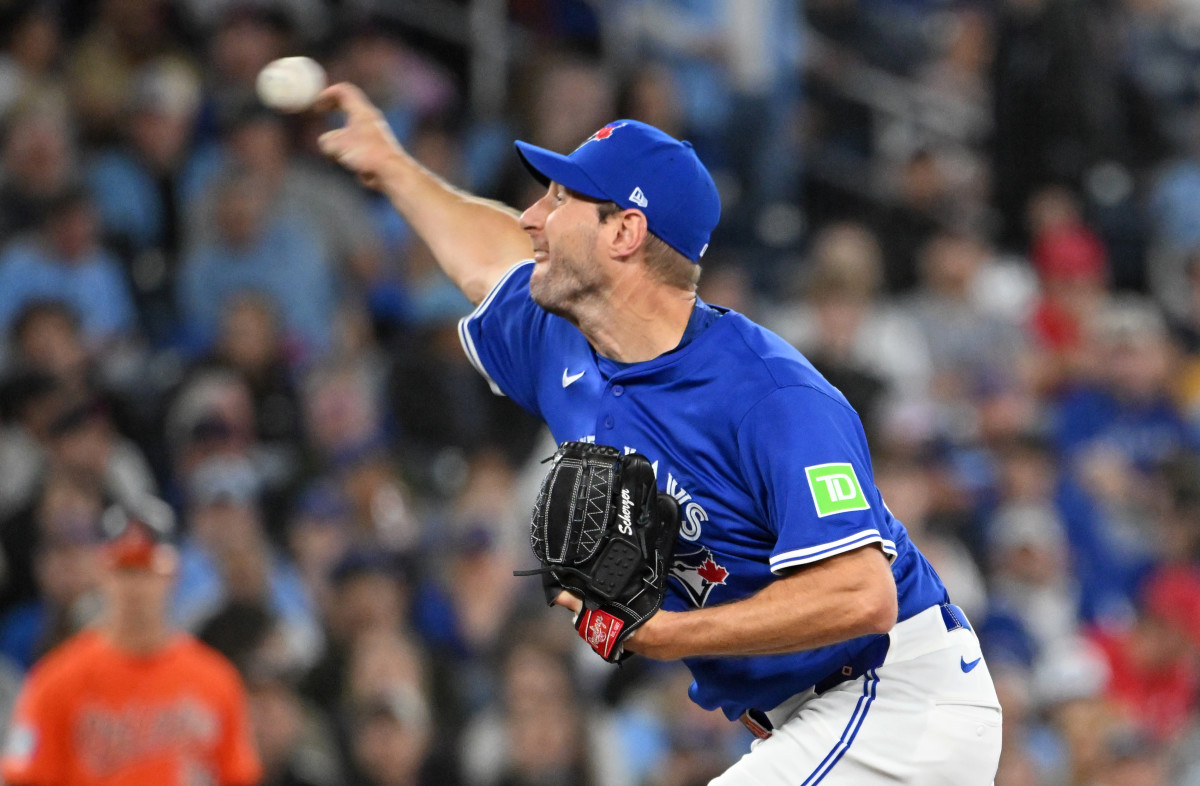
Now, under the Southern California sky, Game 3 features a marquee pitching duel: Max Scherzer, the three-time Cy Young winner making his fourth career World Series start for a fourth franchise, and Tyler Glasnow, the Dodgers’ flame-throwing ace who’s posted back-to-back eight-strikeout postseason outings6.
Scherzer, 41, is expected to deliver five solid innings, having gone 5.2 frames in the ALCS with a 3.18 postseason ERA7. Glasnow, meanwhile, faces a Toronto lineup that’s struck out just 12 times through two games—eight fewer than the Dodgers—suggesting he may need to adjust his approach.
Superstar Spotlight: Who’s Stepping Up?
Shohei Ohtani: Booed in Game 1, Ohtani responded with a clutch eighth-inning single in Game 2, helping extend the Dodgers’ lead.
Will Smith: Homered and drove in three runs across the first two games, including a 404-foot blast in Game 25.
Freddie Freeman: Delivered key hits in both games, including a first-inning RBI single in Game 1.
Alejandro Kirk: Two-run homer in Game 1 and a sacrifice fly in Game 2, driving in three total runs2.
Addison Barger: His Game 1 grand slam was the first pinch-hit slam in World Series history.
Dodger Stadium: A Historic Stage for a Pivotal Game
Game 3’s setting—Dodger Stadium, the third-oldest ballpark in Major League Baseball—is steeped in postseason lore. From Don Drysdale’s 1963 shutout to the record-setting 18-inning marathon in 2018, the stadium has hosted iconic October moments10. Monday night adds another chapter as the Dodgers seek to leverage home-field advantage in a series where Game 3 winners have gone on to win the title 68% of the time.
With the series tied and two aces on the mound, Game 3 could swing momentum decisively. For Scherzer, it’s legacy. For Glasnow, it’s ascension. For fans, it’s baseball at its most dramatic.
Does Major League Soccer Have a Vancouver Problem?
Does the MLS have a Vancouver problem? Increasingly, the answer appears to be yes.
The Vancouver Whitecaps ownership group’s lease with PayCo, a British Columbia provincial Crown corporation, expires at the end of December, and Major League Soccer Commissioner Don Garber is publicly pressuring PayCo to improve the terms. According to Garber, the Whitecaps’ owners are not getting anywhere near the stadium revenue needed to operate competitively or sustainably in today’s MLS landscape.
Garber did not mince words. “The club isn’t sustainable in a situation where they’re in a building which they have no control over, they have minimal participation with revenue. The biggest issue is the lack of schedule flexibility,” he said. The Whitecaps are missing out on essential revenue from concessions, and the team regularly loses access to needed dates because of other events. In 2024, an MLS playoff game that was slated to be played in Vancouver had to be moved entirely because the venue was already booked—forcing the Vancouver-Portland matchup to be relocated to Portland.
Ownership Pressures and Stadium Challenges
PayCo responded by insisting they want to keep Whitecaps games in the stadium, issuing a statement describing “productive discussions” with club ownership. But the story behind the scenes is more complicated. The Whitecaps ownership quietly put the franchise up for sale nearly a year ago, signaling deeper concerns about long-term stability. At the same time, the ownership group began speaking with Vancouver city officials about the possibility of constructing a soccer-specific stadium—something MLS has favored for decades.
BC Place, Vancouver’s existing stadium, seats 55,000 people and is 42 years old. It is currently undergoing yet another renovation, in part because the venue will host seven FIFA Men’s World Cup games in 2026. Since FIFA does not choose outdated or poorly maintained venues for its marquee events, the upgrades are substantial. A new “premium hospitality” area is expected to generate a fresh revenue stream, raising questions about whether improved financial terms might now be possible for the Whitecaps.
Garber’s Mission: Better Venues and Better Deals
A commissioner’s job is to advocate for stronger venues and better lease agreements for every franchise, and Garber has made that clear in Vancouver’s case. With MLS growing rapidly and club valuations climbing, teams need full access to stadium revenues to keep pace. Whether that happens at BC Place—or in a new stadium altogether—may determine the future of the Whitecaps in Vancouver.
ESPN Makes News with NFL deal along with new streaming app coning soon
The Tenure of Paul Tagliabue Defined by Stability, Strategy, and Big Money
Paul Tagliabue did what needed to be done to be a successful sports league commissioner. Tagliabue, who recently passed away at the age of 84, stepped into one of the most challenging roles in American sports when he replaced the legendary Pete Rozelle. Following Rozelle was no easy act, but Tagliabue understood the essential truth of the job: make the owners money, protect the league’s interests, and keep the machine running smoothly. By that metric—and many others—Tagliabue excelled.
One of the biggest turning points of his tenure came in 1993, when Rupert Murdoch’s FOX network was struggling to stay alive and searching desperately for a programming identity. Murdoch needed a major sports property to legitimize his young network, and he shocked the industry by outbidding CBS for the National Football Conference television package. Murdoch made a massive gamble. Tagliabue took the money, and the NFL walked away with a financial windfall. FOX, in turn, took over a series of CBS affiliates and reshaped American television, giving those stations shows like The Simpsons and Married With Children while CBS lost 60 Minutes in several major markets.
Labor Peace and Legal Battles Shaped the League’s Growth
Tagliabue’s relationship with the National Football League Players Association Executive Director Gene Upshaw also became a defining factor of his era. While the two never publicly detailed the mechanics of their working relationship, it was clear they had an understanding that benefitted both sides. The NFL enjoyed unprecedented labor peace, despite a series of complex legal rulings—most notably a court-ordered form of free agency—that changed the business structure of the league. Instead of chaos, the NFL kept moving forward, stabilizing its economic structure and keeping players and owners aligned enough to avoid major disruptions.
Expansion, Relocation, and an Evolving NFL Landscape
The 1990s also became an era of franchise movement and expansion under Tagliabue. In 1995, Al Davis took the Los Angeles Raiders franchise back to Oakland. That same year, Georgia Frontiere moved her Los Angeles Rams to St. Louis. Not long after, Art Modell uprooted the Cleveland Browns franchise for Baltimore in 1996. In 1997, Bud Adams relocated the Houston Oilers to Tennessee.
The moves triggered political battles as well. The city of Cleveland sued the NFL, ultimately forcing the league to promise a return to the city—leading to a 1999 expansion team. Earlier in the decade, the league added franchises in Charlotte and Jacksonville, continuing its push into new markets.
By 1999, the NFL sought a 32nd team and hoped desperately to reenter Los Angeles. With no stadium deal available, the league instead awarded the franchise to Houston.
A Commissioner Who Delivered
Tagliabue retired in 2006, leaving behind a league richer, more stable, and more nationally dominant than when he arrived. Above all else, he made the NFL owners money—and in their eyes, that made him a success.
Could MLS Be Opening the Door for a USL Challenge?
Did Major League Soccer owners give United Soccer League owners an opening to compete with them to be the top soccer league in America? It is possible, and for the first time in decades, the American professional soccer landscape may face a meaningful shake-up. The United Soccer League’s planned major league launch in 2028 positions it strategically: right in the middle of the summer months, when MLS owners have now decided they won’t be playing. With MLS choosing to align with global football and shift to a July-to-May calendar, the USL could gain a rare window to showcase its product without direct competition.
Under the new format, the 2027-28 regular season will begin in mid-to-late July 2027 and wrap in late May 2028 with playoffs and MLS Cup. The league will go dark between December and February due to weather realities. It is bitterly cold in places like Montréal, Toronto, Minneapolis, New York, New Jersey, Foxboro, Chester, Washington D.C., and Chicago. Fans and players alike probably have little interest in sitting or playing in sub-freezing conditions, and MLS knows this.
USL Sees a Strategic Opening—And Plans to Use It
The United Soccer League plans to go major league in 2028, and with a clean runway in late spring and early summer, USL leadership believes this is its best chance yet to capture national attention. Without MLS soaking up the summer sports spotlight, the USL can pitch itself as the top warm-weather soccer product in America. Markets such as Detroit, Pittsburgh and Sacramento appear likely to be part of the initial lineup, giving the league a foundation in soccer-hungry cities that MLS has not entered.
Meanwhile, MLS owners insist they will gain enormous benefits from the shift. MLS teams will finally be in sync with global transfer windows, allowing clubs to acquire and sell top talent during the crucial summer period. International tournaments will no longer interrupt the season. And holding the playoffs and MLS Cup in May should produce far better playing conditions in northern markets than the cold and rain of late fall.
The New Calendar Comes With Risks
Still, the timing comes with real competition. MLS playoffs in May will now go head-to-head with the Kentucky Derby, potentially the Indianapolis 500, the NBA and NHL playoffs, and of course Major League Baseball. That is a crowded sports month. Nothing is official yet, either—MLS owners must renegotiate and essentially rip up the collective bargaining agreement with the players to lock in the new schedule. A trade-off somewhere seems inevitable.
The coming years could redefine the hierarchy of American soccer. The question is whether MLS just gave the USL its long-awaited opening—or whether the shift will strengthen MLS instead.