Connect with us

Business

Top Univ. of Minn. grads are ‘as good, maybe better’ than Harvard’s best: former Goldman Sachs CEO

Published

on


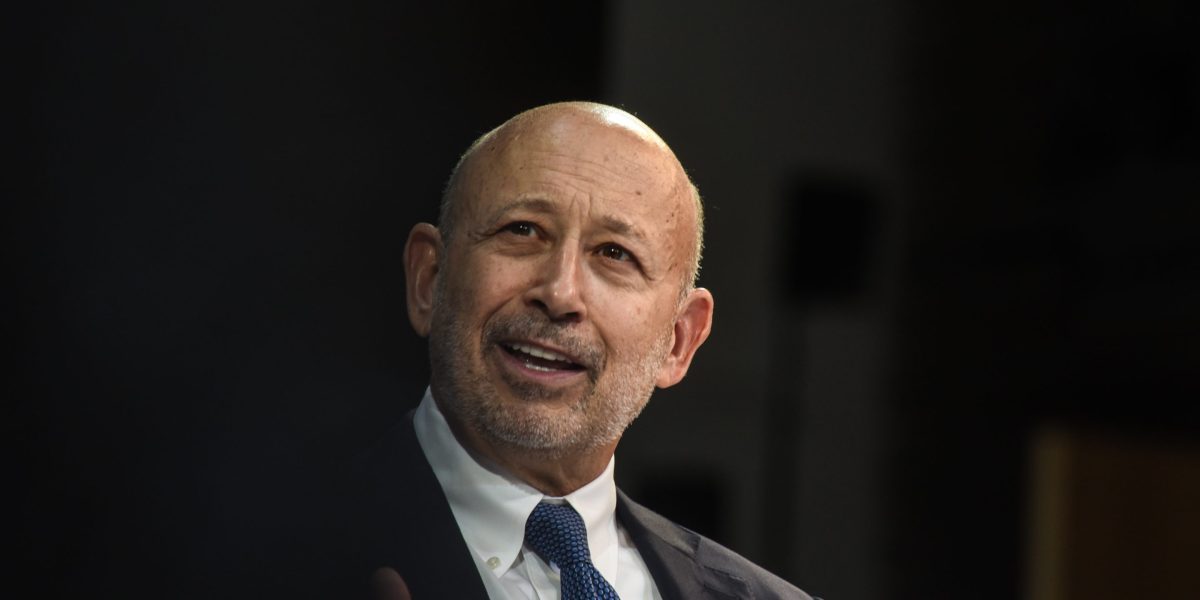
When Lloyd Blankfein was CEO of Goldman Sachs, thousands of newly minted graduates from top universities joined the ranks of the investment banking giant.

But despite being a Harvard alum himself, he wasn’t a snob about where someone went to school and recognized that superior talent can come from outside the Ivy League.

In an interview on the Big Shot podcast two weeks ago, Blankfein pointed out that his colleague Gary Cohn, Goldman’s former president and chief operating officer, attended American University, and current CEO David Solomon went to Hamilton College.

To be sure, the overall population of grads from elite schools should exceed their peers elsewhere, Blankfein conceded.

“The average is going to be higher at these great schools, which are very, very hard to get into and have very high thresholds,” he said. “And the average person may be higher, and certainly the bottom quartile is going to be a lot higher.”

But when assessing the cream of the crop, that advantage disappears, Blankfein added. That’s because a large public university has a much bigger student population.

So surviving such a gauntlet to emerge at the head of the class means more than being the best in a significantly smaller pool.

“If you’re going to look at the tippy, tippy top of Harvard or the tippy, tippy top of the University of Minnesota—where you’re the top of 50,000 as opposed to the top of 1,600—and you’ve gone through that,” he said, “I would say that having gone through that they’re at least as good, maybe better.”

In fact, developing that edge actually begins before college even starts. Students who matriculated into non-elite universities have been “swimming upstream against a much bigger current,” Blankfein said.

But for students who went to top prep boarding schools like Choate or Andover, which send many grads to the Ivy League, “the current’s going with you.”

The comments come as Americans reconsider the value of a college degree as AI shrinks demand for entry-level workers in professional careers. By contrast, interest in skilled trades is booming as those jobs have been less affected by AI and don’t require taking out tens of thousands of dollars, or more, in student loans.

In addition, college students are increasingly using AI to do coursework, which is often graded by professors using AI. The academic rigor of higher education is also in doubt, with Harvard admitting that rampant grade inflation has resulted in about 60% of the marks that are handed out being A’s, up from 40% a decade ago and less than a quarter 20 years ago.

Meanwhile, author Malcolm Gladwell recently urged prospective college students to pick their second or third choice school, where they have a shot at being at the top of their class.

“If you’re interested in succeeding in an educational institution, you never want to be in the bottom half of your class. It’s too hard,” he said in an episode of the Hasan Minhaj Doesn’t Know podcast. “So you should go to Harvard if you think you can be in the top quarter of your class at Harvard. That’s fine. But don’t go there if you’re going to be at the bottom of class. Doing STEM? You’re just gonna drop out.”

But the proliferation of AI-generated résumés has made many applications appear identical, causing some recruiters to fall back on university prestige to distinguish candidates.

A 2025 survey of over 150 companies found that 26% were recruiting from a narrow range of schools, up from 17% that were doing the same in 2022, according to recruiting intelligence firm Veris Insights.

That means job applicants from top schools or those located near company headquarters have priority, Chelsea Schein, Veris’s vice president of research strategy, told the Wall Street Journal

“Everyone’s not starting from the same place if some people have access to on-campus engagement and some don’t,” she said. 


Source link

Continue Reading

Business

Britain is in talks with NATO to boost Arctic security, agreeing with Trump on Russia and China

Published

on


Britain is discussing with NATO allies how it can help beef up security in the Arctic to counter threats from Russia and China, a government minister said Sunday.

Transport Secretary Heidi Alexander said the talks are “business as usual” rather than a response to recent threats by U.S. President Donald Trump to take over Greenland.

Trump said Friday that he would like to make a deal to acquire Greenland, a semiautonomous region of NATO ally Denmark, to prevent Russia or China from taking it over.

“We are going to do something on Greenland whether they like it or not,” Trump said Friday.

Greenland, with a population of around 57,000, is defended by Denmark, whose military is dwarfed by that of the U.S., which has a military base on the island. Denmark’s prime minister has warned that a takeover would threaten NATO.

The U.K. agrees with Trump that Russia and China are increasingly becoming more competitive in the Arctic Circle, Alexander said.

“Whilst we haven’t seen the appalling consequences in that part of the world that we’ve seen in Ukraine, it is really important that we do everything that we can with all of our NATO allies to ensure that we have an effective deterrent in that part of the globe against (Russian President Vladimir) Putin,” Alexander told the BBC.

Britain’s former ambassador to the U.S., Peter Mandelson, who was sacked last year because of his friendship with the disgraced financier Jeffrey Epstein, said he did not think Trump would take Greenland by force.

“He’s not a fool,” Mandelson said. “We are all going to have to wake up to the reality that the Arctic needs securing against China and Russia. And if you ask me who is going to lead in that effort to secure, we all know, don’t we, that it’s going to be the United States.”

Ed Davey, leader of the Liberal Democrat Party, suggested Britain offer to deploy troops to Greenland in a joint command with Denmark.

“If Trump is serious about security, he’d agree to participate and drop his outrageous threats,” Davey said. “Tearing the NATO alliance apart would only play into the hands of Putin.”

It’s unclear how remaining NATO members would respond if the U.S. decided to forcibly take control of the island or if they would come to Denmark’s aid.


Source link

Continue Reading

Business

Hundreds more federal agents heading to Minnesota, Noem says

Published

on


Homeland Security Secretary Kristi Noem signaled that hundreds more federal agents are being deployed to Minneapolis, where the fatal shooting of a woman has inflamed strife around President Donald Trump’s immigration crackdown.

“We’re sending more officers today and tomorrow,” Noem said on Fox News’ Sunday Morning Futures when asked about the government’s response. “They’ll arrive — there’ll be hundreds more, in order to allow our ICE and our Border Patrol individuals that are working in Minneapolis to do so safely.”

Protests erupted in Minneapolis after a US Immigration and Customs Enforcement officer shot and killed Renée Nicole Good during a tense confrontation on Jan. 7. Thousands marched to the shooting site on Saturday.

Read More: Thousands March to Shooting Site in Minneapolis, Protesting ICE

Noem renewed warnings by senior administration officials that people who try to hamper federal law enforcement risk arrest and criminal prosecution.

“If they impede our operations, that’s a crime and we will hold them accountable to those consequences,” she said.

Good’s fatal shooting has sparked a bitter national debate over whether the officer was justified in using deadly force. The Trump administration and other supporters of the ICE agent argue he acted in self-defense as Good’s SUV moved forward. Noem has said he followed his training.

Critics, including Minnesota officials, law-enforcement experts and civil rights advocates, point to video footage and witness accounts that didn’t show an imminent threat, calling the shooting unjustified.

With each side broadly blaming the other for the circumstances that led to the woman’s death, state and federal officials on Sunday called for lowering the political temperature.

“Of course I bear responsibility to bring down the temperature,” Minneapolis Mayor Jacob Frey said on NBC’s Meet the Press. Yet, he said, “the way that these institutions are being utilized right now by the Trump administration is wrong, and to be clear, is unconstitutional.”

“This was clearly a law enforcement action, where the officer acted on his training and defended himself and his life and his fellow colleagues,” Noem said on CNN’s State of the Union. Good’s death shows “why we need our leaders to turn down their rhetoric,” she said, referring to local leaders in Minnesota.

On Friday evening, hundreds of protesters spent hours outside a local hotel in downtown Minneapolis believed to be housing federal agents as part of a social-media-driven campaign dubbed “No Sleep for ICE.”  Armed with musical instruments, air horns and other noisemakers, demonstrators chanted and played music as passing cars honked horns and shouted at ICE to leave the city. 


Source link

Continue Reading

Business

A Supreme Court ruling to undo Trump tariffs would be fastest way to revive job growth, Zandi says

Published

on


Moody’s Analytics chief economist Mark Zandi warned the labor market is stagnating and placed part of the blame on President Donald Trump’s tariffs.

But the Supreme Court, which is due to rule soon on the administration’s global tariffs, could provide relief and help revive job growth, he said in a social media post on Sunday.

That comes after the latest monthly jobs report showed payrolls rose by 50,000 in December, while the unemployment rate edged down to 4.4%. For all of 2025, employers added just 584,000 jobs, a sharp decline from 2 million jobs in 2024 and the weakest year outside of a recession since the early 2000s.

Since Trump shocked global markets with his “Liberation Day” tariffs in April, there has been no job growth, Zandi said, adding that subsequent revisions will likely show net declines.

“This reflects the direct effects of the tariffs on manufacturing, transportation and distribution, and ag-related businesses, which are steadily losing jobs, as well as the indirect uncertainty hit to hiring by most other businesses,” he explained.

Indeed, trade-exposed industries suffered steep losses last year. The manufacturing sector, for example, has hemorrhaged 70,000 jobs since April. Tens of thousands have also been lost in mining and logging as well as warehousing.

Meanwhile, the health care and social services are among the few industries that are hiring steadily. Without those two sectors, the U.S. economy would have seen payrolls drop for the year.

“Other factors are certainly at play, including highly restrictive immigration policies, DOGE cuts, and artificial intelligence; however, the global trade war’s fingerprints are all over the ailing job market,” Zandi added. “Thus, the fastest way to boost the job market would be for the Supreme Court to declare the reciprocal tariffs unlawful and for lawmakers to let them become a thing of the past.”

Justices are expected to hand down a decision any day now on Trump’s ability to impose tariffs under the International Emergency Economic Powers Act (IEEPA).

That law has been used for the bulk of Trump’s trade war, including the so-called reciprocal tariffs and fentanyl-related duties. The administration has also leveraged the IEEPA tariffs to secure trade deals with the European Union, Japan, South Korea and others.

But if the Supreme Court rules against Trump, that won’t put an end to his tariff regime. Other levies are based on separate laws and aren’t under consideration at the high court.

New tariffs could also be imposed outside IEEPA, though those would take longer to roll out with some offering only shorter periods to tax imports.

While administration officials have expressed confidence that they have alternate ways to enact tariffs, Trump may not immediately jump at the chance.

As the affordability crisis has become top of mind for lawmakers, Trump has rolled back some duties on coffee, pasta and other staples, while delaying tariffs on furniture.


Source link

Continue Reading

Trending

Copyright © Miami Select.