Connect with us

Business

Top economists and Jerome Powell agree that Gen Z’s hiring nightmare is real—and it’s not about AI e

Published

on


The dramatic rise in unemployment among Americans under 25—especially recent graduates—has become one of the most troubling economic headlines of 2025. Recent insights from economists, central bankers, and labor market analysts signal that this appears to be a uniquely American challenge, underpinned by a “no hire, no fire” economy rather than solely by the rapid ascent of artificial intelligence.

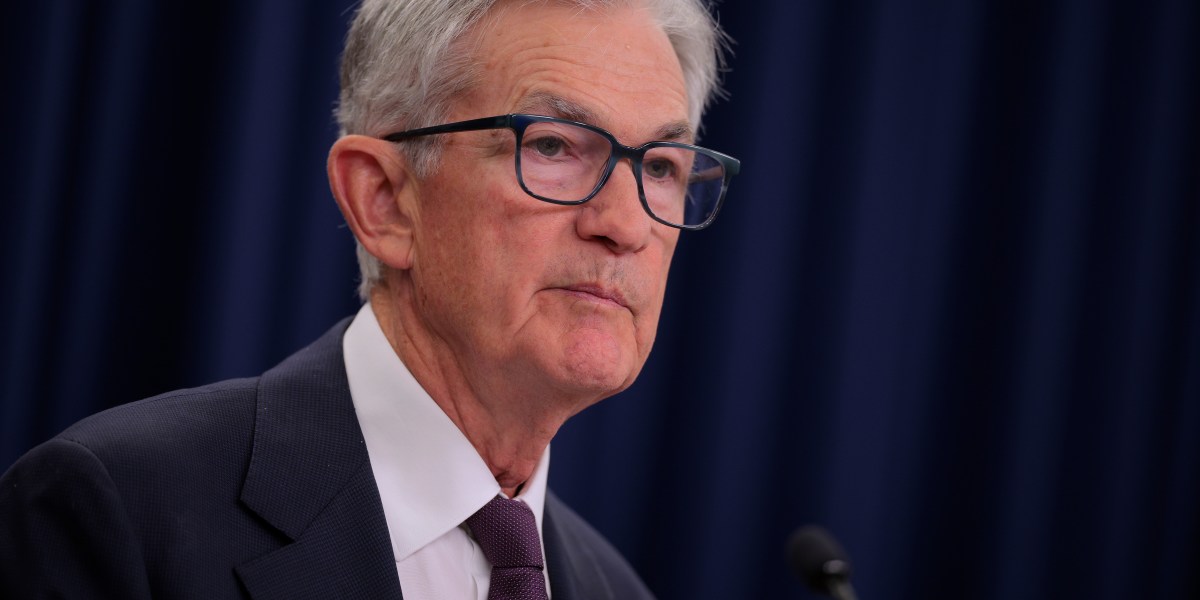
For many Gen Z workers, the struggle to land a job can feel isolating and fuel self-doubt. But that frustration recently got some high-level validation: Federal Reserve Chair Jerome Powell echoed economists’ concerns about the cooling labor market, telling reporters at his regular press conference following the Federal Open Market Committee that it’s an “interesting labor market” right now, adding that “kids coming out of college and younger people, minorities, are having a hard time finding jobs.” Noting a low job finding rate, along with a low redundancy rate, he said, “you’ve got a low firing, low hiring environment.” and noting that it’s harder than ever for young jobseekers to break in.

While recent months have been dubbed by Deutsche Bankthe summer AI turned ugly,” and some major studies find AI adoption disrupting some entry-level roles, Powell was less sure. AI “may be part of the story,” but he insisted the main drivers are a broadly slowed economy and hiring restraint. Top economists at Goldman Sachs and UBS tackled the subject soon after and found Powell to be mostly on the money. This isn’t an AI story, at least not yet.

A deep freeze setting in

According to a Friday analysis by UBS chief economist Paul Donovan, titled “the kids are alright?” the spike in U.S. youth unemployment stands in stark contrast to global trends and cannot be blamed on artificial intelligence despite the current fascination with automation in public debate. “The U.S. labor market experience is peculiar,” he wrote. “Young Euro area workers have a record low unemployment rate. In the UK, the young persons’ unemployment rate has fallen steadily. Employment participation by young Japanese workers is near all-time highs. It seems highly implausible that AI uniquely hurts the employment prospects of younger US workers.”

Goldman Sachs economist Pierfrancesco Mei wrote on Thursday that “finding a job takes longer in a low-turnover labor market.” He argued that “job reallocation,” or the pace at which new jobs are created and existing ones destroyed, has been on the decline since the late 1990s, albeit more slowly as of late. Almost all job changes between existing jobs is taking place as “churn,” driving “almost all the variation in turnover since the Great Recession.” Goldman found that as of 2025, churn was well below its pre-pandemic levels, a “broad-based” pattern across industries and states, and this “mostly fall[s] on younger workers.” In 2019, it took a young unemployed worker about 10 weeks to find a new job in a low-churn state, now that’s 12 weeks on average.

UBS’ Donovan writes that “it might be tempting to blame technology” for the plight of the Gen Z would-be entry-level worker. “Machines, robots, or computers replacing humans is an ever-popular dystopian scenario.” Donovan concludes, similarly to Goldman that the U.S. pattern “more convincingly fits a broader hiring freeze narrative, affecting new entrants to the workforce.”

A blue-collar alternative?

According to Donovan, this also has the benefit of explaining the smaller impact on less educated workers, with high school dropouts able to find full-time employment at a younger age than recent grads, and so they likely found work before the 2025 deep freeze set in. With college enrollment also in a long-term secular decline, trade employment is becoming increasingly popular with blue-collar entrepreneurs, some of whom find themselves earning six figures and calling themselves boss while their peers become saddled with student-loan debt.

Over the long run, recent college graduates are empirically hit the hardest during “no fire, no hire” periods. During the Great Recession, when entire industries froze hiring, college graduates between 2007 and 2011 were uniquely hit by a lack of open positions. Those graduates earned less than their counterparts who graduated during non-recessionary periods — effects that persisted for 10-15 years, according to a Stanford briefing.

The implications for Gen Z and minority jobseekers are severe. Experts warn of “scarring effects”—long-lasting damage to earnings, homeownership prospects, and wealth accumulation. History shows that starting a career during a downturn can result in lower wages and a steeper climb up the economic ladder. On Wednesday, Powell spoke of other factors reducing the labor supply, such as harsher immigration measures; he also mentioned that minorities are having a harder time finding employment during the 2025 freeze.

“The overall job finding rate is very, very low,” Powell said. “If layoffs begin to rise, there won’t be a lot of hiring going on.” The AI question remains open, in the Fed chair’s words. Saying “there’s great uncertainty” around how big an impact AI is having, he offered a perspective, almost a guess, that “you are seeing some effects [from AI], but it’s not the main, not the main thing driving” the youth unemployment picture. Still, “there may be something there. It may be that companies or other institutions that have been hiring younger people right out of college are able to use AI that more than they had in the past. That may be part of the story … Hard to say how big it is.”

Fortune Global Forum returns Oct. 26–27, 2025 in Riyadh. CEOs and global leaders will gather for a dynamic, invitation-only event shaping the future of business. Apply for an invitation.


Source link

Continue Reading

Business

Botched baton passes show why AI needs trust, Blackbaud exec says

Published

on


The U.S. Olympic men’s and women’s sprinting teams have won more gold medals than any other country in history, but the men’s 4×100-meter relay team has suffered four blistering defeats in the past two decades. Why? An absolute whiff at the critical point when a runner has to instinctively reach back and trust their squadmate enough to perfectly place the baton in their hand.  

Sudip Datta, chief product officer at AI-powered software firm Blackbaud, said that image captures exactly what’s taking place in AI today. Companies are advancing swiftly to build the fastest and most powerful systems they can, but there’s a severe lack of trust between the technology and the people using it, causing any new innovation or efficiencies to completely fumble at the handoff. 

“How many times did the U.S. have the fastest athletes, but ended up losing the 4×100 relay?” Datta asked an expert roundtable audience at Fortune’s Brainstorm AI event in San Francisco this week. “Because the trust was not there, where the runner would blindly take it from someone who is passing the baton.”

Datta said the reflexive reach backward on faith alone is what will separate the winners from the losers in AI adoption. And a major challenge looming in building trust is that a lot of companies today treat trust-building as a compliance burden that slows everything down. The opposite is true, he told the Brainstorm AI audience. 

“Trust is actually a revenue driver,” said Datta. “It’s an enabler because it propels further innovation, because the more customers trust us, we can accelerate on that innovation journey.”

Scott Howe, president and CEO of data collaboration network LiveRamp, outlined five conditions that need to be met in order to build trust. Regulation has done a reasonable job in setting up the first two but “we still have a long way to go” on the remaining three, he said. The five conditions include: Transparency into how your data is going to be used; control over your data; an exchange of value for personal data; data portability; and finally, interoperability. Regulations including the EU’s General Data Protection Regulation (GDPR) have secured some minimal progress but Howe said most people don’t “get nearly fair value for the data we contribute.”

“Instead, really big companies, some of whom are speaking on stage today, have scraped the value and made a ton of money,” said Howe. “And then the last two, as an industry and as businesses, we are nowhere on.”

Owning the data

In Howe’s vision of the future, he sees data being viewed as a property right and people being entitled to fair compensation for its use. 

“The LLMs don’t own my data,” said Howe, referring to large language models. “I should own my data and so I should be able to take it from Amazon to Google, and from Google to Walmart if I want, and it should travel with me,”

However, major tech companies are actively resisting portability and interoperability, which has created data silos that entomb customers in their current ecosystems, said Howe. 

Beyond personal data and potential consumer rights issues, the trust challenge takes on a different shape inside various companies, and each has to decide what their own AI systems can safely access and which tasks can be completed autonomously. 

Spencer Beemiller, innovation officer at software company ServiceNow, said the firm’s customers are trying to determine which AI systems can operate without human oversight, a question that remains largely unanswered. He said ServiceNow helps organizations track their AI agents the same way they’ve historically monitored infrastructure by tracking what the systems are doing, what they have access to, and their lifecycle. 

“We’re trying to get a little bit of a grasp on helping our customers determine what points actually matter to create that autonomous decision making,” Beemiller said. 

Issues like hallucinations, where an AI system will confidently provide made-up or inaccurate information in response to a question, require significant risk mitigation processes, he said. ServiceNow approaches it by using what Beemiller called “orchestration layers,” in which queries are directed to specialized models. Small language models handle enterprise-specific tasks that require more precision, while larger models manage natural conversational items, he said. 

“So it’s a little bit of a ‘Yes, and’ conversation of certain agent components will talk to specific models that are only trained on internal data,” he said. “Others called up from the orchestration layer will abstract to a larger model to be able to answer the problem.”

Still, many fundamental issues remain unresolved, including questions about cybersecurity, critical infrastructure, and the potentially catastrophic consequences that could stem from AI errors. And even more so than in other areas of tech, there’s an inherent tension between moving fast and getting it right.

“If we can win the trust, speed follows,” Datta said. “It’s not about only running fast, but also having trust along the way.”

Read more from Brainstorm AI:

Cursor developed an internal AI help desk that handles 80% of its employees’ support tickets, says the $29 billion startup’s CEO

AI is already taking over managers’ busywork—and it’s forcing companies to reset expectations

OpenAI COO Brad Lightcap says ‘code red’ will force the company to focus, as the ChatGPT maker ramps up enterprise push


Source link

Continue Reading

Business

DOGE isn’t dead—it’s been absorbed into the bloodstream of the government, federal employees say

Published

on


DOGE may no longer be helmed by Elon Musk or even considered an official government entity anymore, but the reports of its death are greatly exaggerated. The special advisory intended to eliminate government “waste, fraud, and abuse,” is still up to something, two federal employees told Fortune.

Last month, Office of Personnel Management Director Scott Kupor told Reutersthat DOGE “doesn’t exist,” and is no longer a “centralized entity.” According to an executive order signed on President Donald Trump’s first day in office, DOGE as a temporary organization had been scheduled to end on July 4, 2026, suggesting the agency disbanded about eight months ahead of schedule.

Kupor later clarified DOGE’s current role in the federal government in an X post, saying, “The truth is: DOGE may not have centralized leadership under the [U.S. DOGE Service] But, the principles of DOGE remain alive and well: de-regulation; eliminating fraud, waste and abuse; re-shaping the federal workforce; making efficiency a first-class citizen.”

Federal employees interviewed by Fortune, who spoke on the condition of anonymity as they are not authorized to speak to the press, said it was not apparent to them that DOGE had been disbanded.

An Internal Revenue Services (IRS) employee told Fortune that DOGE “became a shell company” as more and more operatives from the temporary group became tangled in the oversight of individual government agencies.

“It’s like taking the dust jacket off of the book and saying, ‘We’ve got rid of the book,’” he said.

DOGE is still barking

The IRS employee confirmed to Fortune that the agency has been administering “coding tests” over the last few weeks, first reported by Wired, an addition to mandatory training required for certain employees. Per Wired, the tests were a directive from the Treasury Department’s chief information officer and DOGE operative Sam Corcos, and were administered through HackerRank, a tool used by private sector tech companies to assess coding and programming skills of prospective hires.

“The business case could be made that you want people who know their job thoroughly,” the IRS employee told Fortune of the purpose of the tests. “However, given the treatment that we’ve received over the past eight, nine months, I would say it’s more of another screening out of more people.”

Court documents from October indicate the Treasury Department has terminated approximately 1,446 employees since the start to Trump’s second term.

A National Institutes of Health (NIH) employee told Fortune the Department of Health and Human Services (HHS), which oversees the NIH, still has plenty of DOGE personnel, though they are now employees of the agency. Amy Gleason, whom Trump named acting administrator of DOGE, was appointed as an expert/consultant to the HHS’s Office of the Secretary in March. 

The HHS likewise lists Clark Minor, DOGE operative and former Palantir software engineer, as the agency’s chief information officer and acting chief artificial intelligence officer. The agency announced earlier this month a Minor-led effort to integrate AI the HHS’s internal operations and research, in order to fulfill a directive from the Office of Management and Budget led by director and DOGE partner Russell Vought, to integrate technology for “improving internal operations, efficiency, and federal use.”

The NIH and IRS did not respond to Fortune’s requests for comment.

DOGE’s lasting impact

DOGE’s sweeping changes have continued to impact the government’s productivity. For the IRS, December is usually a quiet month, when taxpayer call volumes are so low the agency’s servers can be shut down for routine maintenance, the agency employee said. This year, however, offices are so short-staffed as a result of DOGE-led layoffs that employees have been overwhelmed balancing taking calls with their other responsibilities. The IRS employee said his office has one-third of the workers it had about a year ago.

“This is going to be probably the roughest filing season we’ve had since the pandemic,” he said.

He said ongoing burnout from increased workloads has the potential to impact the quality of internal reviews.

“When we look back historically, we’re going to see that the gutting of the bureaucracy that keeps the government running, that keeps the country functional, will be the trigger that collapses America,” the employee said.

Musk, who was DOGE’s de facto leader as a special government employee earlier this year, had his own reservations about the group’s effectiveness. In an interview with conservative influencer Katie Miller, Musk said DOGE was only “somewhat successful,” claiming it saved the government between $100 billion and $200 billion in annual “zombie payments,” or spending on expired programs.

When Miller asked if Musk would go back and run DOGE all over again, Musk said, “I don’t think so.”

“Instead of doing DOGE, I would have, basically…worked on my companies,” he said.

If you’re a federal worker with a tip, or if you’d like to share your experience, please contact Sasha Rogelberg on Signal @sashrogel.13.


Source link

Continue Reading

Business

Apple CEO Tim Cook out-earns the average American’s salary in just 7 hours—to put that into context, he could buy a new $439,000 home in 2 days

Published

on


While Americans are monitoring their grocery budgets and delaying major life purchases, their employers are being awarded record-breaking salaries. Some of the highest-paid CEOs can watch the annual wage of a U.S. worker hit their bank accounts over the span of just hours. Take Apple’s Tim Cook, for example, he outearns the average American in less than a day’s work.

Apple, now a $4.1 trillion technology behemoth, has come a long way since its public debut 45 years ago. Under Cook’s leadership, it has become the second most valuable company on the planet—and his compensation reflects it. 

Cook’s annual compensation grew to $74.6 million in 2024, an 18% increase from $63.2 million the year before. His eye-watering honeypot is comprised of $58.1 million in stock awards, $12 million in non-equity incentive plan pay, and $1.5 million in other compensation. 

And even though he’s one of the highest-paid chief executives in the world today, his current paycheck is a far cry from what he once earned. In 2022, Cook received nearly $100 million, largely due to stock awards, but his pay dropped the next year following backlash from Apple staffers and shareholders.

And when compared to the paycheck of everyday Americans, the difference is severe. With his $74.6 million package, it only takes around seven hours for Cook to outearn the typical U.S. worker—who takes home just $62,088 a year, according to 2025 first quarter wage data from the BLS. 

Within the 30 minutes it takes most people to commute to the office, Cook is already $4,256 richer—more than what most Americans have set aside as emergency savings

While it may take decades for Americans to save for a home, the Apple CEO can afford it after just one weekend. It only takes 2.15 days for Cook to pool up $439,000 in earnings, the median price of a U.S. home, according to a new CEO salary tool from Resume.io

Even buying his own company’s products—which are luxuries for most, priced in the thousands—barely registers as an expense. In just over 21 minutes, Cook has made enough to buy a $3,000 MacBook Pro; and in less than eight minutes, he can score an $1,100 iPhone Pro 17. 

America’s highest-paid CEOs—and how Cook compares

Cook is one of the highest paid CEOs in the U.S. but he’s not the only one making headlines for his extreme paycheck. 

Tesla leader and world’s richest person Elon Musk just secured a $1 trillion pay package following a heated back-and-forth with advisory firms imploring shareholders to reject the outlandish compensation. It was an unprecedented approval that spurred criticism on the growing wealth divide between the world’s have and have-nots

Musk is just one of many CEOs with a spotlight on their bank accounts. In 2024 the highest-paid CEO leading a large, billion-dollar public U.S. company was Rick Smith. The chief executive of $45.5 billion defense-tech company Axon took home $164.5 million, according to an analysis from executive compensation consulting firm Equilar. 

Smith’s followed by Jim Anderson, the CEO of Coherent, who raked in $101.5 million last year. Meanwhile, StarbucksBrian Niccolmade $95.8 million, GE Aerospace’s Larry Culp took home $87.4 million, and Ares Management’s Michael Arougheti followed in fifth with $85.4 million. On that list, Cook was the seventh highest-paid CEO, right below Microsoft leader Satya Nadella boasting $79.1 million.

There are, of course, other CEOs steering private companies (that don’t need to disclose their CEO’s salaries) who are bringing home eight-figure salaries too. And aside from direct compensation, it’s not uncommon for leaders to enjoy billion-dollar gains from their investments. 

In October, LVMH CEO Bernard Arnaultsaw his wealth skyrocket $19 billion overnight following the business’ breakout earnings report. And the month before, then-Oracle chief executive Safra Catz’s wealth jumped by over $400 million to $3.4 billion in just six hours thanks to the tech company’s breakout year, according toForbes.

America’s widening income inequality 

The U.S. is home to the most billionaires in the world, and the country’s changing wealth dynamics are not lost on those living paycheck-to-paycheck. The after-tax wages of Americans in the lowest-income group grew just 1.3% year-over-year this July, down from 1.6% in the month before, according to the Bank of America Institute. 

Meanwhile, higher-income wages swelled to 3.2% during the same period—the third consecutive monthly increase. This change marks the widest wealth divide between lower- and upper-income households in four years.

“In some sense, we had an improvement in lower-income wage growth since the pandemic, and now that’s gone into reverse,” David Tinsley, senior economist for the Bank of America Institute, told Fortune this August. “There was a narrowing of wealth inequality, and now it’s widening.”

Even the Americans making enough to be considered “rich” are delaying major life purchases. 

About 47% of six-figure earners are setting back their dream vacations and travel, 31% are stalling on home renovations, and 26% are delaying buying or leasing a new car, according to a 2025 report from Clarify Capital. 

Achieving the American Dream of owning a home with a white-picket fence is on pause for now, too; about 17% are delaying buying a house, and 6% are even delaying getting married.


Source link

Continue Reading

Trending

Copyright © Miami Select.