Connect with us

Business

Top analyst still thinks we’re on the cusp of a new boom for the economy, but investors aren’t with him: ‘markets remain choppy’

Published

on


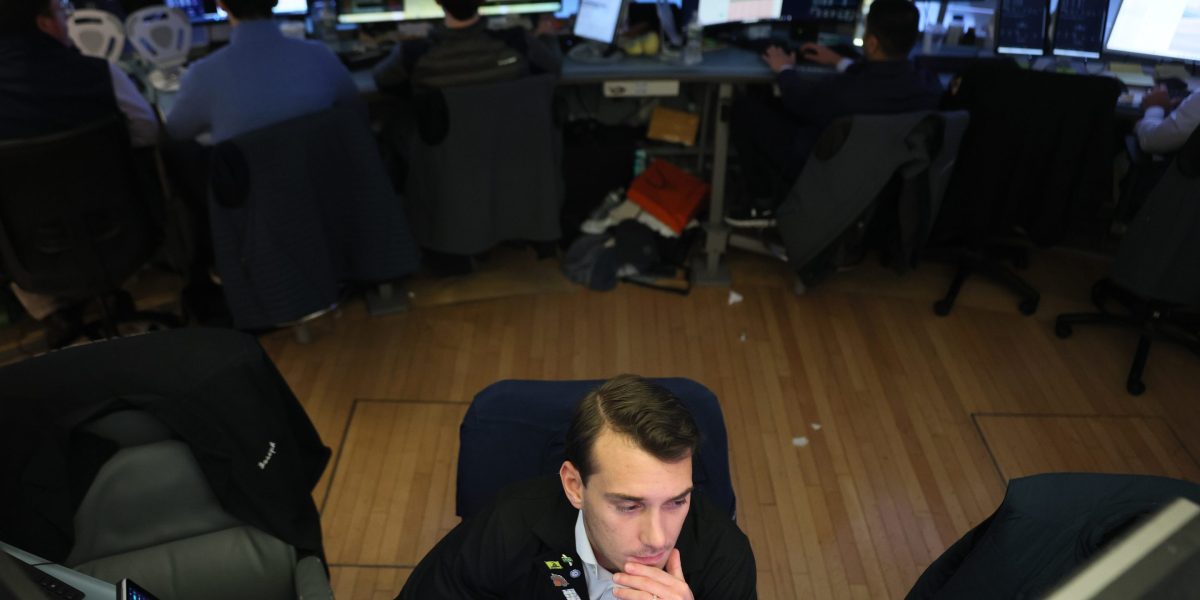
Morgan Stanley chief equity analyst Mike Wilson has been saying for years the U.S. was in a “rolling recession” when economists were seeing nothing but GDP growth. Since April, he’s been declaring a “rolling recovery,” with the early stages of an economic boom working its way through various sectors in the economy.

His optimism has been borne out by an economy that has surprised to the upside consistently throughout 2025, with skeptics warning the impact of tariffs and wider macroeconomic uncertainty would surely show up soon in the data. Third-quarter earnings are giving Wilson a little bit of pause, he wrote on Monday: It’s not that he thinks his thesis is wrong, he’s just noting investors are jittery as they digest the state of play. “This remains an out-of-consensus view from our conversations.”

“Markets remain choppy,” Wilson wrote on Monday, adding “unresolved risks” are weighing heavily on traders’ minds. Much of his discussion centered on the fact most companies simply aren’t raising guidance much; the outlook remains ratcheted down to where it settled after April’s “Liberation Day” tariff announcement. He also discussed the midweek swoon on Oct. 16 as midsized banks disclosed much cloudier earnings than their Wall Street counterparts, prompting JPMorgan CEO Jamie Dimon to describe a “cockroach” moment: “When you see one cockroach, there are probably more.”

Wilson maintains the U.S. economy is poised for a “rolling recovery” with an early-cycle rebound playing out over the next six-to-12 months. He wrote on Monday his thesis remains intact despite current volatility and tepid investor sentiment. If trade tensions de-escalate and earnings per share (EPS) revisions stabilize, combined with improved liquidity, that could set the stage for a powerful upswing in equities, he argued. Policy developments, including anticipated trade negotiations at the upcoming APEC summit, are seen as potential catalysts. However, Wilson added he’s on guard for a “further near-term correction,” in other words, a sicking lurch downward in stocks, before declaring “all clear” for stocks. He cited recent credit market stress, funding volatility, and renewed scrutiny of regional banks after surprise credit losses at several institutions.​

Mixed Signals: Strong Forecasts Meet Shaky Earnings

Earnings season has just begun, with a particular focus on the financial sector. Early results show total EPS surprises are solid, averaging almost 6%, above the historical norm. Yet, the market’s reaction has been lukewarm, with stock prices showing muted-to-negative responses even after earnings beats—an unusual pattern that many chalk up to persistent macro uncertainty. In short, companies are beating expectations, but investors appear far from convinced, especially in economically sensitive sectors like regional banks and capital goods, where underlying risks linger.​

While top analysts are painting a picture of imminent recovery, their view is notably “out of consensus” compared with the broader investment community. The backdrop is a historically elevated level of stock-specific risk. Dispersion in earnings revisions is also rising, pointing to a strong opportunity for skilled stock pickers, but also underlining the level of uncertainty that permeates the current market.​

Investor Anxiety: Volatility, Credit Fears, and Valuations

The mood in the broader market remains cautious. Last week, the VIX—Wall Street’s fear gauge—spiked to its highest level since April before easing, amid new trade policy uncertainties. Index-level measures, such as the S&P 500’s earnings revisions breadth, have retreated from earlier highs but remain in line with typical seasonal patterns. Regression analyses suggest the S&P 500 is fairly valued at current earnings levels; nonetheless, any further pullback in earnings momentum could weigh heavily on equities unless the much-discussed next “leg higher” materializes.​

A key concern among investors is the beleaguered position of regional banks, which have seen their stock prices underperform after disclosures of unexpected credit charges. This, in turn, has led to worries that problems in one of the most economically sensitive corners of the market could either spread or require more internal reviews, keeping financial stocks in limbo until there is greater clarity. Year-to-date, both regional banks and alternative asset manager stocks remain weak performers, and more broadly, large swathes of the market are still trapped in a risk-off mindset.​

The Path Forward: Opportunities and Risks

Despite these headline risks, Wilson is not retreating from his bullish thesis. His team highlighted notable pockets of resilience, such as strong demand in cruise bookings into 2027, upticks in advertising revenue, continued AI-driven growth in tech, healthier than expected corporate travel, and an encouraging, if uneven, outlook for consumer spending. Wilson also notes companies may have an easier time clearing expectations as the year closes because, while it’s “atypical” they haven’t raised guidance much in recent earnings, it was already lowered in April and has held flat since. Therefore, it may be a low bar to clear.

Nevertheless, for investors to share in the optimism, several hurdles must be cleared: confirmed trade de-escalation, stabilization of earnings revisions, and sustained improvements in market liquidity. Until then, the tension between analyst optimism and investor skepticism is set to define the tone of markets heading into 2026.​

For this story, Fortune used generative AI to help with an initial draft. An editor verified the accuracy of the information before publishing. 


Source link

Continue Reading

Business

David Ellison’s billionaire dad got him a plane at 13. He flew in airshows then went to Hollywood

Published

on


David Ellison’s ascent to the summit of Hollywood power traces an unconventional flight path. At 13, the Oracle founder’s son received an extraordinary gift from his father: his own airplane. By 17, he was performing aerial acrobatics in professional airshows. Two decades later, he has traded the cockpit for the boardroom, steering his company through a $8 billion merger that placed him atop Paramount, with hopes of adding Warner Bros. to his trophy case.

The aviation obsession began early. After watching Top Gun as a child, David Ellison became fixated on flying. His billionaire father, Larry Ellison, purchased a plane for him at age 13, and they took lessons together. By 16, he was flying a high-performance German aerobatic aircraft capable of rolling 360 degrees in under a second. Wayne Handley, a pilot who worked with the family, told Variety that to “pry this airplane out of David’s hands, Larry bought him a top-of-the-line aerobatic airplane out of Germany, the Extra 300.”​

David Ellison soloed on his 16th birthday and began competing in airshows at 17. In 2003, at 20, he became the youngest member of the Stars of Tomorrow aerobatic team at the EAA AirVenture Show in Oshkosh, Wisconsin. He flew a Cap 232 painted in full Flyboys regalia to promote the 2006 film.

“I started flying aerobatics when I was 14,” he told Smithsonian Air & Space magazine. “I flew a bunch of airshows, a competition in an Unlimited, and I flew at Nationals.”​

The pivot to entertainment emerged gradually. It was while studying film at the University of Southern California that Ellison appeared in Flyboys, playing an American pilot fighting for the French in the World War I drama. The film cost $65 million but earned only $18 million, marking a brief acting career. ​

Ellison abandoned competitive flying and acting at the same time, dropping out of USC to focus on production. In 2006, he founded Skydance Media with financial backing from his billionaire father. The company’s name reflects Ellison’s passion for stunt flying, also known as “skydancing.”​

Skydance’s first major success came with the Coen brothers’ True Grit in 2011, which grossed over $250 million worldwide on a $38 million budget. This launched a partnership with Paramount that produced five Mission: Impossible films grossing $3.3 billion globally, two Star Trek movies, and the record-breaking Top Gun: Maverick, which is the 14th highest-grossing film of all time.

The Paramount merger, approved by federal regulators in August, culminates Ellison’s transformation from daredevil to mogul. Now 42, David is the chairman and CEO of Paramount Skydance, overseeing CBS, MTV, and Paramount Pictures. The deal faced obstacles including competing bids and political pressure from President Donald Trump, who extracted a multimillion-dollar settlement from Paramount over a 60 Minutes lawsuit.

Ellison’s strategy centers on technology integration. He plans to create a “studio in the cloud” with Oracle’s infrastructure, using AI to streamline production and reduce costs. The company will double theatrical releases while modernizing Paramount+’s streaming algorithms to minimize subscriber cancellations.

Competitors note he has become adept at managing financial outcomes while appeasing high-profile talent, two critical aspects of studio operations.

But Ellison still has that flyboy DNA: He has his pilot’s license to operate helicopters, perform aerobatics, and fly commercial and multi-engine aircraft. Now, the daredevil who once thrilled Oshkosh crowds is navigating a different kind of turbulence—a 113-year-old studio in an industry being reshaped by streaming giants and tech conglomerates.

For this story, Fortune journalists used generative AI as a research tool. An editor verified the accuracy of the information before publishing. 


Source link

Continue Reading

Business

CEO gives job candidates live feedback in interviews—and if they ‘get offended’ they’re not a fit

Published

on


For most candidates, feedback on how their interview went arrives days after an interview—if it arrives at all. But one CEO has decided that waiting is a waste of time. Instead, he’s started delivering his critiques to candidates on the spot (sometimes in front of a full panel) as part of the interview test. 

“Started to give candidates direct feedback during the interview process,” Gagan Biyani (who goes by @gaganbiyani) revealed in a recent X post. “Often in public during our panel interviews or live at the end of my 1:1 with them.”

The CEO of Maven, an education platform, and cofounder of another e-learning provider, Udemy, said it’s the “most telling part” of the interview—and often a deciding factor in whether they get offered the job or not. 

“If this is their nightmare, [the] candidate freezes up or even gets offended,” Biyani added it highlights straight away that they are “not a fit” for the company. “If this is exciting, they are more likely to join.”

The California-based chief revealed that he typically reserves the test for applicants that he wants to move forward with. But sometimes, Biyani admitted he’ll even throw the feedback test to candidates he liked who aren’t the perfect fit for the role.

And there’s no right or wrong answer per se—he’s even happy for candidates to scrap what they said moments earlier and pivot based on the critique: “No matter what, we expect the candidate to take the feedback in real-time and change their answers from then on out.” 

Mixed reactions to the interview tactic: ‘If your company doesn’t care about psychological safety, run this test’

The interview tactic has drawn a mixed response. Some commented that they “love it” and that it’s a great way to gauge a candidate’s ability to receive criticism and whether that can thrive under transparent communications. Many others were not so sure. 

“Publicly critiquing someone in a high-stakes, power-imbalance situation like this isn’t a test of ‘coachability.’ It’s a test of who is willing to suppress their nervous system response to humiliation, stress, and social threat in exchange for a job,” the most-liked response read. “Freezing, discomfort, or offense in that context isn’t fragility, it’s biology…. And filtering people out based on how well they override that isn’t selecting for resilience or a growth mindset. It’s selecting for compliance under pressure.”

Others highlighted that a candidate’s reaction in a high-stakes interview setting could be very different from day-to-day in the role, that some need time to sleep on feedback before responding, that it’s a “dehumanising” approach that would raise HR’s eyebrows, and ultimately could result in losing talent.

Career coach Kyle Elliott, EdD, echoed that “in 10 years of coaching more than 1,000 clients, no one has ever reported facing this type of situation.”

While feedback is perfectly normal, he said that the fact that it’s one-sided, based on a single interview without any prior rapport, with a job offer hinging on the response makes it problematic—and is unlikely to actually help test a candidate’s ability to do the job they’ve applied for. “This just reads like an insensitive science experiment.”

“If your company doesn’t care about psychological safety, likes to put people on the spot, and triggers trauma responses, I suppose you could run this test, Elliott added. “Otherwise, your interview process should mirror the candidate’s day-to-day work environment to get the best talent possible.”

How to handle live feedback in an interview

Live feedback is uncommon, but as Lewis Maleh, CEO of the global executive recruitment agency Bentley Lewis, warned, it is growing in popularity.

“We are seeing more companies experiment with stress testing candidates in various ways to assess how they perform under pressure,” he told Fortune. “I’ve heard of some tech CEOs and startup founders doing similar things, particularly in high-pressure roles where quick thinking and resilience are critical. But it’s definitely not mainstream practice.”

Maleh sees the logic. “If you’re hiring for a role where receiving feedback, adapting quickly, and performing under pressure are essential, testing those skills in real time makes sense,” he said. But “it absolutely can be cruel depending on how it’s executed.” Public critiques can intimidate even brilliant candidates, potentially ruling out top talent who simply don’t thrive in that scenario.

Either way, with tech companies often setting the pace for unconventional hiring and retention practices, similar tests could become more common across other sectors.

Maleh’s advice to candidates? Practice receiving feedback in real time. 

“Ask friends or mentors to critique your work or ideas on the spot and practice responding thoughtfully rather than defensively,” he added. “You can also use your favourite LLM chat (ChatGPT, Gemini, Grok) and ask it to “act as a very harsh interviewer” to give you practice.” 

“Focus on staying calm, asking clarifying questions, and showing you can incorporate feedback quickly.”

But don’t forget that interviews are a two-way street: “Remember that if a company’s interview process feels excessively harsh or performative, that might tell you something about their culture too.”


Source link

Continue Reading

Business

A divided Fed meets today as Wall Street watches for 4 key words from Powell: ‘in a good place’
Published

on


The chances of the Fed delivering another interest rate cut tomorrow are 90%, according to bets tracked by the CME FedWatch Fed funds futures index. But Wall Street has already priced that in. The S&P 500 ticked down 0.35% yesterday but remained near its all-time high and futures were flat this morning. In fact, traders have already moved on from the decision itself, which they regard as a done deal, even though the Federal Open Markets Committee is sharply divided over whether a cut should actually take place.

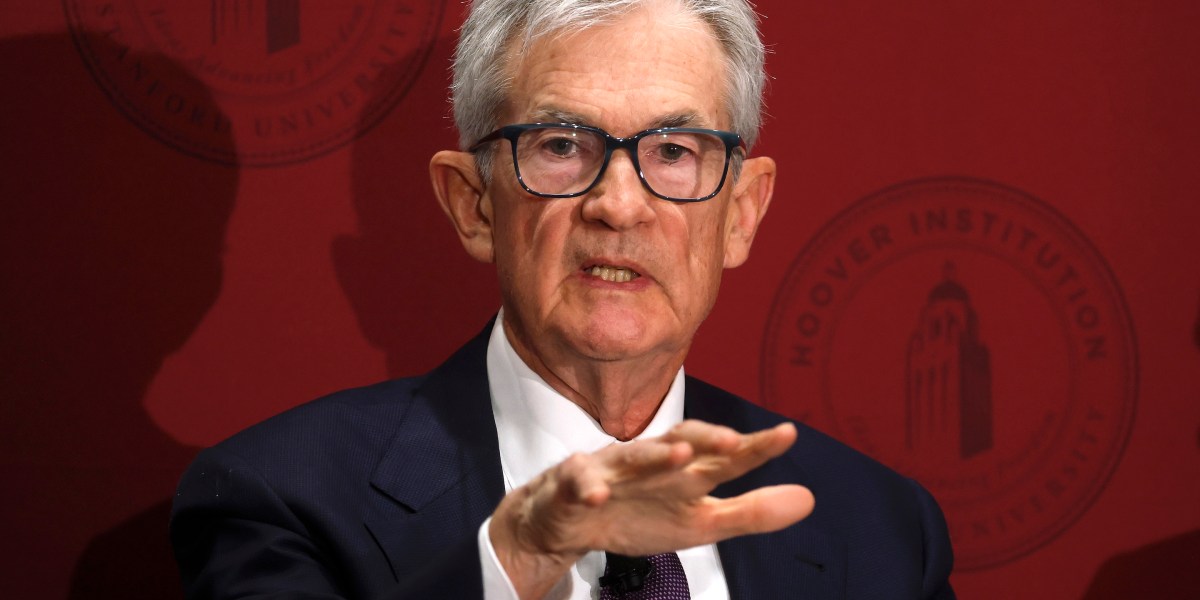
Instead, they will be looking closely for any change in wording or tone in U.S. Federal Reserve Chairman Jerome Powell’s official statement after today’s meeting and tomorrow’s new rate announcement, and in his remarks to the press when he takes questions. 

Jefferies analysts Thomas Simons and Michael Bacolas will be watching for whether Powell says four words in particular: “In a good place.” If he says that phrase, it perhaps implies that he is not leaning toward a further rate cut in January. If he does not use that phrase, he may be open to more cuts after this month.

“The most important aspect of the Fed’s communication on Wednesday is going to be whether Powell characterizes policy as ‘in a good place’, as he did for the first several months of 2025 when the Fed was on hold, or if he repeats his description of policy being ‘modestly restrictive’ or ‘somewhat above neutral’. In the case of the latter, the door will remain open to further cuts in early 2026,” they told clients in a note seen by Fortune. “We do not expect that he will say policy rates are ‘in a good place’, but that will be the phrase to watch out for.” 

The context, of course, is that Powell is famously guided by the data. No matter what he says tomorrow, his decision in January will be based on incoming macroeconomic information between then and now.

And it’s not just Powell’s decision. He presides over an FOMC that is almost evenly divided against itself. Roughly half its members are wary of creating further new rounds of cheaper money that may be inflating a bubble in the stock market. The other half sees an economy on the verge of faltering, with rising unemployment, that needs easier money to avoid recession.

At the last Fed meeting, “there was a sharp division beneath the surface” of the FOMC, according to Macquarie’s David Doyle and Chinara Azizova. “Eight of 19 participants saw the policy rate in the 3.5 to 3.75% range [below where it is now at 3.75%]. This division is likely to remain apparent in the December update.”

“Given the likelihood for dissents, the growing differences in forward-looking policy projections are likely to be addressed. The chair is likely to emphasize that this is to be expected when the dual mandate is in tension due to rising unemployment and still elevated inflation,” they said.

Unemployment is trending upward, as shown in this chart from Macquarie:

At Goldman Sachs, chief U.S. economist David Mericle is also looking for signs of dissent. “There will most likely be two hawkish dissents in the statement, and we expect five participants to register soft dissents,” he told clients. “But we are not sure that all of this would add up to meaningful new information for the market.” 

Those dissents will hinge on how Fed members feel about the employment market, which seems to be weakening by the day. 

“It is not realistic to expect the FOMC to box itself in too much by signaling a very strong bias toward a pause in January because if the labor market is still actively softening at that point, a cut might be appropriate. In fact, participants will be even more uncertain than usual about what will be appropriate at the next meeting because we are now two employment reports behind schedule,” Mericle told clients.

Goldman estimates that U.S. job growth is below the “breakeven” rate vs job cuts:
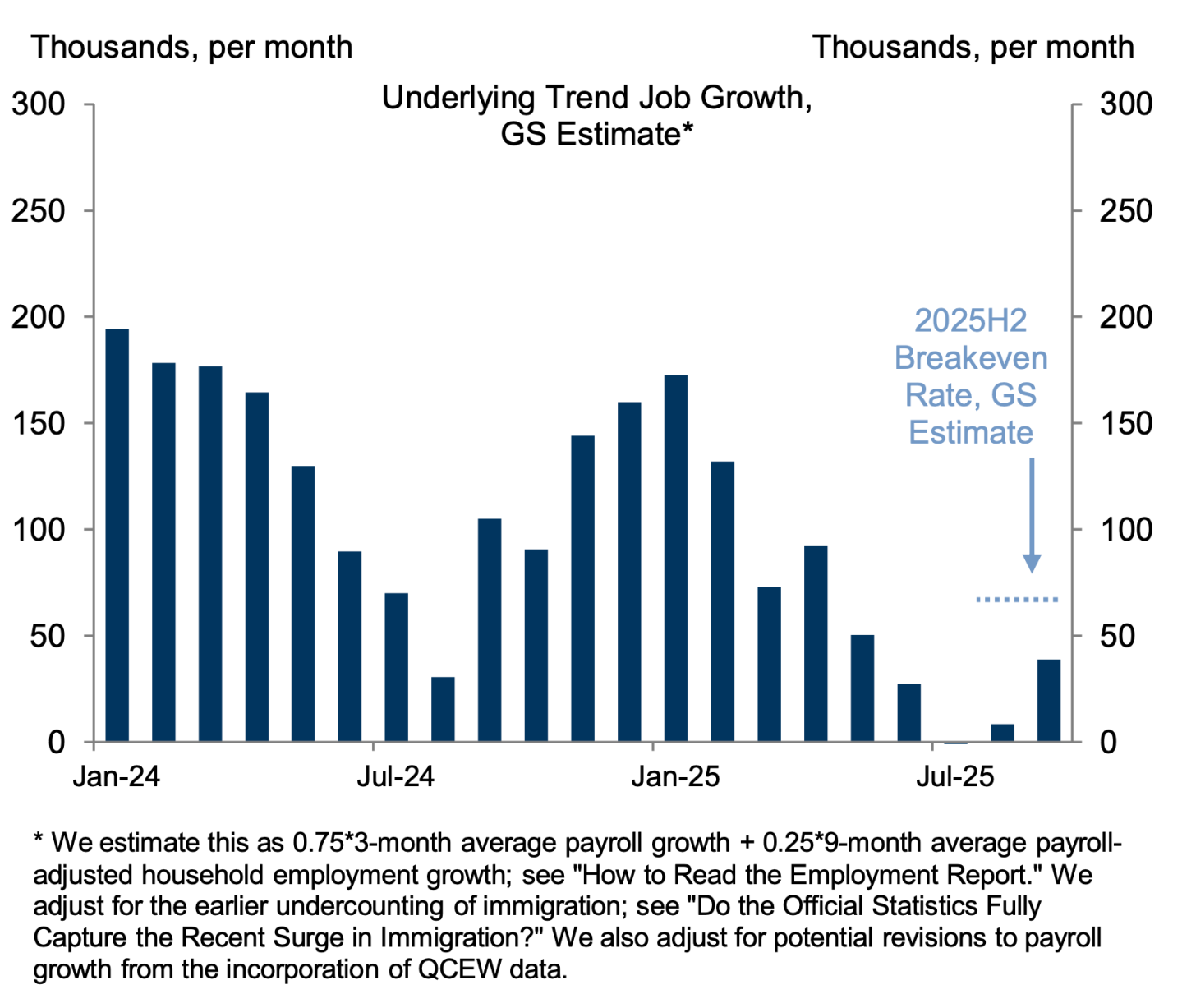
Those missing employment reports—cancelled by the U.S. government shutdown—will leave the Fed more dependent than usual on anecdotal or imperfect private employment data. The Fed’s “beige book,” a periodic summary of quotes from American businesses, shows that employers are increasingly not creating new jobs. 

“Last week’s Beige Book suggested that labor demand is weakening via less hiring rather than layoffs – a fragile equilibrium in the labor market that will keep the Fed in a risk management mindset,” Oxford Economics analyst Michael Pearce.

Private employer data is equally gloomy, according to Bill Adams, chief economist for Comerica Bank in Dallas. ADP, Revelio Labs, and Challenger, Gray, & Christmas—three companies that compile private market jobs data—all saw payrolls falling in the last few months, he told Fortune. “Challenger, Gray, & Christmas reported employers announced plans for 71,000 job cuts in November, up 24% from the same month last year. They cited restructuring, market and economic conditions, and artificial intelligence as key reasons for layoff announcements,” he said. 

If the labor market continues to deteriorate, then it becomes less likely that Powell will say interest rates are “in a good place” and more likely that the Fed will deliver future cuts in 2026.

Here’s a snapshot of the markets ahead of the opening bell in New York this morning:

  • S&P 500 futures were flat this morning. The last session closed down 0.35%. 
  • STOXX Europe 600 were flat in early trading. 
  • The U.K.’s FTSE 100 was flat in early trading. 
  • Japan’s Nikkei 225 was up 0.14%. 
  • China’s CSI 300 was down 0.51%.
  • The South Korea KOSPI was down 0.27%.
  • India’s NIFTY 50 was down 0.47%. 
  • Bitcoin slid to $90K.


Source link

Continue Reading

Trending

Copyright © Miami Select.
