Connect with us

Business

Tom Hayes, the UBS trader who spent 5 years in prison unjustly convicted of rigging interest rates, describes what it’s like to be vindicated

Published

on


Former UBS and Citigroup banker Tom Hayes was one of the few people convicted of crimes and sentenced to prison for trading activities leading up to the Great Financial Crisis. His conviction was overturned last week by the U.K. Supreme Court.

Hayes told Fortune the news took days to sink in—even though he was notified about the decision a day in advance.

“It was actually like 24 hours of anxiety, just like ridiculous anxiety, like ‘Are they going to change their mind? Are they going to change the ruling? Is something going to change,” he said. “Then, obviously, once the ruling came out, bang, like, I just got very busy, very quickly.”

In Hayes’ case, a U.K. court found he manipulated a key interest rate used by banks as a benchmark that set costs for hundreds of millions of dollars of loans and mortgages worldwide. The “manipulation” was that Hayes and colleagues at other banks would discuss the range of interest rates at which their banks were willing to lend money to each other (the “London Inter-Bank Offered Rate” of interest, or Libor), and then Hayes would select a rate inside that range that was most advantageous to his bank.

During the trial, prosecutors argued Hayes was the mastermind of a global operation to fix the now-defunct Libor, which underpinned everything from student loans to derivatives. Prosecutors argued Hayes led a network of traders and brokers to submit information that benefited his trades and earned illicit profits for himself and his employer.

In his defense, Hayes argued that the way he set rates was considered a routine part of doing business, and that no one in banking—especially his bosses—thought it was illegal.

A jury found that choosing an advantageous Libor rate was corruptly self-serving, and Hayes, now 45, was sent to prison.

But, after a decade-long insistence on his innocence, Hayes was vindicated last week when his conviction was overturned. The court said the judge in Hayes’ trial misdirected the jury in a way that “undermined the fairness of the trial.” Yet, it did not fully absolve him, as the justices allowed that there was “ample evidence” in the course of Hayes’ trial that could’ve led to a conviction. The Supreme Court did not comment on the actions of the U.K.’s Serious Fraud Office (SFO), which prosecuted Hayes.

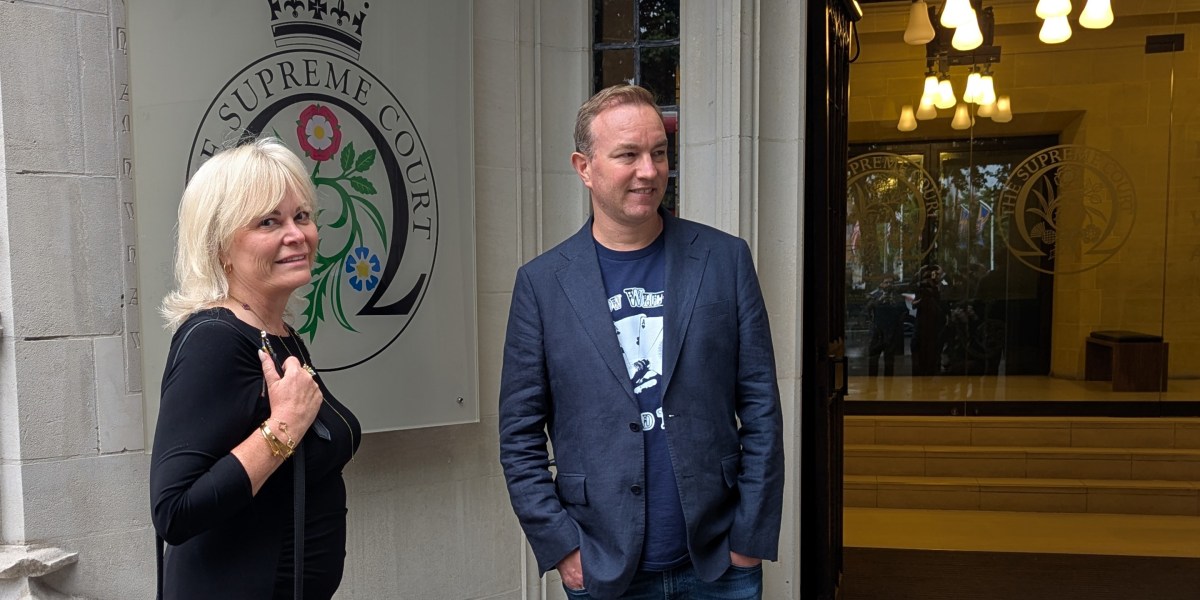
Tom Hayes (right) poses on July 23 with Carlo Palombo, a former Barclays exec whose conviction for rigging Euribor was also overturned by the U.K. Supreme Court.

Courtesy of Sian Harrison

Hayes disagrees with the Supreme Court’s “ample evidence” claim. He argues that if the SFO, which investigates financial crimes, would have chosen to retry his case, if this were true. The SFO said it did not move to retry Hayes because it determined seeking a retrial would “not be in the public interest.”

“If I’d been retried, I would have actually relished that, because I probably would have won,” he told Fortune.

The SFO declined to comment to Fortune beyond what it said in a public statement. 

Although 19 other bankers were also convicted in the U.K. and U.S. for the LIBOR scandal, Hayes’ 14-year prison sentence was among the harshest. He served just over five years in prison (his sentence was reduced to 11 years on appeal) and another four years on probation. 

Hayes’ conviction was overturned on July 23 but it wasn’t until July 26 that the ruling hit home, he said.

That was the day he opened a letter from his sister. She wrote him a letter nearly every week, if not more often, while he was in prison, said Hayes. Following the decision on his conviction, he said, she sent one more.

“The last letter, she called it. She just said, you know, ‘I thought that I should write to you this one last time using pen and paper,’” he said. “The last paragraph of it was, ‘I’m so proud of you, Tom. Here’s to never writing you a letter ever again. The end of an era. And what an end.’”

Tom Hayes: scapegoat

Hayes usually prefers to avoid attention. On the London Underground, he likes to shuffle into a corner and look at his phone to avoid being recognized, he said. Walking around town, his eyes are always fixed on his feet. 

Despite his discomfort, the former star yen derivatives trader for UBS and Citigroup has become globally recognized, some might say, as a fall guy for the Libor scandal, which involved myriad actors, including bankers, banks, and even world governments.

In the aftermath of the 2008 financial crisis, Hayes said the public’s yearning for a scapegoat played into his conviction as well. Getting a fair shake was impossible, he said, at a time when governments and the media were looking to hold bankers to account following the Great Financial Crisis. 

In Hayes’ view, he and his fellow bankers were unfairly targeted for engaging in routine business practices that, at the time, everyone thought were legal. Among those prosecuted was Carlo Palombo, a former Barclays exec, whose conviction for rigging another benchmark rate, Euribor, was also overturned last week by the U.K. Supreme Court.

“Eric Holder gave a live press conference charging me when I’d never even been spoken to by the DOJ. I had nothing to do with America, and I got charged with the same offense at the same time in the U.K. Not even terrorists get that,” he said.

The SFO, which, besides Hayes, also successfully prosecuted another nine people for rigging rates, is at conflict with itself because of its mandate both to investigate and prosecute, said Hayes. In his case, the SFO’s reliance on an investigation by the outside counsel of his former employer, UBS, was also problematic, he claimed.

“There’s a very dark side to the relationship between third-party law firms acting for banks who are suspects and being paid hundreds of millions by those banks or corporates who are suspects and acting in their interests, and their relationship with prosecutors and regulators and that hand-in-glove approach where you know, they all have sort of a similar goal,” he said.

In prison, Hayes ran into inmates who couldn’t believe he was given such a lengthy sentence for fraud and assumed he was either a pedophile or an undercover police officer. In prison, he shied away from conflict, and was only “throttled” once he said, though the altercation ended quickly. Contrary to common belief, Hayes felt safer in the high-security prison, which was less unruly because “the real guys don’t even got nothing to prove.” 

Looking to the future

Hayes maintained that he’s no longer constantly angry for the time he spent in prison or at the judge who oversaw his trial. During his time in confinement, he became a Christian, he said, and learned to forgive. His conviction being overturned last week has also helped keep the “weeds” of his repressed rage from sprouting up again, he said.

“Interestingly, I felt those weeds have not been appearing quite so much since Wednesday. So definitely, I think whatever happened on Wednesday is helping me with that.”

Looking to the future is difficult. Despite—or perhaps because of—being on probation, he hasn’t felt free for years. He’s undecided on whether he’ll return to finance, even as the U.K. Financial Conduct Authority dropped his lifetime ban Friday, Bloomberg reported

One thing he does know is he feels a responsibility to speak out for other convicted bankers who were sentenced for similar charges, despite his wish to live anonymously. At least four convicted bankers have already said they will appeal their convictions following the Supreme Court’s decision on Hayes’ case this week, the Financial Times reported.

For now, though, Hayes is ready for a break. After a week of interviews, he enjoyed a weekend away with his father and 13-year-old son in St Ives, a small coastal town in Cornwall, in the southwest of England. In the future, he wants to live by the sea and buy a dog, he said.

Hayes, who at the pinnacle of his career was bringing in a multi-million-dollar salary with incentives, is now focused on the things he used to take advantage of, and he said the rest of the world should too.  

“Don’t take your freedom for granted. Don’t take all the things that are amazing in your life for granted,” he said. “Don’t get obsessed about just trying to acquire more stuff and thinking this is a good way of measuring your quality of life, because it really isn’t.”



Source link

Continue Reading

Business

JetBlue flight near Venezuela avoids midair collision with U.S. Air Force tanker

Published

on


A JetBlue flight from the small Caribbean nation of Curaçao halted its ascent to avoid colliding with a U.S. Air Force refueling tanker on Friday, and the pilot blamed the military plane for crossing his path.

“We almost had a midair collision up here,” the JetBlue pilot said, according to a recording of his conversation with air traffic control. “They passed directly in our flight path. … They don’t have their transponder turned on, it’s outrageous.”

The incident involved JetBlue Flight 1112 from Curaçao, which is just off the coast of Venezuela, en route to New York City’s JFK airport. It comes as the U.S. military has stepped up its drug interdiction activities in the Caribbean and is also seeking to increase pressure on Venezuela’s government.

“We just had traffic pass directly in front of us within 5 miles of us — maybe 2 or 3 miles — but it was an air-to air-refueler from the United States Air Force and he was at our altitude,” the pilot said. “We had to stop our climb.” The pilot said the Air Force plane then headed into Venezuelan air space.

Derek Dombrowski, a spokesman for JetBlue, said Sunday: “We have reported this incident to federal authorities and will participate in any investigation.” He added, “Our crewmembers are trained on proper procedures for various flight situations, and we appreciate our crew for promptly reporting this situation to our leadership team.”

The Pentagon referred The Associated Press to the Air Force for comment. The Air Force didn’t immediately respond to a request for comment.

The Federal Aviation Administration last month issued a warning to U.S. aircraft urging them to “exercise caution” when in Venezuelan airspace, “due to the worsening security situation and heightened military activity in or around Venezuela.”

According to the air traffic recording, the controller responded to the pilot, “It has been outrageous with the unidentified aircraft within our air.”

Join us at the Fortune Workplace Innovation Summit May 19–20, 2026, in Atlanta. The next era of workplace innovation is here—and the old playbook is being rewritten. At this exclusive, high-energy event, the world’s most innovative leaders will convene to explore how AI, humanity, and strategy converge to redefine, again, the future of work. Register now.


Source link

Continue Reading

Business

Trump admits he can’t tell if the GOP will keep the House despite massive investment pledges

Published

on


President Donald Trump admitted that he’s not sure if his economic policies will pay off for Republicans at the ballot box in 2026.

In an interview with the Wall Street Journal that was published late Saturday, he pointed to massive investment pledges that he’s secured since returning to the White House.

But when asked if Republicans will lose control of the House in next year’s midterm elections, Trump replied, “I can’t tell you. I don’t know when all of this money is going to kick in,” adding that forecasts say the second quarter.

Trump has previously touted as much as $21 trillion of investments pouring into the U.S., though recent commitments don’t come close to adding up to such levels.

Still, under trade deals Trump has negotiated, the European Union has vowed $600 billion in investment, Japan $550 billion, and South Korea $350 billion. Separately, Saudi Arabia has promised $1 trillion. Companies have also announced plans to invest hundreds of billions of dollars, though some of that includes money planned during the Biden administration.

While the timing of all the money is uncertain, not to mention how much will actually be spent, companies have expressed the need to diversify supply chains with more domestic production. Apple has said its $600 billion pledge to build U.S. factories will create a “domino effect” that ignites manufacturing across the country.

At the same time, Wall Street expects Trump’s tax cuts from his One Big Beautiful Bill Act to deliver a significant jolt of fiscal stimulus to the economy next year, potentially reaccelerating GDP growth.

That would come as voters made clear in last month’s off-year elections that affordability is their top priority. Inflation has cooled from its 2022 high, but prices are up sharply from pre-pandemic levels, and consumers are revolting over higher insurance, electricity and grocery bills. Even most Trump voters say the cost of living is bad.

Trump has dismissed the affordability issue as a Democratic “hoax” and insists prices are down. He told the Journal that he will lower prices.

“I think by the time we have to talk about the election, which is in another few months, I think our prices are in good shape,” Trump said.

“I’ve created the greatest economy in history. But it may take people a while to figure all these things out,” he added. “All this money that’s pouring into our country is building things right now—car plants, AI, lots of stuff. I cannot tell you how that’s going to equate to the voter, all I can do is do my job.”

Trump has floated some ideas to appease voters on affordability, including a 50-year mortgage to lower monthly payments and $2,000 “dividend” checks. He also continues to pressure the Federal Reserve to lower rates, even though it could worsen inflation, and rolled back tariffs on some food imports.

In his interview with the Journal, Trump didn’t say if he would cut tariffs on other goods. He also warned that if the Supreme Court strikes down his global tariffs, his alternatives are not as “nimble, not as quick.”

 “I can do other things, but it’s not as fast. It’s not as good for national security,” Trump added. 


Source link

Continue Reading

Business

Nicotine pouches can be a better alternative to cigarettes says CEO

Published

on


Smoking is one of the clearest public-health failures of our time. More than 500,000 Americans still die each year from smoking-related illnesses, and globally the picture is even more alarming. In the United States, anti-smoking campaigns have reduced the number of new cigarette users, but the effectiveness of these measures may be fading. Indeed, the headline of a widely-shared news story notes “Celebrities Are Making Smoking Cigarettes Cool Again”. Yikes. Meanwhile, a quick trip to Mexico, Europe, or Asia is enough to see that cigarettes remain very much in style.

Reducing cigarette use, and preventing a new generation from getting hooked on nicotine, is a noble goal. That is one reason James Monsees and Adam Bowen founded the vape company JUUL Labs, as a potentially less harmful alternative for adult smokers. But a mix of regulatory missteps by a hostile FDA and market loopholes opened the door to a wave of counterfeit and bootleg vapes, often imported from China, sold in local stores, highly addictive, and completely unregulated. Many people became sick from using vapes with unknown ingredients. Teenagers were easily able to access bootleg vapes from China in youth-friendly flavors. What began as an idealistic goal—moving adult smokers off of cigarettes—turned into a new epidemic. 

Now we have two problems: cigarettes and vapes.

I believe science and technology can solve both. I was a tobacco user who became addicted to vaping. I tried everything to quit and cut down my nicotine use. Eventually, I discovered Swedish-style white pouches. That experience led me to create Sesh+, a premium, tobacco-free nicotine pouch made with transparent ingredients. It has been life-changing for me personally: I haven’t picked up a vape since switching to pouches. In Sweden, where oral nicotine products have been widely used for decades, smoking rates are among the lowest in Europe and smoking-related disease is correspondingly lower.

There is growing evidence that nicotine itself, while addictive, is not what primarily causes smoking-related disease; it’s the toxic byproducts of combustion that kill. With vaping, the concern is different: it’s the lack of transparency and quality standards that should alarm us. As a health-conscious consumer, I want to know exactly what I’m putting into my body. That’s why our pouches are independently lab-tested for contaminants like heavy metals and are manufactured in the United States under strict quality controls. 

Fake nicotine pouches are already in the U.S. market. Sofia Hamilton writes for Reason that her favorite convenience store unknowingly sells counterfeit nicotine pouches, and how only someone deeply familiar with FDA nicotine rules could tell the difference. No one should have to be a nicotine policy expert just to know whether a product is safe.

Important questions remain. We do not want to create a product that attracts people who don’t already use nicotine. The average Sesh+ customer is over 35, and I’m very proud of that. Early data is encouraging: a recent Rutgers study found that new nicotine users taking up pouches remains very low. Government has a responsibility to keep black-market and counterfeit pouches out of consumers’ hands. Industry must ensure retailers are educated and know what they’re selling. And we need strong youth prevention laws.

Nicotine pouches will only be effective if industry and government work together to ensure we are not attracting youth or non-nicotine users.

In the U.K., the proposed Tobacco and Vapes Bill would ban people born in or after 2009 from ever purchasing nicotine products. In the United States, we have already raised the legal age to buy tobacco to 21. These are the kinds of measures our industry should support. If the legislation in the U.K. passes, I hope other countries will adopt similar policies to prevent youth from accessing nicotine products. I also hope to see product-verification technology adopted as an industry standard so counterfeit nicotine products never reach consumers. Age verification is not enough; we must ensure a market for counterfeit and bootleg nicotine pouches does not emerge.

If companies in the nicotine pouch space work together, we can learn from JUUL’s experience and avoid repeating the same mistakes. Our responsibility is clear: help adult smokers move to potentially less harmful alternatives, without creating a new generation of nicotine users. If we get this right, a world free from tobacco is not just aspirational. It’s achievable.

Max Cunningham is the CEO of Sesh+, a nicotine pouch company based in Austin, Texas and backed by 8VC. The opinions expressed in Fortune.com commentary pieces are solely the views of their authors and do not necessarily reflect the opinions and beliefs of Fortune.


Source link

Continue Reading

Trending

Copyright © Miami Select.