Connect with us

Business

Tom Freston, the beat-poet exec who made MTV cool for 20 years, sees ‘really nothing in it for the consumer’ from Netflix, Warner, or his old company

Published

on


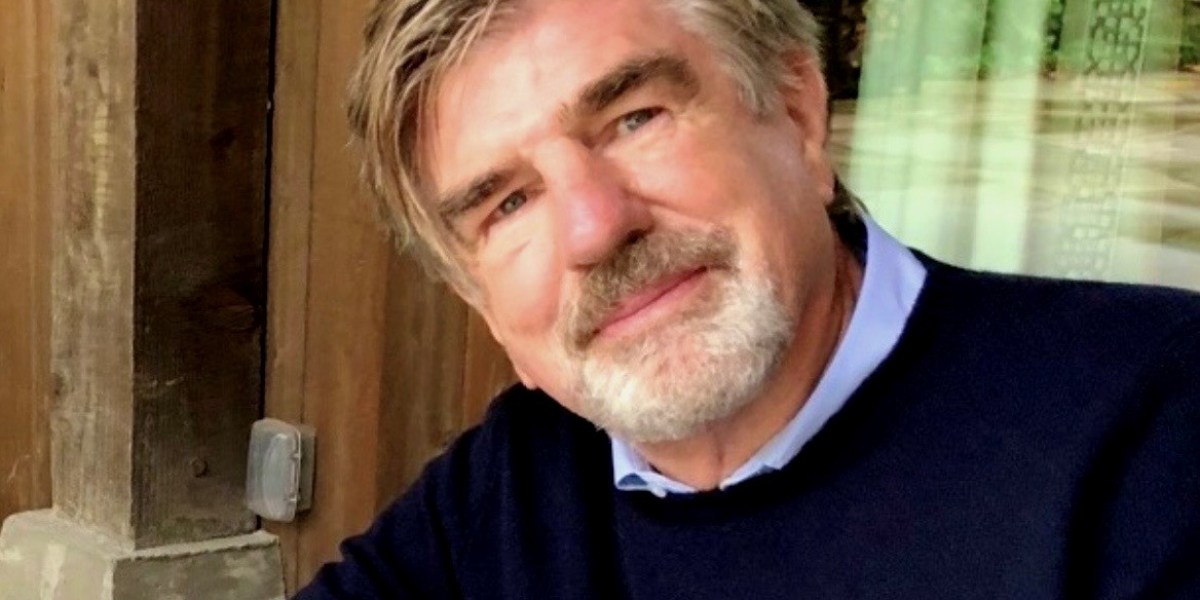
Tom Freston has never been a typical media executive. Freston began with a countercultural spirit that shaped an adventurous career spanning from co-founding MTV to leading Viacom and Paramount Pictures. After spending 26 years at Paramount—now caught up in the $100 billion bidding for Warner Bros Discovery—he remains a defining figure in the evolution of modern entertainment.

The 80-year-old executive, who sounded remarkably youthful in a phone interview with Fortune, harkened back to the days in the 1960s and ’70s when “freedom was in the air.” The vibe was very different then: “It was like, I don’t want to work for ‘the man,’” he told Fortune, referencing a formative summer when he worked as a bellboy in Lake George in the Adirondack foothills of upstate New York. “I had sort of been on the traditional conveyor belt: go to college, get out, get a job. And then I met all these sort of bohemian characters who — their idea was, you didn’t have a career. You kind of improvise your life. You know, the idea was to kind of maximize experience and do interesting things and take some risks.”

Freston added that he was a big fan of both “beat” and libertarian literature, the former made famous by Jack Kerouac and Allen Ginsberg and the latter by Ayn Rand. They both had common themes, he said: “experience and being an individual were important.” As he writes in his new memoir Unplugged, this improvisational journey took him to Afghanistan and India, a business career that was “wild and fulfilling and for a long time profitable.” But it was also “really hard work” and was “really humbling,” adding that “humility is not a thing you see a lot of in the entertainment business.” He didn’t comment directly on the major figures in the current bidding war for Warner Bros., but the example of David Zaslav moving into famed producer Robert Evans’ Hollywood mansion is a prime example of the neo-mogul mindset.

Freston has long been semi-retired, advising media brands such as Oprah Winfrey and Vice while serving as the chairman of the ONE Campaign, the anti-poverty effort in Africa led by U2’s Bono (a friend, Freston said).

As Freston rolled back the years with Fortune and looked out on a much-changed media landscape, he briefly donned his antitrust hat to analyze the bidding war between Netflix and his old company Paramount for Warner Bros. Discovery and how things got to this point. “No matter which way it goes, there’s really nothing in it for the consumer,” Freston said with a sigh.

How Netflix followed in MTV’s footsteps

Freston observed that the media industry is now dominated by “monolith companies … increasingly run by tech people, where data becomes more important than instinct.” He highlighted A24 and Neon as two companies that remind him of the old, almost artisanal MTV, where refreshing the creative instinct became core to success, because Viacom’s once-dominant basic cable lineup appealed to a transient youth culture. “Our challenge was: how do we continue to innovate for these changing demographics that would pass through us, whether it be on [Nickelodeon] or on MTV or Comedy Central or whatever.”

Just 33 years old when he started leading MTV, Freston pointed out that the original audience was Baby Boomers like himself, which was then replaced by Gen Xers with different sensibilities, and so on. Talent can’t be overlooked, Freston argued, because he wanted a creative and “cutting edge” mentality that would stay hooked up to a youth culture that turned over every five years or less. “I didn’t put a salesperson in charge, which would be a traditional way in the television business. I had a creative person in charge.”

In many cases, MTV was someone’s first job, “and they’d learn some things and leave in a few years, and they’d be replaced with another younger person.” He argued that keeping the employee population young made it easier to reinvent the network periodically. When the end came shortly after the millennial generation’s heyday, exemplified by the Total Request Live program, Freston explained that the same forces afoot in Warner-Netflix-Paramount were leaving MTV exposed to the digital wave.

“We were precluded from using our music video library online,” Freston said, explaining that the same licensing deals that had enabled MTV to dominate youth culture for decades proved its undoing when YouTube disrupted how young people liked to watch music videos. “The real players turned out to be the social networks and it was hard to invent one,” he added. “You had to buy one of the ones that were out there, and the only one that ever really got bought was MySpace, and that kind of disintegrated.” The other social-media networks were able to build “unbelievable franchises because they were able to run at losses for years without Wall Street piling on, which would have happened for any of the legacy media companies.”

Reflecting on his own “missed opportunity” to bridge this gap, Freston recounted Viacom’s attempt to buy Facebook when the platform had only $9 million in revenue. He recalled Mark Zuckerberg’s visit to discuss a potential acquisition: “I remember he had a hoodie on and flip flops. It was February in Times Square. And he was younger than anybody on our young staff.” While Viacom was the first to make a bid for Facebook, Freston believes Zuckerberg was never serious about selling, more that he was “curious about, what’s a youth media company today look like.”

The MTV-Netflix cycle

Netflix and other platforms, of course, achieved massive scale by playing the upstart MTV role. “They were able to run at a profit because they were these new growth businesses. Wall Street turned a blind eye to losses for a long time. They got forgiveness on that score.” He added that they began to “vacuum up IP” without necessarily having deals in place. While Netflix went the more traditional licensing route when Hollywood didn’t see it as a threat, Freston noted that MTV was prevented from fighting YouTube’s viral videos with its own digital music presence, almost like a revenge of the record labels that wrote those terms into the licensing deals.

Freston said he doesn’t think any legacy media company distinguished itself in meeting the digital challenge with full force. “Disney did the best job, I think, which was basically tripling down on their content capabilities in trying to make themselves more invincible and more crucial for the streaming services and for the digital onslaught to build up the biggest array of IP.” He agreed that it was ironic in some senses that Netflix seems to be following that playbook with its pursuit of Warner Bros. He said he sees the same old cycle turning: “The forces for this deal seem to be inexorable. Consolidation seems to be the strategy for the moment.”

Today, Freston said he sees his former empire, MTV, as a cautionary tale of what happens when that emphasis on creativity gets severed. He lamented that leadership has “run it into the ground over the last 15 years” by replacing music-obsessed staff with “traditional kind of Hollywood showmaker type people,” replacing hungry, music-obsessed creatives with a shorter-term mindset. His most symbolic grievance is the removal of the words “Music Television” from the logo—a decision that “drove me crazy.”

Freston said he was grateful for his exciting ride at the helm of Viacom for many years, and grateful for some of the genuine friendships that emerged from his time running MTV. He highlighted Bono specifically, with whom he has worked in a chairman role for ONE and (Red), fighting poverty and AIDS in Africa. He said he knew a bit about Africa and poverty issues from his time working and living in Asia and also traveling in Africa, but he also mentioned good relationships with certain people he clicked with: John Mellencamp, David Bowie (a “fascinating character”) and Jon Bon Jovi.

In his laid-back style, Freston added that he wasn’t sure when he sat down to write that there’d by “any kind of reasonable narrative to my life, which at one point seemed to be all these disparate parts.” He came away thinking that his career had been in pursuit of a couple common objectives: trying to “live and exist off the mainstream, more on the edge of the road,” where things are more interesting and independent.

The “beat-poet” executive said he still believes in the MTV brand, and it could come back with some creativity, maybe by positioning MTV as a human curator to counter “algorithm-type music consumption.” But he knows he isn’t the man to lead it. “It’s really a young person’s business,” Freston said, suggesting the reins should be handed to a 25-year-old who can operate with the same risk-taking humility he learned decades ago on the roads of Asia.

Editor’s note: The author worked for Netflix from June 2024 through July 2025.


Source link

Continue Reading

Business

Trump photo pulled from Epstein files: DOJ cites victim-rights groups, doesn’t believe victims shown

Published

on


Deputy Attorney General Todd Blanche cited victim protection protocols to explain why the Department of Justice quietly removed a photo of President Donald Trump from the Epstein files on Saturday, even as he admitted the agency does not believe the image actually depicts any victims. 

At least 16 files vanished from the DOJ’s public Epstein document webpage less than a day after they were posted Friday. Among them was file 468, an image showing a drawer filled with photographs, including one with Trump alongside Jeffrey Epstein, Melania Trump and Epstein associate Ghislaine Maxwell. Another photograph in the drawer showed Trump surrounded by women. 

In an interview on NBC’s Meet the Press on Sunday, Blanche said the DOJ “learned” after releasing the photo that there were women in it, and there were “concerns about those women, and the fact that we had put that photo up, so we pulled that photo down. It has nothing to do with President Donald Trump.”

He cited the DOJ’s obligation under a New York judge’s order and federal law against releasing material that could identify survivors of Epstein’s crimes.

“But the reality is anybody, any victim, any victim’s lawyers, any victim rights group can reach out to us and say, ‘Hey, Department of Justice, there’s a document, there’s a photo, there’s something within the Epstein files that identifies me.’ And we will then of course pull that off and investigate it.”

However, Meet the Press host Kristen Welker asked whether the image actually contained women who are victims or survivors.

“No, that’s not what I’m saying. If we believed that photograph contained a survivor, we wouldn’t have put it up in the first place without redacting the faces,” Blanche replied. “But notwithstanding what we believe, we don’t have perfect information. And so when we hear from victims’ rights groups about this type of photograph, we pull it down and investigate. We’re still investigating that photo. The photo will go back up. And the only question is whether there will be redactions on the photo.”

The DOJ’s removal of file 468 drew swift criticism online, with the Democrats on the House Oversight Committee repeatedly accusing the White House of executing a “cover up” on Saturday

Blanche rejected suggestions that the takedown had anything to do with Trump, calling claims of political motivation “laughable.” He noted that photographs of Trump with Epstein have been publicly available for years and that Trump has acknowledged socializing with Epstein in the 1990s and early 2000s. 

He also said the photo would be reposted, adding that “the only question” was whether it would require redactions—even as he reiterated that if DOJ believed survivors were depicted, the image would not have been released unredacted in the first place.

Blanche added that the department has no intention of redacting or withholding material related to Trump, beyond what is strictly required by law, and repeatedly guaranteed that every mention and photograph of the president contained in the Epstein files will be released.

Blanche said Trump has insisted since before taking office that the records be made public and has “nothing to hide,” rejecting claims that DOJ is shielding him from scrutiny. He emphasized that the department’s review process applies uniformly to all names that appear in the files and is driven solely by victim-protection obligations and other legal constraints, not political considerations.

The Justice Department has said it will continue releasing Epstein-related records on a rolling basis, citing the time required to review materials for potential redactions. Blanche did not say when the removed files, including file 458, will be reposted, or whether any redactions will ultimately be applied.

A very small percentage of the files have been released, Democratic Rep. Ro Khanna, who authored the Epstein Files Transparency Act with Republican Rep. Thomas Massie, said on CNN Saturday evening. 

“There are 300 gigabytes of files, according to [FBI Director] Kash Patel; they released 2.5 of them,” Khanna said

That’s less than 1% of the files. The act required the department to release all unclassified Epstein-related records by Friday and sharply limits the grounds for withholding or redaction.

Massie said Sunday that the most “expeditious way to get justice for these victims” is to bring inherent contempt charges against Attorney General Pam Bondi, as they said the initial disclosures failed to meet the statute’s requirements and warned DOJ officials could face consequences, including impeachment, if the department is found to be obstructing compliance.

Blanche dismissed those concerns during the interview with NBC, insisting the department is “doing everything we’re supposed to be doing” under the law and prioritizing victim protection over rigid deadlines. He added the DOJ collected far more material than required and is continuing to review.

Blanche said the department is “not prepared” to bring more charges to anyone based on the release of the files. 

“We learned the names of additional victims as recently as Wednesday of this week — there’s new names that we didn’t have before — that we ran across our database to understand whether they had ever met with law enforcement or ever talked to the FBI, and so we’re always investigating. And it would be premature and not fair for me to to unilaterally say yes or no.”


Source link

Continue Reading

Business

HubSpot CEO avoids the Sunday scaries simply by working on the weekend

Published

on


We all know that familiar feeling of dread: setting our alarm clocks for Monday morning on Sunday evening, or even earlier in the day knowing your weekend of fun has come to an end.

But HubSpot CEO Yamini Rangan knows no such feeling, she said in an episode of The Grit podcast. That’s because she uses Sundays as her own personal work day. 

“I’m not scared of Sundays. I enjoy it because it’s my time,” said Rangan, who helms the $20 billion software company. “I get to decide what I’m learning, what I’m doing, what I’m thinking, what I’m writing. It is completely my schedule.”

Instead, Rangan—who said she struggles to sit still and take time away from work—carves out Friday night and all of Saturday to take a break. She spends this time going on walks with her husband Kash (a managing director with Goldman Sachs), doing yoga, meditating, and reading. 

“Saturdays are precious to me,” Rangan said. “When I didn’t take breaks, I got burned out pretty quickly.” 

HubSpot employees know Rangan won’t look at or respond to emails on Saturdays, but she’ll spend time on Sundays scheduling emails that hit inboxes in the wee morning hours on Mondays. 

Rangan, who’s been with HubSpot for about five years now, typically starts her weekdays around 6 a.m. and is on work calls by 7 a.m. She says she will work as late as 11 p.m. 

She joined the marketing software company right before the pandemic began as chief customer officer. The pandemic actually boded well for HubSpot as more and more companies started digitizing more of their processes and procedures. The company’s revenue more than doubled, said Rangan, who became CEO in September 2021. HubSpot was also recognized on Fortune’s Future 50 list in 2024 for companies that are likely to adapt, thrive, and grow. HubSpot didn’t immediately respond to Fortune’s request for comment about Rangan’s worth ethic and how she’s impacted the company.

Rangan built her 25-year-plus tech career serving in leadership positions at other large software companies including Dropbox, Workday, and SAP. But the tech powerhouse came from humble beginnings. 

Rangan was born and raised in South India, where she grew up in a 350-foot apartment with her parents and older sister. She says her mother inspired her to become a woman pioneer—whether it was becoming the first woman in India to win a major case, the first woman engineer to “do something really cool,” or becoming a doctor who would do something amazing, Rangan said. 

She ended up studying computer engineering at Bharathiar University in India, and moved to the U.S. at age 21 to earn her MBA from the University of California—Berkeley’s Haas School of Business. She used her combined experience of engineering and business to become a successful salesperson, eventually climbing the ranks in the tech industry. 

Although Rangan is successful—and has a near-$26 million salary to match—she reminds her two teenage sons they’ll have to work hard like she did in order to earn the lifestyle they live now. Rangan is one of the highest-paid Indian-origin CEOs in the U.S., alongside Nikesh Arora, CEO of Palo Alto Networks.

She takes her sons to India every couple of years to show where she and her husband grew up and takes her sons to see a local orphanage they sponsor to “give them a sense of what your responsibility is in society,” Rangan said. 

“[It’s] not just for you to make money and live in the Bay Area,” she said. “It is to figure out how you can actually have a broader impact.”

A version of this story published on Fortune.com on May 12, 2025.

Join us at the Fortune Workplace Innovation Summit May 19–20, 2026, in Atlanta. The next era of workplace innovation is here—and the old playbook is being rewritten. At this exclusive, high-energy event, the world’s most innovative leaders will convene to explore how AI, humanity, and strategy converge to redefine, again, the future of work. Register now.


Source link

Continue Reading

Business

‘Bring it on’ — Top Justice Department official responds to impeachment threat over redacted partial Epstein files

Published

on


Deputy Attorney General Todd Blanche was defiant in the face of potential legal consequences over not fully releasing the Justice Department’s files related to the late sex trafficker Jeffrey Epstein.

In an interview Sunday with NBC’s Meet the Press with Kristen Welker, he was asked about comments from members of Congress exploring possible impeachment or contempt charges and whether he takes the threats seriously.

“Not even a little bit. Bring it on,” Blanche replied. “We are doing everything we’re supposed to be doing to comply with this statute.”

The Epstein Files Transparency Act required the Trump administration to release all the Epstein files by Friday with some exceptions to protect victims’ information.

But the documents that have come out only represent a small fraction of the total, and many of them are heavily redacted.

That caused Rep. Ro Khanna, one of the leaders behind the overwhelmingly bipartisan Epstein Files Transparency Act, to warn that the Justice Department wasn’t complying with the law.

Rep. Thomas Massie, who also led the push to release the Epstein files, said in a social media post that a future DOJ could convict Attorney General Pam Bondi and others, adding “THEY ARE FLAUNTING LAW.” 

On Friday, Khanna said he and Massie have already started working on drafting articles of impeachment and inherent contempt against Bondi, though they haven’t decided yet whether to move forward.

“Impeachment is a political decision and is there the support in the House of Representatives? I mean Massie and I aren’t going to just do something for the show of it,” Khanna told CNN.

On Sunday, Blanche said that members of Congress criticizing DOJ’s efforts “have no idea what they’re talking about,” explaining that there are about a million pages of documents, and “virtually all of them contain victim information” that must be protected.

He also argued that releasing the Epstein files on a rolling basis over a matter of weeks instead of all at once on the Friday deadline was still in compliance with the law Congress passed.

“There is well settled law, as they should know, that in a case like this where we’re required to produce within a certain amount of time, but also comply with other laws like redacting information, that very much trumps … some deadline in the statute,” Blanche said.

This story was originally featured on Fortune.com


Source link

Continue Reading

Trending

Copyright © Miami Select.