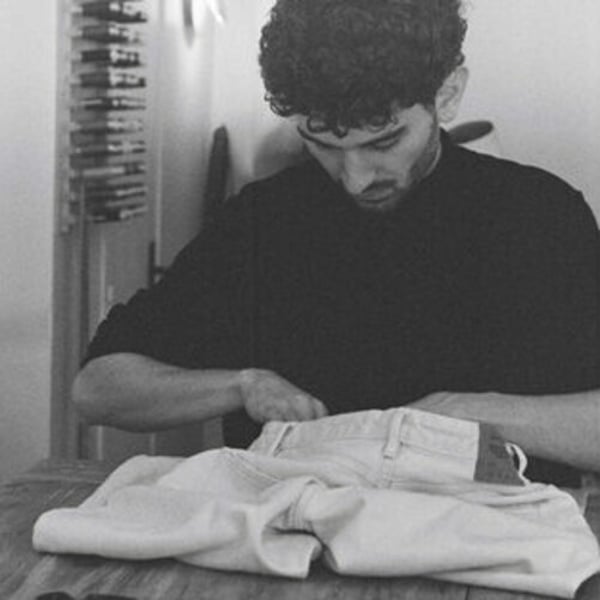
Tilli, the company that coordinates a network of 1,200 European textile repair and alteration workshops, was placed in receivership at its own request on September 17, 2025, according to FashionNetwork.com. When contacted, its founder, Beryl de Labouchere, explained the company’s situation: through this process, it is seeking a way to scale up to an industrial level.
Tilli
Launched in 2016, Tilli saw its revenue grow to €550,000 in 2024, up from €300,000 the previous year. With a staff of eleven, the network has also doubled its number of workshops over the past year, connecting customers in need of textile repairs and alterations. The platform now operates in England, Italy, Spain, Belgium, and Switzerland. Tilli currently collaborates with major international brands, including Zara, Etam, American Vintage, and Ba&sh, and aims to support its clients’ expansion into the U.S. market.
“Business is still growing,” said the founder. “But we realize that to fully reach our potential, bring as many people on board as possible, and become the European leader, we need acceleration at an industrial scale. It was with this in mind that we entered receivership, which is simpler for a buyer, to begin discussions.”
An acquisition offer reviewed by FashionNetwork.com has been submitted by Bleriot Reekom Factory, a company based in Aulnay-sous-Bois (Seine-Saint-Denis) that specializes in the upcycling and reconditioning of textiles and furniture. “Several other offers are currently being drafted,” added de Labouchere. Ideally, the buyer will be a player already operating in the field, able to rapidly increase order volumes and elevate Tilli to a new level.
Tilli’s customer portfolio includes a mix of fashion brands and retailers such as Cartier, Zapa, Soeur, Zadig&Voltaire, Tara Jarmon, Flotte, Madura, Asphalte, Faguo, Maison Lemoine, Bonjour, and Montagut — along with second-hand platform Vestiaire Collective and department store BHV Marais.
Expansion in Europe and the United States
In addition to its 1,200-workshop network, which generates 250,000 services annually, Tilli offers a strategic SaaS (software-as-a-service) platform. This subscription-based tool enables brands to integrate a search widget into their websites, helping customers find nearby textile service providers. Workshops retain 70% of the service price, with the remainder funding Tilli’s operations.
Aside from this referral service, 10% of Tilli’s revenue is generated through the direct shipment of products to remote workshops when no nearby provider is available.
Tilli
“All the partner brands that we have — and those joining us now — want to expand in Europe, and for some of them, very quickly in the United States. That’s another reason we’re looking to have an industrial player at our side: we need financing to accelerate, and on our own, that would take too long,” said de Labouchere, citing cash flow challenges. “When you’re first in a market, you have to invest to build everything. And initiatives to shift consumption, like ours, take time.”
In a market where competitors with distinct models, such as Prolong, Save Your Wardrobe, Sojo, and Les Réparables, are gradually emerging, Tilli has observed a surge in interest in textile repair — particularly in France, where the “repair bonus” covers part of the cost of services.
“Previously, our business was 30% repairs and 70% alterations. Now we’re at 50/50,” said the founder — a sign that demand for textile repair services is continuing to grow.
This article is an automatic translation. Click here to read the original article.
The demerger of Unilever‘s ice cream division, to be named ‘The Magnum Ice Cream Company,’ which had been delayed in recent months by the US government shutdown, will finally go ahead on Saturday, the British group announced.
Reuters
Unilever said in a statement on Friday that the admission of the new entity’s shares to listing and trading in Amsterdam, London, and New York, as well as the commencement of trading… is expected to take place on Monday, December 8.
The longest federal government shutdown in US history, from October 1 to November 12, fully or partially affected many parts of the federal government, including the securities regulator, after weeks without an agreement between Donald Trump‘s Republicans and the Democratic opposition.
Unilever, which had previously aimed to complete the demerger by mid-November, warned in October that the US securities regulator (SEC) was “not in a position to declare effective” the registration of the new company’s shares. However, the group said it was “determined to implement in 2025” the separation of a division that also includes the Ben & Jerry’s and Cornetto brands, and which will have its primary listing in Amsterdam.
“The registration statement” for the shares in the US “became effective on Thursday, December 4,” Unilever said in its statement. Known for Dove soaps, Axe deodorants and Knorr soups, the group reported a slight decline in third-quarter sales at the end of October, but beat market expectations.
Under pressure from investors, including the activist fund Trian of US billionaire Nelson Peltz, to improve performance, the group last year unveiled a strategic plan to focus on 30 power brands. It then announced the demerger of its ice cream division and, to boost margins, launched a cost-saving plan involving 7,500 job cuts, nearly 6% of the workforce. Unilever’s shares on the London Stock Exchange were steady on Friday shortly after the market opened, at 4,429 pence.
This article is an automatic translation. Click here to read the original article.
Burberry has named a new chief operating and supply chain officer as well as a new chief customer officer. They’re both key roles at the recovering luxury giant and both are being promoted from within.
Matteo Calonaci becomes chief operating and supply chain officer, moving from his role as senior vice-president of strategy and transformation at the firm.
In his new role, he’ll be oversee supply chain and planning, strategy and transformation, and data and analytics. He succeeds Klaus Bierbrauer, who’s currently Burberry supply chain and industrial officer. Bierbrauer will be leaving the company following its winter show and a transition period.
Matteo Calonaci – Burberry
Meanwhile, Johnattan Leon steps up as chief customer officer. He’s currently currently Burberry’s senior vice-president of commercial and chief of staff. In his new role he’ll be leading Burberry’s customer, client engagement, customer service and retail excellence teams, while also overseeing its digital, outlet and commercial operations.
Both Calonaci and Leon will join the executive committee, reporting to Company CEO Joshua Schulman.
JohnattanLeon – Burberry
Schulman said of the two execs that the appointments “reflect the exceptional talent and leadership we have at Burberry. Both Matteo and Johnattan have been instrumental in strengthening our focus on executional excellence and elevating our customer experience. Their deep understanding of our business, our people, and our customers gives me full confidence that their leadership will help drive [our strategy] Burberry Forward”.
Traditional and occasion wear designer Puneet Gupta has stepped into the world of fine jewellery with the launch of ‘Deco Luméaura,’ a collection designed to blend heritage and contemporary aesthetics while taking inspiration from the dramatic landscapes of Ladakh.
Hints of Ladakh’s heritage can be seen in this sculptural evening bag – Puneet Gupta
“For me, Deco Luméaura is an exploration of transformation- of material, of story, of self,” said Puneet Gupta in a press release. “True luxury isn’t perfect; it is intentional. Every piece is crafted to be lived with and passed on.”
The jewellery collection features cocktail rings, bangles, chokers, necklaces, and statement evening bags made in recycled brass and finished with 24 carat gold. The stones used have been kept natural to highlight their imperfect and unique forms and each piece in the collection has been hammered, polished, and engraved by hand.
An eclectic mix of jewels from the collection – Puneet Gupta
Designed to function as wearable art pieces, the colourful jewellery echoes the geometry of Art Deco while incorporating distinctly South Asian imagery such as camels, butterflies, and tassels. Gupta divides his time between his stores in Hyderabad and Delhi and aims to bring Indian artistry to a global audience while crafting a dialogue between designer and artisan.