Connect with us

Business

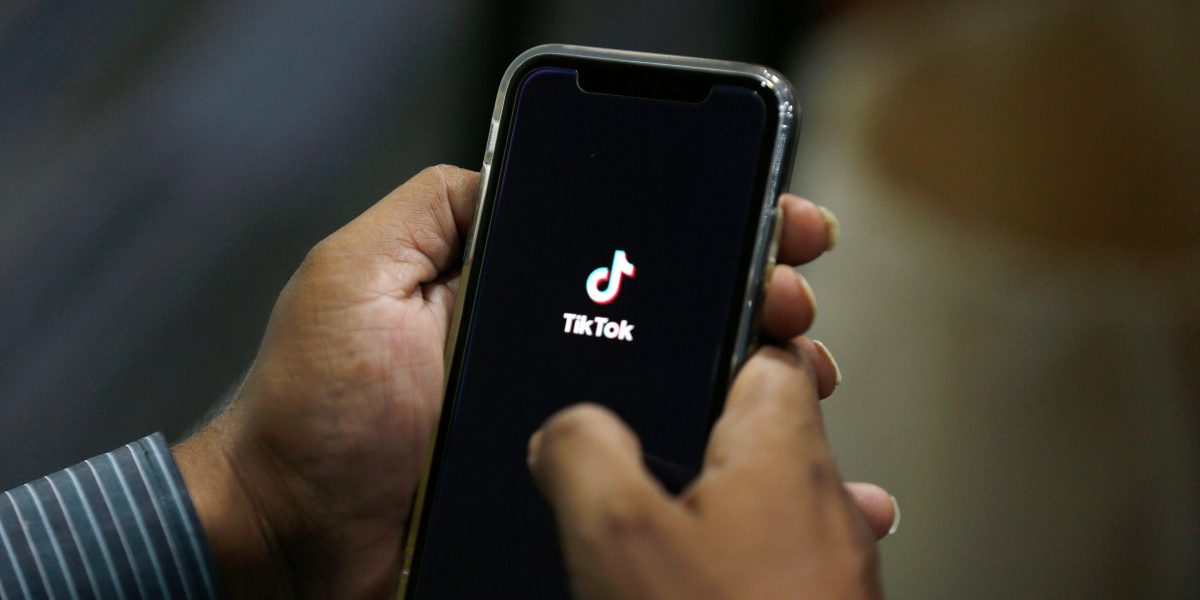
TikTok agrees U.S. joint venture deal with Oracle, Silver Lake and MGX

Published

on


TikTok has signed agreements with three major investors — Oracle, Silver Lake and MGX — to form a new TikTok U.S. joint venture, ensuring the popular social video platform can continue operating in the United States.

The deal is expected to close on Jan. 22, according to an internal memo seen by The Associated Press. In the communication, CEO Shou Zi Chew confirmed to employees that ByteDance and TikTok signed the binding agreements with the consortium.

“I want to take this opportunity to thank you for your continued dedication and tireless work. Your efforts keep us operating at the highest level and will ensure that TikTok continues to grow and thrive in the U.S. and around the world,” Chew wrote in the memo to employees. “With these agreements in place, our focus must stay where it’s always been—firmly on delivering for our users, creators, businesses and the global TikTok community.”

Half of the new TikTok U.S. joint venture will be owned by a group of investors — among them Oracle, Silver Lake and the Emirati investment firm MGX, who will each hold a 15% share. 19.9% of the new app will be held by ByteDance itself, and another 30.1% will be held by affiliates of existing ByteDance investors, according to the memo. The memo did not say who the other investors are and both TikTok and the White House declined to comment.

The U.S. venture will have a new, seven-member majority-American board of directors, the memo said. It will also be subject to terms that “protect Americans’ data and U.S. national security.”

U.S. user data will be stored locally in a system run by Oracle. The memo said U.S. users will continue “enjoying the same experience as today” and advertisers will continue to serve global audiences with no impact from the deal.

TikTok’s algorithm — the secret sauce that powers its addictive video feed — will be retrained on U.S. user data to “ensure the content feed is free from outside manipulation,” the memo said. The U.S. venture will also oversee content moderation and policies within the country.

American officials have previously warned that ByteDance’s algorithm is vulnerable to manipulation by Chinese authorities, who can use it to shape content on the platform in a way that’s difficult to detect.

The algorithm has been a central issue in the security debate over TikTok. China previously maintained the algorithm must remain under Chinese control by law. But the U.S. regulation passed with bipartisan support said any divestment of TikTok must mean the platform cuts ties — specifically the algorithm — with ByteDance.

The deal marks the end of years of uncertainty about the fate of the popular video-sharing platform in the United States. After wide bipartisan majorities in Congress passed — and President Joe Biden signed — a law that would ban TikTok in the U.S. if it did not find a new owner in the place of China’s ByteDance, the platform was set to go dark on the law’s January 2025 deadline. For a several hours, it did. But on his first day in office, President Donald Trump signed an executive order to keep it running while his administration tries to reach an agreement for the sale of the company.

Three more executive orders followed, as Trump, without a clear legal basis, continued to extend the deadline for a TikTok deal. The second was in April, when White House officials believed they were nearing a deal to spin off TikTok into a new company with U.S. ownership that fell apart after China backed out following Trump’s tariff announcement. The third came in June, then another in September, which Trump said would allow TikTok to continue operating in the United States in a way that meets national security concerns.

TikTok has more than 170 million users in the U.S. About 43% of U.S. adults under the age of 30 say they regularly get news from TikTok, higher than any other social media app including YouTube, Facebook and Instagram, according to a Pew Research Center report published this fall.

Shares of Oracle jumped $9.07, or 5%, to $189.10 in after-hours trading.

This story was originally featured on Fortune.com


Source link

Continue Reading

Business

Sam Altman says he’s ‘0%’ excited about running a public company as OpenAI preps IPO

Published

on


OpenAI may be building up to one of the largest initial public offerings ever, but CEO Sam Altman says he is not necessarily looking forward to helming a public company.

“Am I excited to be a public company CEO? 0%,” Altman said in an episode of the “Big Technology Podcast” published on Thursday. “Am I excited for OpenAI to be a public company? In some ways, I am, and in some ways I think it’d be really annoying.”

OpenAI is laying the groundwork for an IPO, with a Thursday report from The Wall Street Journal putting early talks of a valuation at $830 billion. In a more lofty estimate, the company could be valued at up to $1 trillion, Reuters reported in October, citing three sources. According to the Reuters report, chief financial officer Sarah Friar is eyeing a 2027 listing, with a potential IPO filing in late 2026.

Altman told “Big Technology” he didn’t know if his AI company would go public next year and was mum on details about fundraising, or the company’s valuation. OpenAI did not respond to Fortune’s request for comment.

Despite his hesitance to lead a public company—which are often under more scrutiny, greater regulatory oversight, and are associated with less influence from founders—OpenAI’s IPO wouldn’t be all bad, Altman noted. 

“I do think it’s cool that public markets get to participate in value creation,” he said. “And in some sense, we will be very late to go public if you look at any previous company. It’s wonderful to be a private company. We need lots of capital. We’re going to cross all of the shareholder limits and stuff at some point.”

An IPO would pave the way for OpenAI to raise the billions of dollars needed to compete in the AI race. Founded as a nonprofit in 2015, OpenAI just completed a complex restructuring in October that converted it into a more traditional for-profit company, giving the nonprofit controlling the company a $130 billion stake in it. The restructuring also gave Microsoft a reduced 27% stake in the company, as well as increased research access, while simultaneously freeing up OpenAI to make deals with other cloud-computing partners. 

More ‘code reds’ to come

OpenAI’s urgency to compete with rivals was apparent earlier this month when Altman declared a “code red” in an internal memo, following the surge of interest after Google rolled out its new Gemini 3 model in just one day, which the company said was the fastest deployment of a model into Google Search. Altman’s “code red” was an eight-week mandate to redouble OpenAI’s own efforts while temporarily postponing other initiatives, such as advertising and expanding e-commerce offerings.

The blitz appears to be paying off: Last week, OpenAI launched its new GPT-5.2 model, and earlier this week, it released a new image-generation model to compete with Google’s Nano Banana. Fidji Simo, OpenAI’s CEO of applications, said the update wasn’t in response to Google’s Gemini 3, but that the extra resources from the code red did help expedite its debut.

As OpenAI tries to address slowing user growth and retain and grow market share from its competitors, Altman conceded a code red will not be a one-off phenomenon. The all-out effort is a model that’s been employed by Google, and also Meta through Facebook’s more extreme “lockdown” periods. He downplayed the stakes of a code red, matching what sources told Fortune equated to a focused, but not panicked, office environment.

“I think that it’s good to be paranoid and act quickly when a potential competitive threat emerges,” Altman said. “This happened to us in the past. That happened earlier this year with DeepSeek. And there was a code red back then, too.”

Altman likened the urgency of a code red to the beginning of a pandemic, where action taken at the beginning, more so than actions taken later, have an outsized impact on an outcome. He expected code reds will be a norm as the company hopes to gain distance from the likes of Google and DeepSeek.

“My guess is we’ll be doing these once, maybe twice a year, for a long time, and that’s part of really just making sure that we win in our space,” Altman said. “A lot of other companies will do great too, and I’m happy for them.”


Source link

Continue Reading

Business

Klarna partners with Coinbase to receive stablecoin funds from institutional investors

Published

on


After staying out of crypto for years, the buy-now-pay-later giant Klarna has been making a flurry of moves in the digital asset space. The latest example came on Friday when the company said it is partnering with the crypto exchange Coinbase to accept stablecoin funds from institutional investors.

Klarna’s business model revolves around supplying consumers with zero-interest loans to buy goods, an arrangement known as buy-now-pay-later, or BNPL. The Swedish firm earns money primarily by charging merchants a small fee to offer its services, and acquires capital via a banking arm that accepts deposits and issues bonds. Its partnership with Coinbase will let institutional investors front capital denominated in stablecoins, a type of cryptocurrency pegged to underlying assets like the U.S. dollar.

“Stablecoin connects us to an entirely new class of institutional investors,” said Niclas Neglén, Klarna’s CFO, in a statement.

Friday’s announcement is the latest foray into crypto from Klarna, which went public in September. In late November, Klarna launched its own stablecoin, KlarnaUSD, on a new blockchain backed by the fintech giant Stripe and the crypto venture capitalist Paradigm. About two weeks later, the company said it was working with the crypto wallet developer Privy, which is owned by Stripe, to work on potential crypto products for its users.

Klarna’s crypto integrations come as more fintechs and banks dabble in stablecoins, which proponents say are a faster and cheaper means to send and receive money than existing financial rails.

On Thursday, the neobank SoFi announced that it was launching its own stablecoin. In early December, Sony’s banking arm said it was exploring the issuance of its own dollar-backed token. And even Block, the fintech that’s historically been a devoted Bitcoin booster, said that it will integrate stablecoins into Cash App, the digital wallet the company owns. 

The rush into stablecoins follows a series of landmark moments for the crypto assets over the past year. In February, Stripe closed a $1.1 billion deal to acquire the stablecoin startup Bridge. In June, the stablecoin issuer Circle went public in one of the year’s hottest IPOs. And, in July, President Donald Trump signed into law a new bill that creates a regulatory framework for stablecoins.

This story was originally featured on Fortune.com


Source link
Continue Reading

Business

AI hyperscalers have room for ‘elevated debt issuance’—even after their recent bond binge, BofA says

Published

on


The tech giants fueling the AI boom generate so much cash relative to their debt that they have more than enough room to issue more, according to Bank of America.

In a note this week, analysts looked at the top five publicly traded AI hyperscalers: Meta, Alphabet, Microsoft, Amazon and Oracle.

BofA pointed out that while the companies can fund their near-term capital expenditures with cash, they are tapping debt markets for balance-sheet flexibility and better cost of capital. Last month alone, Meta, Alphabet, and Amazon raised tens of billions of dollars in the bond market.

Operating cash flow for the big five hyperscalers is expected to hit $577 billion this year from $378 billion in 2023, while debt should climb from $356 billion to $433 billion.

That means their overall debt burden is actually getting lighter as the debt-to-cash ratio should dip from 0.94 to 0.75.

“Given the hyperscalers’ historically conservative capital allocation and balance sheet policies, elevated debt issuance is possible, as evident by the recent bond deals from Meta, Alphabet and Amazon,” BofA said.

And plenty of additional cash is on the way. By 2029, operating cash flow is seen jumping 95% to $1.1 trillion, while capex is forecast to grow at a much slower pace of 58% to $632 billion.

But then there’s Oracle. Unlike the other AI hyperscalers, it will have negative free cash flow until 2029, meaning its capex will exceed cash from operations, according to BofA. As a result, it doesn’t have much capacity to take on more debt.

Indeed, fears about Oracle’s debt binge have rattled the overall AI stock trade as the company isn’t a cash machine like its AI peers.

Recent earnings guidance was also weak, and the company raised its forecast for fiscal 2026 capex by another $15 billion. In addition, surging lease obligations have spooked Wall Street.

A Financial Times report on Wednesday that said alternative investments firm Blue Owl didn’t team up with Oracle on a data center after all piled on more concerns. Shares fell on the news, though the company’s development partner, Related Digital, said Blue Owl was outbid on the project and didn’t back out of it.

But even though debt may not pose a limit on hyperscalers’ ambitions, they still face physical limits, namely in building enough infrastructure fast enough to meet demand.

Data-center researcher Jonathan Koomey told Fortune’s Eva Roytburg that capital can be deployed instantly, but the equipment that capital must buy cannot. Tmelines for turbines, transformers, specialized cooling systems, and high-voltage gear have stretched into years, he explained.

“This happens every time there’s a massive shift in investment,” Koomey added. “Eventually manufacturers catch up, but not right away. Reality intervenes.”


Source link

Continue Reading

Trending

Copyright © Miami Select.