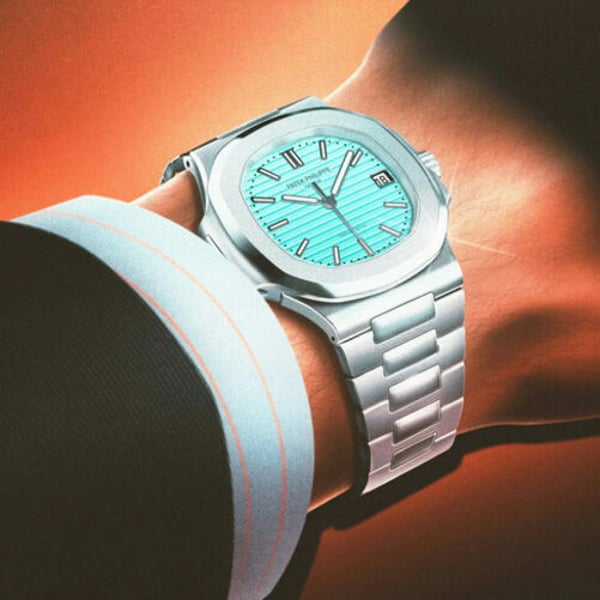
Tiffany & Co., the iconic American jeweler now owned by LVMH, is facing criticism from its wealthiest clients after a controversial sales strategy for an exclusive Patek Philippe timepiece. The limited-edition Nautilus 5711, featuring Tiffany’s signature robin’s-egg blue dial, became a flashpoint in luxury retail, with customers spending millions on jewelry in hopes of securing one of only 170 coveted watches priced at $52,635.
Patek Philippe fallout: Tiffany’s rare blue dial watch angers high-end shoppers – Bloomberg
Tiffany sales associates referred to them as “watch monsters.” These were the obsessives—the affluent clients who believed they deserved one of the rare Patek Philippe Nautilus 5711 watches made in Tiffany’s robin’s-egg blue.
To commemorate 170 years of collaboration between the two heritage brands, Patek Philippe produced just 170 timepieces. As demand soared, Tiffany’s leadership—led by Americas head Christopher Kilaniotis—recognized an opportunity: they could prompt clients to spend millions on jewelry for a chance to buy the $52,635 watch.
Salespeople were allegedly encouraged to guide top clients toward purchases worth $2 to $3 million. There was no official waitlist and no guarantees. Just whispers, strategy—and frustration.
“Everyone wanted that piece,” said luxury watch consultant Oliver R. Müller. “With rich people, if you tell them they can’t have something, they want it. It’s the psychology of billionaires.”
The release of the Blue Dial came during the pandemic-era luxury boom. For Tiffany, the timing was ideal. The brand had just entered a new chapter under LVMH Moët Hennessy Louis Vuitton SE, which acquired it for $16 billion in 2021. The acquisition was the largest in luxury history and aimed to reinvigorate Tiffany, whose sales had stagnated before the deal.
But what began as a masterstroke of exclusivity has become a cautionary tale—how mishandled scarcity can tarnish brand prestige.
Since the Blue Dial’s launch, Patek Philippe has closed three of its four boutiques inside Tiffany locations. Former staff say the fractured relationship with the Swiss watchmaker continues to weigh on store revenue and staff morale.
Tiffany’s press office declined to comment. Executives Kilaniotis and Anthony Ledru were unavailable for comment. However, LVMH maintains that Tiffany’s strategic shift—including upscale store renovations and a focus on high-end Icons collections—is paying off.
“We are seeing continued very good progress on Tiffany’s transformation plan,” said LVMH Chief Financial Officer Cécile Cabanis in April.
Tiffany remains the biggest contributor to LVMH’s watches and jewelry division, which also includes Bulgari and Tag Heuer. Despite that, Bloomberg forecasts the division will post a 1% revenue decline when LVMH reports earnings on July 24.
Patek Philippe declined to comment on its Tiffany relationship or the Blue Dial’s distribution.
In a 2021 interview, Patek President Thierry Stern hinted at potential trouble: “Tiffany executives may not realize how difficult it’s going to be to choose the clients.”
The financial logic for Tiffany was clear: If even two-thirds of the watches unlocked $2.5 million each in jewelry sales, the company stood to gain nearly $300 million. Sales staff could reportedly earn six-figure commissions on such deals.
But the execution left many clients bitter. Sources claim staff were warned not to put any bundling expectations in writing. Everything was discretionary—and often inconsistent.
Some loyal clients spent millions and received nothing in return. Others who did receive the watch grew frustrated when they appeared on the secondary market, often depreciating in value.
One client sued Tiffany over a $4 million jewelry purchase tied to a delayed custom necklace, ultimately settling out of court. Sources confirm that the client had purchased the jewelry to access the Blue Dial.
Another client, who was asked to spend $5 million, walked away and sold off his existing Patek watches from Tiffany in protest. “I don’t shop there anymore,” he said.
One entrepreneur from the Tri-State area spent over $2 million, believing the purchase would secure him the watch. Tiffany staff reportedly asked him to keep the amount confidential, since they quoted different spending thresholds to different clients.
Eventually, the backlash led Tiffany to make exceptions—allowing some clients to return items valued at over $75,000, which broke company policy, according to sources.
While Patek officially framed its boutique closures as part of a “global consolidation,” insiders claim the Blue Dial controversy played a significant role.
Meanwhile, some luxury clients shifted loyalty to rivals like Cartier. According to Euromonitor International, Tiffany’s global jewelry market share has dropped by one percentage point since 2022, while Cartier’s has increased.
In contrast to LVMH’s flat watch and jewelry sales, Richemont—owner of Cartier and Van Cleef & Arpels—reported 14% growth through March 2024.
Symbolically, the Blue Dial was meant to close a chapter. The final release of the 5711 model. The beginning of the LVMH era. “It was my little gift to say congratulations on buying Tiffany,” Stern said in 2021.
Tiffany had long served as one of Patek’s key U.S. partners. Its dual-stamped dials are highly prized. As hype grew, clients were placed on “wish lists”—a term deliberately used to avoid saying “waitlist,” which implied delay and disappointment.
When photos of celebrities like Jay-Z, LeBron James, and Leonardo DiCaprio wearing the Blue Dial surfaced in early 2022, frustration deepened among regular clients who had spent millions and still had nothing to show for it.
The bundling tactic—requiring jewelry purchases to access the watch—though common in the industry, remains controversial. Watchmakers discourage the practice, and retailers rarely speak of it openly.
“Watchmakers give stores impossible tasks,” said Eric Wind, of Wind Vintage. “You get three watches a year with hundreds on a list. So it becomes: Who’s spending more?”
In 2023, a California man sued a jeweler for allegedly pressuring him to purchase $221,000 worth of watches and jewelry to access a specific Patek model, which he never received.
In 2024, Hermès faced similar litigation over alleged bundling practices with its Birkin bags—an accusation the brand denies.
In April 2022, Tiffany invited top spenders to an exclusive Miami jewelry gala, where staff told guests that spending $2 million or more might secure them a Blue Dial.
Clients stayed in five-star accommodations, attended lavish dinners, and bought pieces worth millions. Sales exceeded expectations.
However, after the event, some clients who had made large purchases were never offered the watch. Others waited months. Frustration spread.
Auction prices for the Blue Dial have since dropped—from $6.2 million in December 2021 to around $1.2 million in 2024, according to WatchCharts.
Patek, known for its craftsmanship, discourages the reselling of its watches. Still, Tiffany reportedly failed to vet some buyers. Watching the resale values tumble became the final disappointment for many.
Yet the bundling continues. In December 2024, Charlie Ho, a Boston anesthesiologist, was told by Tiffany staff that buying jewelry might help him obtain a gold Patek 5396R.
Ho declined. “I’ve played that game,” he said. Years earlier, Ferrari told him to buy several cars to earn access to a limited-edition model. He bought five—and never got it.