
Politics
Tick tock — threats — Maduro — Gold Star — patents — TPS
On the brink
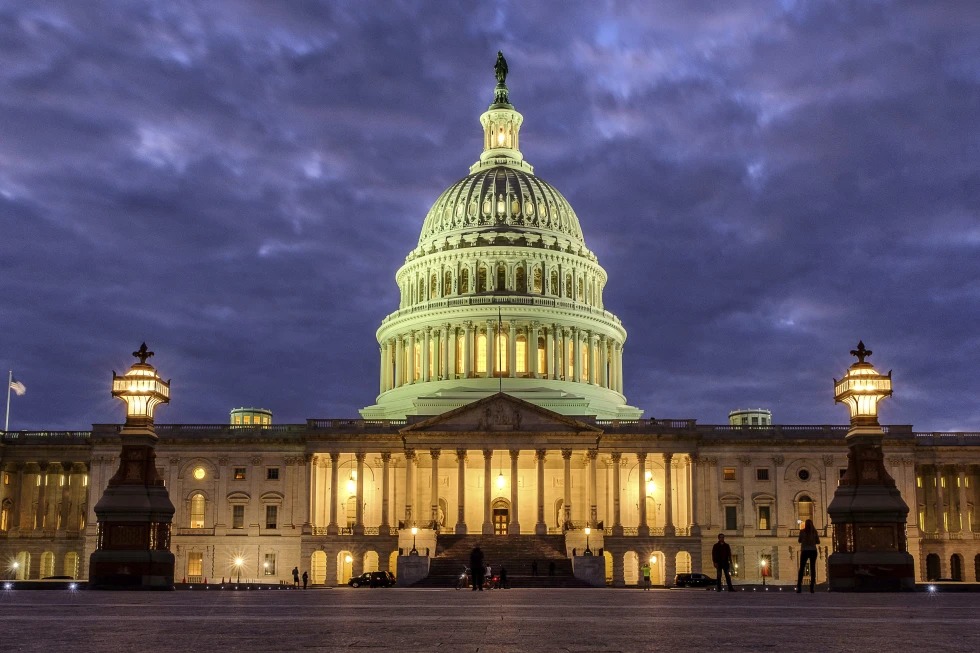
By midnight tonight, congressional leaders must reach an agreement to fund the government or endure the first federal shutdown in seven years.
Republicans and Democrats alike attribute the current stalemate to officials on the other side of the aisle taking an unreasonable position on health care. While Republicans control both the House and Senate, tight margins mean leaders still must mind compromise to land a budget resolution on President Donald Trump’s desk.
It must also, of course, be a deal that the President will sign.
Republicans in the House say they have already done their part and passed a bill out of the lower chamber.
“The federal government will shut down at 12:01 a.m. EST tomorrow. The House of Representatives sent a Continuing Resolution to keep the government open through November,” posted Rep. Jimmy Patronis, a Fort Walton Beach Republican. “The Senate cannot pass it because of (Senate Minority Leader) Chuck Schumer. He wants free health care for illegal immigrants (among other things).”
However, Democrats argue that a deal that cuts health care for Americans will also harm the nation’s economic well-being.
“Our health and jobs are NOT up for debate. The Republican led shutdown isn’t just about offices closing. It’s about working families losing paychecks and access to care,” posted Rep. Sheila Cherfilus-McCormick, a Miramar Democrat.
“As a mom, I understand the fight to protect your family’s future. I won’t cower, back down, or stay silent while Washington gambles with our health care and our jobs. A shutdown means delays and denials of care. Access to doctors, medicine, and lifesaving programs lost to families who can’t afford it. I will fight with everything I have to keep these protections.”
But after the Democrats lost the White House and both chambers of Congress, Republicans say that type of stubbornness won’t help anyone’s agenda.
“The Democrats supporting the Schumer Shutdown are playing a political game at the expense of the American taxpayer. Their last-minute $1 TRILLION in requests are not reasonable. The government does not need to shut down tomorrow night,” said Rep. John Rutherford, a Jacksonville Republican.
“House Republicans did our job passing a short-term, bipartisan and clean Continuing Resolution. This is something Democrats have supported in the past. Why not now? I hope to see Schumer and Senate Democrats do the same and keep the government open.”
The Republican plan, though, will create long-term costs for Americans, according to Rep. Debbie Wasserman Schultz, a Weston Democrat.
“The Republican health care crisis drives up health care costs for everyone,” she said Tuesday on MSNBC. “We need a bipartisan plan to lower health care costs, but Republican leaders refuse to negotiate.”
The coming hours will show if anyone blinks. However, if a shutdown does occur, the White House has signaled that it could have serious consequences. Office of Management and Budget Director Russell Vought said that without a Continuing Resolution passed, many federal employees will be furloughed.
No more shutdowns?
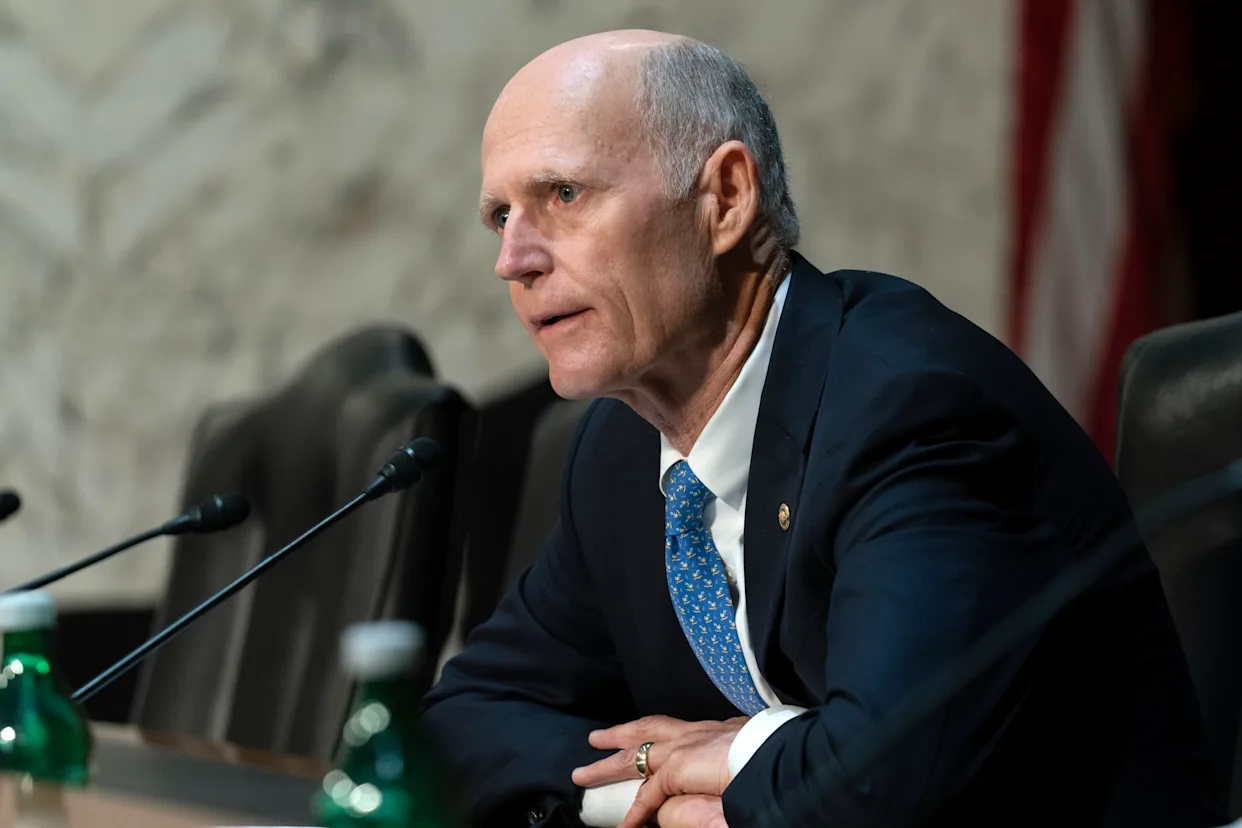
Disputes in Washington need not result in threats of government shutdowns, according to Sen. Rick Scott.
As another fight unfolds in Washington, the Naples Republican has filed the Eliminate Shutdowns Act with Sen. Ron Johnson, a Wisconsin Republican, which would take budget shutdowns off the table amid the brinkmanship over spending bills in Washington.
“The American people are sick of the constant looming threat of a government shutdown due to Leader (Chuck) Schumer and Democrats’ ridiculous demands,” Scott said.
“This most recent threatened Schumer Shutdown is just the latest in a string of temper tantrums the Democrats have thrown to try and stop President (Donald) Trump from delivering for the American people. Democrats’ demands are a wasteful, liberal wish-list while President Trump and Republicans are working to fund the government and work for the American people. Families shouldn’t suffer because of Democrats’ dysfunction.”
And if that doesn’t pass, Scott also has a bill filed that would make sure lawmakers also lose out on pay if they can’t reach a deal. The No Budget, No Pay Act requires lawmakers to pass annual budget bills on time or forgo their salaries.

Brainstorming Maduro
With increasing tension on the waters off Venezuela, Sen. Ashley Moody hosted a roundtable in Doral to discuss the flow of drugs from South America to South Florida.
The Plant City Republican said narco-terrorism has stemmed from Venezuela during President Nicolás Maduro’s regime. She convened a meeting of law enforcement and Venezuelan American leaders in Florida to discuss ways to combat the cartels.

“Narco-terrorism is a war on our country, our kids, and law and order. These terrorists smuggle overwhelming amounts of deadly drugs into our country and sell this poison, destabilizing our communities,” Moody said. “The cartels were emboldened and strengthened under the (Joe) Biden administration, but thankfully, President Trump has taken strong action against these terrorist organizations.”
She also called for the passage of two bills targeting trafficking. Those include the Stop Maduro Act, which increases the U.S. bounty on Maduro for drug charges to $100 million, and the Banning Operations and Leases with the Illegitimate Venezuelan Authoritarian Regime (BOLIVAR) Act, which prohibits U.S. public agencies from doing business with entities affiliated with the Venezuelan government.
“The Stop Maduro Act and BOLIVAR Act will help the President as he leads the charge against the cartels,” Moody said. “As I’ve done when I was a federal prosecutor, Florida’s Attorney General and now as U.S. Senator, I will continue fighting to stop drug trafficking, remove violent criminals from our communities and save lives.”
Gold Star
A bipartisan resolution (HRes 744) championed by Rep. Aaron Bean seeks to recognize families of U.S. Armed Forces members who lose their lives in service to the country.
“America stands strong because the cost of freedom has been paid in full by the brave men and women who gave their lives in service to this nation,” the Fernandina Beach Republican said. “We often say freedom isn’t free — but we must never forget just how steep that price truly is, especially for the families who carry its weight every single day. To our Gold Star families, I’m committed to honoring their sacrifice and legacy — not just in words, but through action.”

He introduced the measure, which would recognize Sept. 21-27 as Gold Star Families Remembrance Week.
Every President since 1936 has recognized the last Sunday in September as Gold Star Mother’s Day to recognize mothers who lose a child in the service. The resolution, though, would honor the sacrifices of all family members.
In addition to the resolution, Bean also announced this week that he is partnering with the Green and Gold Star Congressional Aide Program, agreeing to hire a veteran or Gold Star family member in his Clay County office.
“It’s a privilege to welcome a Green and Gold Star Aide to our team — someone whose life embodies patriotism and resilience,” Bean said. “Together, we’ll ensure that the people of Northeast Florida receive the care, support and respect they’ve earned.”

Patent crackdown
The International Trade Commission ruled in August that Chinese and Indian companies had illegally sold several tech products that infringed on a U.S. patent owned by Oura. Rep. Vern Buchanan applauded the ruling and urged the U.S. Trade Representative’s office to enforce the ruling.
The Longboat Key Republican said that’s in part because he’s a fan of the product.

“As Chair of the Health Subcommittee, I’ve made it a top priority to highlight the promise of wearable technology in transforming our health care system,” Buchanan said. “Oura was the first to bring its innovative smart ring technology to the American market and has invested significantly in research, development and manufacturing here in the United States.”
However, he also emphasized that it is vital for the U.S. to enforce its patents abroad.
“Protecting this progress is not only vital to upholding U.S. patent policy but also to safeguarding the privacy of patient health information,” Buchanan said.
“Upholding the ITC’s ruling will ensure that all companies choosing to invest in America can continue to grow and create jobs here at home. Foreign adversaries and competitors should not be allowed to mislead regulators or compromise the biometric data of American citizens. Congress must stand firm in protecting the health and security of the American people.”
He sent a letter to U.S. Trade Ambassador Jamieson Greer encouraging a criminal investigation into the infringement.
“The public interest factors weigh decisively in favor of enforcement,” the letter reads. These foreign-owned respondents collect vast quantities of sensitive biometric data while operating under weaker privacy regimes, thereby posing heightened cybersecurity, national security, and health privacy risks to American consumers.”
Sanibel soldier killed
A Sanibel native lost his life in a Black Hawk helicopter crash near Tacoma, Washington. The crash, which happened during a routine flight training west of Joint Base Lewis-McChord, killed four soldiers, including Chief Warrant Officer Andrew Kraus, as reported by CBS News.
Rep. Byron Donalds, a Naples Republican who represents Sanibel, mourned the loss.

“Last week, our nation lost four heroes. Among the fallen was Army Chief Warrant Officer Three Andrew Kraus of Sanibel,” Donalds said. “Erika and I join the entirety of our Southwest Florida community in praying for the strength of the Kraus family. May Andrew’s lasting legacy of service, sacrifice, and patriotism be a blessing to us all.”
The cause of the accident remains under investigation. Kraus was 39.

Rallying for TPS
The fight over temporary protected status for Venezuelans continues to play out in court. As the Supreme Court considers whether the Trump administration had the right to revoke legal immigration status for thousands, Wasserman Schultz made sure justices know how many in Congress feel.
The Weston Democrat co-led a legal brief with Sen. Chris Van Hollen, a Maryland Democrat, which argued Homeland Security Secretary Kristi Noem didn’t have the power to cancel legal protections for many Venezuelan nationals in the U.S.

“The Secretary’s actions not only violate the TPS statute but also contradict the bipartisan opposition to terminating Venezuela TPS,” the amicus brief reads. “Members of Congress on both sides of the aisle have long supported temporary protected status for Venezuelans who fled dangerous conditions in their country — conditions that persist today.”
The brief was joined by 167 Democratic members of Congress, including every Democrat in Florida’s congressional delegation.
No Republicans supported the brief, but Wasserman Schultz notably filed a bill earlier this year with Rep. María Elvira Salazar, a Coral Gables Republican, and Darren Soto, a Kissimmee Democrat, that would reverse the administration’s revocation of TPS for Venezuelans.
Trans socialists?
After the Utah shooting death of conservative pundit Charlie Kirk, Rep. Mario Díaz-Balart wants both the Justice and State Departments to investigate a trans rights group in that state.
The Hialeah Republican sent a letter to Attorney General Pam Bondi and Secretary of State Marco Rubio voicing concerns about the Armed Queers Salt Lake City, a radical group based in the Beehive State. He specifically criticized the past rhetoric of Ermiyah Fanaeian, a trans native of Iran.

“According to the since-deleted membership form on its website, AQSLC claimed to be dedicated to ‘the armed and militant protection of … oppressed people,’ abolishing prisons, and creating ‘a socialist society,’ Also in 2020, Fanaeian restarted a Salt Lake City chapter of the ‘Pink Pistols,’ but reportedly was forced to leave due to using the organization for advocacy outside the organization’s mission. Fanaeian reportedly founded the AQSLC two years later,” Díaz-Balart wrote.
He included the State Department in his concerns, he said, because the Armed Queers group, also known as AQSLC, is listed as a member organization by the National Network on Cuba, which the Congressman described as a propaganda group of the communist government’s May Day Brigade efforts.
Authorities arrested Tyler Robinson for Kirk’s shooting. They also made public text messages showing his romantic interest in a transgender roommate, but no relationship between Robinson and the Armed Queers group has been discussed.

Repurposing vacant homes
Salazar turned her attention this week to addressing a nationwide affordable housing crisis, one that is deeply felt in her South Florida district.
The Republican introduced the Revitalizing Empty Structures Into Desirable Environments (RESIDE) Act, which would authorize a pilot program providing local communities with grants to rehabilitate vacant buildings into affordable homes.

“Homeownership has long been a cornerstone of the American dream. In Miami, that dream has become increasingly unaffordable, especially for young people,” Salazar said. “The Revitalizing Empty Structures Into Desirable Environments Act is a bipartisan, budget-neutral, and common sense solution that would increase the supply of housing and make the dream of homeownership a reality.”
She filed the bill with Democratic Reps. Sam Liccardo of California, Johnny Olszewski of Maryland, and GOP Rep. Brian Fitzpatrick of Pennsylvania.
Senate language with the same effect appears in a housing package already advancing in Committee in the upper chamber.

Steady at SOUTHCOM
U.S. Southern Command in Miami hosted a pair of congressional delegation members for a tour this week, when Moody and Rep. Carlos Giménez, a Miami-Dade Republican, toured the facility.
“U.S. Southern Command plays a critical role in safeguarding our hemisphere,” Giménez said. “It was an honor to join Senator Ashley Moody and Admiral Alvin Holsey to see firsthand the work being done to protect our nation. In Congress, I remain committed to strengthening America’s military capabilities, protecting Florida, and ensuring the security of the United States against all who threaten our freedom.”

Moody said the facilities in South Florida also play a critical role in securing the border, despite Florida not having a land connection to another nation.
“Florida is a border state — not just because of geography, but because of the role we play as a first line of domestic defense when fighting drugs and human trafficking from Central and South America,” she posted.
“It was important to hear from SOUTHCOM how the U.S. is fighting back to keep our state and country safe and about the well-being and mission focus of our service members. Thank you to these brave men and women for their sacrifices to protect our homeland.”

On this day
Sept. 30, 1962 — “Riots erupt over desegregation of Ole Miss” via History.com — In Oxford, Mississippi, James H. Meredith, an African American student, is escorted onto the University of Mississippi campus by U.S. Marshals, setting off a deadly riot. Two men were killed before more than 3,000 federal soldiers quelled the violence. The next day, Meredith successfully enrolled and began attending classes amid the continuing disruption. A former service member in the U.S. Air Force, Meredith applied and was accepted to the University of Mississippi in 1962. Still, his admission was revoked when the registrar learned of his race.
Sept. 30, 1935 — “Franklin Roosevelt dedicates future Hoover Dam” via Mystic Stamp Company — President Roosevelt presided over the dedication ceremony of the Boulder Dam. As early as 1900, Black Canyon and Boulder Canyon were studied to consider the possibility that either might be able to support a dam to control floods, provide irrigation water, and create hydroelectric power. In 1922, a commission was established to equally divide the waters of the Colorado River among the Basin States. From this, the Boulder Dam Project (initially planned for Boulder Canyon but later relocated to Black Canyon) was established to construct a dam that would prevent silt and sediment from entering the Colorado River.

Happy birthday
Best wishes to Wasserman Schultz, who turned 59 on Saturday, Sept. 27.
___
Peter Schorsch publishes Delegation, compiled by Jacob Ogles, edited and assembled by Phil Ammann and Ryan Nicol.