Connect with us

Politics

Thousands of Cubans struggle without power and water nearly a month after Hurricane Melissa
Published

on


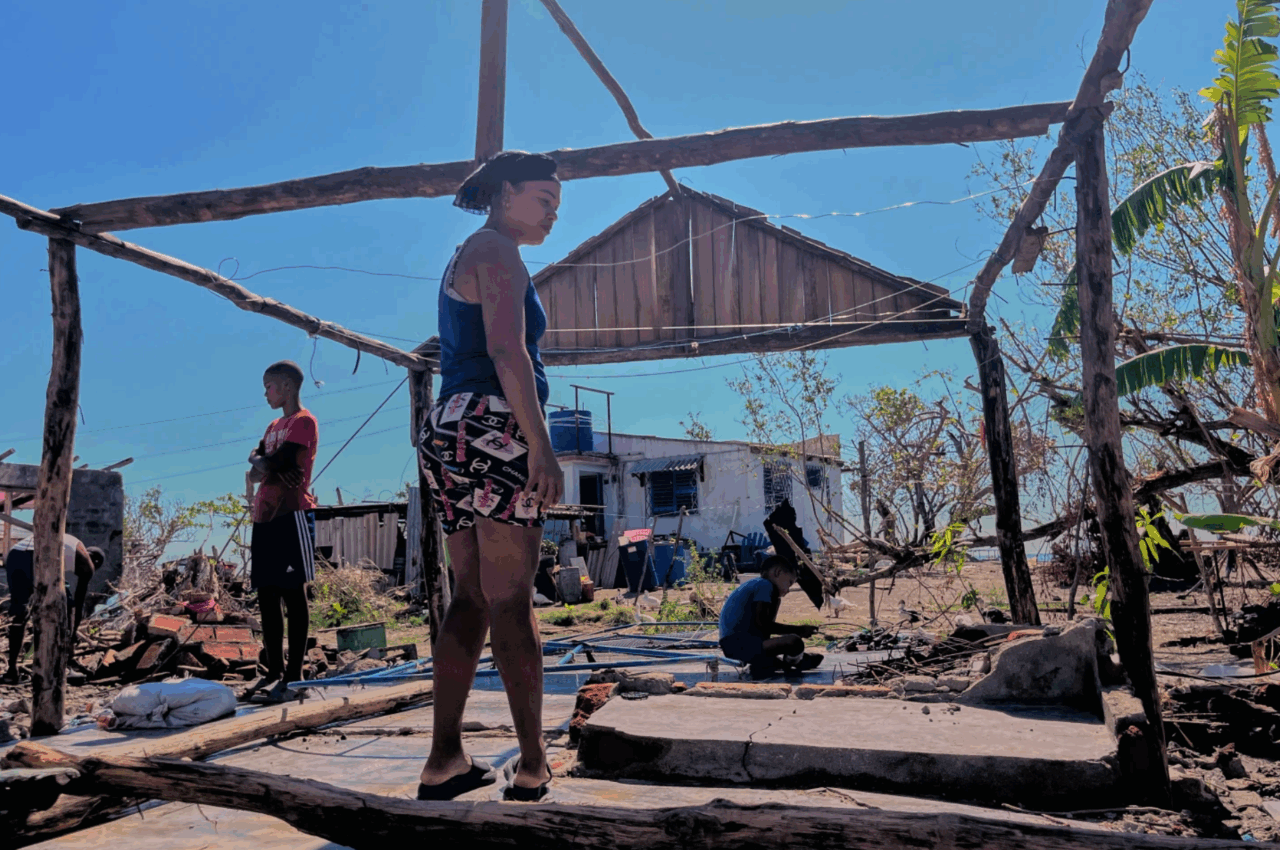
Thousands of Cubans remain without power, water or proper shelter almost a month after Hurricane Melissa pummeled the island’s eastern region as one of the strongest Atlantic storms in history.

By day, families walk toward the nearest river to fill plastic containers with water and by night, they squeeze together to sleep under temporary shelters and tents.

“We lost everything in the flood,” 80-year-old Lucía García said. “I am very depressed and very sad here.”

García is living in a small classroom with her two sons, ages 45 and 55, and her ailing 81-year-old husband, who remains bedridden.

The school where they’re staying in the town of Río Cauto serves as a shelter for 14 families and is providing daily meals to them and 25 other families living with relatives and neighbors. Water delivery trucks pass by every three or four days.

Many of the town’s residents lived by the river and lost their homes after Melissa cut through eastern Cuba, forcing nearby dams to release huge amounts of water.

More than 2,300 people were evacuated from the Río Cauto area, with more than 750 staying in private homes, according to a Nov. 10 report published in the official newspaper, Granma. It claimed that the return of residents to their homes “has been completed.”

Major damage also was reported in the nearby town of Los Mangos, where residents said massive floods hit a day after the storm made landfall.

“By dawn, the entire village was underwater,” recalled Anisleydis Hidalgo.

“We were evacuated before the hurricane hit,” she said. “When we returned home, they came to tell us there would be flooding…but no one expected the water to reach the level it did.”

She is living in a military-style tent with her 5-year-old daughter and two other families.

Lianet Socarras, a social worker from Los Mangos, said that 58 people, including 30 children, are sharing 10 tents donated by the government of India.

“The most critical problem we have now is the supply of drinking water in the community,” she said, noting that there is none.

‘The sea came into my house’

Soaked mattresses, electrical appliances, clothing, food, furniture and other belongings remain scattered outside the homes, with the smell of decaying carcasses of animals killed during the storm hanging over the town.

Neither the hurricane nor the floods damaged the electrical system in Los Mangos, but scheduled power outages have lasted many hours, further exacerbating an already difficult situation.

In the southern coastal municipality of Guamá, several towns are still reeling from the storm.

“The sea came into my house and soaked mattresses, electrical appliances and everything else that was there,” said Altagracia Fonseca, a 65-year-old retiree.

On a recent day, she walked to a nearby river to wash some of the clothes she was able to salvage after the storm.

Before Melissa hit, she had evacuated and packed only two changes of clothes, a toothbrush, toothpaste and a towel.

“I packed things like someone would when they are going to be away from home for a day,” she said as she burst into tears. “I never imagined I would find my house in such a state of disrepair. It was sad, very painful.”

Elizandra Sorrilla was in a similar situation.

“I packed clothes for myself and my children in a backpack; that’s all we have,” she said. “It’s something none of us will ever forget.”

Sorrilla, along with her husband, two children, and their dog, Roki, are living out of a small grocery store where they have improvised a kitchen and a space that serves as both bedroom and living room.

“They tell us they’re going to help us, but the resources haven’t arrived yet,” Sorrilla said.

Patience is running out

Power outages are constant in Guamá, and officials from the National Electric Union warned that repairs could take until mid-December.

But patience is running out.

Residents in the town of El Carmen recently blocked a main highway with fallen trees and electrical posts, noting they had been without electricity —even before Melissa hit.

“Everyone wants electricity, and we are working tirelessly to achieve this,” said Alfredo López, Director General of the National Electric Union, in a heated discussion with residents in the middle of the blocked road.

While food, mattresses, roof tiles and other items are being distributed to those affected by the storm, many needs are still going unmet as relations between Cuba and the U.S. are at their most tense since U.S. President Donald Trump and Secretary of State Marco Rubio took office.

They have implemented a radical tightening of sanctions against the island that were imposed more than six decades ago to pressure it to change its economic model.

No storm-related deaths were reported in Cuba, where authorities evacuated more than 700,000 people from coastal areas.

The U.N. said that some 53,000 people in Cuba have been unable to return to their homes, including 7,500 living in official shelters.

Melissa also made landfall in Jamaica, where at least 45 deaths were reported, and its outer bands swiped Haiti, where at least 43 people were killed.

____

Republished with permission of The Associated Press.


Source link

Continue Reading

Politics

Emily Duda Buckley family business gets philanthropic, gives $200K to cancel student lunch debt

Published

on


As part of its 100th anniversary celebrations, family-operated agriculture and real estate company DUDA has donated $200,000 to the nonprofit All for Lunch program to eliminate school lunch debt for students in Seminole County who qualify for free or reduced meals.

The company, which owns a suite of brands across the country in both agriculture and real estate development, includes leadership from Emily Duda Buckley, who is running for House District 38 to replace term-limited incumbent David Smith.

Duda Buckley is the senior manager for external affairs for DUDA, where she leads the company’s external engagement strategy with a primary focus on community relations, philanthropy and industry partnerships. She also monitors public policy and regulatory developments that may impact business operations.

“Education begins with meeting basic needs,” Duda Buckley said of the company’s donation to All for Lunch. “Clearing school lunch debt helps remove a quiet but very real barrier for students and families, and our family business is honored to support Seminole County schools in this meaningful way. When we support students, we support the entire community.”

The Duda family presented a check Tuesday to All for Lunch and Seminole County Public Schools, at Pine Crest Elementary.

“As we celebrate 100 years, it’s important for us to give back to the community that helped shape who we are,” said Tracy Duda Chapman, Chief Legal and Administrative Officer at DUDA.

“Our family firmly believes in sharing our blessings, and eliminating this lunch debt allows us to put those values into action and support Seminole County families in a tangible way. No child should carry the weight of a lunch debt, and we’re honored to help ensure students have access to the nutritious foods they need to optimize learning.”

The donation from DUDA will clear lunch balances for more than 3,600 Seminole County students who qualify for free meals and another 1,425 who receive reduced-price meals, collectively helping more than 5,000 students eliminate stress and focus on learning.

“DUDA’s donation made an immediate difference for thousands of students. When a partner steps forward at this scale, it allows us to lift a burden that many parents quietly struggle with. This gift didn’t just erase debt — it offers relief for families navigating tight household budgets month-to-month,” All for Lunch founder and Executive Director Alessandra Ferrara-Miller said.

It’s estimated that 1 in 6 kids in Central Florida face hunger on any given day, and Seminole County school leaders say this type of philanthropic support is a huge relief to those students and their families.

“The extraordinary generosity of DUDA exemplifies that community partnerships make a significant impact on the lives of our students and families,” Seminole County Public Schools Superintendent Serita Beamon said.

“This support provides a fresh start for many of our families and helps to ensure students and their families can focus on learning. On behalf of our students, families, and staff, thank you for making such a meaningful difference.”

And Seminole County Schools are also using the Duda family philanthropy as a tool to attract additional donors. All for Lunch has established a special donation page in honor of DUDA’s 100th anniversary contribution, allowing anyone in Central Florida to chip in to make a difference.

Emily Duda Buckley is one of three Republicans currently vying for the HD 38 seat, and she’s off to an early lead, with nearly $134,000 raised. The other two Republicans in the race are far behind, with Marcus Hyatt banking more than $35,000 and Austyn Cydney Spell hasn’t reported any fundraising.


Source link

Continue Reading

Politics

Have Democrats given up on the Pinellas County Commission?

Published

on


Three Pinellas County Commission seats are up for election this year, and Republicans incumbents are seeking re-election in all of them. Those office-holders appear relatively safe if 2025 campaign finance reports are any indication.

Brian Scott, who represents the countywide District 2 seat, is so far unopposed. Qualifying in the races runs June 8-12, so there is still time for a challenger to emerge. However, any would-be challenger would enter the race at an immediate funding disadvantage, with Scott raising more than $94,000 as of the end of 2025.

The other two incumbents facing re-election this year — Dave Eggers in District 4 and Kathleen Peters in District 6 — have drawn challengers, though neither have posted significant fundraising activity since entering the race.

There isn’t a Democrat challenging Eggers so far, but he faces intraparty opposition from fellow Republican Tony Ringelspaugh. Ringelspaugh, who describes himself as retired, raised just $1,000 since entering the race in October, and half of that was a contribution from himself to his campaign. As of Dec. 31, he hadn’t spent any of it.

Eggers, meanwhile, has raised nearly $19,000 and retains about $13,000. It’s a small sum compared to fundraising activity in past Pinellas County Commission races — note Scott’s nearly six-figure haul for a so far unopposed race — but it’s still enough to create a wide funding gap between his opponent.

And Ringelspaugh doesn’t appear to be actively campaigning at this point. His most recent post to his campaign Facebook page was on Oct. 15 announcing his bid. Ringelspaugh does not appear to have a campaign website, either.

Eggers also has strong institutional support, including recent nods from U.S. Reps. Gus Bilirakis and Anna Paulina Luna.

Eggers faced intraparty opposition four years ago, but won re-election that year with 68% of the vote. If no Democrat enters the race, and no one files as a write-in to close the Primary, the GOP Primary will be open to all voters.

District 4 covers the northernmost parts of Pinellas County, including Palm Harbor, East Lake, Tarpon Springs, Dunedin and Safety Harbor.

Peters is the top fundraiser among incumbents up for re-election this year, with $103,000 raised as of Dec. 31. Her opponent, architect David Glenn Jr., a Democrat, has collected less than $2,300.

While Glenn entered the race in December and only had three weeks of fundraising to report, his early activity doesn’t show a lot of momentum. All of his funds came from the candidate himself. Still, he has been at least somewhat active on social media and in the community, speaking at local Democratic clubs. His campaign website, though, doesn’t list any upcoming events.

Glenn previously said he was running to disrupt what he describes as entrenched county leadership. His platform emphasizes land use and development policy, arguing the need for more density and carefully planned growth. He also favors increased support for public transportation and affordable housing, and wants to crack down on nuisance short-term rental properties, among other priorities.

But getting that message to voters amid a six-figure funding deficit will be a challenge, and like her colleagues on the dais, Peters will have plenty of support from the county’s donor class.

Peter’s fourth-quarter haul, which was nearly $40,000, included top $1,000 donations from a number of local businesses and interests, including Marine construction companies Speeler Helicals, Bayside Dredging, Tampa Bay Marine Contractors, Haven Dock & Marine, Decks & Docks Lumber, Waterfront Property Services, and BCJ 2.

She also received top donations from a couple of bowling alleys, and from interests in real estate development, insurance, restaurant and automotive industries. The political committee supporting state Rep. Linda Chaney cut a $1,000 check in the fourth quarter, as did former state Rep. Jackie Toledo, both Republicans, among other donors.

First elected in 2018 with 60% of the vote over Democrat Amy Kedron, Peters was re-elected in 2022 without opposition.

Taken collectively, the three County Commission seats up for election this year may prove to be sleepy affairs unless current challengers step up campaign efforts.

The lack of competitive races so far may be a result of Pinellas County’s position as an increasingly red region. For Scott, countywide voter registration favors Republicans by about 47,000 voters. In Eggers’ District 4, Republicans outnumber Democrats by about 29,000 voters, and Democrats trail Republicans in Peters’ District 6 by about 23,000 voters.


Source link

Continue Reading

Politics

Florida Council of 100 recommends major upgrades in state severe weather prep

Published

on


A new report on Florida’s resilience to natural disasters concludes there are key challenges ahead for the state, as well as opportunities to modernize infrastructure to help streamline recovery after an emergency.

The Florida Council of 100 (FC 100), made up of of business leaders who analyze some of the biggest challenges facing the state, published a report called “Resilience Reimagined: Modern Policy and Innovation for a Stronger Florida.”

The document analyzes how long-term economic competitiveness can expand in the face of severe weather endemic to the state. The report concludes that even as hurricanes, flooding and other severe weather events are part of Florida living, resilience can become an economic component as well as an environmental effort.

“Florida’s future will be defined by how well we prepare for and respond to storms and flooding,” said George S. LeMieux, Chair of FC 100. “Resilience is not just about repairing damage. It is about protecting our economy, safeguarding communities, and ensuring Florida remains one of the most competitive places in the world to live and do business.”

Some of the key findings in the report, published Tuesday, include warnings that failure to invest in storm preparedness will result in lost economic activity, business closings and disruption to the job market, while insurance costs could rise. Long-term investments in recovery plans can reduce losses and accelerate recovery after major weather events.

Beyond outlining the issues that could damage Florida’s business sector, the FC 100 report provides several recommendations, including:

— Streamlining post-disaster recovery and permitting to reduce delays and uncertainty

— Hardening infrastructure and utilities to limit outages and economic disruption

— Modernizing Florida’s building code to reflect evolving flood, wind, and energy risks

— Incentivizing resilience investments by homeowners and communities

— Supporting resilience innovation and commercialization to grow new industries and jobs

“The choices we make now will shape Florida’s quality of life and economic strength for generations,” said Michael Simas, President and CEO of the FC 100. “This report offers a clear path forward and an opportunity for Florida to define itself not by its exposure to storms, but by its ability to thrive despite them.”

The FC 100 has more than 200 companies in its membership that represent more than 1.3 million workers in the state.


Source link

Continue Reading

Trending

Copyright © Miami Select.