Connect with us

Business

This millennial went from being a builder on $5 an hour to launching (and selling) Wingstop in the UK for $532 million—with no restaurant experience

Published

on


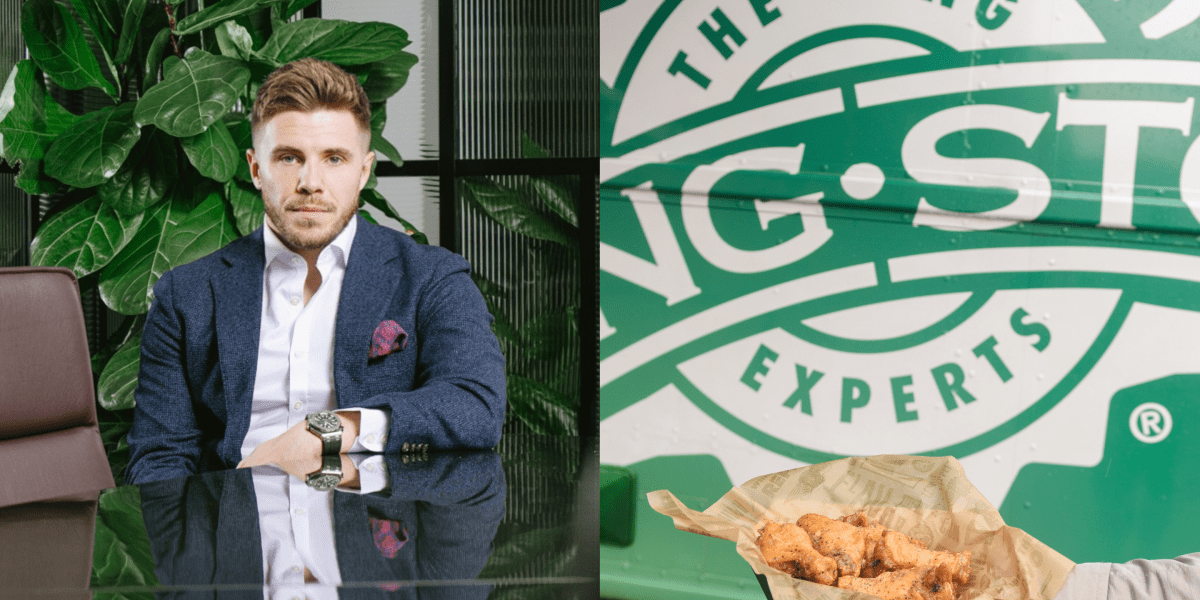
Tom Grogan’s first job paid him just £30 ($40) a day lugging bricks and hauling cement on a Birmingham building site. His latest payday? A £400 million ($532 million) takeover deal for the UK arm of Wingstop—the American fried chicken chain with celebrity fans like Kylie Jenner—that he cofounded with Herman Sahota and Saul Lewin.

And it’s all thanks to a chance encounter that traces back to when he was just 18 and not sure what he really wanted to do with his life. Like many Gen Zers today, the millennial decided to skip university and try his hand at the trade industry when he turned 16 years old. 

He had been working as a labourer on a building site for 2 years when he met a property developer. Like Grogan, he hadn’t gone to university either and made his way from the bottom to the top, so he began to mentor the teenager. 

“You meet certain people in life that change the direction of it,” Grogan exclusively told Fortune, adding that the mentorship led to an internship at Dragon Den (the UK equivalent of Shark Tank) star James Caan’s private equity firm in central London.

“So I started to understand how deals were put together. I was surrounded by a number of entrepreneurs, and that really quickly drove my fire to do something more with my life.”

“That very quickly led me to wanting to leave the world of employment to start my own business in the world of residential development and property development,” he added. “Along that journey, you have to meet lots of people, pitch for money. So I sort of understood the fundraising process and having worked within the world of private equity, I understood business plans and presentations.”

His real estate career set the stage for everything that followed, including meeting Sahota and Lewin—the men who would eventually help him launch Wingstop UK. They met while working in real estate and property development, but they decided to chance their arm in fast food seven years ago.

The trio saw the U.S. cult following and wanted to bring it to London. The problem? Nobody believed in them.

It took one cold email and 50 no’s before a $532 million yes

Grogan first discovered Wingstop through a line in a Rick Ross track—the Grammy-nominated rapper was a franchisee in the U.S. and heavily promoted the brand through his music. Wanting in, he tried his luck sending a cold email to the parent company in Texas. 

“That’s really how we discovered Wingstop,” Grogan says. “We Googled it, and back in September 2016, I sent a cold email to Wingstop HQ: ‘Hey, you’ve got no presence in Europe. We’d love to launch the brand in the UK.’ Honestly, my thought process was, I’ll figure it out afterwards. It was a punt.”

To his surprise, the U.S. team replied positively, and Grogan’s cofounders came on board to piece the deal together. “We managed to convince the US parent that one, we could raise the necessary capital, and two, we would assemble a team around us. Yes, we had no experience, but we had identified a market gap. No one in the UK food-and-beverage world was speaking authentically to younger consumers the way brands like Gymshark and Nando’s were,” he explains.

“We didn’t have to worry about product or even food at first. We later learned just how tough operations are in a restaurant business, but being naive allowed us to jump headfirst into the challenge with no preconceptions. That was a gift.” 

But getting the go-ahead was just the first hurdle: What followed were months and months of rejection from 50 investors. 

“Three young men with no experience in hospitality, ultimately trying to pitch a brand, that no one in Europe had really heard of at that time—that’s a huge red flag,” Grogan continued. “We had a lot of setbacks…We took a lot of no’s and we had a lot of stops and starts, but by the skin of our teeth, we managed to pull it off.” 

One of the largest fast-food brand takeovers in Britain

In the end, it took nearly a year to get that yes. “If we’d have stopped a week earlier, we wouldn’t be sat here now,” he said adding that each rejection was a lesson. “Ultimately, by the 50th presentation, a lot of the concerns that early investors had raised had either been figured out or we had an answer for.”

By then, they’d managed to secure what is now the site for their flagship restaurant in London’s West End. “So it made it a bit more real for those later investors that came to speak to us,” Grogan adds. “We say amongst ourselves that the stars have aligned on this journey, and that was probably one of the first stars that did align for us.” 

And the stars really did align for Grogan and the team. They built the UK Wingstop brand from scratch; following in the U.S. branches’ targeting of Gen Z and millennial consumers, using social media and the celebrities of the moment. Today, there are 57 Wingstop sites in the UK.

Nearly nine years after sending that first cold email, the trio sold a majority stake of Lemon Pepper Holdings (Wingtop UK’s parent company) to Californian private equity firm Sixth Street just before the New Year. Already, it has plans to expand to 200 UK sites in the next five years. The deal marked one of the largest takeovers of a restaurant brand in Britain. 

And Grogan, a 35-year-old Brit with zero prior restaurant cashed in his share of a £400 million ($532 million) windfall.

Reflecting on his meteoric rise from construction sites, Grogan tells the next generation of aspiring entrepreneurs that real-world experience—not lectures—shapes success.

“Unless you want to be a doctor or a lawyer, university is a waste of time. The experiences that you can have within the world of business, or with a mentor, or by becoming street smart are far more valuable than a textbook.” 

Fortune Global Forum returns Oct. 26–27, 2025 in Riyadh. CEOs and global leaders will gather for a dynamic, invitation-only event shaping the future of business. Apply for an invitation.


Source link

Continue Reading

Business

What the new wave of agentic AI demands from CEOs

Published

on


For decades, technologies have largely been built as tools, extensions of human intent and control that have helped us lift, calculate, store, move, and much more. But those tools, even the most revolutionary ones, have always waited for us to ‘use’ them, assisting us in doing the work—whether manufacturing a car, sending an email, or dynamically managing inventory—rather than doing it on their own. 

With recent advances in AI, however, that underlying logic is shifting. “For the very first time, technology is now able to do work,” Nvidia CEO Jensen Huang recently observed. “[For example], inside every robotaxi is an invisible AI chauffeur. That chauffeur is doing the work; the tool it uses is the car.”

This idea captures the transition underway today. AI is no longer just an instrument for human use: Rather, it is becoming an active operator and orchestrator of “the work” itself, not only capable of predicting and generating, but also planning, acting, and learning. This emerging class—“agentic” AI—represents the next wave of artificial intelligence. Agents can coordinate across workflows, make decisions, and adapt with experience. In doing so, they also blur the line between machine and teammate. 

For business leaders, that means agentic AI upends the fundamental management calculation around technology deployment. Their job is no longer simply installing smarter tools but guiding organizations where entire portions of the workforce are synthetic, distributed, and continuously evolving. With agents on board, companies must rethink their very makeup: how work is designed, how decisions are made, and how value is created when AI can execute on its own. How organizations redesign themselves around these agentic capabilities will determine whether AI becomes not just a more efficient technology, but a new basis for strategic differentiation altogether.

To better understand how executives are navigating this shift, BCG and MIT Sloan Management Review conducted a global study of more than 2,000 leaders from 100+ countries. The findings show that while organizations are rapidly exploring agentic AI, most enterprises still need to define the overall strategies and operating models needed to integrate AI agents into their daily operations. 

The organizational challenge: Redesigning the enterprise

Agentic AI’s perceived dual identity—as both machine and teammate—creates tensions that traditional management frameworks cannot easily resolve. Leaders can’t eliminate these tensions altogether; they must instead learn to manage them. There are four organizational tensions that stand out:

  1. Scalability versus adaptability. Machines scale predictably, while people adapt dynamically. Agentic AI can do both, requiring new organizational design principles capable of balancing efficiency with flexibility across workflows.
  2. Experience versus expediency. Leaders must weigh building long-term capabilities against moving fast enough to capture near-term opportunities in a technology landscape that changes rapidly.
  3. Supervision versus autonomy. Agentic AI requires oversight not just of outputs but of actions; organizations must decide when humans stay in the loop and when agents act independently, with clear accountability structures for each.
  4. Retrofitting versus reimagining. Leaders must choose when to layer AI onto existing processes for immediate benefit and when to rebuild end-to-end workflows around agentic potential.

The companies furthest ahead aren’t resolving these tensions outright. Instead, they’re embracing them—redesigning systems, governance, and roles to turn the frictions into forward momentum. They see agentic AI’s complexity as a feature to harness, not a flaw to fix.

What leaders should be doing now

For CEOs, the challenge now is figuring out how to lead an organization where technology acts alongside people. Managing this new class of systems requires different frameworks than previous waves of AI. While predictive AI helped organizations analyze faster and better and generative AI helped create faster and better, agentic AI now enables them to operate faster and better, by planning, executing, and improving on its own. That shift upends traditional management approaches, requiring a new playbook for leadership.

Reimagine the work, not just the workflow. In predictive or generative AI, the leadership task is to insert models into workflows. But agentic AI demands something different: It doesn’t just execute a process—it reimagines it dynamically. Because agents plan, act, and learn iteratively, they can discover new, often better ways of achieving the same goal. 

Historically, many work processes were designed to make humans mimic machine-like precision and predictability: Each step was standardized so work could be replicated reliably. Agentic systems, however, invert that logic: Leaders only need to define the inputs and desired outcomes. The work that happens in between those starting and ending points is then organic, a living system that optimizes itself in real time. 

But most organizations are still treating AI as a layer on top of existing workflows—in essence, as a tool. To take advantage of agentic AI’s true potential, leaders should start by identifying a few high-value, end-to-end processes—where decision speed, cross-functional coordination, and learning feedback loops matter most—and redesign them around how humans and agents can learn and act together. The opportunity is to create systems that can both scale predictably and adapt dynamically, not one or the other.

Guide the actions, not just the decisions. Earlier AI waves required oversight of outputs; agentic AI requires oversight of actions. These systems can act autonomously, but not all actions carry the same risk. That makes the leadership challenge broader than determining decision rights. It’s defining how agents operate within an organization: what data they can see, which systems they can trigger, and how and to what extent their choices ripple through an organization. While leaders will need to decide which categories of decisions remain human-only, which can be delegated to agents, and which require collaboration between the two, the overall focus should be around setting boundaries for agent behaviors.

Governance can therefore no longer be a static policy; it must flex with context and risk. And just as leaders coach people, they will also need to coach agents—deciding what information they need, which goals they optimize for, and when to escalate uncertainty to human judgment. Companies that embrace these new approaches to governance will be able to build trust, both internally and with regulators, by making accountability transparent even when machines may be executing.

Rethink structures and talent. Generative AI changed how individuals work; agentic AI changes how organizations are structured. When agents can coordinate work and information flow, the traditional middle layer built for supervision will shrink. That’s not a story of replacement—it’s a redesign. The next generation of leaders will be orchestrators, not overseers: people who can combine business judgment, technical fluency, and ethical awareness to guide hybrid teams of humans and agents. Companies should start planning now for flatter hierarchies, fewer routine roles, and new career paths that reward orchestration and innovation over task execution.

Institutionalize learning for humans and agents. Like people, agents drift, learn, and—most critically—improve with feedback. Every action, interaction and correction makes them more capable. But that improvement depends on people staying engaged, not to control every step, but to help systems learn faster and better. 

To make that happen, leaders should create continuous learning loops connecting humans and agents. Employees must learn how to work with agents—how to improve them, critique them, and adapt to their evolving capabilities—while agents improve through those same interactions, across onboarding, monitoring, retraining, and even “retirement.”

Organizations that treat this as a shared development process—where people shape how agents learn and agents elevate how people work—will see the biggest gains. Managing this loop requires viewing both humans and agents as learners, and creating structures for ongoing training, retraining, and knowledge exchange. When this process is done right, the organization itself becomes a continuously improving system, one that gets smarter every time its humans and agents interact.

Build for radical adaptability. Traditional transformation programs were designed for predictability. Agentic AI, however, moves too fast for those to keep up. Leaders need organizations that can adapt continuously—financially, operationally, and culturally. But adaptability in the agentic era isn’t just about keeping up with a faster technology cycle, it’s about being ready to evolve as your organization learns alongside its agents. Each new capability can reshape responsibilities, decision flows, and even what “good performance” looks like.

Leaders will need to treat adaptability not as crisis management but as an organizing principle. That means budgeting for constant reinvestment, building modular structures that allow functions to reconfigure as agents take on new roles, and cultivating cultures where experimentation is routine rather than exceptional. Agentic AI rewards organizations that can lean into continuous, radical change. This kind of “agent-centricity” means reassigning talent, updating processes, and refreshing governance in response to what the system itself learns. The most resilient companies will see adaptability not as a defensive reflex, but as a defining source of advantage.

The agentic enterprise 

For years, the story of AI has been one of automation—doing the same work faster, cheaper, and with fewer people. But that era is coming to an end. Agentic AI changes the nature of value because it can reshape the organization itself: how it learns, collaborates, and evolves. The next frontier is radical redesign, not repetition.

The real opportunity is to set up an enterprise that can reinvent itself continuously, where agentic AI becomes the connective tissue—linking knowledge, decision-making, and adaptation into one living system. This is the foundation of what we call the Agentic Enterprise Operating System: a model where human creativity and machine initiative evolve together, dynamically redesigning how the company works. Companies that embrace this shift will outgrow those still chasing efficiency—they will be the ones defining how value, capability, and competition work in the age of AI.

Read other Fortune columns by François Candelon.

Francois Candelonis a partner at private equity firm Seven2 and the former global director of the BCG Henderson Institute.

Amartya Das is a principal at BCG and an ambassador at the BCG Henderson Institute.

Sesh Iyer is a managing director and senior partner at BCG. He is the North America chair for BCG X and the insight leader for the BCG Henderson Institute’s AI and Technology Lab. 

Shervin Khodabandeh is a managing director and senior partner at BCG.

Sam Ransbotham is a professor of analytics at Boston College’s Carroll School of Management.


Source link

Continue Reading

Business

Asia will get steady growth next year, defying global headwinds: Mastercard’s chief APAC economist

Published

on


“The actual contributions to global growth come more from the Asia-Pacific region than they do from the Americas or Europe,” says David Mann, Mastercard’s chief APAC economist, in an interview with Fortune. 

Mann credits plentiful investment, particularly in technology and infrastructure associated with the AI buildout, for Asia’s resilient growth. He adds that the APAC region is unique as three-quarters of its foreign direct investment comes from the rest of the region, rather than from non-Asian sources. 

With the U.S. being an increasingly unreliable trade partner, Asian countries are looking to build supply chains with their neighbors. “Even more investment is going into other markets around the region, from China, to Japan and South Korea, to help expand supply chains and capacity in multiple markets for diversification,” says Mann. 

Uneven growth in ASEAN

Mastercard predicts that growth trajectories will diverge in Southeast Asia next year. Among the ASEAN-5 nations (the five founding and largest economies of the Association of Southeast Asian Nations), Indonesia and the Philippines will expand steadily, while growth moderates in Malaysia, Singapore, and Thailand.

“We think that there will be some support in Indonesia, from fiscal policy and investment expansion,” Mann says, adding that he predicts “steady growth” (5% real GDP growth) in Southeast Asia’s most populous country.

In the Philippines, multiple one-off shocks in 2025 have led analysts to predict stronger growth rates in 2026, due to more moderate growth this year.

Thailand, on the other hand, is going through a “softer patch”, with Mann calling it one of the slower-growing economies in the region.

Mastercard predicts real GDP growth in Thailand to slow to 1.8% in 2026. The country faces “relatively large” demographic challenge, Mann adds, pointing to the country’s rapid transition into a super-aged society due to its record-low birth rates.

The rising middle class

Yet, Mann argues that there are reasons to be optimistic about Southeast Asia’s growth.

“ASEAN itself is a big, significant global player, even compared to Eastern Europe, Western Europe, Latin America and the EMEA region,” he says. “It’s a significant region that has still got a rising middle class and urbanization story, especially in places like Vietnam.”

The young region’s growing affluence will also increase consumer spending, further spurring growth. Southeast Asia’s relatively young, digitally-savvy demographic also provides a steady flow of customers chasing the latest consumer trends. 

“If you’re producing in Indonesia, you would be selling there as well, because it’s such a huge market—over 40% of the ASEAN populace is in Indonesia itself,” says Mann. 

A richer demographic is also likely to travel more. “As you get more and more people becoming more affluent, they’re moving beyond just buying stuff to going for experiences—and travel is at the top of that list,” says Mann.

The resurgence of tourism after the pandemic is also a boon for Southeast Asia, a popular travel destination for regional and global tourists alike. In 2025, Thailand especially saw a surge in tourists, following the release of the third season of hit HBO TV series, The White Lotus, which was filmed in various Thai cities including Koh Samui, Phuket and Bangkok.

Globally, alternative destinations (or destination dupes) have also grown increasingly popular, as  travelers seek out the path less trodden. “That means that you can see even more places opening up where you get tourists going in—where they’d never been before,” Mann explains. This would spur job creation and infrastructure investment, and spread the economic gains from tourism over different regions of the country.

“In places like Thailand or Malaysia, we have seen an increased dispersion of the share of spending. It used to be that the top five destinations had the lion’s share of all the spending in the country by tourists—and that has been going down steadily year after year,” Mann says.


Source link

Continue Reading

Business

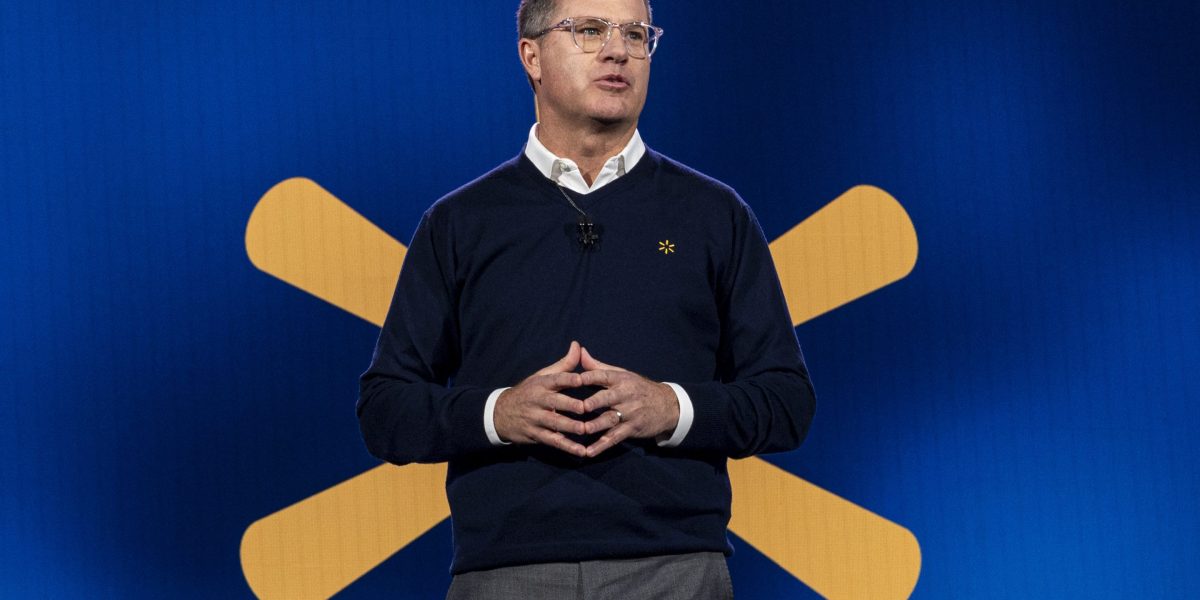
What it’s like to be mentored by Walmart CEO Doug McMillon

Published

on


Good morning. I’m always fascinated by who CEOs turn to for feedback, and who they choose to mentor outside their companies. Some relationships develop organically through working with people who become friends after you move on. (I feel fortunate to remain connected to former bosses like Norman Pearlstine, as well as numerous colleagues over the years.)

Then there are the leaders whose names come up because they offered advice or made a gesture that was meaningful to another CEO. One of those names is Walmart’s Doug McMillion, who is retiring as CEO next month after 12 years at the helm. A lot will be written about his legacy in transforming the world’s largest retailer into a daunting competitor in the digital realm. But Carla Vernón, CEO of the Honest Company, recently recounted a story about him that stuck with me.

About a year ago, Vernón said, she had an opportunity to meet McMillion for about 30 seconds at an event. Instead of talking about the business that her $383 million-a-year company does with the $704 billion-a-year Walmart, she took a different tack: “I said, ‘I want to be an extraordinary CEO. You are, in my view, one of the best of our time. So, if I could borrow a bit more time from you, I would love to ask you a question or two.”

McMillion shared his email with Vernón, who’d been CEO since 2023, and told her to get in touch. “I thought it would be like a Zoom call, but he invited me to come to Bentonville with one of my leaders and set up an entire day of one-on-ones for us,” she said. “He connected us with everybody who we needed to know strategically, everybody on his executive team who he thought might be able to help me build a strong executive team in the C-Suite. There was no agenda and this was Q4, which is the season for retailers that’s super busy.”

She compares her experience in Bentonville to being in a regional dance company and getting invited to go backstage and watch the New York City Ballet rehearse The Nutcracker. “If I can, for one day, watch what the very best at what they do do, then I’m going to forever realize what’s possible from myself as a leader,” said Vernón, who brought her VP of Sales. “When you meet somebody who you think of as some kind of iconic business brilliant mind, and realize they are just human, trying to have a good life, trying to be good to others, it’s helpful to put in perspective what is possible for you.”

It’s clear she was moved by McMillon’s desire to help her in a meaningful way. “I’m Afro-Latina. I’m female … In these companies that we get to run, the people are changing. They are changing in their generational values. They’re changing in what they look like. The companies that we love will be run by different kinds of people in the next 20 or 30 years,” she said. “I wish that, in our sector of CEOs, we took more time to help coach, grow and build each other, so that maybe we could be a stronger body doing right by businesses, employees, culture and society. We’re in such units of one and we don’t have to be.”

Contact CEO Daily via Diane Brady at diane.brady@fortune.com

Top news

Do Kwon given 15 years in prison

The founder of Terraform Labs and its algorithmic stablecoin TerraUSD, which collapsed in 2022, costing investors $40 billion and triggering a “crypto winter,” was sentenced on fraud charges.

Lululemon CEO ousted for not being cool enough

Despite tripling sales at the athletic-wear company since 2018, Calvin McDonald will leave the company in January. Founder Chip Wilson blamed him for the company’s “loss of cool.” Although the company most recently reported a 7% increase in revenues, its sales in the americas were down 2%.  Finance chief Meghan Frank and chief commercial officer André Maestrini will serve as interim co-CEOs.

Why Trump is targeting Venezuelan oil ships

Ninety percent of Venezuelan exports are oil, the WSJ says, and by threatening Maduro’s ability to export the fuel it forces Maduro to discount its sales and drain the country’s reserves. It could ultimately destabilize the regime.

HSBC ends 160-year-old management track

HSBC has closed its historic “International Manager” program, founded at the company in the 1800s, which rotated an elite group of generalist executives from country to country. “HSBC employees don’t need this special status,” a source told the FT. “There is this snooty attitude and haughty air attached to being an IM.”

OpenAI releases new model

OpenAI released its new AI model GPT-5.2 on Thursday, less than a month after its predecessor, as competition from rivals like Google and Anthropic heats up. The company claims that the model is particularly apt at coding, mathematical reasoning, and “knowledge work.”

Disney announces partnership with OpenAI

Disney announced a $1 billion investment and three-year licensing deal with OpenAI that allows users on Sora, OpenAI’s video generation platform, to create content featuring Disney’s copyrighted characters. In a statement announcing the agreement, Disney CEO Bob Iger stated that the partnership will allow the company to “thoughtfully and responsibly extend the reach of our storytelling through generative AI.”

Powell fears K-shaped economy

U.S. Federal Reserve Chair Jerome Powell confirmed that a “K-shaped economy” appeared to be developing in the U.S. and questioned whether it was “sustainable.”

The markets

S&P 500 futures were flat this morning. The last session closed up 0.21% to hit a new reofrd high of 6,901. STOXX Europe 600 was up 0.37% in early trading. The U.K.’s FTSE 100 was up 0.38% in early trading. Japan’s Nikkei 225 was up 1.37%. China’s CSI 300 was up 0.63%. The South Korea KOSPI was up 1.38%. India’s NIFTY 50 was up 0.51%. Bitcoin went to $92K.

Around the watercooler

Exclusive: YouTube launches option for U.S. creators to receive stablecoin payouts through PayPal by Ben Weiss

Apple’s Steve Jobs told students to never ‘settle’ in their careers: ‘If you haven’t found it yet, keep looking’ by Emma Burleigh

Why Jerome Powell’s latest rate cut still won’t help you get a lower mortgage rate by Sydney Lake

‘We have not seen this rosy picture’: ADP’s chief economist warns the real economy is pretty different from Wall Street’s bullish outlook by Eleanor Pringle

‘We’re not just going to want to be fed AI slop for 16 hours a day’: Analyst sees Disney/OpenAI deal as a dividing line in entertainment history by Nick Lichtenberg

CEO Daily is compiled and edited by Joey Abrams, Jim Edwards, and Lee Clifford.


Source link

Continue Reading

Trending

Copyright © Miami Select.