Connect with us

Business

This millennial went from being a builder on $5 an hour to launching (and selling) Wingstop in the UK for $532 million—with no restaurant experience

Published

on


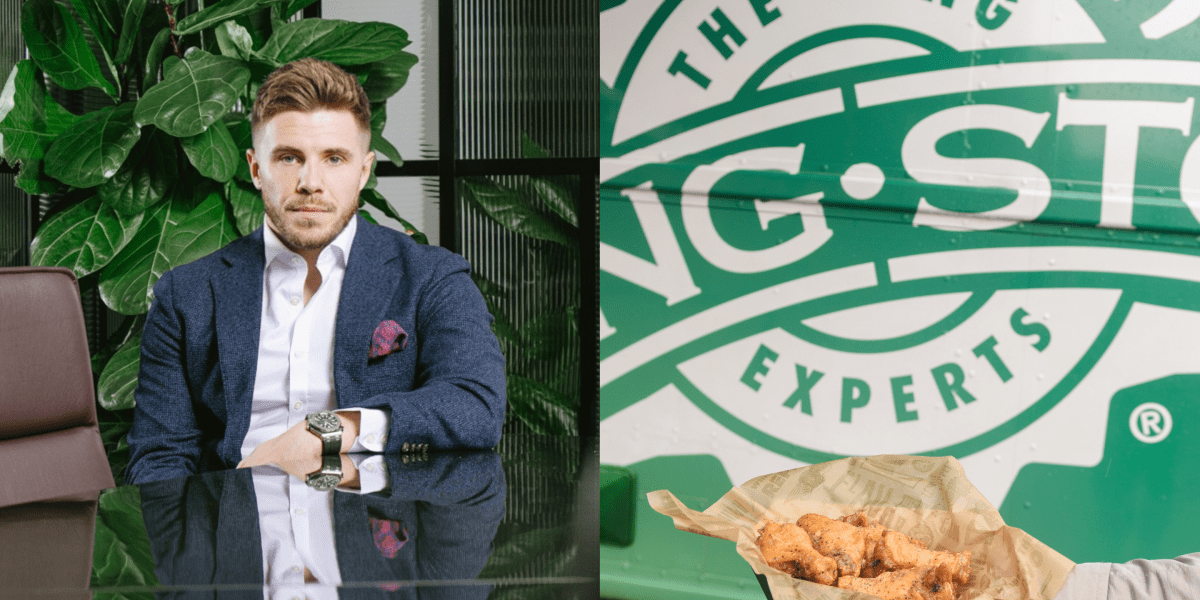
Tom Grogan’s first job paid him just £30 ($40) a day lugging bricks and hauling cement on a Birmingham building site. His latest payday? A £400 million ($532 million) takeover deal for the UK arm of Wingstop—the American fried chicken chain with celebrity fans like Kylie Jenner—that he cofounded with Herman Sahota and Saul Lewin.

And it’s all thanks to a chance encounter that traces back to when he was just 18 and not sure what he really wanted to do with his life. Like many Gen Zers today, the millennial decided to skip university and try his hand at the trade industry when he turned 16 years old. 

He had been working as a labourer on a building site for 2 years when he met a property developer. Like Grogan, he hadn’t gone to university either and made his way from the bottom to the top, so he began to mentor the teenager. 

“You meet certain people in life that change the direction of it,” Grogan exclusively told Fortune, adding that the mentorship led to an internship at Dragon Den (the UK equivalent of Shark Tank) star James Caan’s private equity firm in central London.

“So I started to understand how deals were put together. I was surrounded by a number of entrepreneurs, and that really quickly drove my fire to do something more with my life.”

“That very quickly led me to wanting to leave the world of employment to start my own business in the world of residential development and property development,” he added. “Along that journey, you have to meet lots of people, pitch for money. So I sort of understood the fundraising process and having worked within the world of private equity, I understood business plans and presentations.”

His real estate career set the stage for everything that followed, including meeting Sahota and Lewin—the men who would eventually help him launch Wingstop UK. They met while working in real estate and property development, but they decided to chance their arm in fast food seven years ago.

The trio saw the U.S. cult following and wanted to bring it to London. The problem? Nobody believed in them.

It took one cold email and 50 no’s before a $532 million yes

Grogan first discovered Wingstop through a line in a Rick Ross track—the Grammy-nominated rapper was a franchisee in the U.S. and heavily promoted the brand through his music. Wanting in, he tried his luck sending a cold email to the parent company in Texas. 

“That’s really how we discovered Wingstop,” Grogan says. “We Googled it, and back in September 2016, I sent a cold email to Wingstop HQ: ‘Hey, you’ve got no presence in Europe. We’d love to launch the brand in the UK.’ Honestly, my thought process was, I’ll figure it out afterwards. It was a punt.”

To his surprise, the U.S. team replied positively, and Grogan’s cofounders came on board to piece the deal together. “We managed to convince the US parent that one, we could raise the necessary capital, and two, we would assemble a team around us. Yes, we had no experience, but we had identified a market gap. No one in the UK food-and-beverage world was speaking authentically to younger consumers the way brands like Gymshark and Nando’s were,” he explains.

“We didn’t have to worry about product or even food at first. We later learned just how tough operations are in a restaurant business, but being naive allowed us to jump headfirst into the challenge with no preconceptions. That was a gift.” 

But getting the go-ahead was just the first hurdle: What followed were months and months of rejection from 50 investors. 

“Three young men with no experience in hospitality, ultimately trying to pitch a brand, that no one in Europe had really heard of at that time—that’s a huge red flag,” Grogan continued. “We had a lot of setbacks…We took a lot of no’s and we had a lot of stops and starts, but by the skin of our teeth, we managed to pull it off.” 

One of the largest fast-food brand takeovers in Britain

In the end, it took nearly a year to get that yes. “If we’d have stopped a week earlier, we wouldn’t be sat here now,” he said adding that each rejection was a lesson. “Ultimately, by the 50th presentation, a lot of the concerns that early investors had raised had either been figured out or we had an answer for.”

By then, they’d managed to secure what is now the site for their flagship restaurant in London’s West End. “So it made it a bit more real for those later investors that came to speak to us,” Grogan adds. “We say amongst ourselves that the stars have aligned on this journey, and that was probably one of the first stars that did align for us.” 

And the stars really did align for Grogan and the team. They built the UK Wingstop brand from scratch; following in the U.S. branches’ targeting of Gen Z and millennial consumers, using social media and the celebrities of the moment. Today, there are 57 Wingstop sites in the UK.

Nearly nine years after sending that first cold email, the trio sold a majority stake of Lemon Pepper Holdings (Wingtop UK’s parent company) to Californian private equity firm Sixth Street just before the New Year. Already, it has plans to expand to 200 UK sites in the next five years. The deal marked one of the largest takeovers of a restaurant brand in Britain. 

And Grogan, a 35-year-old Brit with zero prior restaurant cashed in his share of a £400 million ($532 million) windfall.

Reflecting on his meteoric rise from construction sites, Grogan tells the next generation of aspiring entrepreneurs that real-world experience—not lectures—shapes success.

“Unless you want to be a doctor or a lawyer, university is a waste of time. The experiences that you can have within the world of business, or with a mentor, or by becoming street smart are far more valuable than a textbook.” 

Fortune Global Forum returns Oct. 26–27, 2025 in Riyadh. CEOs and global leaders will gather for a dynamic, invitation-only event shaping the future of business. Apply for an invitation.


Source link

Continue Reading

Business

YouTube launches option for U.S. creators to receive stablecoin payouts through PayPal

Published

on


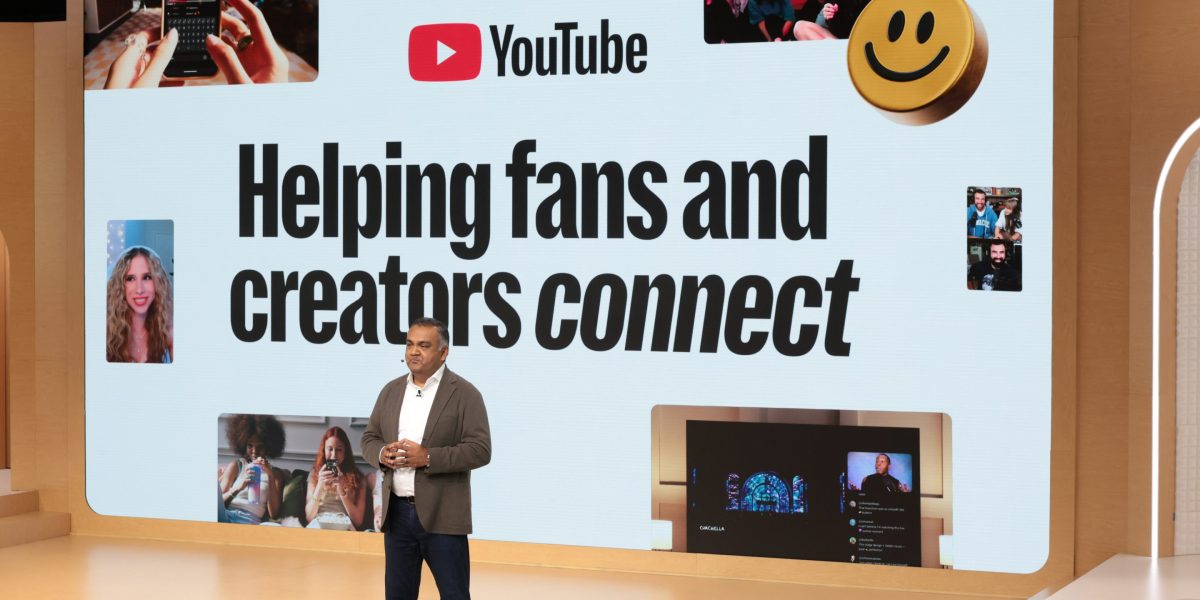
Big Tech continues to tiptoe into crypto. The latest example is a move by YouTube to let creators on the video platform choose to receive payouts in PayPal’s stablecoin. The head of crypto at PayPal, May Zabaneh, confirmed the arrangement to Fortune, adding that the feature is live and, as of now, only applies to users in the U.S. 

A spokesperson for Google, which owns YouTube, confirmed the video site has added payouts for creators in PayPal’s stablecoin but declined to comment further.

YouTube is already an existing customer of PayPal’s and uses the fintech giant’s payouts service, which helps large enterprises pay gig workers and contractors. 

Early in the third quarter, PayPal added the capability for payment recipients to receive their checks in PayPal’s stablecoin, PYUSD. Afterwards, YouTube decided to give that option to creators, who receive a share of earnings from the content they post on the platform, said Zabaneh.

“The beauty of what we’ve built is that YouTube doesn’t have to touch crypto and so we can help take away that complexity,” she added.

Big Tech eyes stablecoins

YouTube’s interest in stablecoins comes as Google and other Big Tech companies have shown interest in the cryptocurrencies amid a wave of hype in Silicon Valley and beyond. 

The tokens, which are pegged to underlying assets like the U.S. dollar, are longtime features of the crypto industry. But over the past year, they’ve exploded into the mainstream, especially after President Donald Trump signed into law a new bill regulating the crypto assets. Proponents say they are an upgrade over existing financial infrastructure, and big fintechs have taken notice, including Stripe. In February, the payments giant closed a blockbuster $1.1 billion purchase of the stablecoin startup Bridge.

PayPal has long been an earlier mover in crypto among large tech firms. In 2020, it let users buy and sell Bitcoin, Ethereum, and a handful of other cryptocurrencies. And, in 2023, it launched the PYSUD stablecoin, which now has a market capitalization of nearly $4 billion, according to CoinGecko.

PayPal has slowly integrated PYUSD throughout its stable of products. Users can hold it in its digital wallet as well as Venmo, another financial app that PayPal also owns. They can use it to pay merchants. And, in February, a PayPal executive said small-to-medium sized merchants will be able to use it to pay vendors.

YouTube’s addition of payouts in PYUSD isn’t the first time Google has experimented with PayPal’s stablecoin. An executive at Google Cloud, the tech giant’s cloud computing arm, previously toldFortune that it had received payments from two of its customers in PYUSD. 


Source link

Continue Reading

Business

Oracle slides by most since January on mounting AI spending

Published

on


Oracle Corp. shares plunged the most in almost 11 months after the company escalated its spending on AI data centers and other equipment, rising outlays that are taking longer to translate into cloud revenue than investors want.

Capital expenditures, a metric of data center spending, were about $12 billion in the quarter, an increase from $8.5 billion in the preceding period, the company said Wednesday in a statement. Analysts anticipated $8.25 billion in capital spending in the quarter, according to data compiled by Bloomberg. 

Oracle now expects capital expenditures will reach about $50 billion in the fiscal year ending in May 2026 — a $15 billion increase from its September forecast — executives said on a conference call after the results were released.

The shares fell 11% to $198.85 at the close Thursday in New York, the biggest single-day decline since Jan. 27. Oracle’s stock had already lost about a third of its value through Wednesday’s close since a record high on Sept. 10. Meanwhile, a measure of Oracle’s credit risk reached a fresh 16-year high.

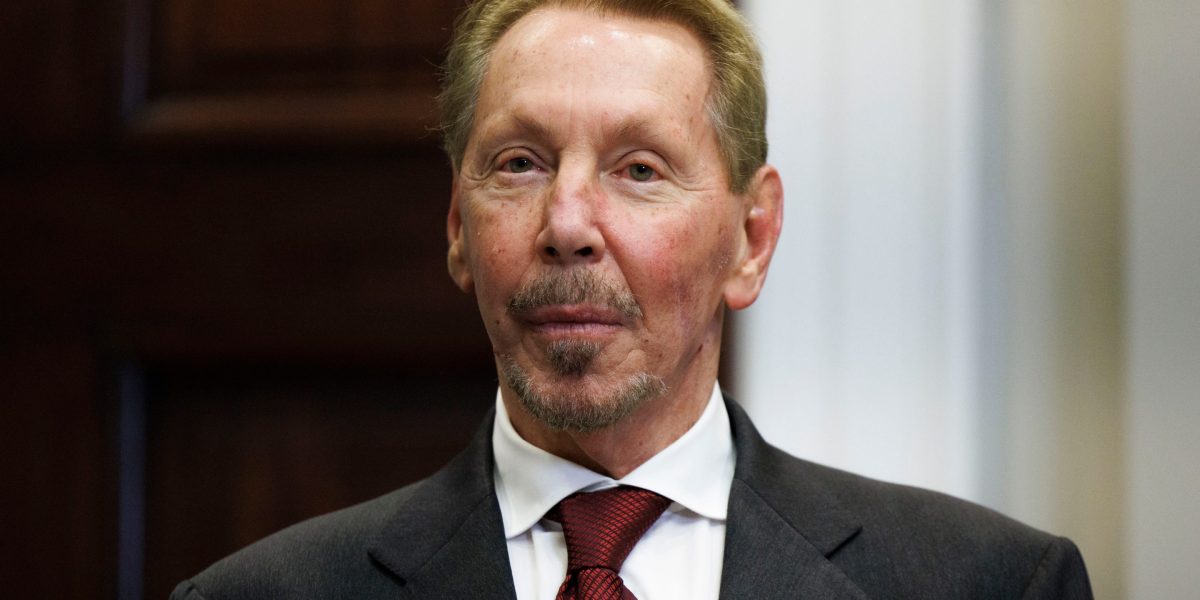
The latest earning report and share slide marks a reversal of fortunes for a company that just a few months ago was enjoying a blistering rally and clinching multibillion-dollar data center deals with the likes of OpenAI. The gains temporarily turned co-founder Larry Ellison into the world’s richest person, with the tech magnate passing Elon Musk for a few hours.

Known for its database software, Oracle has recently found success in the competitive cloud computing market. It’s engaging in a massive data center build-out to power AI work for OpenAI and also counts companies such as ByteDance Ltd.’s TikTok and Meta Platforms Inc. as major cloud customers. 

Fiscal second-quarter cloud sales increased 34% to $7.98 billion, while revenue in the company’s closely watched infrastructure business gained 68% to $4.08 billion. Both numbers fell just short of analysts’ estimates.Play Video

Still, Wall Street has raised doubts about the costs and time required to develop AI infrastructure at such a massive scale. Oracle has taken out significant sums of debt and committed to leasing multiple data center sites. 

The cost of protecting the company’s debt against default for five years rose as much as 0.17 percentage point to around 1.41 percentage point a year, the highest intraday level since April 2009, according to ICE Data Services. The gauge rises as investor confidence in the company’s credit quality falls. Oracle credit derivatives have become a credit market barometer for AI risk.

“Oracle faces its own mounting scrutiny over a debt-fueled data center build-out and concentration risk amid questions over the outcome of AI spending uncertainty,” said Jacob Bourne, an analyst at Emarketer. “This revenue miss will likely exacerbate concerns among already cautious investors about its OpenAI deal and its aggressive AI spending.”

Remaining performance obligation, a measure of bookings, jumped more than fivefold to $523 billion in the quarter, which ended Nov. 30. Analysts, on average, estimated $519 billion.

Investors want to see Oracle turn its higher spending on infrastructure into revenue as quickly as it has promised. 

“The vast majority of our cap ex investments are for revenue generating equipment that is going into our data centers and not for land, buildings or power that collectively are covered via leases,” Principal Financial Officer Doug Kehring said on the call. “Oracle does not pay for these leases until the completed data centers and accompanying utilities are delivered to us.”

“As a foundational principle, we expect and are committed to maintaining our investment grade debt rating,” Kehring added.

Oracle’s cash burn increased in the quarter and its free cash flow reached a negative $10 billion. Overall, the company has about $106 billion in debt, according to data compiled by Bloomberg. “Investors continually seem to expect incremental cap ex to drive incremental revenue faster than the current reality,” wrote Mark Murphy, an analyst at JP Morgan.Play Video

“Oracle is very good at building and running high-performance and cost-efficient cloud data centers,” Clay Magouyrk, one of Oracle’s two chief executive officers, said in the statement. “Because our data centers are highly automated, we can build and run more of them.”

This is Oracle’s first earnings report since longtime Chief Executive Officer Safra Catz was succeeded by Magouyrk and Mike Sicilia, who are sharing the CEO post.

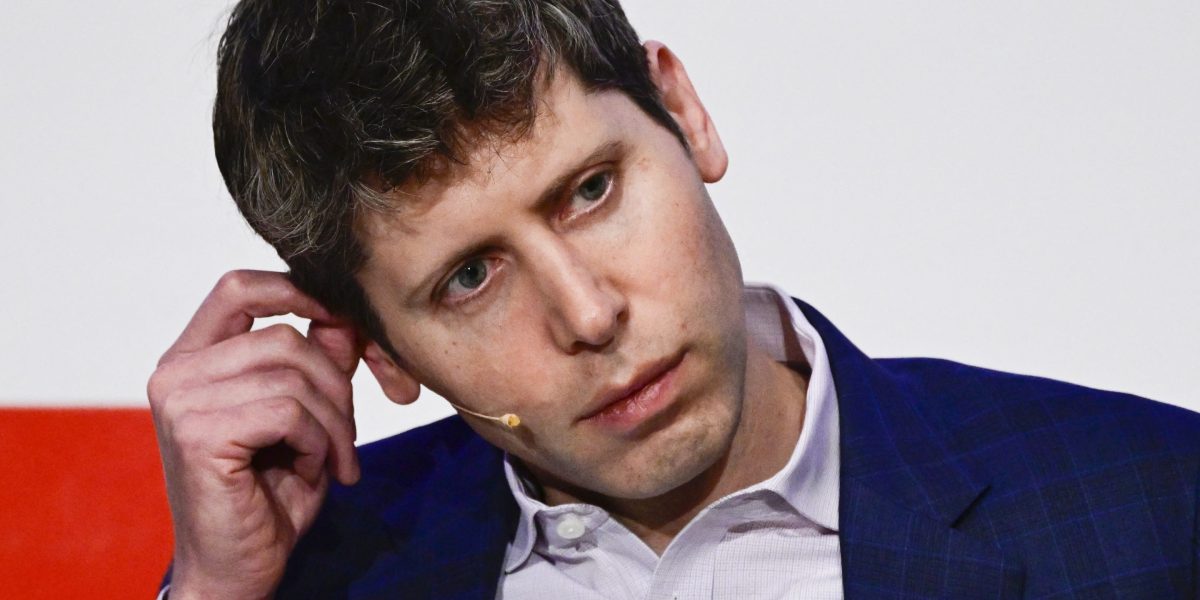
Part of the negative sentiment from investors in recent weeks is tied to increased skepticism about the business prospects of OpenAI, which is seeing more competition from companies like Alphabet Inc.’s Google, wrote Kirk Materne, an analyst at Evercore ISI, in a note ahead of earnings. Investors would like to see Oracle management explain how they could adjust spending plans if demand from OpenAI changes, he added.

In the quarter, total revenue expanded 14% to $16.1 billion. The company’s cloud software application business rose 11% to $3.9 billion. This is the first quarter that Oracle’s cloud infrastructure unit generated more sales than the applications business.

Earnings, excluding some items, were $2.26 a share. The profit was helped by the sale of Oracle’s holdings in chipmaker Ampere Computing, the company said. That generated a pretax gain of $2.7 billion in the period. Ampere, which was backed early in its life by Oracle, was bought by Japan’s SoftBank Group Corp. in a transaction that closed last month.

In the current period, which ends in February, total revenue will increase 19% to 22%, while cloud sales will increase 40% to 44%, Kehring said on the call. Both forecasts were in line with analysts’ estimates.

Annual revenue will be $67 billion, affirming an outlook the company gave in October.


Source link

Continue Reading

Business

Analyst sees Disney/OpenAI deal as a dividing line in entertainment history

Published

on


Disney’s expansive $1 billion licensing agreement with OpenAI is a sign Hollywood is serious about adapting entertainment to the age of artificial intelligence (AI), marking the start of what one Ark Invest analyst describes as a “pre‑ and post‑AI” era for entertainment content. The deal, which allows OpenAI’s Sora video model to use Disney characters and franchises, instantly turns a century of carefully guarded intellectual property (IP) into raw material for a new kind of crowd‑sourced, AI‑assisted creativity.​

Nicholas Grous, director of research for consumer internet and fintech at Ark Invest, told Fortune tools like Sora effectively recreate the “YouTube moment” for video production, handing professional‑grade creation capabilities to anyone with a prompt instead of a studio budget. In his view, that shift will flood the market with AI‑generated clips and series, making it far harder for any single new creator or franchise to break out than it was in the early social‑video era.​ His remarks echoed the analysis from Melissa Otto, head of research at S&P Global Visible Alpha, who recently told Fortune Netflix’s big move for Warner Bros.’ reveals the streaming giant is motivated by a need to deepen its war chest as it sees Google’s AI-video capabilities exploding with the onset of TPU chips.

As low‑cost synthetic video proliferates, Grous said he believes audiences will begin to mentally divide entertainment into “pre‑AI” and “post‑AI” categories, attaching a premium to work made largely by humans before generative tools became ubiquitous. “I think you’re going to have basically a split between pre-AI content and post-AI content,” adding that viewers will consider pre-AI content closer to “true art, that was made with just human ingenuity and creativity, not this AI slop, for lack of a better word.”

Disney’s IP as AI fuel

Within that framework, Grous argued Disney’s real advantage is not just Sora access, but the depth of its pre‑AI catalog across animation, live‑action films, and television. Iconic franchises like Star Wars, classic princess films and legacy animated characters become building blocks for a global experiment in AI‑assisted storytelling, with fans effectively test‑marketing new scenarios at scale.​

“I actually think, and this might be counterintuitive, that the pre-AI content that existed, the Harry Potter, the Star Wars, all of the content that we’ve grown up with … that actually becomes incrementally more valuable to the entertainment landscape,” Grous said. On the one hand, he said, there are deals like Disney and OpenAI’s where IP can become user-generated content, but on the other, IP represents a robust content pipeline for future shows, movies, and the like.

Grous sketched a feedback loop in which Disney can watch what AI‑generated character combinations or story setups resonate online, then selectively “pull up” the most promising concepts into professionally produced, higher‑budget projects for Disney+ or theatrical release. From Disney’s perspective, he added, “we didn’t know Cinderella walking down Broadway and interacting with these types of characters, whatever it may be, was something that our audience would be interested in.” The OpenAI deal is exciting because Disney can bring that content onto its streaming arm Disney+ and make it more premium. “We’re going to use our studio chops to build this into something that’s a bit more luxury than what just an individual can create.”

Grous agreed the emerging market for pre‑AI film and TV libraries is similar to what’s happened in the music business, where legacy catalogs from artists like Bruce Springsteen and Bob Dylan have fetched huge sums from buyers betting on long‑term streaming and licensing value.

The big Netflix-Warner deal

For streaming rivals, the Disney-OpenAI pact is a strategic warning shot. Grous argued the soaring price tags in the bidding war for Warner Bros. between Netflix and Paramount shows the importance of IP for the next phase of entertainment. “​I think the reason this bidding [for Warner Bros.] is approaching $100 billion-plus is the content library and the potential to do a Disney-OpenAI type of deal.” In other words, whoever controls Batman and the like will control the inevitable AI-generated versions of those characters, although “they could take a franchise like Harry Potter and then just create slop around it.”

Netflix has a great track record on monetizing libraries, Grous said, listing the example of how the defunct USA dramedy Suits surged in popularity once it landed on Netflix, proving extensive back catalogs can be revived and re‑monetized when matched with modern distribution.​

Grous cited Nintendo and Pokémon as examples of under‑monetized franchises that could see similar upside if their owners strike Sora‑style deals to bring characters more deeply into mobile and social environments.​ “That’s another company where you go, ‘Oh my god, the franchises they have, if they’re able to bring it into this new age that we’re all experiencing, this is a home-run opportunity.’”

In that environment, the Ark analyst suggests Disney’s OpenAI deal is less of a one‑off licensing win than an early template for how legacy media owners might survive and thrive in an AI‑saturated market. The companies with rich pre‑AI catalogs and a willingness to experiment with new tools, he argued, will be best positioned to stand out amid the “AI slop” and turn nostalgia‑laden IP into enduring, flexible assets for the post‑AI age.​

Underlying all of this is a broader battle for attention that spans far beyond traditional studios and shows how sectors between tech and entertainment are getting even blurrier than when the gatecrashers from Silicon Valley first piled into streaming. Grous notes Netflix itself has long framed its competition as everything from TikTok and Instagram to Fortnite and “sleep,” a mindset that fits naturally with the coming wave of AI‑generated video and interactive experiences.​ (In 2017, Netflix co-founder Reed Hastings famously said “sleep” was one of the company’s biggest competitors, as it was busy pioneering the binge-watch.)

Grous also sounded a warning for the age of post-AI content: The binge-watch won’t feel as good anymore, and there will be some kind of backlash. As critics such as The New York Times‘ James Poniewozik increasingly note, streaming shows don’t seem to be as re-watchable as even recent hits from the golden age of cable TV, such as Mad Men. Grous said he sees a future where the endangered movie theater makes a comeback. “People are going to want to go outside and meet or go to the theater. Like, we’re not just going to want to be fed AI slop for 16 hours a day.”

Editor’s note: the author worked for Netflix from June 2024 through July 2025.


Source link

Continue Reading

Trending

Copyright © Miami Select.