Connect with us

Business

This Harvard professor spent 8 years traveling the world researching the secret history of capitalism and how ‘marginal’ and ‘weak’ it used to be

Published

on


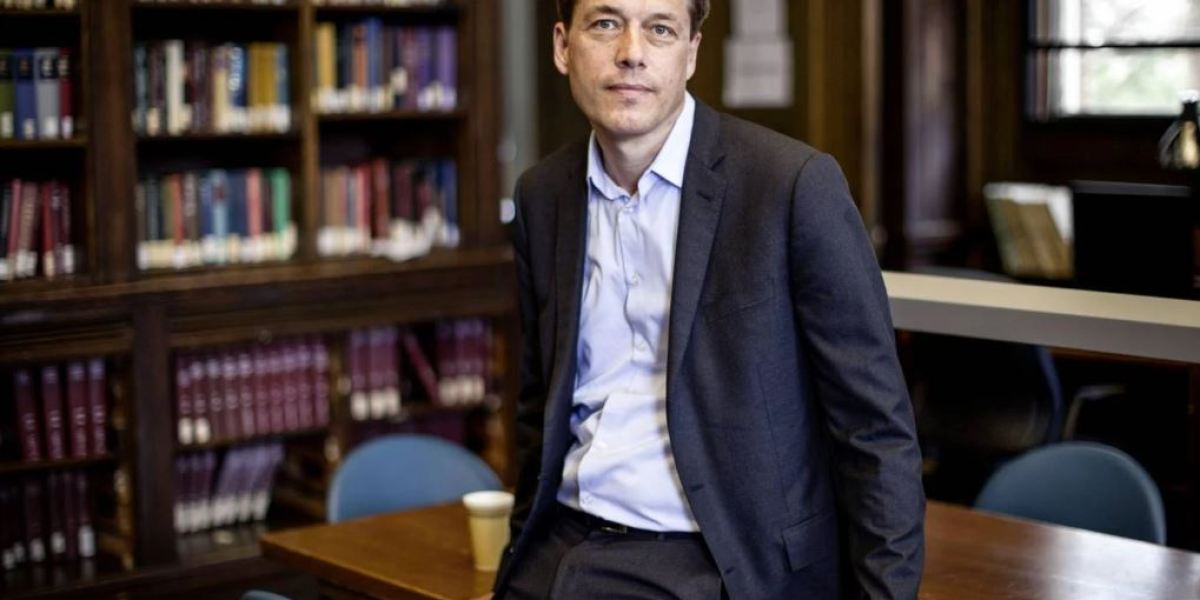
Sven Beckert isn’t here to judge capitalism, even though he just wrote a provocative, ambitious, 1,300-page book on its history. As he writes several times in the book (which this editor has read), he’s not even sure what it is. He’s trying to understand it.

The Harvard professor, who Zoomed in to talk to Fortune from his home office in Cambridge, Mass., explained that his new book, Capitalism: A Global History, is the product of an eight-year odyssey to seek understanding of the way we actually live out our economic lives. “Often, when I teach the history of capitalism here at Harvard, many of my students think that capitalism is kind of the state of nature.” But that’s just not the case when you look at the historical record, he added.

When pressed to explain what his book accomplishes, he said it’s two-pronged: to offer a more global perspective on the history of capitalism and to “denaturalize” the history of whatever capitalism is. Capitalism is neither eternal nor natural, in Beckert’s telling; itʼs a human invention that spread and evolved over centuries through deliberate choices, sometimes extraordinary violence, and incredible institutional innovation. Capitalism rose from the margins of medieval trade to dominate modern life, and so it could also, someday, fade or transform again.

These may be considered bold claims by some who take capitalism’s primacy as inevitable, but the book has been generally well reviewed. Although some critics have taken shots at it for being a bit of a “doorstop,” like Beckert’s previous tome, the Pulitzer finalist, award-winning The Empire of Cotton, the ambition and narrative boldness of this global history have been generally praised. 

In the Boston Globe, Hamilton Cain wrote that Beckert weaves a sprawling tapestry that “unfurls with the suspense and intricacy of a detective novel,” with capitalism’s ascendance reading a bit like a crime story, even a whodunit. Adrian Woolridge of Bloomberg Opinion criticized it for nearly the identical thing, saying that the book “ignores [the] secret sauce” of innovation, focusing more on its exploitative history than on how it created new value. Beckert insisted that his book is all about the question of how, not why. He attempted to chart “how we get from a world in which this logic exists, but it’s marginal, to a world in the year 2025, where [it] almost structures all of our economic life—and almost all of our lives.”

From marginal to dominant

Beckert told Fortune that his research showed traces of capitalist logic can be seen in the historical record as far back as 1,000 years ago, but for hundreds of years it “remained marginal to economic life.” In his book, he talks many times of “islands” and “nodes,” as capitalists were at first outsiders, regarded as almost freakish by people who lived their life without the constant accumulation of more money to invest. Then, when the tide started to turn and capitalism became ascendant, in the last 500 years, the islands and nodes shifted to the holdouts from the capitalist way of life, like the farmers of the 20th century. 

“The first thing I always say is that capitalism is not the same as the existence of markets,” Beckert said. He pointed out that “economic life” existed for all of human history, but not the relentless accumulation and reinvestment of capital, which was practiced by a few merchant communities on the outskirts of society. Capitalism “has existed in many different parts of the world,” Beckert insisted, “but it was also rather thinly spread and rather weak … This kind of capitalist logic that is so crucial to economic life today, that is something relatively novel.”

Beckert points out in his book that until the fall of the USSR in the late 1980s, something like 30% of the world was living in a non-capitalist system, and much of the rural west was able to avoid the capitalist way of life by, for example, growing their own food as subsistence farmers. (Tom Lee of Fundstrat recently compared the emergence of artificial intelligence to flash-frozen food in the 1920s, which changed the composition of the economy from 40% subsistence farmers to just 2%.)

The professor highlighted ancient mercantile communities of capitalists in unexpected places such as the Port of Aden, in Yemen, or Cambay, in modern Gujarat, India. Goods were traded across oceans from Aden as early as 1150, he finds, while Song-dynasty China invented paper money centuries before Europe; and textiles thrived in ancient Indian hubs ages before the Industrial Revolution. But these capitalists were encircled for hundreds of years by a sea of subsistence farmers and tributary empires that operated on completely different principles. “The extremely global nature of early merchant communities, that was something that I, broadly speaking, I did have a sense of,” Beckert said, but hadn’t put together in quite this way before.

“They were always connected to a state,” Beckert said of the early merchants, but they were also freewheeling and kind of separate from that state,” he said, that is, until things drastically changed in the 19th century. Beckert highlights the disturbing case of Hermann Röchling, the German steel industrialist who saw such capitalist opportunities that he closely allied himself with successive German governments and found himself “on trial for war crimes, not just in one war, but in two wars, World War I and World War II, which must be a world historical record.”

How capitalism moved to the center

To illustrate just how unnatural the capitalist logic was once considered, Beckert’s book highlights the odd case of Robert Keayne, a Puritan merchant in 1639 Boston. Keayne was dragged before a court and church elders nearly 400 years ago, but not for stealing. Instead it was for the “very evil” practice of selling goods for a profit that exceeded community standards. He was nearly excommunicated for behaving in a way that is now considered the basic function of business. It would take centuries, Beckert argues, for the “covetous” accumulation of wealth to be rebranded as a public good, or in other words, for capitalism to be regarded as normal.

For his part, Beckert insisted that he’s not trying to judge capitalism, even if some harsh judgments emerge throughout his book. “The ability to write this book is, of course, itself an outcome of the capitalist revolution,” he told Fortune, arguing that at this juncture in the 21st century, the logic of capitalism has brought enormous productivity gains, unprecedented economic growth and made many people much wealthier. He wouldn’t be able to fly to Barbados or Cambodia for research without it, he acknowledged.

And Beckert did travel far and wide over eight years to dig up what he regards as a kind of secret history of the origins of capitalism. From the dusty outskirts of Phnom Penh to the archives of the Godrej company in India to the relics of the sugar plantations of Barbados (where he spent 10 days), Beckert surprised himself again and again by what he found. 

When the American colonies emerge on the scene, for example, more than a third of the way into his narrative, Beckert points out that West Indies were much more central to global capitalism than the 13 territories that would become the United States. The city of Boston, he notes, might have perished if it didn’t figure out how to become a service hub for Barbados, whose sugar plantations generated huge revenues. “That’s also kind of an amazing story,” Beckert agreed. “For us, Barbados is a foreign country and it’s far away, but for them [Bostonians in the early 1700s], it was also part of the British empire. And then it was … kind of a suburb to Boston—or vice versa. They were tightly integrated with one another.”

Beckert said he was surprised in what his research turned up of the darkness of capitalism’s past. “I did know a lot about the history of slavery, but being on this island and then reading the historical records and reading the kind of horrific accounts of what happened on this island in the 1600s, that was also not really surprising, but it was really quite shocking, the degree of violence that I found within this history.”

Could capitalism end?

Beckert told Fortune that he believes the world is currently in a “moment of transition,” similar to the shift that occurred in the 1970s when the Keynesian order gave way to neoliberalism. One of the largest surprises of the book is at its very conclusion, when he suggested that someday, capitalism could end. The fact that “it rests on the ever expanding accumulation of capital” implies that somehow, someway, the capital will run out. “In the distant future,” he writes, historians will look back at our times and “find it difficult to understand our ways of thinking, our ways of being.”

Ultimately, Beckert said he views his book not as a moral tale with capitalism as the villain, but as an investigation into human agency. By revealing that capitalism was once fragile, marginal, and weak—and that it required centuries of specific political choices, violence, and institutional building to become dominant—he hopes to show that the future remains unwritten. “This is not like a machine that kind of unfolds on its own,” Beckert said. “This is a human-created order.”

As the global economy faces new shocks in the mid-2020s, Beckert’s history offers a reminder: The economy is not a force of nature. It was made by people, and it can be remade by them. “The future is open,” he told Fortune. “People build a word that’s different from the word that they were born into [and] sometimes the least powerful have made a huge difference in the trajectory of the development of capitalism. So, I think that is important to see at the contemporary moment.”


Source link

Continue Reading

Business

Meet a 28-year-old Canadian woman who turned her pen-pal side hustle into a subscription side hustle with over 1,000 members

Published

on


At a time when productivity means optimizing every second and screens blur the line between work and home, some people are slowing down and disconnecting by looking to communication devices from the past.

Tactile activities ranging from writing letters and typewriter clubs to TikTok communities showcasing calligraphy skills and wax seals are giving retro writing instruments a resurgence. More than quaint throwbacks, the pursuits provide their enthusiasts with opportunities to reduce their technology use, be more intentional with time and build meaningful connections with others.

“I feel as though my pen pals are my friends. I don’t think of them much differently than if I were chatting with a friend on the phone, in a coffee shop or at another person’s house,” said Melissa Bobbitt, 42, a devoted letter-writer who corresponds with about a dozen people from her home in Claremont, California, and has had up to 40 pen pals at one time. “Focusing on one person and really reading what they are saying, and sharing what’s on your heart is almost like a therapy session.”

Ink, paper and other tools that once were the only way to send a message from afar are continuing to bring people together from around the world. Below, some of them explain the appeal of snail mail and give recommendations for getting started.

Writing can be an escape

In a society shaped by constant availability, hands-on hobbies like writing letters and scrapbooking require focus and patience. The act of picking up a pen, sealing an envelope with wax and laying out pages may yield aesthetically pleasing results, but it also creates a space for reflection.

Stephania Kontopanos, a 21-year-old student in Chicago, said it can be hard to put her phone and computer away, especially when it seems all of her friends and peers are on social media and her classes and personal life revolve around being online.

“There are times when I’m with my friends and at dinner, I’ll realize we are all on our phones,” Kontopanos said, adding that she tries to put her phone down at those moments.

Kontopanos also unplugs consciously by sending postcards to her family and friends, scrapbooking, and junk journaling, which involves repurposing everyday materials like tickets and receipts to document memories or ideas. She says going to the post office has become an activity she does with her mother back home in Kansas and includes sharing stories with the postal workers, people she would not have routinely encountered.

Nostalgia can foster community

Writing and sending letters is nostalgic for KiKi Klassen, who lives in Ontario, Canada. The 28-year-old says it helps her feel more connected to her late mother, who was a member of the Canadian Union of Postal Workers, which represents mail carriers and other postal employees.

In October 2024, Klassen launched the Lucky Duck Mail Club, a subscription-based monthly mail service that sends participants a piece of her art, an inspiring quote and message. She says her membership includes more than 1,000 people across, at most, 36 countries.

“When I sit down, I’m forced to reflect and choose my words carefully,” Klassen said. “It also lends itself to vulnerability because it is easier to write down how you are feeling. I’ve had people write me back and I’ve cried hearing so many touching stories. I think for a lot of people paper creates a safe space. You write it down, send it off and don’t really think about it after.”

For Bobbitt, who has corresponded by mail for years, there is a “grand excitement” when she opens her mailbox and finds something that is not a bill or advertisement. “If we all filled each other’s mailboxes with letters, we would all be kinder and, at the very least, won’t dread checking our mailboxes,” she said.

Bobbitt says she first joined a pen pal club in second or third grade and later was connected to more writers through Postcrossing, an online project that partners people around the world to send and receive postcards. She says some of the postcards turned into letters as friendships grew between her and some other regular writers.

It’s a similar feeling of connection that inspired DJ Robert Owoyele, 34, to create CAYA, a monthly “analog gathering” in Dallas. Owoyele launched the event less than a year ago and has since organized evenings with letter writing, coloring, vinyl listening sessions and other activities.

“We live in a digital age that fosters a false sense of connection, but I think true connection happens in person,” he said. “When we are able to touch or see something, we are more connected to it naturally. These analog activities are a representation of that.”

How to get started

While writing letters and engaging in other vintage pursuits might seem accessible, it is not always easy to get involved. For many people, carving out time to slow down can feel like another obligation in a schedule filled with to-dos.

Kontopanos says she decided it was important for her to reprioritize her time. “The older I get, the more I realize how much time had been wasted on my phone,” she said. Creating space to explore allowed her to discover the hobbies she loved doing enough to make them a priority, she said.

There are many hobbies to consider, some of which don’t require expensive tools or hours of free time. Frequenting spaces where communities centered around these hobbies gather can be a way to learn about the different activities. For example, participating in typewriter clubs such as Type Pals, attending events like the Los Angeles Printers Fair hosted by the International Printing Museum in California, and engaging with social media communities like the Wax Seal Guild on Instagram and The Calligraphy Hub on Facebook.

Klassen says that based on posts she’s seeing on her social media feeds, reviving vintage writing instruments and small tactile pleasures might be on the verge of becoming trendy.

“The girls are going analog in 2026,” she said.


Source link

Continue Reading

Business

Democrats think a war-powers resolution for Greenland would get more GOP votes than one on Venezuela

Published

on


Republican lawmakers are scrambling to contain President Donald Trump’s threats of taking possession of Greenland, with some showing the most strident opposition to almost anything the Trump administration has done since taking office.

They gave floor speeches on the importance of NATO last week. They introduced bills meant to prevent the U.S. from attacking Denmark. And several traveled to Copenhagen to meet with Danish counterparts.

But it’s not clear that will be enough, as the president continues to insist that he will take control of the Arctic island. It’s raised fears of an end to NATO — a decades-old alliance that has been a pillar of American strength in Europe and around the globe — and raised questions on Capitol Hill and around the world about what Trump’s aggressive, go-it-alone foreign policy will mean for world order.

“When the most powerful military nation on earth threatens your territory through its president over and over and over again, you start to take it seriously,” Sen. Chris Coons told The Associated Press.

The Delaware Democrat organized the bipartisan trip to Denmark to “bring the temperature down a bit,” he said, as well as further talks about mutual military agreements in the Arctic. Republican Sens. Thom Tillis of North Carolina and Lisa Murkowski of Alaska accompanied a handful of Democrats on the trip. Also, Republican lawmakers joined in meetings in Washington last week with the Danish foreign minister and his Greenlandic counterpart where they discussed security agreements.

Yet it’s clear Trump has other ideas. He said Saturday he will charge a 10% import tax starting in February on goods from eight European nations because of their opposition to his Greenland plans.

Trump said on social media that because of modern weapons systems “the need to ACQUIRE is especially important.”

The pushback to Trump’s Greenland plans

Key Republicans have made clear they think that forcefully taking Greenland is out of the question. But so far, they’ve avoided directly rebuking Trump for his talk of possessing the island.

Tillis on social media called Trumps tariff plans “bad for America, bad for American businesses, and bad for America’s allies.”

Senate Majority Leader John Thune, R-S.D., told reporters Thursday that “there’s certainly not an appetite here for some of the options that have been talked about or considered.”

In a floor speech, Thune’s predecessor as Republican leader, Sen. Mitch McConnell, warned that an attempt to seize Greenland would “shatter the trust of allies” and tarnish Trump’s legacy with a disastrous foreign policy decision.

Republican and Democratic lawmakers alike see an obvious path to bolstering American interests in Greenland while keeping the relationship with NATO-ally Denmark intact.

In a meeting with lawmakers Thursday, Danish Foreign Minister Lars Løkke Rasmussen and his Greenlandic counterpart Vivian Motzfeldt discussed how the countries could work together to develop critical mineral industries and military cooperation, Coons said. The diplomats also told the senators there is no evidence of Chinese or Russian activity in Greenland.

Trump has made the argument that the U.S. should take Greenland before China or Russia do, prompting worry across Europe. Troops from several nations have been sent to Greenland in support of Denmark.

Murkowski said on social media that “our NATO allies are being forced to divert attention and resources to Greenland, a dynamic that plays directly into Putin’s hands by threatening the stability of the strongest coalition of democracies the world has ever seen.”

What can Congress do?

Lawmakers are looking at a few options for taking a military attack on Greenland off the table. Still, the Trump administration has shown little if any willingness to get congressional approval before taking military action.

Lawmakers, including Republicans like Murkowski, are pushing legislation that would prohibit Department of Defense funds from being used to attack or occupy territory that belongs to other NATO members without their consent.

The Alaska senator also suggested Congress could act to nullify Trump’s tariffs. Murkowski and several other Republicans have already helped pass resolutions last year meant to undo tariffs around the globe, but those pieces of legislation did not gain traction in the House. They would have also required Trump’s signature or support from two-thirds of both chambers to override his veto.

Democrats have also found some traction with war powers resolutions meant to force the president to get congressional approval before engaging in hostilities. Republicans last week narrowly defeated one such resolution that would prohibit Trump from attacking Venezuela again, and Democrats think there could potentially be more Republicans who would support one applying to Greenland.

“What I’ve noticed is these war powers resolutions, they do put some pressure on Republicans,” said Sen. Tim Kaine, a Virginia Democrat who has forced votes on several similar resolutions. He said the tactic has also compelled the Trump administration to provide lawmakers with briefings and commitments to get congressional approval before deploying troops.

Still, while dismissing the Venezuela war powers resolution on Wednesday, Republican leaders made the argument that the legislation should be ruled out of order because the Trump administration has said there are currently no U.S. troops on the ground in Venezuela.

That argument may set a precedent for future war powers resolutions, giving Republicans a way to avoid voting against Trump’s wishes.

“If you don’t have boots on the ground, it’s a moot point,” said Sen. Mike Rounds, a South Dakota Republican, about war powers resolutions in general. He also argued that the prospect of taking Greenland over the objections of Denmark is nothing “more than a hypothetical.”

Other Republicans have expressed support for Trump’s insistence that the U.S. possess Greenland, though they have downplayed the idea that the U.S. would take it by force.

That’s left the strongest objections on the Republican side of the aisle coming from a handful of lawmakers who are leaving Congress next year.

Rep. Don Bacon, a Nebraska Republican, told The Omaha World Herald that an invasion of Greenland would lead to Trump’s impeachment — something he would “lean” towards supporting.

Tillis, another retiring Republican, has directed his criticism at Trump advisors like White House Deputy Chief of Staff Stephen Miller.

“The fact that a small handful of ‘advisors’ are actively pushing for coercive action to seize territory of an ally is beyond stupid,” he said.


Source link

Continue Reading

Business

Europe can wield a $8 trillion ‘sell America’ weapon as Trump reignites a trade war over Greenland

Published

on


As the European Union weighs options to retaliate against President Donald Trump’s latest tariffs, its most potent weapon may be in financial markets.

France is already urging the EU to deploy its “anti-coercion instrument,” which can target foreign direct investment and finance as well as trade. That’s after Trump announced new U.S. tariffs on NATO countries that sent troops to Greenland amid his plans to take over the semi-autonomous Danish territory.

At face value, a 10% tariff rising to 25% would have minimal economic consequences, Capital Economics chief economist Neil Shearing said in a note Sunday, estimating they would reduce GDP in the targeted NATO economies by 0.1-0.3 percentage points and add 0.1-0.2 points to U.S. inflation.

“The political ramifications would be far greater than the economic ones,” he warned, with any attempt by the U.S. to seize Greenland by force or coercion potentially leading to irreparable harm to NATO. 

So far, European officials have signaled Greenland’s sovereignty is a red line that’s not up for compromise, while the Trump administration isn’t budging either on its stance.

But the U.S. has a key vulnerability the EU can exploit, according to George Saravelos, head of FX research at Deutsche Bank.

“Europe owns Greenland, it also owns a lot of Treasuries,” he wrote in a note on Sunday.

Holding those bonds helps balance America’s massive external deficits, and Europe is the world’s biggest lender to the U.S.

For example, offsetting the U.S. trade imbalance requires heavy inflows of capital from abroad. Meanwhile, the Treasury Department must also finance budget gaps by issuing more debt, often to foreign investors.

“European countries own $8 trillion of US bonds and equities, almost twice as much as the rest of the world combined,” Saravelos pointed out. “In an environment where the geoeconomic stability of the western alliance is being disrupted existentially, it is not clear why Europeans would be as willing to play this part.”

As Trump threatened to upend global trade and finance last year, Danish pension funds led the charge in reducing their dollar exposure and repatriating money back home, he said.

Such moves represented the “sell America” trade that saw investors dump dollar-denominated assets amid doubts that they would continue serving as safe havens or still deliver attractive returns.

“With USD exposure still very elevated across Europe, developments over the last few days have potential to further encourage dollar rebalancing,” Saravelos added.

At the same time, the euro and Danish krone may see minimal impact from the fallout of Trump’s tariffs on NATO and any subsequent retaliation, he predicted.

That’s as European political cohesion stands to solidify in the face of Trump’s threats, with even right-wing officials previously sympathetic to him now rejecting his heavy-handed approach.

Saravelos sees additional leverage for Europe ahead of U.S. midterm elections with the Trump administration focused on affordability issues. On that front, the EU could influence inflation and Treasury yields, which affect borrowing costs.

“With the US net international investment position at record negative extremes, the mutual inter-dependence of European-US financial markets has never been higher,” he said. “It is a weaponization of capital rather than trade flows that would by far be the most disruptive to markets.”


Source link

Continue Reading

Trending

Copyright © Miami Select.