Connect with us

Fashion

THG upbeat as Beauty sees strong Q4

Published

on


Published


January 13, 2026

THG’s trading update on Tuesday showed a record revenue performance in the second half and outperformance in its Beauty division during Q4.

THG

The company said H2 (the six months to the end of December) saw group revenue up 6.7% year on year, well ahead of the 3.9%-5.9% guidance range.

THG Beauty delivered 5.5% adjusted H2 revenue growth, also easily ahead of its guidance that had been only around +1%-+3%. THG Nutrition was up 9.2%.

In Q4 alone, THG Beauty revenue rose 2.2% to £370.2 million and was up 6.4% on a continuing constant currency basis.

Overall, the company said Q4 was the strongest quarter of FY25 for the business, supported by a successful November and December performance.

And for the full year, revenue growth of 2.3% was the first year of growth since 2021 as well as an encouraging recovery from the H1 revenue decline of 2.5%. 

As for THG Beauty specifically, its strength saw it turning in its best Q4 growth performance since Q4 2021. It was driven by Lookfantastic (+16.2%) in the UK and Ireland. But the effect of discontinued activities and asset disposals (including the sale of the luxury portfolio) impacted full-year and Q4 2025 reported revenue growth by 460bps and 370bps, respectively.

On the revenue growth side for its continuing operations, the company that also owns Dermstore and Cult Beauty said Beauty’s Q4 performance was broad-based across categories, “helping deepen penetration in established and high-growth segments. Cosmetics and Skincare drove the strongest performance, with both gaining UK market share, alongside a record advent contribution”.

Lookfantastic had partnered with Uber Eats, “allowing London-based customers access to same-day delivery for a range of curated beauty and fragrance essentials, further supporting its focus on streamlining the product discovery and purchase experience”.

Within Own Brands, the Perricone MD performance improved in the period after a “challenging” H1, “driven by investment in brand and formulation, alongside expanded B2B distribution”. 

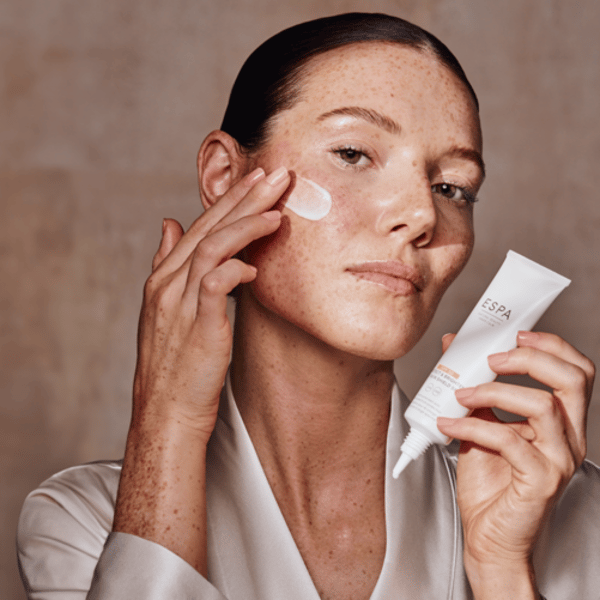
Also, 60 ESPA SKUs were launched in over 100 M&S stores and online, “building brand visibility and aid[ing] awareness for the luxury spa and skincare brand, leveraging access to the Sparks reward scheme members”.

CEO Matthew Moulding said: “We finished 2025 on a high with our best quarter of the year thanks to a strong November and December period. In THG Beauty, our strategy to focus on core categories and territories is delivering clear results, with Lookfantastic UK achieving exceptional growth. We continue to accelerate our digital leadership, prioritising high-margin prestige brands and enhancing personalisation by increased use of AI and virtual tools.

“We enter the new year with strong trading momentum and a clear focus on continuing to deliver quality, value and newness for our customers.”

Copyright © 2026 FashionNetwork.com All rights reserved.


Source link

Continue Reading

Fashion

“Pitti Uomo ushers in the year of Made in Italy and recovery,” says politician Adolfo Urso at its opening

Published

on


Published


January 13, 2026

Italian fashion is ready to shift up a gear with Pitti Uomo. The fair that opens the menswear season is spearheading the sector’s recovery, as it seeks to put behind it a 2025 marked by conflict and trade wars. So says politician Adolfo Urso at the opening of the 109th edition of the Florentine trade show at the Fortezza da Basso (running from January 13 to 16). “Pitti is the event that opens the year of Made in Italy, a showcase for Italian style and manufacturing. Today, as it was 70 years ago, we must be the country of the industrial renaissance in the West,” says the minister.

The inauguration of Pitti Immagine Uomo 109

“Last year we faced a stormy sea. We resisted better than others and better than we could have imagined,” continues Urso, who, among the government’s measures, recalls work on introducing anti-ultra-fast-fashion regulations and a three-year hyper-amortisation scheme. Also in the pipeline is the SME bill, currently before the Chamber of Deputies, which contains several tools to support businesses, including the transfer of skills between generations, with the possibility of using retiring workers to train those under 35. “Beauty and the well-made must also go hand in hand with respect for sustainability and legality,” Urso stressed.

“2026 will also be the year of new markets,” continues the minister, who welcomes the EU-Mercosur agreement being finalised next week. “Other free-trade agreements are in the pipeline, with the United Arab Emirates, India, all the way to South-East Asia and Oceania. Finally, starting with Pitti and at major Italian events, we will, for the first time, open the House of Made in Italy: a Ministry office that will help companies with investment (Transition 5.0 or tax credits) and internationalisation,” Urso reveals.

“In the past two years the fashion system has lost 13-15 billion in turnover. 2025 was a complex year, but we have hit rock bottom. Now we can see clearer skies ahead and we have to push small and large companies together to recreate a new ecosystem starting from Pitti, from Tuscany,” echoes Luca Sburlati, president of Confindustria Moda.

Among the issues brought to the table by the head of the federation is the mobilisation of private savings. “It would give a boost to the listing of small businesses.” There are also high expectations for the 10-year strategic plan, “which we will present to the government in the coming weeks. The goal is to take the unique strengths of our country abroad as well. We hope to extend the agreement with Mercosur to countries such as Mexico, known for cotton sourcing,” Sburlati explains.

“Pitti is the only truly global fair for menswear and the only one that has evolved in recent years,” argues Antonio De Matteis, president of Pitti Immagine. “We must also protect the distribution chain, which is suffering today. We need to find a new generation of retailers and restore safety to the streets of our historic centres,” says De Matteis, who reveals he is studying the first overseas editions of Pitti Uomo. “We are evaluating opportunities to take the event beyond national borders and stage one-off editions to make our brands known in new, expanding markets.”

“Fashion is in crisis and is split between those who are slowing down and those who are flying. But there is also strong momentum at a national level in the interest of the industrial fabric,” says Matteo Zoppas, president of ICE. “At Pitti this year we are bringing 350 buyers, almost half of those present at the fair. They are strategically important. Pitti as a brand attracts global excellence and we are considering possible international expansion. From the government we have more and more resources and they need to be invested in this direction. There is also a spotlight on second-hand, which will reach 250 billion in turnover in the short term,” Zoppas notes.

At the end of the conference, Raffaello Napoleone, CEO of Pitti Immagine, presented the Pitti Immagine 2026 award to UniCredit, the fair’s main partner since 2020. “Giorgio Armani said that fashion is the strongest cultural expression because it tells us where we are and where we want to go. Our fashion-bank partnership started during Covid. We want to lay the foundations for a collaboration that truly adds value to Made in Italy. In Italy we have 50,000 companies linked to fashion manufacturing (in France there are 35,000). The Italian fashion system is too fragmented. It needs support to grow,” Areni concludes.

This article is an automatic translation.
Click here to read the original article.

Copyright © 2026 FashionNetwork.com All rights reserved.


Source link

Continue Reading

Fashion

Google rolls out its ‘universal’ standard for AI-powered commerce

Published

on


Published


January 13, 2026

At the NRF trade show in New York, Google unveiled its Universal Commerce Protocol (UCP), an open standard designed to streamline interactions between AI and merchants. Backed by a coalition of industry players spanning Shopify to Zalando, the protocol aims to shape the era of ‘agentic commerce’, in which virtual assistants steer the buying journey from search through to payment.

Shutterstock

Google’s aim is to establish a common language for the sector and, in the process, preserve its strategic position in e-commerce. The UCP is designed to serve as a universal infrastructure, enabling AI-powered ‘agents’ (personal assistants) to carry out complex tasks- from product sourcing to after-sales service- without running up against platform-specific technical barriers.

This standardisation is designed to ensure compatibility with existing protocols (A2A, AP2…) and promises ‘total interoperability’- a pledge of instant compatibility intended to guarantee a ‘frictionless’ dialogue between AI and retailers.

To avoid the pitfalls of a closed solution, Google has opted for an industry alliance. The protocol has been co-developed with leading players such as Shopify, Etsy, Walmart and Wayfair. The coalition also includes major payment providers (Stripe, Visa, Adyen) and international retailers including Best Buy and Zalando, helping to secure initial adoption of the standard across the entire value chain.

Conversion-focused agents

For brands, this framework unlocks new levers for transactional performance. Its flagship feature is the ‘Business Agent,’ a virtual salesperson capable of conversing with consumers directly in search results, adopting the brand’s tone of voice to advise or answer questions. Google is also introducing ‘Direct Offers,’ enabling brands to surface exclusive, real-time discounts within Google’s interface to convert hesitant buyers.

For customers, it is now possible to complete an order directly from the Gemini app (Google’s consumer AI) or within Google’s interface itself, without being redirected to a third-party site. Payment relies on secure data from Google Wallet (and soon PayPal), while the retailer handles fulfilment. This level of fluidity now requires sellers to significantly enrich their data in Merchant Center to remain visible to these new algorithmic intermediaries.

This deployment comes three months after OpenAI, ChatGPT’s parent company, launched its Instant Check-Out feature. This enables Internet users to purchase products on third-party sites without ever leaving ChatGPT. At a time when consumers are increasingly turning to AI for their product searches, Google could find in the UCP a key to defending the position of ‘arbiter of commerce’ conferred on it by its mastery of SEO.

This article is an automatic translation.
Click here to read the original article.

Copyright © 2026 FashionNetwork.com All rights reserved.


Source link

Continue Reading

Fashion

Humana launches pilot for automated textile collection system

Published

on


Published


January 13, 2026

The non-profit organisation is championing automated clothing collection. Humana has launched a pilot programme in Spain using smart containers for used clothing, as part of the European TexMat project, with the aim of assessing the quality of garments deposited and rewarding citizens for their donations.

The project will be rolled out in phases until March 2029 – Humana

The project is at an early stage and has €6.25 million in funding from the European Union’s Horizon Europe programme. This initiative will run until March 2029 and includes pilot trials in Spain and Finland, structured in phases to explore the implementation of a Europe-wide deposit return system for used textiles.

The initiative is supported by a consortium of 14 partners from seven EU countries and is led by the VTT Technical Research Centre of Finland. In Spain, participants include institutions such as the Universidade da Coruña, Humana Fundación Pueblo para Pueblo, and the technology companies IRIS Technology Solutions and Rovimatica, which are collaborating on the development of the digital platform, the smart container and the associated business models.

‘Through automated collection and sorting, the TexMat solution directly contributes to the development of the future digital product passport and paves the way for a successful extended producer responsibility system for textiles,’ said Ece Şanlı, a circular economy expert at Humana, noting that the project also ‘rewards citizens for making responsible choices and encourages greater participation in a circular textile economy.’

Humana Fundación Pueblo para Pueblo was founded in 1987 with the aim of protecting the environment through textile reuse and improving the living conditions of communities in developing countries. In 2024, Humana shops sold around 7.6 million garments, cementing its position as one of the leading names in sustainable and second-hand fashion in Spain.

This article is an automatic translation.
Click here to read the original article.

Copyright © 2026 FashionNetwork.com All rights reserved.


Source link

Continue Reading

Trending

Copyright © Miami Select.