Connect with us

Business

These millennials were among the donors who gave over $125 million after Trump slashed foreign aid

Published

on


When the Trump administration froze foreign assistance overnight, urgent efforts began to figure out how to continue critical aid programs that could be funded by private donors.

Multiple groups launched fundraisers in February and eventually, these emergency funds mobilized more than $125 million within eight months, a sum that while not nearly enough, was more than the organizers had ever imagined possible.

In those early days, even with needs piling up, wealthy donors and private foundations grappled with how to respond. Of the thousands of programs the U.S. funded abroad, which ones could be saved and which would have the biggest impact if they continued?

“We were fortunate enough to be in connection with and communication with some very strategic donors who understood quickly that the right answer for them was actually an answer for the field,” said Sasha Gallant, who led a team at the U.S. Agency for International Development that specialized in identifying programs that were both cost effective and impactful.

Working outside of business hours or after they’d been fired, members of Gallant’s team and employees of USAID’s chief economist’s office pulled together a list that eventually included 80 programs they recommended to private donors. In September, Project Resource Optimization, as their effort came to be called, announced all of the programs had been funded, with more than $110 million mobilized in charitable grants. Other emergency funds raised at least an additional $15 million.

Those funds are just the most visible that private donors mobilized in response to the unprecedented withdrawal of U.S. foreign aid, which totaled $64 billion in 2023, the last year with comprehensive figures available. It’s possible private foundations and individual donors gave much more, but those gifts won’t be reported for many months.

For the Trump administration, the closure of USAID was a cause for celebration. In July, Secretary of State Marco Rubio said the agency had little to show for itself since the end of the Cold War.

“Development objectives have rarely been met, instability has often worsened, and anti-American sentiment has only grown,” Rubio said in a statement.

Going forward, Rubio said the State Department will focus on providing trade and investment, not aid, and will negotiate agreements directly with countries, minimizing the involvement of nonprofits and contractors.

Some new donors were motivated by the emergency

Some private donations came from foundations, who decided to grant out more this year than they had planned and were willing to do so because they trusted PRO’s analysis, Gallant said. For example, the grantmaker GiveWell said it gave out $34 million to directly respond to the aid cuts, including $1.9 million to a program recommended by PRO.

Others were new donors, like Jacob and Annie Ma-Weaver, a San Francisco-based couple in their late-thirties who, through their work at a hedge fund and a major tech company respectively, had earned enough that they planned to eventually give away significant sums. Jacob Ma-Weaver said the U.S. aid cuts caused needless deaths and were shocking, but he also saw in the moment a chance to make a big difference.

“It was an opportunity for us and one that I think motivated us to accelerate our lifetime giving plans, which were very vague and amorphous, into something tangible that we could do right now,” he said.

The Ma-Weavers gave more than $1 million to projects selected by PRO and decided to speak publicly about their giving to encourage others to join them.

“It’s actually very uncomfortable in our society —maybe it shouldn’t be — to tell the world that you’re giving away money,” Jacob Ma-Weaver said. “There’s almost this embarrassment of riches about it, quite literally.”

Private donors could not support whole USAID programs

The funds that PRO mobilized did not backfill USAID’s grants dollar for dollar. Instead, PRO’s team worked with the implementing organizations to pare down their budgets to only the most essential parts of the most impactful projects.

For example, Helen Keller Intl ran multiple USAID-funded programs providing nutrition and treatment for neglected tropical diseases. All of those programs were eventually terminated, taking away almost a third of Helen Keller’s overall revenue.

Shawn Baker, an executive vice president at Helen Keller, said as soon as it became clear that the U.S. funding was not coming back, they started to triage their programming. When PRO contacted them, he said they were able to provide a much smaller budget for private funders. Instead of the $7 million annual budget for a nutrition program in Nigeria, they proposed $1.5 million to keep it running.

Another nonprofit, Village Enterprise, received $1.3 million through PRO to continue an antipoverty program in Rwanda that helps people start small businesses. But they were also able to raise $2 million from their own donors through a special fundraising appeal and drew on an unrestricted $7 million gift from billionaire and author MacKenzie Scott that they’d received in 2023. The flexible funding allowed them to sustain their most essential programming during what CEO Dianne Calvi called seven months of uncertainty.

That many organizations managed to hold on and keep programs running, even after significant funding cuts, was a surprise to the researchers at PRO. Since February, the small staff supporting PRO have extended their commitment to the project one month at a time, expecting that either donations would dry up or projects would no longer be viable.

“That time that we were able to buy has been absolutely invaluable in our ability to reach more people who are interested in stepping in,” said Rob Rosenbaum, the team lead at PRO and a former USAID employee. He said they have taken a lot of pride in mobilizing donors who have not previously given to these causes.

“To be able to convince somebody who might otherwise not spend this money at all or sit on it to move it into this field right now, that is the most important dollar that we can move,” he said.

Other donors may wait to see what is next

Not all private donors were eager to jump into the chasm created by the U.S. foreign aid cuts, which happened without any “rhyme or reason,” said Dean Karlan, the chief economist at USAID when the Trump administration took over in January.

Despite the extraordinary mobilization of resources by some private funders, Karlan said, “You have to realize there’s also a fair amount of reluctance, rightly so, to clean up a mess that creates a moral hazard problem.”

The uncertainty about what the U.S. will fund going forward is likely to continue for some time. The emergency funds offered a short term response from interested private funders, many of whom are now trying to support the development of whatever comes next.

For Karlan, who is now a professor of economics at Northwestern University, it is painful to see the consequences of the aid cuts on recipient populations. He also resents the attacks on the motivations of aid workers in general.

Nonetheless, he said many in the field want to see the administration rebuild a system that is efficient and targeted. But Karlan said, he hasn’t yet seen any steps, “that give us a glimpse of how serious they’re going to be in terms of actually spending money effectively.”



Source link

Continue Reading

Business

Trump administration waives part of a Biden-era fine against Southwest Air for canceled flights

Published

on


The U.S. Department of Transportation is waiving part of a fine assessed against Southwest Airlines after the company canceled thousands of flights during a winter storm in 2022.

Under a 2023 settlement reached by the Biden administration, Southwest agreed to a $140 million civil penalty. The government said at the time that the penalty was the largest it had ever imposed on an airline for violating consumer protection laws.

Most of the money went toward compensation for travelers. But Southwest agreed to pay $35 million to the U.S. Treasury. Southwest made a $12 million payment in 2024 and a second $12 million payment earlier this year. But the Transportation Department issued an order Friday waiving the final $11 million payment, which was due Jan. 31, 2026.

The department said Southwest should get credit for significantly improving its on-time performance and investing in network operations.

“DOT believes that this approach is in the public interest as it incentivizes airlines to invest in improving their operations and resiliency, which benefits consumers directly,” the department said in a statement. “This credit structure allows for the benefits of the airline’s investment to be realized by the public, rather than resulting in a government monetary penalty.”

The fine stemmed from a winter storm in December 2022 that paralyzed Southwest’s operations in Denver and Chicago and then snowballed when a crew-rescheduling system couldn’t keep up with the chaos. Ultimately the airline canceled 17,000 flights and stranded more than 2 million travelers.

The Biden administration determined that Southwest had violated the law by failing to help customers who were stranded in airports and hotels, leaving many of them to scramble for other flights. Many who called the airline’s overwhelmed customer service center got busy signals or were stuck on hold for hours.

Even before the settlement, the nation’s fourth-biggest airline by revenue said the meltdown cost it more than $1.1 billion in refunds and reimbursements, extra costs and lost ticket sales over several months.


Source link

Continue Reading

Business

Trump slams Democratic congressman as disloyal for not switching parties after pardon

Published

on


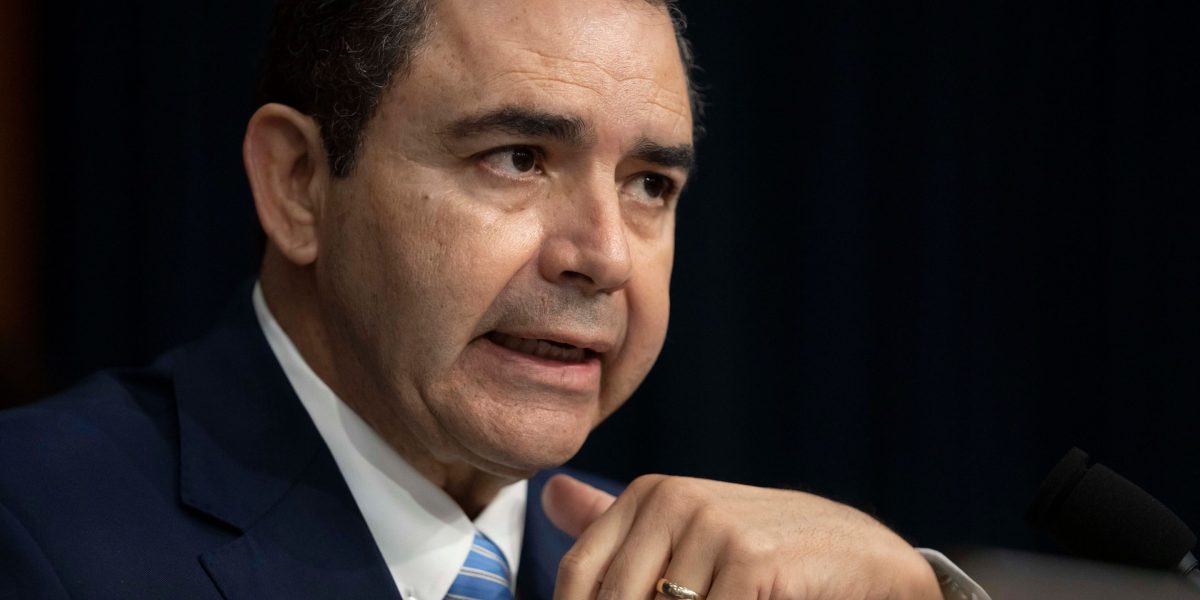
Trump blasted Cuellar for “Such a lack of LOYALTY,” suggesting the Republican president might have expected the clemency to bolster the GOP’s narrow House majority heading into the 2026 midterm elections.

Cuellar, in a television interview Sunday after Trump’s social media post, said he was a conservative Democrat willing to work with the administration “to see where we can find common ground.” The congressman said he had prayed for the president and the presidency at church that morning “because if the president succeeds, the country succeeds.”

Citing a fellow Texas politician, the late President Lyndon Johnson, Cuellar said he was an American, Texan and Democrat, in that order. “I think anybody that puts party before their country is doing a disservice to their country,” he told Fox News Channel’s “Sunday Morning Futures.”

Trump noted on his Truth Social platform that the Democratic President Joe Biden’s administration had brought the charges against Cuellar and that the congressman, by running once more as a Democrat, was continuing to work with “the same RADICAL LEFT” that wanted him and his wife in prison — “And probably still do!”

“Such a lack of LOYALTY, something that Texas Voters, and Henry’s daughters, will not like. Oh’ well, next time, no more Mr. Nice guy!” Trump said. Cuellar’s two daughters, Christina and Catherine, had sent Trump a letter in November asking that he pardon their parents.

Trump explained his pardon he announced Wednesday as a matter of stopping a “weaponized” prosecution. Cuellar was an outspoken critic of Biden’s immigration policy, a position that Trump saw as a key alignment with the lawmaker.

Cuellar said he has good relationships within his party. “I think the general Democrat Caucus and I, we get along. But they know that I’m an independent voice,” he said.

A party switch would have been an unexpected bonus for Republicans after the GOP-run Legislature redrew the state’s congressional districts this year at Trump’s behest. The Texas maneuver started a mid-decade gerrymandering scramble playing out across multiple states. Trump is trying to defend Republicans’ House majority and avoid a repeat of his first term, when Democrats dominated the House midterms and used a new majority to stymie the administration, launch investigations and twice impeach Trump.

Yet Cuellar’s South Texas district, which includes parts of metro San Antonio, was not one of the Democratic districts that Republicans changed substantially, and Cuellar believes he remains well-positioned to win reelection.

Federal authorities had charged Cuellar and his wife with accepting thousands of dollars in exchange for the congressman advancing the interests of an Azerbaijan-controlled energy company and a bank in Mexico. Cuellar was accused of agreeing to influence legislation favorable to Azerbaijan and deliver a pro-Azerbaijan speech on the floor of the U.S. House.

Cuellar has said he his wife were innocent. The couple’s trial had been set to begin in April.

In the Fox interview, Cuellar insisted that federal authorities tried to entrap him with “a sting operation to try to bribe me, and that failed.”

Cuellar still faces a House Ethics Committee investigation.


Source link

Continue Reading

Business

Jerome Powell faces a credibility issue as he tries to satisfy hawks and doves on a divided Fed

Published

on


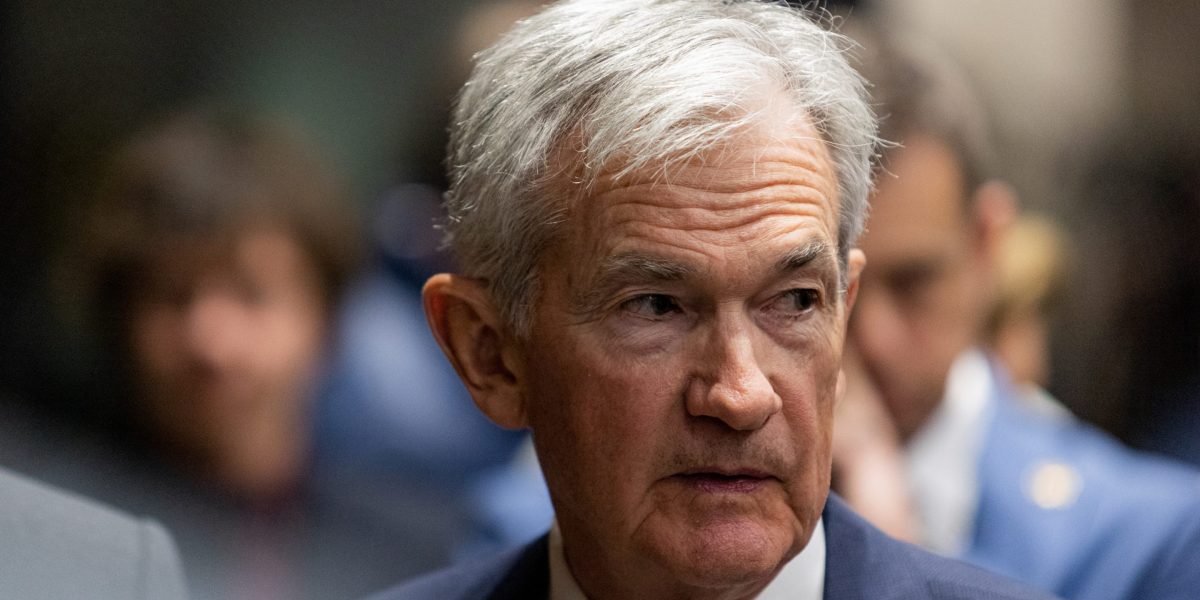
With the Federal Reserve split between increasingly hawkish and increasingly dovish policymakers, Chairman Jerome Powell is due to perform some serious log-rolling when the central bank meets this week.

Another rate cut is a near certainty after the Fed meeting ends on Wednesday, but the main question is what Powell will say about the prospects for more easing next month.

Wall Street expects a hawkish cut, meaning Powell is likely to avoid signaling a January cut to appease Fed hawks, after joining doves to lower rates this month.

“Chair Powell is facing the most divided committee in recent memory,” analysts at Bank of America said in a note on Friday. “Therefore, we think he will attempt to balance the expected rate cut with a hawkish stance at the press conference, just as he did in October.”

But at the same time, the Fed chief has also been insistent that policymakers are not on a pre-determined course and that rate moves depend on the data that come in.

As a result, BofA is doubtful that he can pull off a hawkish cut so easily, considering all the market-moving data that will come out between the two meetings, with some delayed due to the government shutdown.

The week after the Fed meeting, for example, jobs numbers for October and November, October retail sales, and the consumer price index for November will come out. And December readings for those indicators are likely to be released before the next meeting on Jan. 27-28.

“It will be difficult for Powell to send a credibly hawkish signal at the press conference,” analyst said.

BofA still sees a way for him to thread the needle. One option is for Powell to suggest that “significant further weakening” in the jobs data will be necessary to trigger a January cut.

Another option is to argue that 3.5%-3.75%—where benchmark rates would be if the Fed cuts again this week—isn’t restrictive after accounting for inflation, meaning the central bank is no longer weighing on the economy as much.

Similarly, JPMorgan chief U.S. economist Michael Feroli said he expects Powell to stress that after this week’s cut, rates will be close to neutral. So any additional easing would depend on meaningful deterioration in the labor market and not be predicated in risk management.

For now, Wall Street doesn’t expect a January cut, with 25% odds currently being priced in on CME Group’s FedWatch tool. But BofA thinks Powell will likely leave the door open for one.

“We wouldn’t be surprised if markets start pushing more aggressively for a Jan cut in the near term,” analysts predicted. “And the anticipation of this outcome might raise the probability of more dissents in Dec, since hawks might be inclined to dig their heels in instead of compromising.”


Source link

Continue Reading

Trending

Copyright © Miami Select.