Connect with us

Business

The world’s richest added a record $2.2 trillion in wealth this year—but they’ve increasingly lost faith in the American Dream

Published

on


The world’s richest people saw their wealth increase more than ever in 2025, but a funny thing happened along the way. Many of them seemed to decide that their best prospects for the future don’t lie on the western side of the Atlantic, even though the exceptional performance of U.S. equity markets is driving much of these gains. A growing share of the ultra-elite are quietly voting with their feet against the idea that the American Dream is still worth pursuing in America.​

The 500 richest individuals on the planet added a record $2.2 trillion to their fortunes this year, Bloomberg’s Dylan Sloan reported, lifting their combined net worth to about $11.9 trillion.​ Big Tech led the charge, with a euphoria over the prospects of artificial intelligence growing so large that the Magnificent Seven decoupled in many respects from the other 493 companies in the S&P 500. Indeed, Sloan reported that roughly a quarter of all the gains recorded by Bloomberg’s wealth index came from just eight individuals.

The year also saw a surge in what UBS Global Wealth Management calls “everyday millionaires,” or the millionaire next door with wealth in the low seven digits. At the dawn of the millennium, there were just over 13 million of these folks worldwide, but that number has “skyrocketed” to nearly 52 million through the end of 2024—a more than fourfold increase. Even after adjusting for inflation, this population has more than doubled in real terms since the start of the century. New York Times bestselling author Nick Maggiulli, the COO of Ritholtz Wealth Management, told Fortune in August that “something weird’s going on” with wealth trends, as many affluent Americans are asset-rich but feeling poor, with six new economic classes taking shape and nobody seemingly very happy about it.

Another look at UBS wealth analysis, the latest Billionaire Ambitions Report, offers a partial explanation. Global billionaire wealth overall climbed to an all‑time high of roughly $15.8 trillion in 2025, powered both by self‑made founders and the largest intergenerational wealth transfer in the report’s history.​ Nearly 3,000 billionaires now sit atop that mountain of capital, as 196 new self‑made billionaires added about $386.5 billion and heirs inherited a record $297.8 billion this year alone.​

To be sure, North America remains the top investment destination for billionaires surveyed by UBS, but the proportion of ultrawealthy who believe it’s the greatest short-term opportunity for returns dropped from 80% to 63% year over year. And where North America is dipping, other destinations are climbing, with four in 10 billionaires rating Western Europe as the greatest space for opportunity over the next 12 months.

When success means leaving

Some high-profile anecdotes show ultrawealthy Americans voting with their feet. Even as the U.S. remains the top investment destination for billionaires’ capital, many of the people who have “made it” are increasingly deciding they do not want to live out their success inside America’s borders.​

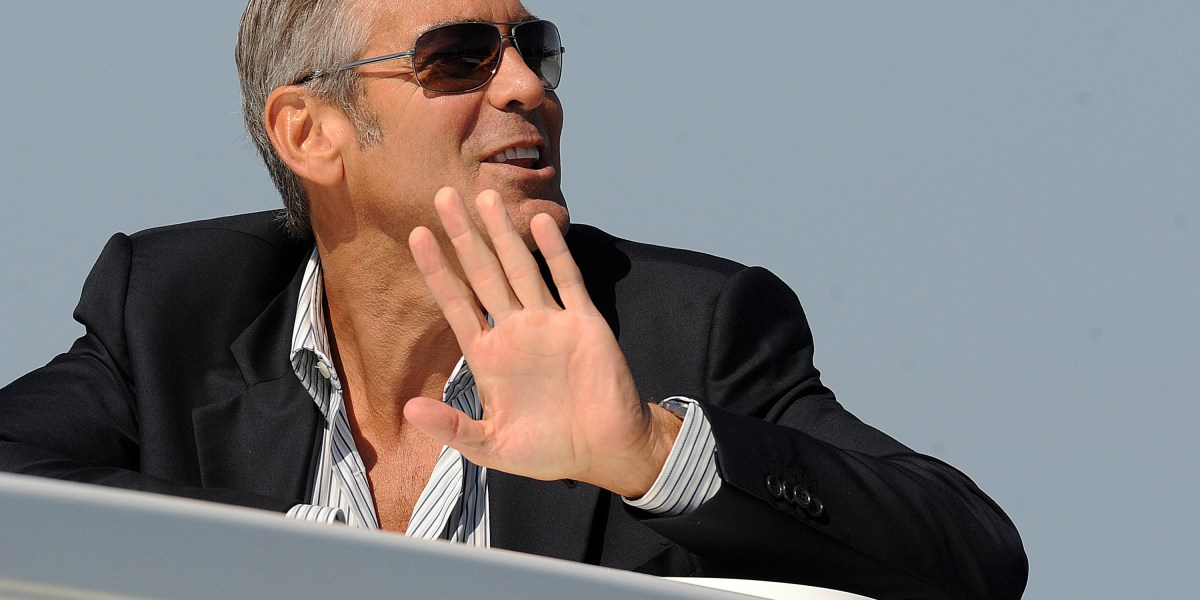
The same forces that have inflated asset prices—hyper‑financialization, permanent online visibility and polarized politics—are pushing some high-earners to seek safety, anonymity, and a slower pace of life overseas.​ France’s decision this month to grant citizenship to George Clooney, his wife, Amal, and their twins, reflects deep tensions.

The two‑time Oscar winner, long a Hollywood fixture, has effectively shifted his family’s center of gravity to a former wine estate in Provence that he describes as a farm, turning the hills of southern France into home base instead of Los Angeles. And he’s been unusually blunt about why he no longer wants to raise his children in Los Angeles, telling Esquire recently that he feared they would “never … get a fair shake at life” in the culture of Hollywood. France, on the other hand, can offer his children a “much better life” centered on chores, family, and relative obscurity rather than red carpets and paparazzi.

By choosing a jurisdiction with strict privacy laws and tougher limits on photographing children, Clooney is effectively arbitraging legal regimes the way multinational corporations arbitrage tax codes—only here the protected asset is family life, not corporate profit. His move amounts to a personal hedge against U.S. celebrity culture and, more broadly, a critique of an American Dream that offers visibility as a reward but often delivers surveillance as the cost.

A broader elite exit

Clooney is far from alone among the prominent and wealthy reassessing their relationship with the United States. Recent years have seen Ellen DeGeneres and Portia de Rossi decamp to the U.K. after Trump’s reelection, Rosie O’Donnell relocate to Ireland, and figures like Richard Gere, Tom Ford, and former Google CEO Eric Schmidt shift homes or primary bases to Europe.

Behind the headlines, data points to a wider, less visible wave of departures. The IRS “Expatriation List,” which tracks mostly high‑net‑worth individuals giving up U.S. citizenship, recorded roughly 4,820 renunciations in 2024—up about 48% from 2023 and the third‑highest annual total on record, with about 21,000 high‑net‑worth Americans renouncing between 2020 and 2024 alone. The only years with higher prominent expat departures were 2016 and 2020, for rather obvious reasons—the first election of Trump and the onset of the COVID pandemic.

A fractured dream at the top

UBS finds that billionaire families are becoming more mobile and international, with over a third saying they have relocated at least once and a similar share considering moves, citing a better quality of life, geopolitical concerns, and tax planning.​ It shows how ultrawealthy families are “becoming increasingly extended and international,” wrote Benjamin Cavalli, head of strategic clients and global connectivity at UBS. “This means they now face an unprecedented set of challenges that span continents, generations, and cultures.”

That mobility underscores a paradox: North America remains the preferred destination for capital, yet for some of the people who own it, the “dream” increasingly seems to require an offshore upgrade in order to protect their children and their peace of mind.​

Another aspect of the UBS report suggests the tensions pushing some people to leave are the same thing creating so much wealth in the first place. The U.S. created so much wealth in 2025 that it minted 92 new self-made billionaires, leading the way globally as $179.9 billion of fortunes were created out of the churn of American innovation. Asia-Pacific saw 61 people become billionaires, representing $124.4 billion, and Europe came in last place, with 43 new billionaires and $82.2 billion of wealth.

And regarding long-term investment destinations, billionaires surveyed by UBS found that North America is still the best place for them to generate a return, with 65% seeing it as the top spot, almost unchanged from 2024’s finding of 68%. It suggests that only one region is innovative enough to see the most wealth produced the most quickly, as the wildly popular Irish economics podcaster David McWilliams told Fortune in November.

“This innovative spirit is rooted in American history,” McWilliams said, going all the way back to Alexander Hamilton, as discussed in his 2025 book, The History of Money. In Europe, he said, “the whole idea is you mitigate risk all the time, right? You go to public health, you go to public schools, you get a job, can’t get fired, all that sort of stuff.” Risk, on the other hand, is “the defining psychological state of the American.” The American Dream, in other words, is alive and well, when you look at just how much wealth is being created in the engine room of risk and innovation. It just comes with a big handful of risk.


Source link

Continue Reading

Business

5 states to ban soda, candy, other snacks from SNAP recipients under MAHA food-stamp push

Published

on


Starting Thursday, Americans in five states who get government help paying for groceries will see new restrictions on soda, candy and other foods they can buy with those benefits.

Indiana, Iowa, Nebraska, Utah and West Virginia are the first of at least 18 states to enact waivers prohibiting the purchase of certain foods through the Supplemental Nutrition Assistance Program, or SNAP.

It’s part of a push by Health Secretary Robert F. Kennedy Jr. and Agriculture Secretary Brooke Rollins to urge states to strip foods regarded as unhealthy from the $100 billion federal program — long known as food stamps — that serves 42 million Americans.

“We cannot continue a system that forces taxpayers to fund programs that make people sick and then pay a second time to treat the illnesses those very programs help create,” Kennedy said in a statement in December.

The efforts are aimed at reducing chronic diseases such as obesity and diabetes associated with sweetened drinks and other treats, a key goal of Kennedy’s Make America Healthy Again effort.

But retail industry and health policy experts said state SNAP programs, already under pressure from steep budget cuts, are unprepared for the complex changes, with no complete lists of the foods affected and technical point-of-sale challenges that vary by state and store. And research remains mixed about whether restricting SNAP purchases improves diet quality and health.

The National Retail Federation, a trade association, predicted longer checkout lines and more customer complaints as SNAP recipients learn which foods are affected by the new waivers.

“It’s a disaster waiting to happen of people trying to buy food and being rejected,” said Kate Bauer, a nutrition science expert at the University of Michigan.

A report by the National Grocers Association and other industry trade groups estimated that implementing SNAP restrictions would cost U.S. retailers $1.6 billion initially and $759 million each year going forward.

“Punishing SNAP recipients means we all get to pay more at the grocery store,” said Gina Plata-Nino, SNAP director for the anti-hunger advocacy group Food Research & Action Center.

The waivers are a departure from decades of federal policy first enacted in 1964 and later authorized by the Food and Nutrition Act of 2008, which said SNAP benefits can be used for “any food or food product intended for human consumption,” except alcohol and ready-to-eat hot foods. The law also says SNAP can’t pay for tobacco.

In the past, lawmakers have proposed stopping SNAP from paying for expensive meats like steak or so-called junk foods, such as chips and ice cream.

But previous waiver requests were denied based on USDA research concluding that restrictions would be costly and complicated to implement, and that they might not change recipients’ buying habits or reduce health problems such as obesity.

Under the second Trump administration, however, states have been encouraged and even incentivized to seek waivers – and they responded.

“This isn’t the usual top-down, one-size-fits-all public health agenda,” Indiana Gov. Mike Braun said when he announced his state’s request last spring. “We’re focused on root causes, transparent information and real results.”

The five state waivers that take effect Jan. 1 affect about 1.4 million people. Utah and West Virginia will ban the use of SNAP to buy soda and soft drinks, while Nebraska will prohibit soda and energy drinks. Indiana will target soft drinks and candy. In Iowa, which has the most restrictive rules to date, the SNAP limits affect taxable foods, including soda and candy, but also certain prepared foods.

“The items list does not provide enough specific information to prepare a SNAP participant to go to the grocery store,” Plata-Nino wrote in a blog post. “Many additional items — including certain prepared foods — will also be disallowed, even though they are not clearly identified in the notice to households.”

Marc Craig, 47, of Des Moines, said he has been living in his car since October. He said the new waivers will make it more difficult to determine how to use the $298 in SNAP benefits he receives each month, while also increasing the stigma he feels at the cash register.

“They treat people that get food stamps like we’re not people,” Craig said.

SNAP waivers enacted now and in the coming months will run for two years, with the option to extend them for an additional three, according to the Agriculture Department. Each state is required to assess the impact of the changes.

Health experts worry that the waivers ignore larger factors affecting the health of SNAP recipients, said Anand Parekh, a medical doctor who is the chief health policy officer at the University of Michigan School of Public Health.

“This doesn’t solve the two fundamental problems, which is healthy food in this country is not affordable and unhealthy food is cheap and ubiquitous,” he said.

——

The Associated Press Health and Science Department receives support from the Howard Hughes Medical Institute’s Department of Science Education and the Robert Wood Johnson Foundation. The AP is solely responsible for all content.


Source link

Continue Reading

Business

‘You only find out who is swimming naked when the tide goes out’: Pearls of Warren Buffett wisdom on his last day in charge

Published

on


The advice that legendary investor Warren Buffett offered on investing and life over the years helped earn him legions of followers who eagerly read his annual letters and filled an arena in Omaha every year to listen to him at Berkshire Hathaway’s annual meetings.

Buffett’s last day as CEO is Wednesday after six decades of building up the Berkshire conglomerate. He’ll remain chairman, but Greg Abel will take over leadership.

Here’s a collection of some of Buffett’s most famous quotes from over the years:

___

“Be fearful when others are greedy, and greedy when others are fearful.”

That’s how Buffett summed up his investing approach of buying out-of-favor stocks and companies when they were selling for less than he estimated they were worth.

He also urged investors to stick with industries they understand that fall within their “circle of competence” and offered this classic maxim: “Rule No. 1: Never lose money. Rule No. 2: Never forget Rule No. 1.”

___

“After they first obey all rules, I then want employees to ask themselves whether they are willing to have any contemplated act appear the next day on the front page of their local paper to be read by their spouses, children and friends with the reporting done by an informed and critical reporter.

“If they follow this test, they need not fear my other message to them: Lose money for the firm and I will be understanding; lose a shred of reputation for the firm and I will be ruthless.”

That’s the ethical standard Buffett explained to a Congressional committee in 1991 that he would apply as he cleaned up the Wall Street investment firm Salomon Brothers. He has reiterated the newspaper test many times since over the years.

___

“You only find out who is swimming naked when the tide goes out.”

Many companies might do well when times are good and the economy is growing, but Buffett told investors that a crisis always reveals whether businesses are making sound decisions.

___

“Who you associate with is just enormously important. Don’t expect that you’ll make every decision right on that. But you are going to have your life progress in the general direction of the people you work with, that you admire, that become your friends.”

Buffett always told young people that they should try to hang out with people who they feel are better than them because that will help improve their lives. He said that’s especially true when choosing a spouse, which might be the most important decision in life.

___

“Our unwavering conclusion: never bet against America.”

Buffett has always remained steadfast in his belief in the American capitalist system. He wrote in 2021 that “there has been no incubator for unleashing human potential like America. Despite some severe interruptions, our country’s economic progress has been breathtaking.”


Source link

Continue Reading

Business

JPMorgan says Javice firms billed millions just for ‘attendance’

Published

on


JPMorgan Chase & Co. said Charlie Javice’s “unconscionable” $74 million tab for legal fees included more than $5 million in charges for lawyers and other staff just for attending her fraud trial, even on days court wasn’t in session.

A previously sealed Delaware court filing released Monday offered the most detailed picture yet of JPMorgan’s claim that Javice, who was convicted in March of defrauding the largest US bank in a $175 million deal, abused a 2023 order requiring it to cover the costs of her defense. 

JPMorgan is seeking to avoid $10.2 million in disputed charges and end the requirement that it pay future bills. Lawyers at Javice’s five law firms billed unnecessary work and inappropriate expenses under the mindset that “someone else is paying her bills,” according to the filing.

The dispute has raised the question of how much is too much for a top-flight criminal defense. Javice’s costs have been much higher than the $30 million in bills Theranos Inc. founder Elizabeth Holmes amassed in her defense. 

The bank focused much of its criticism on Javice’s two largest firms, Quinn Emanuel Urquhart & Sullivan and Mintz, Levin, Cohn, Ferris, Glovsky and Popeo, which it said “have already received tens of millions, and seek millions more for patently unreasonable fees and expenses that constitute clear abuse.” 

JPMorgan said it has “largely resolved” bills through July with Javice’s other firms, including the one for her planned appeal.

In a statement, a Quinn Emanuel spokesman said, “JPMorgan is trying to walk away from its contractual obligation to pay the remainder of Ms. Javice’s legal bills — all in hopes it can cut off her right to pursue her meritorious appeal.” Mintz didn’t immediately respond to phone calls and emails seeking comment.

The two large firms had already billed more than $22 million in the criminal case by August 2024, when Javice hired two smaller firms defend her in the upcoming trial, offering “no explanation” for why Quinn Emanuel and Mintz Levin couldn’t serve as lead trial counsel. 

Quinn Emanuel’s fee’s “skyrocketed” after telling the court before trial that it anticipated transitioning its responsibilities to Mintz, JPMorgan argued. And the Mintz Levin lawyers were “peripheral and unnecessary, even during trial,” the bank said.

JPMorgan said that Javice had as many as 16 to 29 lawyers and other legal professionals in court for every day of her trial, billing an average of $360,000 a day during the six weeks of the trial. No more then four lawyers had speaking roles, and many of the bills were for “trial attendance alone,” JPMorgan said. “Javice’s counsel even improperly billed for trial ‘attendance’ on non-trial days.”

According to the bank, lawyers attending the trial charged a number of inappropriate expenses, the bank said. Included in 2,377 pages of receipts submitted for March were a Cookie Monster toddler’s toy, lavender and jasmine sachets, 57 hotel room upgrades at $300 a night and a $900 meal at Koloman, a highly rated New York restaurant, JPMorgan said.

A New York jury found Javice guilty of misleading JPMorgan into acquiring her student-finance startup, Frank, by creating millions of fake users for the site. She was sentenced in September to seven years in prison but is free on bail pending her appeal.

As part of her sentence, Javice was ordered to repay the legal fees JPMorgan covered. But even if that order is upheld, the bank is unlikely to ever get back more than a small fraction of the total amount. Javice is only required to pay 10% of her income in restitution after she leaves prison, and the order expires in 20 years.

The case is Javice v. JPMorgan, 2022-1179, Delaware Chancery Court (Wilmington).


Source link

Continue Reading

Trending

Copyright © Miami Select.