Connect with us

Business

The world’s richest added a record $2.2 trillion in wealth this year—but they’ve increasingly lost faith in the American Dream

Published

on


The world’s richest people saw their wealth increase more than ever in 2025, but a funny thing happened along the way. Many of them seemed to decide that their best prospects for the future don’t lie on the western side of the Atlantic, even though the exceptional performance of U.S. equity markets is driving much of these gains. A growing share of the ultra-elite are quietly voting with their feet against the idea that the American Dream is still worth pursuing in America.​

The 500 richest individuals on the planet added a record $2.2 trillion to their fortunes this year, Bloomberg’s Dylan Sloan reported, lifting their combined net worth to about $11.9 trillion.​ Big Tech led the charge, with a euphoria over the prospects of artificial intelligence growing so large that the Magnificent Seven decoupled in many respects from the other 493 companies in the S&P 500. Indeed, Sloan reported that roughly a quarter of all the gains recorded by Bloomberg’s wealth index came from just eight individuals.

The year also saw a surge in what UBS Global Wealth Management calls “everyday millionaires,” or the millionaire next door with wealth in the low seven digits. At the dawn of the millennium, there were just over 13 million of these folks worldwide, but that number has “skyrocketed” to nearly 52 million through the end of 2024—a more than fourfold increase. Even after adjusting for inflation, this population has more than doubled in real terms since the start of the century. New York Times bestselling author Nick Maggiulli, the COO of Ritholtz Wealth Management, told Fortune in August that “something weird’s going on” with wealth trends, as many affluent Americans are asset-rich but feeling poor, with six new economic classes taking shape and nobody seemingly very happy about it.

Another look at UBS wealth analysis, the latest Billionaire Ambitions Report, offers a partial explanation. Global billionaire wealth overall climbed to an all‑time high of roughly $15.8 trillion in 2025, powered both by self‑made founders and the largest intergenerational wealth transfer in the report’s history.​ Nearly 3,000 billionaires now sit atop that mountain of capital, as 196 new self‑made billionaires added about $386.5 billion and heirs inherited a record $297.8 billion this year alone.​

To be sure, North America remains the top investment destination for billionaires surveyed by UBS, but the proportion of ultrawealthy who believe it’s the greatest short-term opportunity for returns dropped from 80% to 63% year over year. And where North America is dipping, other destinations are climbing, with four in 10 billionaires rating Western Europe as the greatest space for opportunity over the next 12 months.

When success means leaving

Some high-profile anecdotes show ultrawealthy Americans voting with their feet. Even as the U.S. remains the top investment destination for billionaires’ capital, many of the people who have “made it” are increasingly deciding they do not want to live out their success inside America’s borders.​

The same forces that have inflated asset prices—hyper‑financialization, permanent online visibility and polarized politics—are pushing some high-earners to seek safety, anonymity, and a slower pace of life overseas.​ France’s decision this month to grant citizenship to George Clooney, his wife, Amal, and their twins, reflects deep tensions.

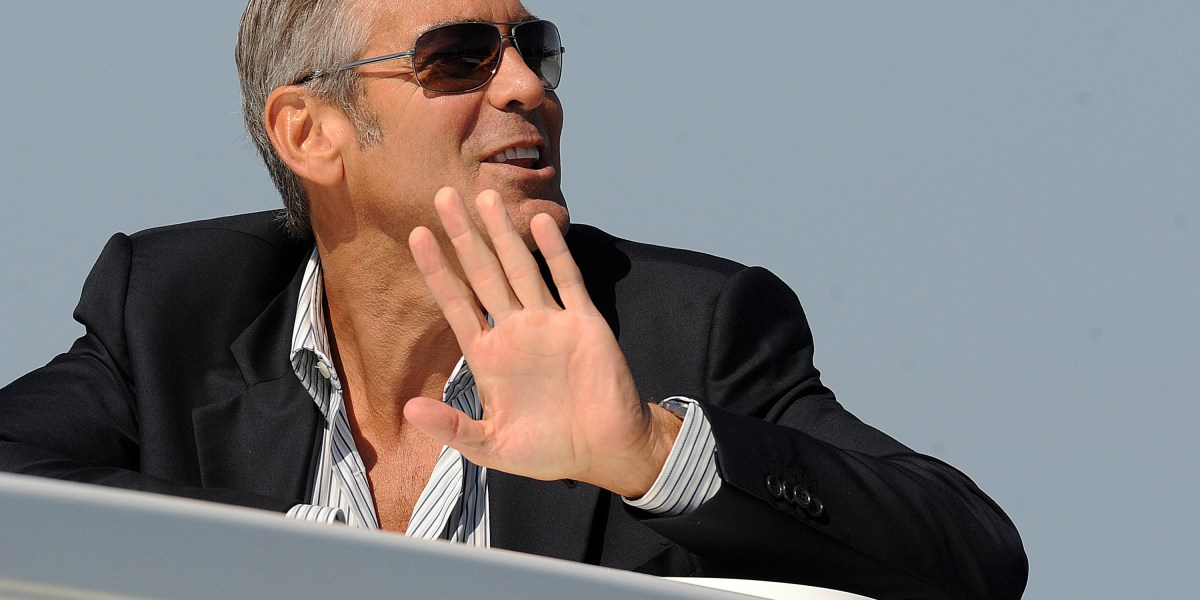
The two‑time Oscar winner, long a Hollywood fixture, has effectively shifted his family’s center of gravity to a former wine estate in Provence that he describes as a farm, turning the hills of southern France into home base instead of Los Angeles. And he’s been unusually blunt about why he no longer wants to raise his children in Los Angeles, telling Esquire recently that he feared they would “never … get a fair shake at life” in the culture of Hollywood. France, on the other hand, can offer his children a “much better life” centered on chores, family, and relative obscurity rather than red carpets and paparazzi.

By choosing a jurisdiction with strict privacy laws and tougher limits on photographing children, Clooney is effectively arbitraging legal regimes the way multinational corporations arbitrage tax codes—only here the protected asset is family life, not corporate profit. His move amounts to a personal hedge against U.S. celebrity culture and, more broadly, a critique of an American Dream that offers visibility as a reward but often delivers surveillance as the cost.

A broader elite exit

Clooney is far from alone among the prominent and wealthy reassessing their relationship with the United States. Recent years have seen Ellen DeGeneres and Portia de Rossi decamp to the U.K. after Trump’s reelection, Rosie O’Donnell relocate to Ireland, and figures like Richard Gere, Tom Ford, and former Google CEO Eric Schmidt shift homes or primary bases to Europe.

Behind the headlines, data points to a wider, less visible wave of departures. The IRS “Expatriation List,” which tracks mostly high‑net‑worth individuals giving up U.S. citizenship, recorded roughly 4,820 renunciations in 2024—up about 48% from 2023 and the third‑highest annual total on record, with about 21,000 high‑net‑worth Americans renouncing between 2020 and 2024 alone. The only years with higher prominent expat departures were 2016 and 2020, for rather obvious reasons—the first election of Trump and the onset of the COVID pandemic.

A fractured dream at the top

UBS finds that billionaire families are becoming more mobile and international, with over a third saying they have relocated at least once and a similar share considering moves, citing a better quality of life, geopolitical concerns, and tax planning.​ It shows how ultrawealthy families are “becoming increasingly extended and international,” wrote Benjamin Cavalli, head of strategic clients and global connectivity at UBS. “This means they now face an unprecedented set of challenges that span continents, generations, and cultures.”

That mobility underscores a paradox: North America remains the preferred destination for capital, yet for some of the people who own it, the “dream” increasingly seems to require an offshore upgrade in order to protect their children and their peace of mind.​

Another aspect of the UBS report suggests the tensions pushing some people to leave are the same thing creating so much wealth in the first place. The U.S. created so much wealth in 2025 that it minted 92 new self-made billionaires, leading the way globally as $179.9 billion of fortunes were created out of the churn of American innovation. Asia-Pacific saw 61 people become billionaires, representing $124.4 billion, and Europe came in last place, with 43 new billionaires and $82.2 billion of wealth.

And regarding long-term investment destinations, billionaires surveyed by UBS found that North America is still the best place for them to generate a return, with 65% seeing it as the top spot, almost unchanged from 2024’s finding of 68%. It suggests that only one region is innovative enough to see the most wealth produced the most quickly, as the wildly popular Irish economics podcaster David McWilliams told Fortune in November.

“This innovative spirit is rooted in American history,” McWilliams said, going all the way back to Alexander Hamilton, as discussed in his 2025 book, The History of Money. In Europe, he said, “the whole idea is you mitigate risk all the time, right? You go to public health, you go to public schools, you get a job, can’t get fired, all that sort of stuff.” Risk, on the other hand, is “the defining psychological state of the American.” The American Dream, in other words, is alive and well, when you look at just how much wealth is being created in the engine room of risk and innovation. It just comes with a big handful of risk.


Source link

Continue Reading

Business

Epstein files fight in court heats up as congressmen accuse DOJ of ‘serious misconduct’

Published

on


Manhattan’s top federal prosecutor said Friday that a judge lacks the authority to appoint a neutral expert to oversee the public release of documents in the sex trafficking probe of financier Jeffrey Epstein and British socialite Ghislaine Maxwell.

Judge Paul A. Engelmayer was told in a letter signed by U.S. Attorney Jay Clayton that he must reject a request this week by the congressional cosponsors of the Epstein Files Transparency Act to appoint a neutral expert.

U.S. Rep. Ro Khanna, a California Democrat, and Rep. Thomas Massie, a Kentucky Republican, say they have “urgent and grave concerns” about the slow release of only a small number of millions of documents that began last month.

In a filing to the judge they said they believed “criminal violations have taken place” in the release process.

Clayton, though, said Khanna and Massie do not have standing with the court that would allow them to seek the “extraordinary” relief of the appointment of a special master and independent monitor.

Engelmayer “lacks the authority” to grant such a request, he said, particularly because the congressional representatives who made the request are not parties to the criminal case that led to Maxwell’s December 2021 sex trafficking conviction and subsequent 20-year prison sentence for recruiting girls and women for Epstein to abuse and aiding the abuse.

Khanna said Clayton’s response “misconstrued” the intent of their request.

“We are informing the Court of serious misconduct by the Department of Justice that requires a remedy, one we believe this Court has the authority to provide, and which victims themselves have requested,” Khanna said in a statement.

“Our purpose is to ensure that DOJ complies with its representations to the Court and with its legal obligations under our law,” he added.

Epstein died in a federal jail in New York City in August 2019 as he awaited trial on sex trafficking charges. The death was ruled a suicide.

The Justice Department expects to update the court “again shortly” regarding its progress in turning over documents from the Epstein and Maxwell investigative files, Clayton said in the letter.

The Justice Department has said the files’ release was slowed by redactions required to protect the identities of abuse victims.

In their letter, Khanna and Massie wrote that the Department of Justice’s release of only 12,000 documents out of more than 2 million documents being reviewed was a “flagrant violation” of the law’s release requirements and had caused “ serious trauma to survivors.”

“Put simply, the DOJ cannot be trusted with making mandatory disclosures under the Act,” the congressmen said as they asked for the appointment of an independent monitor to ensure all documents and electronically stored information are immediately made public.

They also recommended that a court-appointed monitor be given authority to prepare reports about the true nature and extent of the document production and whether improper redactions or conduct have taken place.


Source link

Continue Reading

Business

See the face of ICE’s crackdown on normal Americans: a 21-year-old college student permanently blind in one eye

Published

on


A 21-year-old college student who said he was blinded in one eye by a projectile fired by a federal officer during a Southern California protest said he faces a drastically different life now.

Kaden Rummler said in an interview that he was in agonizing pain and underwent an extensive six-hour surgery to his left eye after he was injured at a Jan. 9 protest over the fatal shooting of a woman by an Immigration and Customs Enforcement officer in Minneapolis. Rummler said he has no depth perception and can no longer drive. Shards of metal and a nickel-sized piece of plastic remain lodged in his skull, his attorney said, and he is considering suing.

“It’s going to affect every aspect of my life,” said Rummler, who hopes to pursue a career in forestry.

A second demonstrator at the same protest outside a federal immigration building in Orange County told the Los Angeles Times he was also blinded in one eye by a projectile fired by federal agents. Britain Rodriguez, 31, said he was standing on steps outside the immigration building when he was struck in the face.

“I remember hitting the ground and feeling like my eye exploded in my head,” Rodriguez told the newspaper.

The Department of Homeland Security didn’t respond to questions from The Associated Press about what type of projectile was used. Tricia McLaughlin, assistant secretary for the agency, said in an emailed statement this week that the protesters were violent and that two officers were injured but didn’t specify the extent of their injuries. DHS said one demonstrator was taken to the hospital with a cut. McLaughlin confirmed to the Times that was a reference to Rummler and called his injury claims “absurd.”

Rummler has been charged with a misdemeanor count of disorderly conduct. One of his fellow protesters was jailed for several days and has been charged with assaulting, resisting or impeding a federal officer.

Rummler’s attorney John Washington said doctors want to know whether the materials in the projectile could be toxic but have been unable to get answers from DHS. Washington said based on their preliminary investigation they believe it was a capsule made from metal and plastic containing pepper spray.

The injuries in California are the latest in a growing number of violent encounters between federal agents and community members during protests over the Trump administration’s immigration crackdown.

Federal immigration agents deployed to Minneapolis have used aggressive crowd-control tactics that have become a dominant concern after the deadly shooting of Renee Good.

In Santa Ana, California, hundreds of people marched in the streets on Jan. 9 to protest Good’s killing. A smaller group later congregated outside the federal immigration building, shouting expletives through megaphones about ICE, according to video taken by OC Hawk, a group that films breaking news in Orange County.

The video shows a handful of officers in riot gear standing guard and urging demonstrators to move back. An orange cone is later seen rolling onto a plaza outside the building, and authorities begin firing crowd-control projectiles as they walk toward the crowd.

In the video, an officer is seen grabbing a protester by the arm and Rummler and a few others are seen stepping forward shouting in response. An officer then fires a crowd-control weapon, striking Rummler from several feet away. Rummler grabs his face and falls to the ground, and an officer grabs him by the shirt and drags him backward across the ground toward the building, the video shows. Later, video appears to show him face down on the ground being handcuffed.

Rummler said he joined the protest against immigration authorities because he can’t stand seeing families torn from their homes. Despite his injuries, he said he would do it again.

“I refuse to sit around idly and watch that happen, and in 50 years, I would absolutely regret not trying to make a change,” he said.

Washington, a civil rights lawyer, said his client could have been killed.

“Any officers with just the most basic training would know you don’t shoot someone ever in the face with this, but let alone at point-blank range, and that’s because it is a lethal weapon when used like that, and it very nearly was,” Washington said.

Geoffrey Alpert, a professor of criminology and criminal justice at University of South Carolina, said a thorough investigation is needed into the reason for using a high level of force in that situation.

“I don’t know of any projectile where you train to shoot at that close range,” Alpert said.


Source link

Continue Reading

Business

Fortune Article | Fortune

Published

on


The eight European countries targeted by U.S. President Donald Trump for a 10% tariff for opposing American control of Greenland blasted the move Sunday, warning that the American leader’s threats “undermine transatlantic relations and risk a dangerous downward spiral.”

In an unusual and very strong joint statement coming from major U.S. allies, Denmark, Norway, Sweden, France, Germany, the United Kingdom, the Netherlands and Finland on Sunday said troops sent to Greenland for the Danish military training exercise “Arctic Endurance” pose “no threat to anyone.”

Trump’s Saturday announcement sets up a potentially dangerous test of U.S. partnerships in Europe. The Republican president appeared to indicate that he was using the tariffs as leverage to force talks over the status of Greenland, a semiautonomous territory of NATO ally Denmark that he regards as critical to U.S. national security.

“We stand in full solidarity with the Kingdom of Denmark and the people of Greenland,” the group said. “Building on the process begun last week, we stand ready to engage in a dialogue based on the principles of sovereignty and territorial integrity that we stand firmly behind. Tariff threats undermine transatlantic relations and risk a dangerous downward spiral.”

There are immediate questions about how the White House could try to implement the tariffs because the EU is a single economic zone in terms of trading. It was unclear, too, how Trump could act under U.S. law, though he could cite emergency economic powers that are currently subject to a U.S. Supreme Court challenge.

European Union foreign policy chief Kaja Kallas said China and Russia will benefit from the divisions between the U.S. and Europe. She added in a post on social media: “If Greenland’s security is at risk, we can address this inside NATO. Tariffs risk making Europe and the United States poorer and undermine our shared prosperity.”

Trump’s move was also panned domestically.

U.S. Sen. Mark Kelly, a former U.S. Navy pilot and Democrat who represents Arizona, posted that Trump’s threatened tariffs on U.S. allies would make Americans “pay more to try to get territory we don’t need.”

“Troops from European countries are arriving in Greenland to defend the territory from us. Let that sink in,” he wrote on social media. “The damage this President is doing to our reputation and our relationships is growing, making us less safe. If something doesn’t change we will be on our own with adversaries and enemies in every direction.”

‘These tariffs will hurt us’

Six of the countries targeted are part of the 27-member EU, which operates as a single economic zone in terms of trading. It was not immediately clear if Trump’s tariffs would impact the entire bloc. EU envoys scheduled emergency talks for Sunday evening to determine a potential response.

The tariff announcement even drew blowback from Trump’s populist allies in Europe.

Italy’s right-wing premier, Giorgia Meloni, considered one of Trump’s closest allies on the continent, said Sunday she had spoken to him about the tariffs, which she described as “a mistake.”

The deployment to Greenland of small numbers of troops by some European countries was misunderstood by Washington, Meloni told reporters. She said the deployment was not a move against the U.S. but aimed to provide security against “other actors” that she didn’t name.

French President Emmanuel Macron wrote on social media that “no intimidation or threats will influence us, whether in Ukraine, Greenland or anywhere else in the world when we are faced with such situations.” He added that “tariff threats are unacceptable and have no place in this context.”

Jordan Bardella, president of Marine Le Pen’s far-right National Rally party in France and also a European Parliament lawmaker, posted that the EU should suspend last year’s tariff deal with the U.S., describing Trump’s threats as “commercial blackmail.”

Trump also achieved the rare feat of uniting Britain’s main political parties — including the hard-right Reform UK party — all of whom criticized the tariff threat.

“We don’t always agree with the U.S. government and in this case we certainly don’t. These tariffs will hurt us,” Reform UK leader Nigel Farage, a longtime champion and ally of Trump, wrote on social media. He stopped short of criticizing Trump’s designs on Greenland.

Meanwhile, U.K. Prime Minister Keir Starmer, who leads the center-left Labour Party, said the tariffs announcement was “completely wrong” and his government would “be pursuing this directly with the U.S. administration.”

The foreign ministers of Denmark and Norway are also expected to address the crisis Sunday in Oslo during a news conference.

__

Leicester reported from Paris and Cook from Brussels. Associated Press writers Jill Lawless in London, Barry Hatton in Lisbon, Portugal, Aamer Madhani in Washington and Josh Boak in West Palm Beach, Florida, contributed to this report.


Source link

Continue Reading

Trending

Copyright © Miami Select.