Connect with us

Business

The world’s richest added a record $2.2 trillion in wealth this year—but they’ve increasingly lost faith in the American Dream

Published

on


The world’s richest people saw their wealth increase more than ever in 2025, but a funny thing happened along the way. Many of them seemed to decide that their best prospects for the future don’t lie on the western side of the Atlantic, even though the exceptional performance of U.S. equity markets is driving much of these gains. A growing share of the ultra-elite are quietly voting with their feet against the idea that the American Dream is still worth pursuing in America.​

The 500 richest individuals on the planet added a record $2.2 trillion to their fortunes this year, Bloomberg’s Dylan Sloan reported, lifting their combined net worth to about $11.9 trillion.​ Big Tech led the charge, with a euphoria over the prospects of artificial intelligence growing so large that the Magnificent Seven decoupled in many respects from the other 493 companies in the S&P 500. Indeed, Sloan reported that roughly a quarter of all the gains recorded by Bloomberg’s wealth index came from just eight individuals.

The year also saw a surge in what UBS Global Wealth Management calls “everyday millionaires,” or the millionaire next door with wealth in the low seven digits. At the dawn of the millennium, there were just over 13 million of these folks worldwide, but that number has “skyrocketed” to nearly 52 million through the end of 2024—a more than fourfold increase. Even after adjusting for inflation, this population has more than doubled in real terms since the start of the century. New York Times bestselling author Nick Maggiulli, the COO of Ritholtz Wealth Management, told Fortune in August that “something weird’s going on” with wealth trends, as many affluent Americans are asset-rich but feeling poor, with six new economic classes taking shape and nobody seemingly very happy about it.

Another look at UBS wealth analysis, the latest Billionaire Ambitions Report, offers a partial explanation. Global billionaire wealth overall climbed to an all‑time high of roughly $15.8 trillion in 2025, powered both by self‑made founders and the largest intergenerational wealth transfer in the report’s history.​ Nearly 3,000 billionaires now sit atop that mountain of capital, as 196 new self‑made billionaires added about $386.5 billion and heirs inherited a record $297.8 billion this year alone.​

To be sure, North America remains the top investment destination for billionaires surveyed by UBS, but the proportion of ultrawealthy who believe it’s the greatest short-term opportunity for returns dropped from 80% to 63% year over year. And where North America is dipping, other destinations are climbing, with four in 10 billionaires rating Western Europe as the greatest space for opportunity over the next 12 months.

When success means leaving

Some high-profile anecdotes show ultrawealthy Americans voting with their feet. Even as the U.S. remains the top investment destination for billionaires’ capital, many of the people who have “made it” are increasingly deciding they do not want to live out their success inside America’s borders.​

The same forces that have inflated asset prices—hyper‑financialization, permanent online visibility and polarized politics—are pushing some high-earners to seek safety, anonymity, and a slower pace of life overseas.​ France’s decision this month to grant citizenship to George Clooney, his wife, Amal, and their twins, reflects deep tensions.

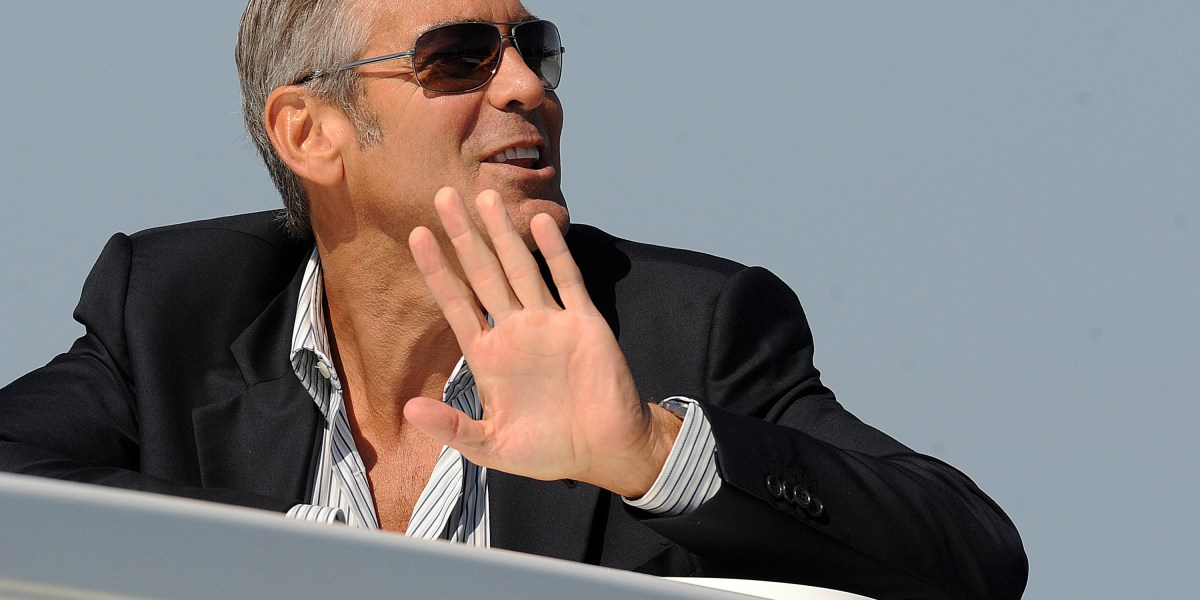
The two‑time Oscar winner, long a Hollywood fixture, has effectively shifted his family’s center of gravity to a former wine estate in Provence that he describes as a farm, turning the hills of southern France into home base instead of Los Angeles. And he’s been unusually blunt about why he no longer wants to raise his children in Los Angeles, telling Esquire recently that he feared they would “never … get a fair shake at life” in the culture of Hollywood. France, on the other hand, can offer his children a “much better life” centered on chores, family, and relative obscurity rather than red carpets and paparazzi.

By choosing a jurisdiction with strict privacy laws and tougher limits on photographing children, Clooney is effectively arbitraging legal regimes the way multinational corporations arbitrage tax codes—only here the protected asset is family life, not corporate profit. His move amounts to a personal hedge against U.S. celebrity culture and, more broadly, a critique of an American Dream that offers visibility as a reward but often delivers surveillance as the cost.

A broader elite exit

Clooney is far from alone among the prominent and wealthy reassessing their relationship with the United States. Recent years have seen Ellen DeGeneres and Portia de Rossi decamp to the U.K. after Trump’s reelection, Rosie O’Donnell relocate to Ireland, and figures like Richard Gere, Tom Ford, and former Google CEO Eric Schmidt shift homes or primary bases to Europe.

Behind the headlines, data points to a wider, less visible wave of departures. The IRS “Expatriation List,” which tracks mostly high‑net‑worth individuals giving up U.S. citizenship, recorded roughly 4,820 renunciations in 2024—up about 48% from 2023 and the third‑highest annual total on record, with about 21,000 high‑net‑worth Americans renouncing between 2020 and 2024 alone. The only years with higher prominent expat departures were 2016 and 2020, for rather obvious reasons—the first election of Trump and the onset of the COVID pandemic.

A fractured dream at the top

UBS finds that billionaire families are becoming more mobile and international, with over a third saying they have relocated at least once and a similar share considering moves, citing a better quality of life, geopolitical concerns, and tax planning.​ It shows how ultrawealthy families are “becoming increasingly extended and international,” wrote Benjamin Cavalli, head of strategic clients and global connectivity at UBS. “This means they now face an unprecedented set of challenges that span continents, generations, and cultures.”

That mobility underscores a paradox: North America remains the preferred destination for capital, yet for some of the people who own it, the “dream” increasingly seems to require an offshore upgrade in order to protect their children and their peace of mind.​

Another aspect of the UBS report suggests the tensions pushing some people to leave are the same thing creating so much wealth in the first place. The U.S. created so much wealth in 2025 that it minted 92 new self-made billionaires, leading the way globally as $179.9 billion of fortunes were created out of the churn of American innovation. Asia-Pacific saw 61 people become billionaires, representing $124.4 billion, and Europe came in last place, with 43 new billionaires and $82.2 billion of wealth.

And regarding long-term investment destinations, billionaires surveyed by UBS found that North America is still the best place for them to generate a return, with 65% seeing it as the top spot, almost unchanged from 2024’s finding of 68%. It suggests that only one region is innovative enough to see the most wealth produced the most quickly, as the wildly popular Irish economics podcaster David McWilliams told Fortune in November.

“This innovative spirit is rooted in American history,” McWilliams said, going all the way back to Alexander Hamilton, as discussed in his 2025 book, The History of Money. In Europe, he said, “the whole idea is you mitigate risk all the time, right? You go to public health, you go to public schools, you get a job, can’t get fired, all that sort of stuff.” Risk, on the other hand, is “the defining psychological state of the American.” The American Dream, in other words, is alive and well, when you look at just how much wealth is being created in the engine room of risk and innovation. It just comes with a big handful of risk.


Source link

Continue Reading

Business

Down Arrow Button Icon

Published

on


The dollar is poised for its sharpest annual retreat in eight years and investors say more declines are coming if the next Federal Reserve chief opts for deeper interest-rate cuts as expected. 

The Bloomberg Dollar Spot Index has fallen about 8% this year so far. After tumbling in the wake of Donald Trump’s “Liberation Day” tariffs in April, the greenback came under sustained pressure as the president kicked off his aggressive campaign to get a dovish appointee installed as Fed chair next year.

“The biggest factor for the dollar in first quarter will be the Fed,” said Yusuke Miyairi, a foreign-exchange strategist at Nomura. “And it’s not just the meetings in January and March, but who will be the Fed Chair after Jerome Powell ends his term.”  

With at least two rate reductions priced in for next year, the US’s policy path diverges from some of its developed peers, further dimming the dollar’s appeal.

The euro has surged against the greenback as benign inflation and a coming wave of European defense spending keep rate-cut bets close to zero. In Canada, Sweden and Australia, meanwhile, rates traders are wagering on hikes. 

The dollar gauge rose as much as 0.2% Wednesday after Labor Department data showed applications for US unemployment benefits fell last week to one of the lowest levels this year. The greenback index was still on track to finish December down about 1%. 

This month, a brief period of bullish positioning on the dollar reverted to the more pessimistic stance that’s dominated since the April tariffs fueled concerns about the US economy, Commodity Futures Trading Commission data for the week ending Dec. 16 show.

For now, it’s all about the Fed and who steps into replace Jerome Powell, whose term as chair is set to end in May. 

Trump recently teased that he has a preferred candidate, but is in no hurry to make an announcement — while also musing that he might fire the central bank’s current leader.

National Economic Council Director Kevin Hassett has long been seen as the leading candidate, while Trump also expressed interest in former Fed governor Kevin Warsh. Fed governors Christopher Waller and Michelle Bowman and BlackRock’s Rick Rieder are also seen as being in the running. 

“Hassett would be more or less priced in since he has been the frontrunner for some time now, but Warsh or Waller would likely not be as quick to cut, which would be better for the dollar,” said Andrew Hazlett, a foreign-exchange trader at Monex Inc.


Source link

Continue Reading

Business

Gold and silver stumble at the end of best year since the 1970s

Published

on


Gold and silver fell on the last trading day of 2025, though both remained on track for the biggest annual gain in more than four decades as a banner year for precious metals draws to a close. 

Spot gold hovered around $4,320 an ounce, while silver slid toward $71. The two have seen exceptional volatility in thin post-holiday trading, plunging Monday before recovering Tuesday and dropping again Wednesday. The big swings prompted exchange operator CME Group to raise margin requirements twice. 

Both metals are still on track for their best year since 1979, supported by strong demand for haven assets amid mounting geopolitical risks, and by interest-rate cuts by the US Federal Reserve. The so-called debasement trade — triggered by fears of inflation and swelling debt burdens in developed economies — has helped supercharge the scorching rally.

In gold, the bigger market by far, those factors spurred a rush by investors into bullion-backed exchange-traded funds, while central banks extended a years-long buying spree.

Gold is up about 63% this year. In September, it eclipsed an inflation-adjusted peak set 45 years ago — a time when US currency pressures, spiking inflation and an unfolding recession pushed prices to $850. This time around, the record run saw prices smash through $4,000 in early October.

“In my career, it’s unprecedented,” said John Reade, a market veteran and chief strategist at the World Gold Council. “Unprecedented by the number of new all-time highs, and unprecedented in the performance of gold exceeding the expectations of so many people by so much.”

Silver has notched up a gain of more than 140% during the year, driven by speculative buying but also by industrial demand, with the metal used extensively in electronics, solar panels and electric cars. In October, it soared to a record as tariff concerns drove imports into the US, tightening the London market and triggering a historic squeeze.

The new peak was then passed the following month as US rate cuts and speculative fervor drove prices higher, and the rally topped out above $80 earlier this week — in part reflecting elevated buying in China.

Yet the latest move swiftly reversed, with the market closing down 9% on Monday then swinging the following two days. In response to the extreme volatility, CME Group again raised margins on precious-metal futures, meaning traders must put up more cash to keep their positions open. Some speculators may be forced to shrink or exit their trades — weighing on prices.

“The key driver today is the CME raising margins for the second time in just a few days,” said Ross Norman, chief executive officer of Metals Daily, a pricing and analysis website. The higher collateral requirements are “cooling the markets off,” he said.

Platinum, Palladium

The enthusiasm for gold and silver has extended into the wider precious-metals complex in 2025, with platinum breaking out of a years-long holding pattern to hit a new high.

The metal is on course for a third annual deficit, following disruptions in major producer South Africa, and supply will likely remain tight until there’s clarity on whether the Trump administration will impose tariffs — as well as on silver.

Prices for silver, platinum and palladium all sagged on Wednesday, though there’s little sign of enthusiasm waning.

“2025’s surprise was how safe-haven metals turned into momentum trades — silver in particular,” said Charu Chanana, chief market strategist at Saxo Markets in Singapore.

Silver traded down 6% at $71.44 an ounce as of 12:28 p.m. in New York. Gold slipped 0.4% to $4,322.04 an ounce, while the Bloomberg Dollar Spot Index was up 0.1%.


Source link

Continue Reading

Business

Copper records biggest annual gain since 2009 on supply bets

Published

on


Copper had its best year since 2009, fueled by near-term supply tightness and bets that demand for the metal key in electrification will outpace production. 

The red metal has notched a series of all-time highs in an end-of-year surge, rallying 42% on the London Metal Exchange this year. That makes it the best performer of the six industrial metals on the bourse. Prices dipped 1.1% Wednesday, the last trading day of 2025.

The latest gains also have been driven by traders rushing to ship copper to the US in anticipation of potential tariffs, creating tightness elsewhere. Trump’s plan to revisit the question of tariffs on primary copper in 2026 revived the arbitrage trade that rocked the market earlier in the year, tightening availability elsewhere even as underlying demand in key buyer China has softened. That price spread narrowed recently amid a power December rally on the LME.

“The expectation for future US import tariffs on refined copper has resulted in more than 650,000 tons of metal entering the country, creating tightness ex-US,” wrote Natalie Scott-Gray, senior metals analyst at StoneX Financial Ltd. She noted two-thirds of global visible stocks now are held within COMEX.

Beyond the tariff-driven flows, a deadly accident at the world’s second-largest copper mine in Indonesia, an underground flood in the Democratic Republic of Congo and a fatal rock blast at a mine in Chile have all added more strain to availability of the metal.

The near-term outlook for copper demand growth has been clouded by weakness in China, the world’s top consumer of the red metal. The country’s property market has been stuck in a yearslong downturn that’s dented the need for copper plumbing and wiring, while consumer spending has been sluggish, weighing on appetite for finished goods such as electronic appliances.

Still, robust momentum in global copper demand is expected over the long term. BloombergNEF estimates consumption could increase by more than a third by 2035 in its baseline scenario.

The drivers of this trend include the ongoing shift to cleaner energy sources such as solar panels and wind turbines, growing adoption of electric vehicles and the expansion of power grids.

Copper settled 1.1% lower at $12,558.50 a ton in London. Prices hit a record $12,960 on Monday. 

This story was originally featured on Fortune.com


Source link

Continue Reading

Trending

Copyright © Miami Select.