Connect with us

Business

The Walmart C-suite reshuffle shows how the retailer sees itself now: as a tech company

Published

on


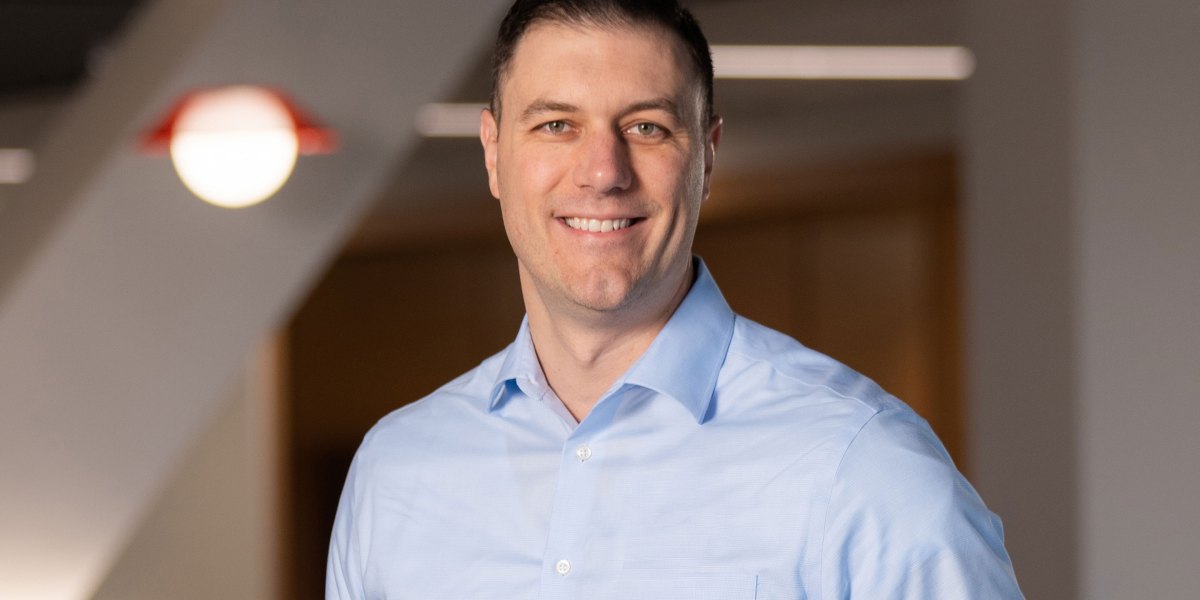
When Walmart last week announced that David Guggina, its U.S. e-commerce chief executive, would become CEO of its nearly $500 billion U.S. division, one thing stood out in his résumé: Unlike his predecessors, Guggina has no experience running stores and has never held a merchandising role, at Walmart or elsewhere. These are two classic job requirements in retail. Incoming Walmart CEO John Furner, for example, who has run U.S. operations since 2019, began his Walmart career as an hourly associate in 1993, and held roles in merchandising, operations, and sourcing.

But there’s another realm of experience that Guggina does have in spades: e-commerce, automation, and supply chain. And by putting him atop the division that generates 69% of company revenue, Walmart is signaling that it now sees itself as a tech company, as well as a retailer. Guggina has spent eight years at Walmart, after nine years at arch-rival Amazon.com. In its announcement, Walmart touted Guggina’s work in building delivery capabilities to serve 95% of U.S. households in under three hours, and said his appointment “positions him to continue to drive our goal of being America’s favorite place to shop.”

In the last decade, after years of fits and starts, Walmart has emerged as a formidable e-commerce player, with U.S. digital sales of almost $100 billion a year—still far behind Amazon, but well ahead of any other U.S. retailer. In its most recent quarter, Walmart’s U.S. e-commerce rose 27%. That has been the result of billions in investments to integrate Walmart’s 4,600 stores with its e-commerce operations. This work has helped ensure faster shipping while also integrating technology more effectively into things like inventory management, supply chain, and in-store customer service. Guggina was instrumental in those achievements, working under Furner, who will become Walmart Inc’s new CEO next week.

“This is a unique moment in retail,” Guggina said in a LinkedIn post about his appointment. “AI is changing how people shop, and customer expectations are higher than ever. But no one is more prepared to usher in the next era of retail.”

The timing of Guggina’s promotion was fitting: It came soon after Walmart moved its shares from the New York Stock Exchange to the Nasdaq exchange, where tech giants such as Amazon, Google, and Microsoft list their shares. In December, Walmart said the move underscores its “technology-forward approach.” 

Guggina isn’t the only techy whose star is rising at Walmart. The company also appointed Seth Dallaire chief growth officer for Walmart U.S., charging him with pushing Walmart U.S. further beyond traditional retail into tech-heavy lines of business—including its booming advertising, media, and online marketplace ventures. Dallaire is a veteran of Instacart and Amazon.

Walmart is considered by analysts to be well ahead of other retailers in AI-assisted shopping. In October, it announced a partnership with OpenAI to allow shoppers to browse and buy Walmart products directly inside ChatGPT, using a built-in instant checkout feature. Last week, Walmart and Google announced their own shopping tool. Also last week, Walmart’s executive vice president for AI acceleration, product and design, Daniel Danker, suggested at a conference that the company was developing auto-ordering for the replenishment of staples.

Bolstering Walmart’s tech and AI aura has had the additional benefit of lifting the company’s stock: In the last year, Walmart shares have risen 27%, double the S&P 500’s growth and trouncing Amazon’s 1% increase.

This story was originally featured on Fortune.com


Source link

Continue Reading

Business

Trump says Mark Zuckerberg showed him a ‘Manhattan-sized’ AI data center

Published

on


President Donald Trump gave a surprise shoutout to Meta CEO Mark Zuckerberg after his address at the World Economic Forum Wednesday. At a Q&A after the address, Trump recounted a moment when Zuckerberg displayed a map of a proposed AI data center facility overlaid against Manhattan. The project’s footprint, Trump noted, appeared to swallow the entire island.

“Mark Zuckerberg showed me a plant where he put it over a map of Manhattan, and it was basically the size of Manhattan,” Trump told the crowd of global elites. “I said, ‘You’ve got to be kidding.’ It was miles long, miles wide, and very high. It literally covered most of the island.”

Meta’s stock jumped 1.6% after Trump’s statement, paring gains to 0.9% as of press time.

While Trump referred to the project as a “big plant,” he could have been referring to Meta’s Richland Parish “Hyperion” AI data center campus which is currently rising in Louisiana and is set to open in 2030. The massive industrial undertaking comprises 2,250 acres—a land mass equal to roughly 1,700 football fields. Once Meta completes the build, the campus will house 4 million square feet of data center space, making it one of the largest silicon clusters on Earth. However, that 4 million miles is much smaller than Manhattan’s 22 million square miles; raising questions about whether Trump was referring to a much larger project being built by Zuckerberg. 

Trump also marveled at the project’s $50 billion price tag, contrasting the staggering investment with traditional real estate, harkening back to his past life as a developer. That $50 billion matches the projected cost of building the Hyperion data center campus.

“If you spend $500 million, you can build a good shopping center,” Trump remarked. “But how do you spend $50 billion? When I looked at this thing, I understood why.”

Meta is currently transitioning from a social media company to an AI infrastructure giant, raising its capital expenditure guidance for the 2025 fiscal year to nearly $72 billion, 70% more than the previous year. Looking into 2026, Zuckerberg has warned of “notably larger” spending, with market analysts projecting that annual outlays could surpass $100 billion.

The president said that AI is “massive” and driving a rapid demand for energy that requires a shift in policy. Recognizing that the aging U.S. electrical grid cannot support the two-to-five gigawatts of power that these “titan clusters” require, Trump ordered the government to step aside during his speech. He told the Davos audience that he has authorized AI companies to act as their own private utilities.

So far it seems that under this new framework, tech giants will build their own on-site power plants using natural gas, coal or oil. Trump promised to slash the bureaucratic red tape that usually bogs down such projects, making them drag on for four or five years. Instead, he pledged to deliver federal approvals for these private energy plants in just two weeks, as long as the companies build their “own electric generating plants.”

“You people are brilliant. You have a lot of money,” Trump said, addressing the tech executives in the room, egging them on to start building their own plants. 

This industrial blitz serves as the President’s primary leverage ahead of his planned state visit to China in April. Trump has argued that American leadership in AI depends on physical infrastructure rather than just software, and said Chinese President Xi Jinping respects this rapid industrial execution.

“I’ve always had a very good relationship with President Xi,” Trump said. “But we’re leading the world in AI by a lot because I’ve allowed these big companies to build their own electric capacity. We’re creating more energy than any country anywhere in the world.”

China and the U.S. are widely seen to be neck-and-neck in the AI race, with each country emphasizing their own strengths to best the other. The U.S. leads China in AI talent, investment and access to semiconductors, while China has the U.S. beat on AI-related infrastructure, according to a recent Morgan Stanley report. China is just “months” behind the U.S. in terms of model quality, Demis Hassabis, the CEO of Google DeepMind told CNBC.

The same day Trump was speaking in Davos, Nvidia CEO Jensen Huang dismissed fears of an AI bubble while discussing China’s progress. The release of DeepSeek in 2023, in particular, he highlighted as a “major breakthrough.” Huang called China’s advance in this regard “a huge event for most of the industries, most of the companies around the world, because it’s the world’s first open reasoning model.” Since then, he explained, many open reasoning models have emerged, enabling researchers to create something that’s domain specific or specialized for their needs. In the U.S., Mark Zuckerberg has stood out for his own commitment to open-source AI models, citing DeepSeek as a model in particular.


Source link

Continue Reading

Business

Down Arrow Button Icon

Published

on


Nestled in the heart of Bangkok’s Chinatown, the Ong Ang Canal served as a vital trade artery in the 18th century. Over time, it became heavily polluted, and even earned a reputation as the city’s dirtiest canal.

Last month, as part of a broader government effort to revitalize the canal, Siam Cement Group (SCG), Thailand’s oldest cement firm, unveiled the country’s first 3D-printed pedestrian bridge across its waters. 

The bridge is part of SCG’s drive to bring new construction materials to Southeast Asia, Surachai Nimlaor, who helms its operations in cement and green solutions, tells Fortune in a Jan. 20 interview. 

The company first started applying 3D printing tech to construction in the early 2020s, including the 2023 construction of the world’s first 3D printed medical center in Saraburi, Thailand. 

“When we use 3D printing, we can shorten construction time and create buildings with unique shapes that conventional builders may not be able to achieve,” says Nimlaor.

The process involves creating a digital model, slicing it for the 3D printer, and then allowing the printer’s robotic arms to set down concrete, layer-by-layer, to form structures. By removing the need for traditional molds or formwork, it enables freeform architecture which includes sculptural curves and undulating walls. SCG’s 3D printed medical center, for instance, has fluid facades that would be difficult to execute with conventional cast concrete.

Courtesy of Siam Cement Group

This technology could be especially valuable for Thailand, where an aging population and a workforce wary of construction jobs is shrinking the sector’s pool of available workers. Nimlaor explains that the industry has been forced to turn to foreign workers from neighboring countries like Cambodia and Myanmar. (According to 2025 data from Cambodia’s Ministry of Labour and Vocational Training, there are over 1.2 million Cambodian workers in Thailand, many of whom are employed in construction.)

Still, 3D printed buildings are often only one or two storeys tall, Nimlaor admits, as taller buildings introduce “material constraints around structural loads and stability.”

Thailand’s first cement firm

SCG was founded in 1913 to build Bangkok’s first cement plant, under the orders of then-King Rama VI. In the century that followed, the company expanded to focus on three core businesses: cement and building materials, chemicals, and packaging.

Today, SCG is Thailand’s largest building materials company, with a 2024 revenue of $14.5 billion. It ranks No. 21 in Fortune’s Southeast Asia 500 list, which sorts the region’s largest companies by revenue. SCG has also expanded to other parts of Southeast Asia, including packaging businesses in Malaysia and a petrochemical plant in Vietnam.

Greening the construction industry

Beyond 3D printing, SCG is also developing low-carbon cement, tackling an industry that accounts for roughly 8% of global carbon emissions, according to the World Economic Forum.

SCG is trying to formulate cement produced using biomass, like wood. This cuts the carbon emissions from the production process by as much as 20% per ton, Nimlaor claims. SCG now exports its low-carbon cement to the U.S. and Australia, where developers now prefer materials that meet ESG standards. 

“ESG has become a very strong driver in the global market,” he explains. “Many companies now have clear carbon-reduction targets and sustainability commitments.” 

SCG hopes to launch the third-generation of its low-carbon cement, which would cut carbon emissions from production by up to 40%, but Nimlaor has hopes that they can eventually cut emissions by up to 90%. 

Looking forward, SCG hopes to continue pushing the boundaries in creating greener construction materials. “Sustainability and business growth must go together,” he concludes.


Source link

Continue Reading

Business

Fortune Article | Fortune

Published

on


Bitcoin is one of the world’s most battle-tested pieces of software. Launched in early 2009, the network has run continuously without being hacked, and today feels more secure than ever. There is, however, a threat on the medium-term horizon that threatens not only Bitcoin but every other type of software that relies on current encryption technology. That threat is quantum computing and, on Wednesday, Coinbase announced it has created a board of outside experts to prepare for its eventual arrival.

The board includes academics from Stanford, Harvard, and the University of California with specialties in fields like computer science, cryptography and fintech. Formally known as the Coinbase Independent Advisory Board on Quantum Computing and Blockchain, it is also composed of experts in blockchain and security from the Ethereum Foundation, the DeFi platform EigenLayer and from Coinbase itself.

In an interview with Fortune, Coinbase Chief Information Security Officer Jeff Lunglhofer explained how the arrival of quantum computing could defeat current encryption mechanisms, including the ones employed to protect the wallets and private keys held by Bitcoin owners.

“In simple terms, modern cryptography relies on hard math problems that would take thousands of years for a modern computer to solve,” he said. “But when we have a million times the horsepower [with quantum computing], that will provide the computation power to solve them.”

While the security threat of quantum computing is real, it is unlikely to be an urgent issue for at least a decade, according to Lunglhofer. His view is consistent with other experts who note that, while companies like Google and IBM have been building quantum computers for years, the current generation of these machines can only operate at a small scale and are not close to being able to crack the algorithms that protect Bitcoin and other networks.

The purpose of the new Advisory Board, says Lunglhofer, is to explore the coming impact of quantum computing in a “non-hype based way.” This will include promoting efforts by the blockchain industry, which are already underway, to update Bitcoin and other networks so that they are resistant to quantum-based attacks.

Currently, the Bitcoin network secures wallets by means of private keys, which are long strings of random numbers and letters that are visible to their owners, but that can only be guessed by means of an impossibly long series of trial-and-error attempts. When the quantum computing era arrives, it will be possible to guess a private key using trial-and-error. In response, Lunglhofer says, blockchain experts anticipate that Bitcoin and other networks will respond by creating larger keys and, at the same time, introducing “noise” to make the location of the key harder to detect in the first place.

All of this will require blockchain networks to introduce and deploy these defensive upgrades, a process that is likely to take years. In the interim, the new Advisory Board will begin publishing research papers and issuing position statements to help the crypto industry prepare for the arrival of quantum computing. The group plans to publish its first paper, which will focus on quantum’s impact on the consensus and transaction layers of blockchain, in the next month or two.

“Quantum computing is both a technological opportunity and a security challenge. By bringing together the foremost experts in the world, Coinbase is ensuring that the blockchain ecosystem is prepared, not just reactive,” said Yehuda Lindell, Head of Cryptography at Coinbase, in a statement.


Source link

Continue Reading

Trending

Copyright © Miami Select.