
Business
The unlikely rise of Karyn Tomlinson, who traveled to France in her 20s to learn how to cook and just won the culinary world’s most prestigious award
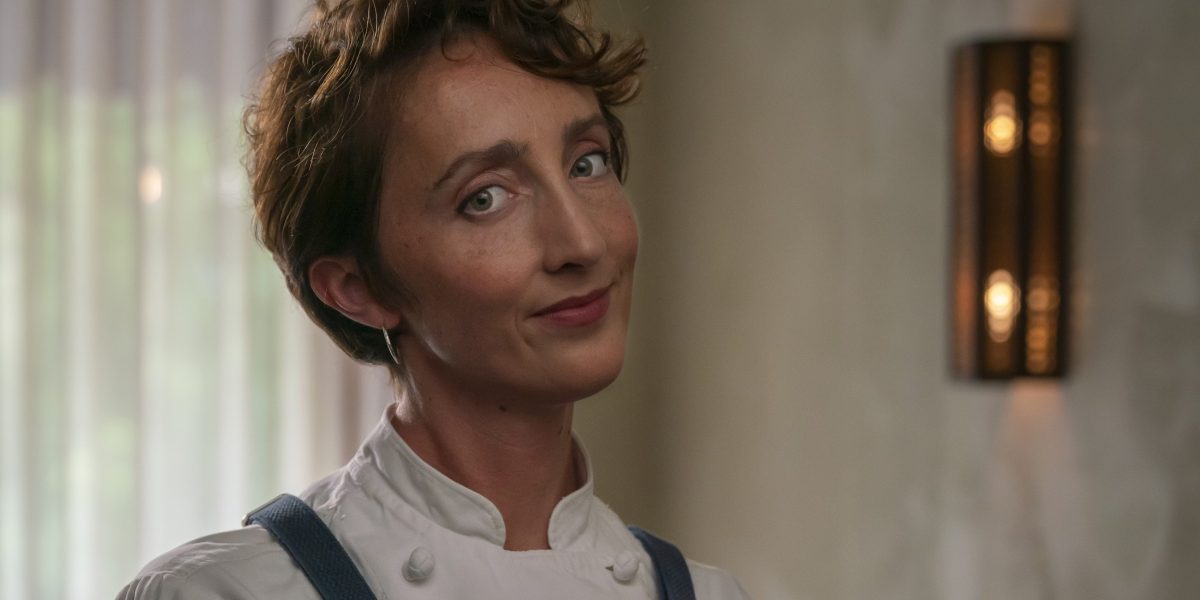
When Karyn Tomlinson took the stage at Chicago’s Lyric Opera House this June to accept the 2025 James Beard Award for Best Chef: Midwest, she wore a piece of family history: a floor-length coral dress her grandmother once donned as the Dassel Corn Queen in 1941. It was a fitting tribute for a chef whose culinary philosophy is deeply rooted in heritage, hospitality, and the Midwest.
Tomlinson, the 40-year-old chef-owner of Myriel in St. Paul, Minnesota, has quickly become a leading voice in the new wave of Midwestern cuisine. Her restaurant, celebrated for its “grandma cooking nouveau”—a blend of Scandinavian and Minnesotan roots with refined French technique—has garnered acclaim from Food & Wine, Esquire, and The Washington Post. Think golden pie crust that melts in your mouth, baked after it was coaxed into form with cold lard and handheld pastry cutters—exactly how her grandmother taught her.
Karyn Tomlinson
Tomlinson’s approach is both humble and precise: She champions local farmers, leans into sustainability, and crafts dishes that are comforting and sophisticated, earning her a loyal following and national recognition.
Raised in a family where hospitality was a way of life, Tomlinson’s journey took her from the woods of Minnesota to the kitchens of Le Cordon Bleu in Paris at age 25 and the storied, two-Michelin-starred Fäviken in Sweden. She returned home, at 32, with a global perspective and a mission: to create food that connects people, honors the land, and celebrates the unsung ingredients of the region.
Fortune recently spoke with Tomlinson at the height of her success to discuss her unlikely path from restaurant host to industry trailblazer, and how winning one of the culinary world’s highest honors is transforming both her career and the profile of Midwestern dining.
FORTUNE: Your Minnesota roots are central to your story. Can you tell me about your mother and grandmother?
TOMLINSON: My grandmother was a joyful person. She was a farm girl through and through; she would walk outside barefoot at almost any time of the year. She just knew how to make people feel welcome, and she was never stressed out about getting a meal on the table. Her hospitality was a very nurturing kind of hospitality. And she made the best pies, everyone knew it. People at church potlucks or picnics would always try to find out which ones she made. That was how she showed up for people—by cooking.
Both she and my mom represent the kind of femininity that is willing to work and get some scrapes, but is at the same time very nurturing. Hospitality in my family was about making people feel special, not showing off. My mom is my favorite sounding board for cooking and entertaining.
FORTUNE: When did you decide to pursue food seriously?
TOMLINSON: After college, I realized I wanted to do something meaningful. Cooking brought people together, and I wanted to create that kind of connection. I had no training, so I went to France to study at Le Cordon Bleu in Paris.
FORTUNE: What was cooking school in France like?
TOMLINSON: It was intensive and focused—just cooking all day. I basically went for the equivalent of a couple of semesters, but it was all squished into a smaller amount of time. And then my money was up and I thought, well, I guess I’ll return to Minnesota where I’m still paying rent, shop my résumé around a little bit, and see what happens.
FORTUNE: Did you ever feel like an outsider in the kitchen? Did you ever have imposter syndrome?
TOMLINSON: Absolutely. I started cooking professionally in my mid-20s, which was late compared to others. A lot of chefs I knew of had started, like, dishwashing when they were 14 and then worked their way up. I knew I was smart and driven, but I didn’t have that same kind of muscle memory, or years of experience; I wasn’t street smart in that way. And so I really felt like an imposter.
I think it was humbling to have to rewind and learn from the ground up, which I actually did a couple of times in my adulthood: first when I started cooking in my mid-20s, and then later on after I had been cooking in restaurants for a while by going to cook in a really elite kitchen in Sweden: Fäviken, Magnus Nilsson’s restaurant. It was on the World’s 50 Best list. Michelin status restaurant. It was a really incredible experience.
In both situations, I knew I was smart, I knew I had experience, but in that particular context, I knew nothing. I had to build up my confidence within each place. And then over time, that all accumulates, but it takes humility. I was really reluctant to show people if I didn’t know something, or admit I didn’t know something, or that somebody else maybe I didn’t like very much or didn’t get along with or didn’t respect me might actually have the answer.

Karyn Tomlinson
FORTUNE: When did that feeling end for you? When your confidence broke through?
TOMLINSON: Maybe a couple of weekends ago when I got the James Beard award. I think it’s happened in increments. And I’ve had really amazing people in my life who reminded me that everybody struggles with that—even people who look like they’re on top, or really know what they’re doing. My dad has been really good about reminding me of that.
There have been naysayers in my life, but there have always been other people who are encouraging, and I’ve been really grateful for those people. Sometimes, that’s all you need: Just one voice that thinks you can do it, and that even if you don’t know something, you can learn, and it’s okay if you don’t know it yet.
FORTUNE: How did you transition from working for others to opening your own restaurant?
TOMLINSON: In most of my cooking career, most of my next steps haven’t really made sense on paper. Like, everything’s been kind of a reach. After going to Sweden, I came back home and somebody asked me to run his restaurant, and I’d never run a restaurant before. The owners of that restaurant asked me if I would be interested in becoming a partner and rebranding—coming up with my own concept—so I worked on that plan for a while, and this was right before COVID hit. In the end, they decided to close the restaurant rather than do that, which was heartbreaking for me, but in hindsight, I’m so grateful that happened.
Some months into the pandemic, I had all this momentum to become a restaurant owner, and to create a space. I was starting to get excited about it and wondering, what do I do with it? Eventually, after asking those hard questions, I decided to take that risk. I’ve just learned that even if you don’t feel technically prepared for something, if you know how to use the resources around you, you’re probably going to be okay.

Karyn Tomlinson
FORTUNE: What was the risk involved in opening Myriel?
TOMLINSON: I opened Myriel in a really modest way. I borrowed $25,000 from my uncle. And my commercial realtor, actually, as we went through the process of finding this space, he was more and more into what I was describing and we found ourselves aligned, so he asked if he could be my business partner as well. So, he’s my business partner.
Due to COVID, it was really hard to get a bank loan at that time. You would need about $100,000 to build out the space, so I ended up borrowing and adding other silent partners to the equation for that. It’s an interesting setup. But the fact we were able to come up with a restaurant for less than $150,000, that’s pretty wild. But that’s still, for me—somebody who’s been cooking and not making lots of money in my adult years—it’s a huge financial risk. You’ve got to make sure your idea works, or at least have a good plan to know what to do if it doesn’t. That really compelled me to be as creative as I could. I’ve seen too many chefs get into quick-money situations and it never ends up good, so I wanted to do it in a way that was modest, where we could build things and be resourceful and I wouldn’t be on the hook for an inordinate amount of money.
Since it all happened during COVID, we were able to get a good deal on a lease, and I was able to actually open during construction. I started takeout meal kits on the weekends, and so we had a little bit of a revenue flow so I could hire some people.
FORTUNE: What were those first few months like after you finally opened? How did the community respond?
TOMLINSON: It was slow. St. Paul is kind of a small-town neighborhood. It takes people a while to get used to new things. But we did have a handful of neighbors who had been faithfully doing takeout during COVID—and we still have people come in today and say “we used to do your meal kits and that was such a special time for us”—but certain aspects took a while to build.
I’ve never paid for marketing; it’s mainly been word of mouth, and we were really fortunate to have media attention. I had enough of a reputation in that town at that time that people were excited to write about the restaurant opening. So within months of opening, we were on Esquire’s 50 Best New Restaurants list, and got a review by The Washington Post—an amazing article. So all of that helped make it work and kept our seats full. We were fortunate to make a splash from the start.
FORTUNE: Why did you name the restaurant Myriel?
TOMLINSON: Myriel is inspired by the bishop in Victor Hugo’s Les Misérables, who’s about to have a meal when this ex-convict comes to his door—Jean Valjean.
The ex-convict lists all the things that he’s done wrong and shows his prison papers, expecting to get turned out like he has everywhere else, but that bishop’s response is to just quietly set a table with the most dignified place setting of silver and invites him to sit down and have a meal. I just thought, wow, what a cool picture of hospitality.

Karyn Tomlinson
FORTUNE: What was it like for you growing up?
TOMLINSON: You know, I did not dream of being a chef when I was a little girl. I was playing outside a lot. I always loved art, was never bored, and I was always coming up with a project. As an only child, I was often making up games or plans for my dog; she was a black lab mix.
I appreciate Minnesota now, but I used to feel different, maybe because my interests were unusual—like old movies and art. My dad taught film, so I grew up analyzing movies and loving classics like It’s a Wonderful Life. I always felt a bit apart from the typical Minnesota experience.
Cooking was around me—my mom made everything from scratch, and my grandma was always cooking—and I was always curious about that, but it didn’t really register that I was interested in cooking until after college. That’s when I started gardening, growing vegetables, and figuring out what to do with them, which led me to cook more.
FORTUNE: Where was this first garden?
TOMLINSON: I was renting a house with friends after college. The yard became my first real garden. My grandfather taught me a lot, and our neighbor, a retired horticulturist, helped me get started. He taught me how to mark rows using radishes, how to plant things well, and how to keep the “varmint out,” as he put it. I grew things like Romano beans, kohlrabi, cabbage, carrots, and beets.
FORTUNE: What’s your favorite thing to grow?
TOMLINSON: I love beets and radishes—they’re the first thing you can harvest in Minnesota. They come up so quickly. Even if radishes bolt [flower prematurely due to environmental stress], you can eat the flowers and seed pods, and save the seeds and plant them for more radishes the next year. Lettuce is also gratifying, since it germinates and grows pretty quickly.
FORTUNE: What dishes do you think everyone should learn to make?
TOMLINSON: Well, as a Midwesterner, I would say to learn to love your grains and legumes. They’re affordable, nutritious, and satisfying—it’s kind of like beans and rice, you know? I make savory porridges using cooked wheat berries and sorghum, and simple dishes like omelets with greens. I’ll also do a grain bowl a lot of times with a poached egg on top, and then whatever vegetables I have in my fridge or whatever fermented or pickled things I have. You can do a lot of dishes like that.
If you eat meat, learn how to do a really good braised meat dish, and learn to do it in a few ways so you’re not always just buying prime cuts of steak or just eating chicken breasts. Learn how to use the pieces that maybe make you a little bit uncomfortable at first—not only is it going to be better for you, but there’s traditions among many cultures about eating that way, and I think if you can break past your intimidation or fear of that, it’s always cheaper, and it can be really quite nutritious and delicious, too.