Connect with us

Business

The U.S. is about to hold the government’s biggest coal sales in over a decade even as demand wanes

Published

on


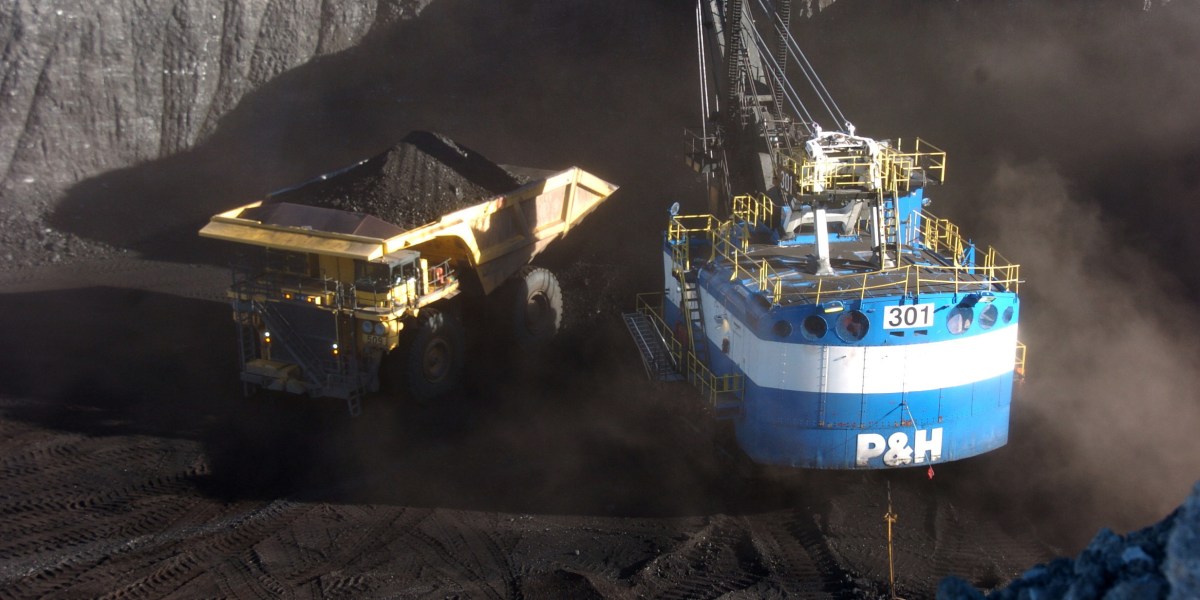
U.S. officials in the coming days are set to hold the government’s biggest coal sales in more than a decade, offering 600 million tons from publicly owned reserves next to strip mines in Montana and Wyoming.

The sales are a signature piece of President Donald Trump’s ambitions for companies to dig more coal from federal lands and burn it for electricity. Yet most power plants served by those mines plan to quit burning coal altogether within 10 years, an Associated Press data analysis shows.

Three other mines poised for expansions or new leases under Trump also face declining demand as power plants use less of their coal and in some cases shut down, according to data from the U.S. Energy Information Administration and the nonprofit Global Energy Monitor.

Those market realities raise a fundamental question about the Republican administration’s push to revive a heavily polluting industry that long has been in decline: Who’s going to buy all that coal?

The question looms over the administration’s enthusiastic embrace of coal, a leading contributor to climate change. It also shows the uncertainty inherent in inserting those policies into markets where energy-producing customers make long-term decisions with massive implications, not just for their own viability but for the future of the planet, in an ever-shifting political landscape.

Rushing to approve projects

The upcoming lease sales in Montana and Wyoming are in the Powder River Basin, home to the most productive U.S. coal fields.

Officials say they will go forward beginning Monday despite the government shutdown. The administration exempted from furlough those workers who process fossil fuel permits and leases.

Democratic President Joe Biden last year acted to block future coal leases in the region, citing their potential to make climate change worse. Burning the coal from the two leases being sold in coming days would generate more than 1 billion tons of planet-warming carbon dioxide, according to a Department of Energy formula.

Trump rejected climate change as a “con job” during a Sept. 23 speech to the U.N. General Assembly, an assessment that puts him at odds with scientists. He praised coal as “beautiful” and boasted about the abundance of U.S. supplies while deriding solar and wind power. Administration officials said Wednesday that they were canceling $8 billion in grants for clean energy projects in 16 states won by Democrat Kamala Harris in the 2024 presidential election.

In response to an order from Trump on his first day in office in January, coal lease sales that had been shelved or stalled were revived and rushed to approval, with considerations of greenhouse gas emissions dismissed. Administration officials have advanced coal mine expansions and lease sales in Utah, North Dakota, Tennessee and Alabama, in addition to Montana and Wyoming.

Interior Secretary Doug Burgum said Monday that the administration is opening more than 20,000 square miles (52,000 square kilometers) of federal lands to mining. That is an area bigger than New Hampshire and Vermont combined.

The administration also sharply reduced royalty rates for coal from federal lands, ordered a coal-fired power plant in Michigan to stay open past planned retirement dates and pledged $625 million to recommission or modernize coal plants amid growing electricity demand from artificial intelligence and data centers.

“We’re putting American miners back to work,” Burgum said, flanked by coal miners and Republican politicians. “We’ve got a demand curve coming at us in terms of the demand for electricity that is literally going through the roof.”

Coal demand plummets

The AP’s finding that power plants served by mines on public lands are burning less coal reflects an industrywide decline that began in 2007.

Energy experts and economists were not surprised. They expressed doubt that coal would ever reclaim dominance in the power sector. Interior Department officials did not respond to questions about future demand for coal from public lands.

But it will take time for more electricity from planned natural gas and solar projects to come online. That means Trump’s actions could give a short-term bump to coal, said Umed Paliwal, an expert in electricity markets at Lawrence Berkeley National Laboratory.

“Eventually coal will get pushed out of the market,” Paliwal said. “The economics will just eat the coal generation over time.”

The coal sales in Montana and Wyoming were requested by Navajo Nation-owned company. The Navajo Transitional Energy Co. (NTEC) has been one of the largest industry players since buying several major mines in the Powder River Basin during a 2019 bankruptcy auction. Those mines supply 34 power plants in 19 states.

Twenty-one of the plants are scheduled to stop burning coal in the next decade. They include all five plants using coal from NTEC’s Spring Creek mine in Montana.

In filings with federal officials, the company said the fair market value of 167 million tons of federal coal next to the Spring Creek mine was just over $126,000.

That is less than one-tenth of a penny per ton, a fraction of what coal brought in its heyday. By comparison, the last large-scale lease sale in the Powder River Basin, also for 167 million tons of coal, drew a bid of $35 million in 2013. Federal officials rejected that as too low.

NTEC said the low value was supported by prior government reviews predicting fewer buyers for coal. The company said taxpayers would benefit in future years from royalties on any coal mined.

“The market for coal will decline significantly over the next two decades. There are fewer coal mines expanding their reserves, there are fewer buyers of thermal coal and there are more regulatory constraints,” the company said.

In central Wyoming on Wednesday, the government will sell 440 million tons of coal next to NTEC’s Antelope Mine. Just over half of the 29 power plants served by the mine are scheduled to stop burning coal by 2035.

Among them is the Rawhide plant in northern Colorado. It is due to quit coal in 2029 but will keep making electricity with natural gas and 30 megawatts of solar panels.

Aging plants and optimism

The largest U.S. coal company has offered a more optimistic take on coal’s future. Because new nuclear and gas plants are years away, Peabody Energy suggested in September that demand for coal in the U.S. could increase 250 million tons annually — up almost 50% from current volumes.

Peabody’s projection was based on the premise that existing power plants can burn more coal. That amount, known as plant capacity, dropped by about half in recent years.

“U.S. coal is clearly in comeback mode,” Peabody’s president, James Grech, said in a recent conference call with analysts. “The U.S. has more energy in its coal reserves than any nation has in any one energy source.”

No large coal power plants have come online in the U.S. since 2013. Most existing plants are 40 years old or older. Money pledged by the administration to refurbish older plants will not go very far given that a single boiler component at a plant can cost $25 million to replace, said Nikhil Kumar with GridLab, an energy consulting group.

That leads back to the question of who will buy the coal.

“I don’t see where you get all this coal consumed at remaining facilities,” Kumar said.


Source link

Continue Reading

Business

Davos 2026: reading the signals, not the headlines

Published

on


Davos 2026: reading the signals, not the headlines | Fortune

Louisa Loran advises boards and leadership teams on transformation and long-term value creation and currently serves on the boards of Copenhagen Business School and CataCap Private Equity. At Google, Louisa launched a billion-dollar supply chain solutions business, doubled growth in a global industry vertical, and led strategic business transformation for the company’s largest customers in EMEA—working at the forefront of AI, data, and platform innovation. At Maersk, she co-authored the strategy that redefined the brand globally and doubled its share price, helping pivot the company from traditional shipping to integrated logistics. Her career began in the luxury and FMCG space with Moët Hennessy and Diageo, where she built iconic brands and led innovation at the intersection of heritage and digital transformation.


Source link

Continue Reading

Business

Hotels allege predatory pricing, forced exclusivity in Trip.com antitrust probe

Published

on


China’s hotels are welcoming record numbers of travelers, yet room rates are sinking—a paradox many operators blame on Trip.com Group Ltd.

For Gary Huang, running a five-room homestay in the scenic Huzhou hills near Shanghai was supposed to secure his family’s financial future. Instead, he and other hoteliers in China’s southeastern Zhejiang province say nightly rates have fallen to levels last seen more than a decade ago, as Trip.com’s frequent discount campaigns force them to cut prices simply to remain visible on China’s dominant booking platform.

“The promotion campaigns now are almost a daily routine,” said Huang, who asked to use his self-given English name out of concern of speaking out against Trip.com. “We have to constantly cut prices at least 15% to attract travelers. We have no choice but to go along with the price cuts.”

Trip.com has been central to China’s post-pandemic travel rebound, connecting millions of travelers with small operators like Huang. But for many hotels, visibility—and sometimes survival—comes at the expense of profits.

That dynamic is now at the heart of Beijing’s antitrust probe. Regulators allege Trip.com is abusing its market position, with analysts citing deflation across the sector as the government’s main concern. Interviews with lodging operators, industry groups and travel consultants describe a system where constant price-cutting and opaque policies are eroding profitability, even as demand rebounds.

Trip.com has said it’s cooperating with the government’s investigation. The company’s stock dove more 16% since the probe was announced a week ago. 

Revenue per room—a key hotel metric—was flat across China in 2025, even as other Asian markets saw gains, according to Bloomberg Intelligence. Marriott International Inc.’s revenue per room in China fell 1% most of last year, while Hilton’s China room revenue trailed its regional peers.

The company controls about 56% of China’s online travel market, according to China Trading Desk, and has grown into the world’s largest booking site. Its dominance has helped fuel domestic tourism’s recovery—nearly 5 billion trips were logged in the first three quarters of 2025—but operators say the benefits are being offset by falling room yields.

“The market has developed unevenly and innovation is lacking due to monopolistic practices,” said He Shuangquan, head of the Yunnan Provincial Tourism Homestay Industry Association that represents some 7,000 operators. “The entire online travel agency sector is stagnating in a pool of dead water.”

‘Pick-one-of-two’

The broader challenge is oversupply and cautious consumer spending. In regions like Yunnan, hotel capacity has tripled since the pandemic, just as travelers tightened budgets. Consultants note that while people are traveling more, they’re spending less—leaving hotels slashing rates to fill empty beds and posting billions in losses.

For operators like Huang, the paradox is stark: the platform that delivers customers is also accelerating the race to the bottom. The complaints center around Trip.com’s “er xuan yi,” Mandarin for pick-one-of-two exclusivity arrangements—a practice that Chinese regulators have repeatedly vowed to stamp out.

Trip.com categorizes merchants into tiers with “Special Merchants” enjoying the most visibility and traffic, Yunnan Provincial Tourism’s He said. However, these top-tier merchants are typically prohibited from listing on rival platforms like Alibaba’s Fliggy, ByteDance’s Douyin or Meituan. Merchants who aren’t bound by these exclusive arrangements report being effectively compelled to offer the lowest prices on Trip.com’s online booking platform Ctrip, or risk facing a raft of measures like lowered search rankings.


Source link

Continue Reading

Business

CEOs at Davos are buying into the agentic AI hype

Published

on


Good morning. The atmosphere here at the World Economic Forum in Davos is all about nervous excitement as the Trump administration descends on the normally quaint but currently chaotic ski town in the Alps.

President Donald Trump will be making remarks just a couple hours from now, and Fortune will be reporting live from USA House on the main promenade, with insights from government officials and chief executives during and immediately following the president’s conversation. Keep an eye on our livestream, here https://fortune.com/2026/01/21/ceos-davos-buy-into-the-agentic-ai-hype/.

Elsewhere around town, CEOs are setting their agendas for the year. Here’s what’s top of mind for a few of them:

This will actually be the year of agentic AI. The first time I heard the term “agentic AI” was at Davos last year. For all the hype around it, does the average CEO really know what it is or how to deploy it? And is AI good enough yet for agents to replace or even significantly assist human employees? The answer appears to be yes. Google Gemini head Demis Hassabis told me that Gemini 3 achieved some milestones that allow agentic AI to truly proliferate in terms of its capabilities. ServiceNow CEO Bill McDermott is also an emphatic “yes,” and says he is already using it to do things like automate his IT department (without doing layoffs, he stresses; he says he has repurposed employees instead). He thinks other CEOs are ready to do the same.

Get ready for Google glasses—for real, this time. A decade ago, Google launched its Google Glass eyewear to widespread mockery. Hassabis thinks the timing was just off; at the time there was no super app to go on the platform. AI has changed that, and Hassabis is bullish on Gemini glasses being the future form for consumer AI. Meta is betting the same thing, and OpenAI is also reportedly considering a super-device, but it doesn’t seem like either can match Gemini’s capabilities any time soon.

There’s artificial intelligence, and now there’s also “energy intelligence.” Schneider Electric CEO Olivier Blum says that nailing energy intelligence is his mission this year. By that he means he wants to capture data from various energy sources into a single “data cube,” filter it, and use agentic AI so customers can manage it all in one place to find opportunities to save power and money. “Our job is to make sure we go to the next level of energy technology to make energy more intelligent,” he told me yesterday. If he can achieve it, he sees a 7%-10% annual growth opportunity ahead.

Greenland: national panic or national security risk? I’ve heard various reactions to President Trump’s desire for a full U.S. takeover of the huge islandfrom outrage to vigorous support. If he does get his wish (which some here think is likely), could Europe retaliate by making life harder and more restrictive for big U.S. tech companies? That was one CEO’s consideration. Said another: “Clear-eyed people can agree that that is a national security concern. And having a national security concern is not just a U.S. concern, it’s also a NATO concern.” They were optimistic that the in-person meetings this week would help move the matter in a positive direction. You can follow all our Davos coverage—including Fortune live interviews today with Ray Dalio, Dara Khosrowshahi and more—right here.—Alyson Shontell

Contact CEO Daily via Diane Brady at diane.brady@fortune.com

Top news

The crisis CEOs can’t ignore

The annual Edelman Trust Barometer, revealed at Davos every year, shows an “insular” mindset permeating the business world, with 70% of respondents not wanting to talk to, work for, or even be in the same space with anyone with a different world view. Richard Edelman says CEOs must adopt a sense of urgency in addressing the crisis; they need to sense that “time is running out.”

The Fortune 2026 World’s Most Admired Companies list

Fortune published the 2026 World’s Most Admired Companies this week, an annual ranking in collaboration with Korn Ferry that surveys executives, directors, and analysts across a range of industries. Apple made the top of the list among leaders in all industries for the 19th year in a row—read who else made the cut.

Netflix co-CEOs boost the case for the Warner Bros. deal

Netflix co-CEOs Ted Sarandos and Greg Peters praised the streaming company’s planned acquisition of Warner Bros. Discovery during its earnings call on Tuesday, selling the deal as a boost to its streaming business and a production boost for America. Investors, however, remain worried that the deal will push Netflix away from its core business, and the stock dropped almost 5% after hours.

The markets

S&P 500 futures are up 0.19% this morning. The last session closed down 2.06%. STOXX Europe 600 was down 0.41% in early trading. The U.K.’s FTSE 100 was down 0.02% in early trading. Japan’s Nikkei 225 was down 0.41%. China’s CSI 300 was up o.09%. The South Korea KOSPI was up 0.49%. India’s NIFTY 50 was down 0.3%%. Bitcoin was at $89K.

Around the watercooler

What Walmart’s CEO succession reveals about the smartest time to exit by Ruth Umoh

Americans are paying nearly all of the tariff burden as international exports die down, study finds by Jacqueline Munis

The 9 most disruptive deals of Trump’s first year back in the White House by Geoff Colvin

Gen Z’s nostalgia for ‘2016 vibes’ reveals something deeper: a protest against the world and economy they inherited by Nick Lichtenberg and Eva Roytburg

CEO Daily is compiled and edited by Joey Abrams, Claire Zillman and Lee Clifford.


Source link

Continue Reading

Trending

Copyright © Miami Select.