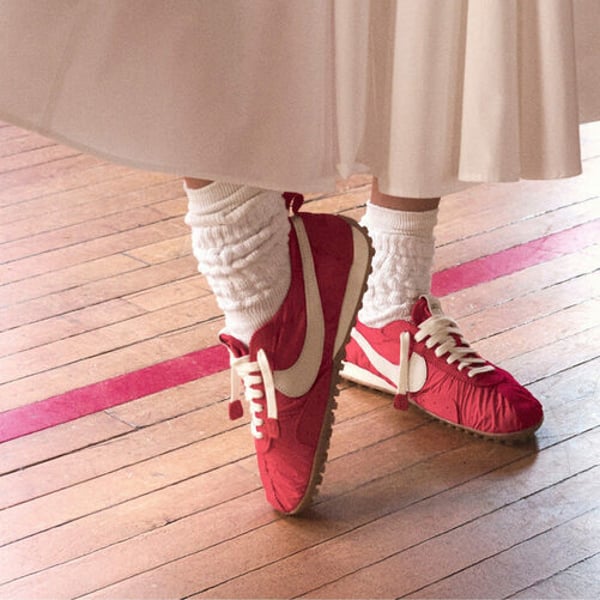
The sneaker boom had a long run. Now some analysts say it’s over
By
Bloomberg
Published
January 11, 2026
For nearly two decades, sports brands benefited as people swapped out dress shoes for sneakers when heading everywhere from the airport to fancy restaurants and even the office.
Nike
That’s been a boon for Adidas AG, Nike Inc. and Puma SE, which capitalized on consumers’ changing tastes by serving up snazzy, comfy kicks that people wanted to wear on and off the playing field. The rising demand for sports shoes also underpinned the rapid growth of challengers like Hoka and On Holding AG, which emerged in the wake of the financial crisis and quickly became popular brands.
Now the future of that longstanding sneaker boom is being called into question, most notably by Bank of America analysts led by Thierry Cota. They rocked the footwear world last week with a 61-page analysis concluding that the growth prospects for these sports brands are rapidly dimming.
They argue that the sporting goods sector had enjoyed a 20-year “upcycle” that lifted sneakers from less than a quarter of world footwear sales to at least a half — a trend that culminated during the Covid pandemic, when millions of people were suddenly working from home. “With this structural shift largely complete, prospects for future revenue growth are now significantly reduced,” the analysts said.
They accompanied that view with a rare “double downgrade” of Adidas, abandoning their “buy” rating and declaring the stock one of the least attractive in the industry.
Their contention that the sneaker boom has passed its peak prompted a backlash from skeptics who say the casual footwear trend has room to run. Longtime industry analyst Matt Powell, an adviser at consulting firm Spurwink River, conveyed that sentiment on LinkedIn, where he posted a Barron’s article about the research and commented: “C’mon, man! No evidence of this.”
Adidas shares plunged as much as 7.6% in response to the downgrade on Tuesday, before recovering part of those losses by the end of the week.
Sneakers now make up about 60% of footwear sales in the US, according to Beth Goldstein, an analyst at Circana in New York. Sport shoes have won over the population as part of a wider societal push toward comfort, health and wellness, priorities that probably aren’t going to disappear anytime soon, she said. The US sneaker category grew 4% last year through November, while the fashion category dropped 3%, she added.
“The sneaker business is larger than ever,” she said. “I wouldn’t even call casualization a trend — it’s just a key consumer preference.”
Yet the sneaker makers have run into headwinds since the pandemic as they sometimes failed to keep up with shoppers’ fickle tastes, saw sales cool particularly in China, and faced the threat of US tariffs. Shares of Adidas are down by almost a third in the past year, and even On Holding’s stock is down by more than 10% in the period, despite strong revenue growth.
“We don’t believe the casualization trend is over — rather, it has stabilized, with wardrobes now more balanced,” said Poonam Goyal, an analyst at Bloomberg Intelligence.
“The category has moved beyond the pandemic-driven demand spike and is now operating in a more normalized environment.”
There are signs that sneakers are bleeding into the dress shoe category. In 2025, the top-traded loafer on Stockx, an online resale platform, was the New Balance 1906L, which looks like the offspring of a preppy boat shoe and a marathon trainer. It’s also common these days to see movie stars and fashion influencers donning spiffed-up, expensive versions of trainers, often in collaboration with luxury brands like Gucci and Moncler.
The analysts at Bank of America didn’t suggest that people are going to ditch their sneakers for patent leather oxfords anytime soon. Rather, they indicated that sporting goods — after booming during the pandemic — have since mid-2023 been growing at a slower-than-average pace compared with the past couple of decades.
While that typically could mean the industry is poised to take off again, no big rebound is apparent, the analysts argued. They cited data ranging from recent credit card purchases to sluggish sales figures from Asian footwear and apparel suppliers to less-than-bullish commentary from industry leaders regarding the outlook for 2026.
If the sporting goods industry grew by an average of about 9% a year since 2007, as millions of people traded in dress shoes for sneakers, the future annual expansion may only be about 4% or 5%, they suggested.
Their optimistic take is that the industry is in a prolonged slump because of consumers fearing economic conditions and recent stumbles at Nike. That could mean that the sneaker boom still has legs and will resurge as early as 2027.
“The alternative is much worse and more likely, in our view,” the Bank of America analysts added. “The emergence of a new, less favorable long-term industry paradigm.”