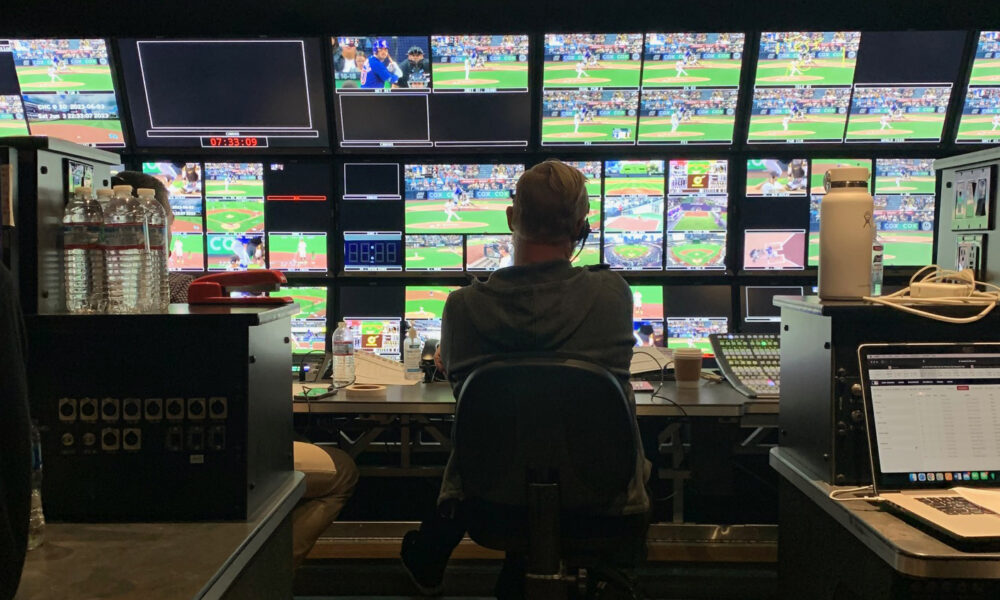
The Tampa Bay Rays joined nine other Major League Baseball teams in leaving Main Street Sports. The company struggled to meet financial commitments. The Rays regained full control of their local broadcast rights after years of uncertainty. Their former deal delivered between forty million and sixty million dollars each year. The team now enters a new era with a chance to design a modern media plan that fits the Florida market.
Rays aim to replace lost revenue with a new hybrid model
The Rays must now replace the money once supplied by Main Street Sports. The team can reach that range by building a hybrid system that blends over the air stations with cable and streaming. A statewide network can reach far beyond the Tampa Bay region. It can stretch south to Sarasota and Fort Myers. It can move east toward Orlando and Melbourne. It can extend north to Tallahassee and Jacksonville. Jacksonville is the home of new ownership leader Patrick Zalupski. This wide reach gives the Rays a rare chance to create a unified Florida network.
Over the air network offers reach and stability
A statewide over the air network built around Scripps Gray Tegna or a combination can deliver massive reach. Florida has between five and a half and six million television homes across its major markets. The Rays can secure clearance for one hundred to one hundred twenty games. They can control advertising inventory with their station partners. They avoid carriage disputes that often plague regional sports networks. This model can generate between eight and twelve million dollars each year. That estimate is based on the Padres and Diamondbacks over the air revenue splits. Florida’s larger population and multiple markets push the number upward. Stations often pay a modest rights fee and share advertising revenue.
Cable and satellite remain important revenue sources
The Rays can also negotiate cable and satellite sub fee deals with Spectrum, DirecTV, WOW and Cox. These deals can include low per subscriber fees between one dollar and one dollar fifty each month. They can include limited carriage windows inside Rays territory. They can include guaranteed minimum payments. Spectrum alone covers more than one and a half million households in Rays territory. This model can generate between twelve and eighteen million dollars each year. The number is lower than the regional sports network era but still meaningful. DirecTV remains aggressive in sports carriage. Spectrum wants local sports to reduce customer losses.
MLB TV adds a strong third pillar
MLB can produce Rays games and sell the streaming package through MLB TV. MLB keeps a portion and sends the team a guaranteed annual distribution. Teams also receive a share of national MLB TV revenue. This model can generate between twenty and twenty five million dollars each year. The Padres reportedly receive around sixty million dollars in total value. The Diamondbacks receive around fifty five million dollars. The Rays market is smaller but not dramatically smaller. MLB wants stability in Florida a key Sun Belt region. Under this plan the Rays can expect a reliable payout that lands near the middle of the league. The projected range places the Rays in a strong position to match past revenue while gaining long term security.
A complete model that matches past revenue
The Rays can combine over the air revenue cable and satellite sub fees and MLB TV distribution. The total can reach between forty and fifty five million dollars each year. That number fits within the Rays historical range of forty to sixty million dollars. The hybrid model offers more reach more flexibility and more control. It removes the risk of regional sports network bankruptcy. It improves fan access with no blackout style restrictions. MLB is quietly steering multiple clubs toward this structure.
Source link