
Politics
The race for Miami Mayor is crowded. Here’s a look at the top six candidates

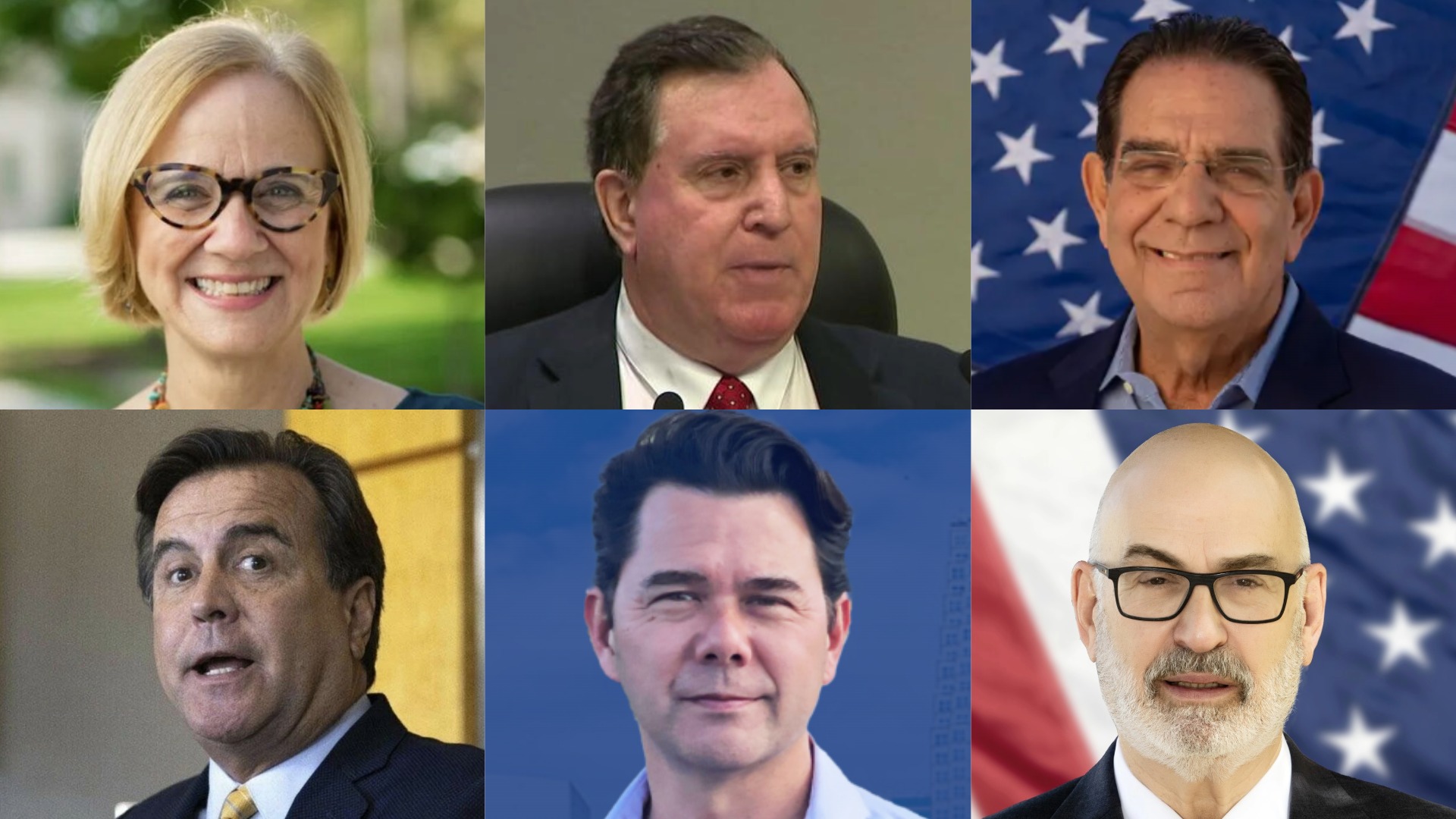
A baker’s dozen of candidates are vying for the right to succeed term-limited Miami Mayor Francis Suarez.
Of them, six stand out for having the highest polling numbers, the longest uninterrupted tenures as “Magic City” residents and for raking in the most campaign cash.
Each of them has also served in at least one prominent government role.
Miami’s Mayor position is a “weak Mayor” post, meaning the office is largely symbolic and its holder carries little power aside from being able to hire and fire the City Manager and veto City Commission items. But having political experience and administrative savvy is still vital to the job.
Late last month, the six candidates — Miami Commissioner Joe Carollo, former City Manager Emilo González, Miami-Dade County Commissioner Eileen Higgins, former Miami Mayor Xavier Suarez, and former Miami Commissioner Alex Díaz de la Portilla and Ken Russell — participated in a debate hosted by the Downtown Neighbors Alliance (DNA).
Only candidates who polled above 5% in a survey that the DNA conducted were invited to participate.
During the debate, the mayoral hopefuls traded barbs over housing, corruption and city leadership. Higgins blamed Miami’s “broken” permitting system for the city’s housing crisis, while Russell and Díaz de la Portilla sparred over funding and past scandals. González and Carollo exchanged corruption accusations.
A separate debate NBC 6 held this month featured four candidates — González, Higgins, Russell and Suarez — who polled above 10% in a Griffin Catalyst survey. Carollo polled in excess of that threshold, too, but didn’t commit to the event by NBC’s deadline.
In terms of fundraising might and government experience in Miami, few can rival Carollo, the city’s term-limited District 3 Commissioner, who previously served two separate stints as Mayor.
Since filing to run for Mayor last month, he’s raised $26,500 through his campaign account. He also collected more than $686,000 this year through his political committee, Miami First, not counting another $1.84 million in carryover funds he still had in the PC.
Through early October this year, Carollo spent more than $558,000 on various campaign and political expenditures.
His campaign website says his priorities as Mayor would be to improve public safety and government accountability, restore public spaces, attract entrepreneurs and “world-class investment” to Miami, boost opportunities through education and protect local “heritage” by prioritizing residents, small businesses and “strengthening neighborhood identity.”
Carollo, a 70-year-old Republican born in Cuba, entered government service early as a police officer. He cut his political teeth as a young adult backing segregationist Alabama Gov. George Wallace’s 1976 campaign for President. Carollo said he was attracted to Wallace’s populist, small-government message, not his racist views. In 1979, he was reprimanded for slipping a drawing of a Ku Klux Klan member into a mailbox of a fellow Black police officer — a prank, he said.
That same year, he became the Miami Commission’s youngest member at 24. He almost immediately began clashing with the city’s then-Police Chief, who accused him of inappropriate and allegedly unlawful acts, including bribing cops seeking police favors for friends.
In 2001, he was arrested on later-dropped charges of domestic violence after he allegedly hit his then-wife in the head with a pot.
Twenty years later, after the city’s then-Police Chief Art Acevedo accused Carollo, Díaz de la Portilla and late Commissioner Manolo Reyes of repeatedly interfering with Miami Police Department affairs, Carollo led a successful charge to oust Acevedo that included showing a clip of the lawman impersonating Elvis Presley in tight pants.
Then, in 2023, two businessmen successfully sued for violating their First Amendment rights by weaponizing city resources to harass them after they backed their political opponent. An appellate court upheld the judgment this past July. Three months earlier, a Broward State Attorney’s Office investigation cleared Carollo of criminal wrongdoing for allegedly stalking and, who own the Ball & Chain restaurant and nightclub, harassing the businessmen and Acevedo.
Last year, an insurer for Miami sued the city seeking a $5 million refund for legal costs incurred defending Carollo against numerous lawsuits since 2018. The case is not yet closed, according to the U.S. District Court of the Southern District of Florida.
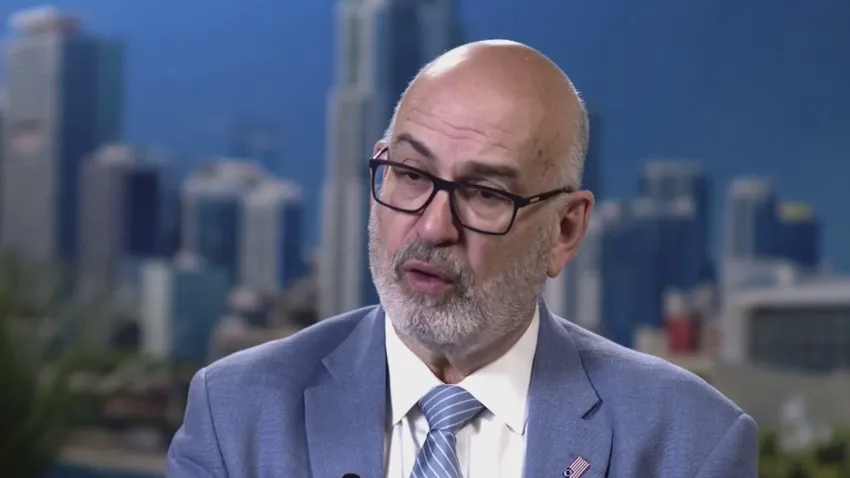
González, a 68-year-old born in Cuba, brings the most robust government background to the race. A U.S. Army veteran who rose to the rank of colonel, he served as Miami City Manager from 2017 to 2020, CEO of Miami International Airport (MIA) from 2013 to 2017 and as Director of Citizenship and Immigration Services at the U.S. Department of Homeland Security under President George W. Bush.
In private life, he works as a partner at investment management firm RSMD Investco LLC. He also serves as a member of the Treasury Investment Council under the Florida Department of Financial Services.
Since filing to run for Mayor in April, he’s raised more than $1 million and spent about $347,000.
He also amassed several high-profile endorsements, including nods from Gov. Ron DeSantis, U.S. Sens. Ted Cruz and Rick Scott, 11 former police officials, former Miami Director of Human Services Milton Vickers, mixed martial arts star Jorge Masvidal, and Emmy award-winning reporter Michael Putney.
MIA workers union AFSCME Local 1542, construction trade group Associated Builders and Contractors, Miami Young Republicans and the Log Cabin Republicans of Miami, among others, are also backing him.
González vows, if elected, to work on rolling back property tax rates, establishing a “Deregulation Task Force” to unburden small businesses, prioritizing capital investments that protect Miamians, increasing the city’s police force, modernizing Miami services with technology and a customer-friendly approach, and rein in government spending and growth.
Notably, Miami’s Nov. 4 election this year might not have taken place if not for González, who successfully sued Miami in July to stop officials from delaying the city’s election until 2026.
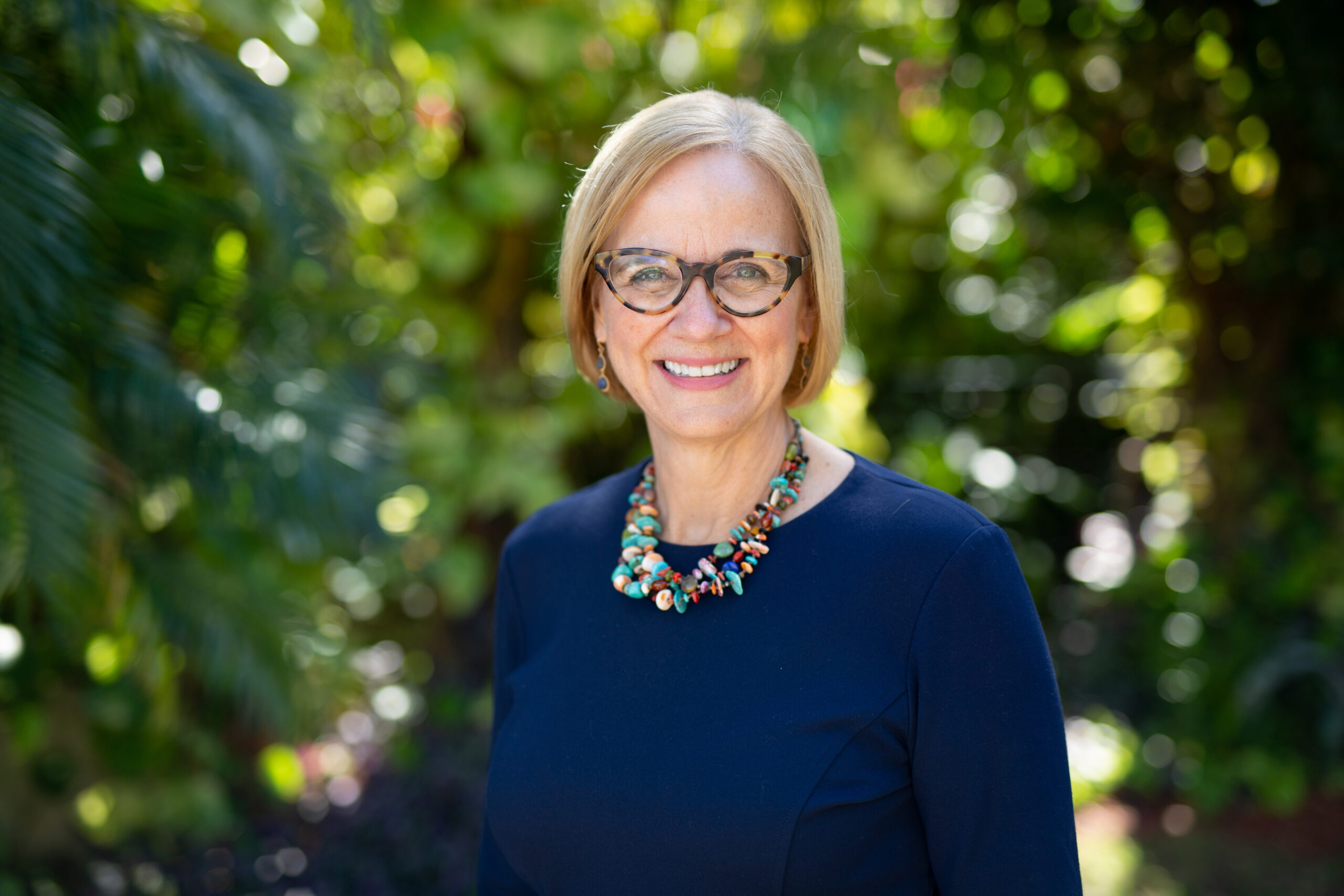
Higgins, a 61-year-old Democrat who was born in Ohio and grew up in New Mexico, comes into the race as the current longest-serving member of the Miami-Dade Commission. She won her seat in a 2018 Special Election and coasted back into re-election unopposed last year.
She’s vacating her seat three years early to run for Mayor.
Higgins boasts a broad, international background in government service. She worked for years in the private sector, overseeing global manufacturing in Europe and Latin America before returning stateside to lead marketing for companies like Pfizer and Jose Cuervo.
In 2006, she took a Director job with the Peace Corps in Belize, after which she served as a foreign service officer for the U.S. State Department under President Barack Obama, working in Mexico and in economic development areas in South Africa.
Her campaign platform for Mayor prioritizes restoring trust in City Hall by fixing Miami’s permitting process and boosting government efficiency, improving affordability, advocating for police and first responders, enhancing transportation connectivity and efficiency, and shoring up the city’s resiliency against climate change effects.
Since filing in April, Higgins raised $156,000 through her campaign account. She also amassed close to $658,000 through her county-level political committee, Ethical Leadership for Miami. Close to a third of that sum — $175,000 — came through a transfer from her state-level PC.
Higgins spent more than $676,000 this year and had $336,300 left heading into October.
Her endorsers include Miami-Dade Mayor Daniella Levine Cava, Miami Gardens Sen. Shevrin Jones, Miami Rep. Ashley Gantt and South Miami Mayor Javier Fernández.
Union and advocacy groups backing her include UNITE HERE Local 355, SAVE Action PAC, LiUNA Local 1652, SEIU 32BJ, Equality Florida Action PAC, EMILY’s List and Ruth’s List Florida.
If elected, Higgins would make history as Miami’s first woman Mayor.

Suarez, a 76-year-old lawyer with no party affiliation, made history in 1985 as Miami’s first Cuban-born Mayor. His son is the current Mayor.
He previously served as a Miami-Dade County Commissioner from 2011 to 2020 and left office after new term limit rules kicked in.
If elected, he said he’ll tackle property tax reform, including supporting Miami Rep. Vicki Lopez’s proposal to exempt all Miami-Dade residents whose homes don’t exceed the county’s median value ($575,000, on average) from paying property taxes.
Suarez wants to make mass transit in Miami free and promised to work with state lawmakers further to reform the “entire system of casualty insurance, beginning by having the state take over catastrophic insurance for all new affordable housing.”
He also backs proposed charter amendments to expand the Miami Commission from five to nine seats and align city elections with federal races.
Since filing in July, Suarez raised about $12,600 through his campaign account. Imagine Miami PAC, which he launched in mid-January, raised another $266,000 of which it has since spent $184,000, leaving him with about $82,000 about a month before Election Day.
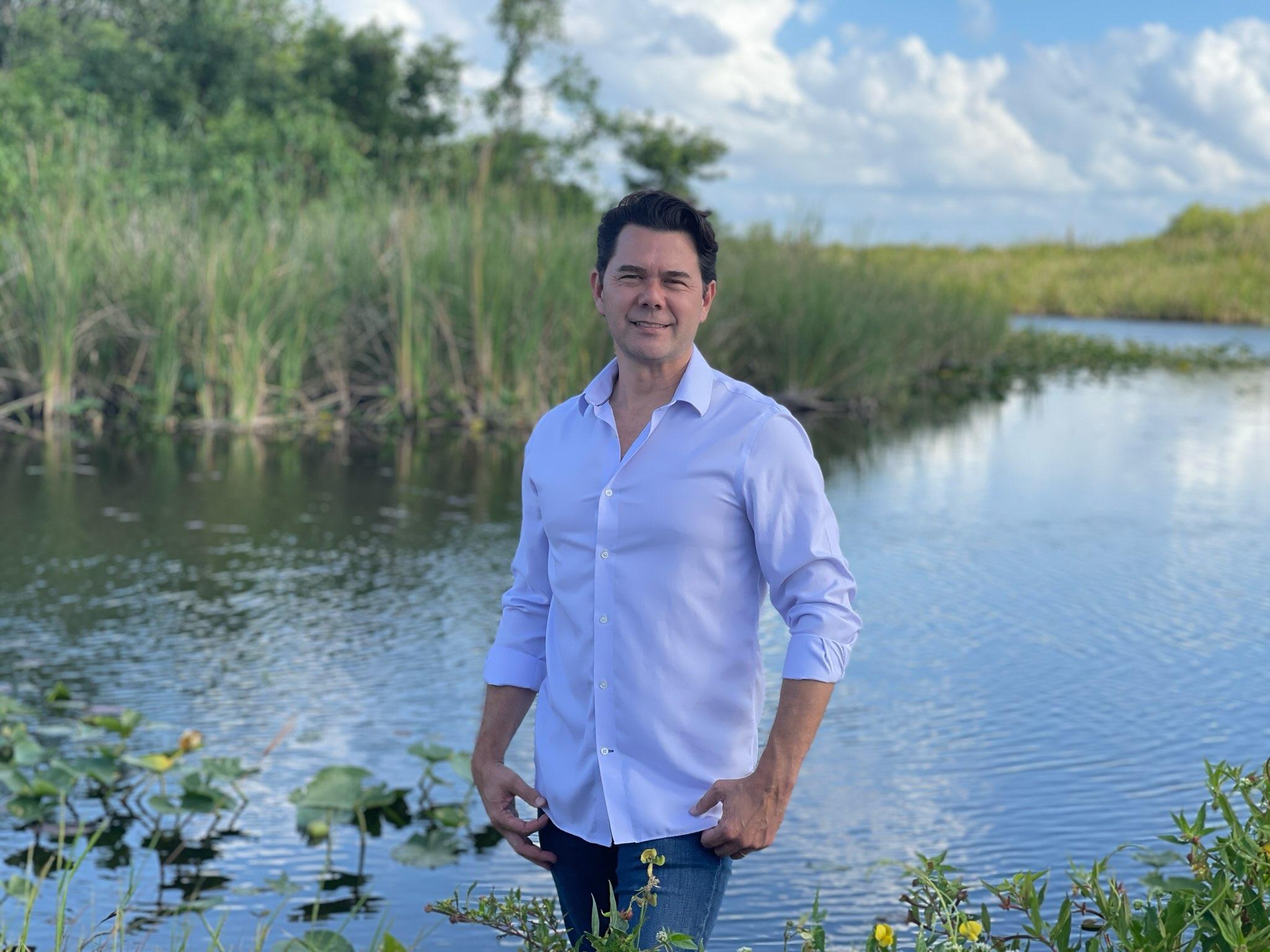
Russell, a 52-year-old Democrat born in Coral Gables and raised in and around Miami, is seeking a comeback after three years away from elected office.
He served as Miami’s District 2 Commissioner from 2015 to 2022, when he ran unsuccessfully for Congress. As a city policymaker, Russell prioritized affordable housing and environmental protection.
As a day job, Russell owns and operates a Miami-based strategic consulting firm focused on environment, government, housing and transit. He previously owned a company that sold water sports gear and a seasonal woodworking business.
He’s also a former yo-yo champion with a penchant for going viral on social media.
Since filing for the race in March, he’s raised and spent about $108,000.
Russell’s endorsers include Fort Lauderdale Mayor Dean Trantalis, former Pinecrest Mayor Cindy Lerner, former South Miami Mayor Phil Stoddard, retired Miami-Dade County Schools Administrator Freddie Young, NBA champion and philanthropist Udonis Haslem and historian, author and filmmaker Marvin Dunn.
VoteWater, a nonpartisan Florida-based group that supports “clean-water candidates,” is backing him too.
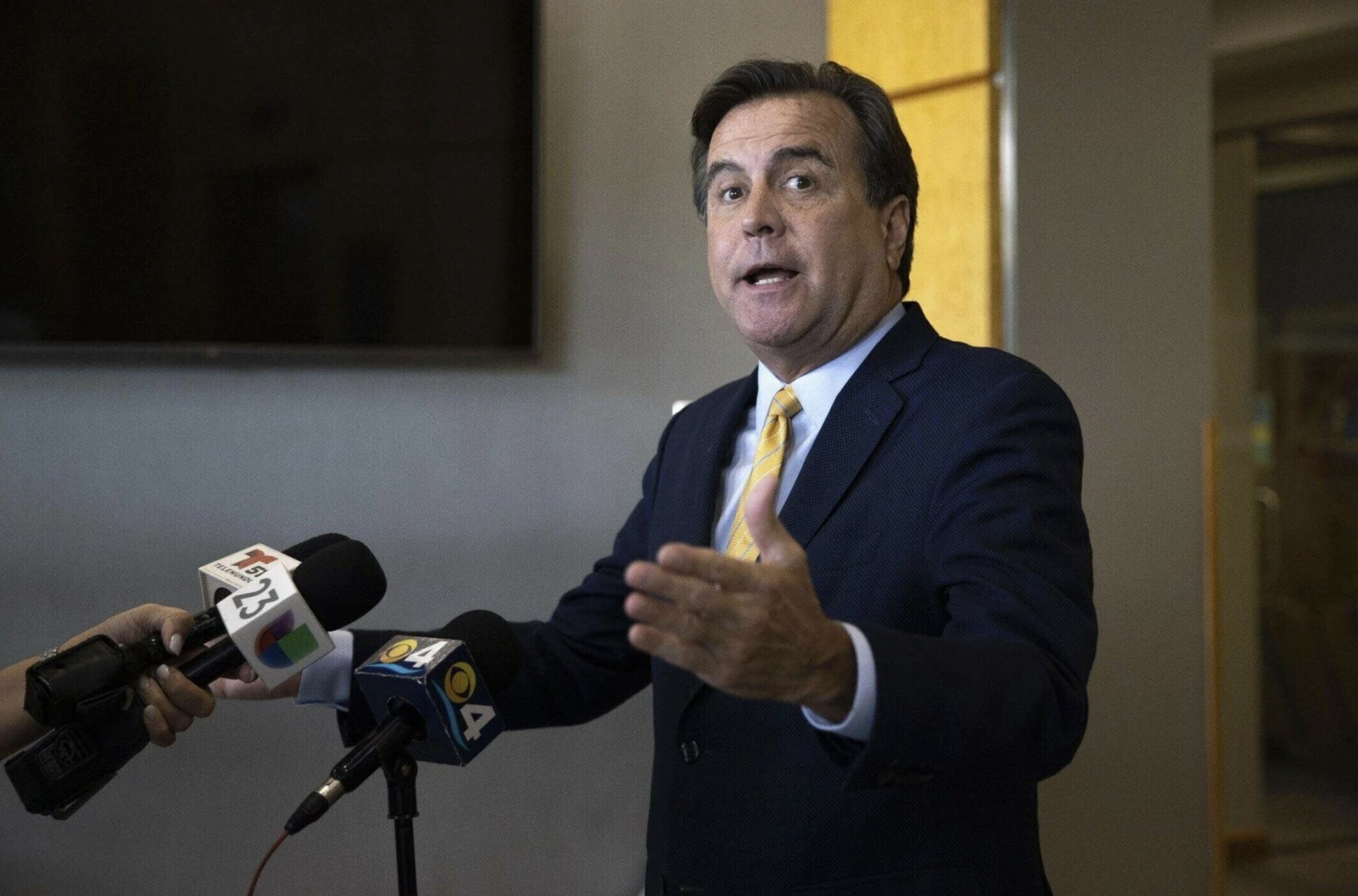
Díaz de la Portilla, a 61-year-old Republican who was born in Miami, is part of a political family dynasty. Several men in his family, including his great-grandfather, served in the Cuban government, including the Cuban Senate, House and as the country’s Minister of Justice.
He and his brothers, Miguel and Renier, carried on that tradition, serving in various county and state offices.
Díaz de la Portilla served in both the state Senate and House, including stints as Senate Majority Leader and President Pro Tempore, before winning a seat on the Miami Commission in 2019. But in 2023, DeSantis suspended him from office after he was arrested on a host of corruption charges, including bribery, money laundering and criminal conspiracy — all of which the Broward State Attorney’s Office dropped just over a year later, citing inconsistent witness testimony and insufficient evidence.
Since he filed to run for Mayor last month, Díaz de la Portilla raised $101,000 through his campaign account. He also spent about $370,200 this year through his political committee, Proven Leadership for Miami-Dade County PC, which still had $60,000 left in it by Sept. 30.
Curiously, Díaz de la Portilla does not have a campaign website. He’s also been largely absent from social media since June.
Other candidates running include Republicans Christian Cevallos, Alyssa Crocker and June Savage; Democrats Elijah Bowdre and Michael Hepburn; and Laura Anderson and Kenneth “K.J. DeSantis, who have no party affiliation.
Anderson, Cevallos, Crocker and DeSantis — who says he’s related to the Governor — haven’t lived in Miami for longer than two years. Bowdre and Savage have lived in the city for at least three years.
Hepburn, a consistent Miami candidate, has alternatively lived in Miami and South Miami since 2016. He most recently moved back to Miami in September 2024, less than a week before he would have been ineligible to run.
Of the lower-polling candidates, Hepburn leads fundraising with $38,400 in donations and $61,600 worth of in-kind contributions. If elected, he’d become Miami’s first Black Mayor.
Miami’s elections are technically nonpartisan, but party politics are frequently still a factor.
The General Election is Nov. 4. If no candidate tops 50% in a race, the top two advance to a Dec. 9 runoff.
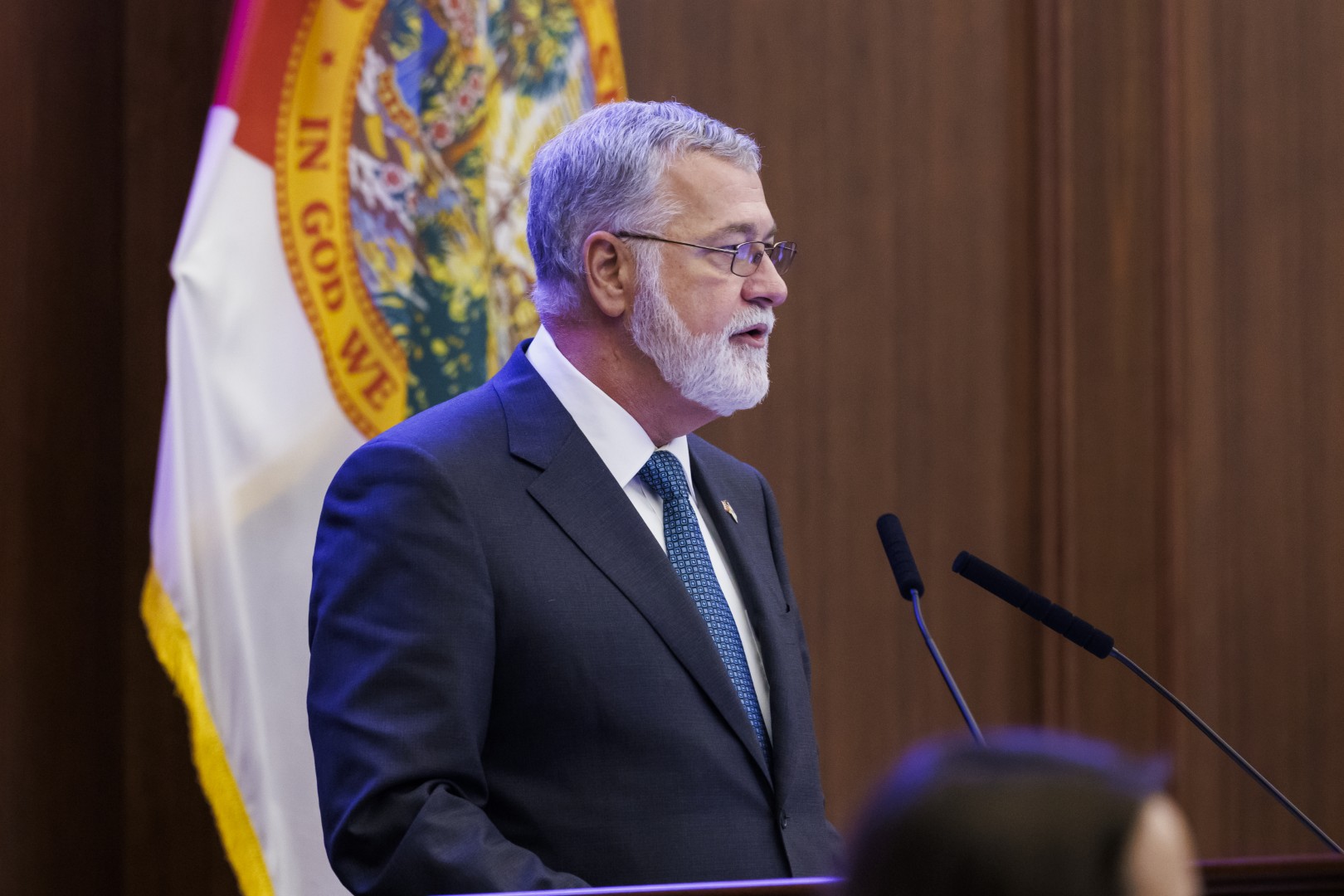
Days before the Department of Health (DOH) is to hold a public meeting on changing Florida’s rules on vaccine requirements for schools, Senate President Ben Albritton said the issue is among those about which he and his team are trying to “build consensus.”
He said that while there’s ample evidence to show the efficacy and safety of long-used vaccines like those used for measles, mumps, polio, rubella, tetanus and others mandated in state statutes, he’s also swayed by the importance of parental rights.
“The one opinion I can have is the opinion of a dad and how (my wife) Missy and I would (act for our children). I’m a believer (in) the vaccines of old; some of these things have been around, just say, forever, a long time and have a great record,” he said.
“Now, there’s new conversation I know about (regarding) schedules and … what age the child would get vaccinated for those (diseases). I’m open to those conversations. But functionally, I think, given the decision for Missy and I, we would be supportive of our children being vaccinated, but those old school vaccines.”
Albritton noted that while polio hasn’t been entirely eradicated, vaccines have “put a dent into that and other very challenging diseases.”
DOH is scheduled for a three-hour meeting Friday at the Hyatt Place Panama City Beach to mull over whether and to what degree Florida should revise its requirement that public and private students in pre-K through 12th grade and adult education enrollees must be vaccinated.
Gov. Ron DeSantis and Surgeon General Joseph Ladapo have called for a complete repeal of Florida’s vaccine mandate. Ladapo has likened the current arrangement to “slavery,” while DeSantis has argued that making still-available inoculations optional will boost their popularity.
Albritton said at a Tuesday conference with Capitol press corps reporters that while he’s a believer in tried-and-true vaccines, he’s wary of mRNA types like those used in many COVID shots.
“I have never gotten, nor will I ever get, an mRNA COVID vaccine or any other type. I never have,” he said. “Now, that isn’t because I consider myself a rebel or something. I just don’t trust the technology. It seems a little weird to inject something in your body that tinkers with your DNA.”
And that’s where he draws the line: Old vaccines, good; new vaccines that use mRNA, suspect; and moms and dads should have final say.

“We support parental rights,” he said. “Missy and I believe we’re going to separate the mRNA stuff from the traditional stuff. And let’s be thoughtful about what works and what we know.”
According to the National Library of Medicine, mRNA vaccines do not alter or interact with DNA and quickly leave the body, leaving natural genetic material untouched, after triggering immune responses in cells.
Because Florida’s vaccine requirements are in statute, legislation is necessary to repeal them.
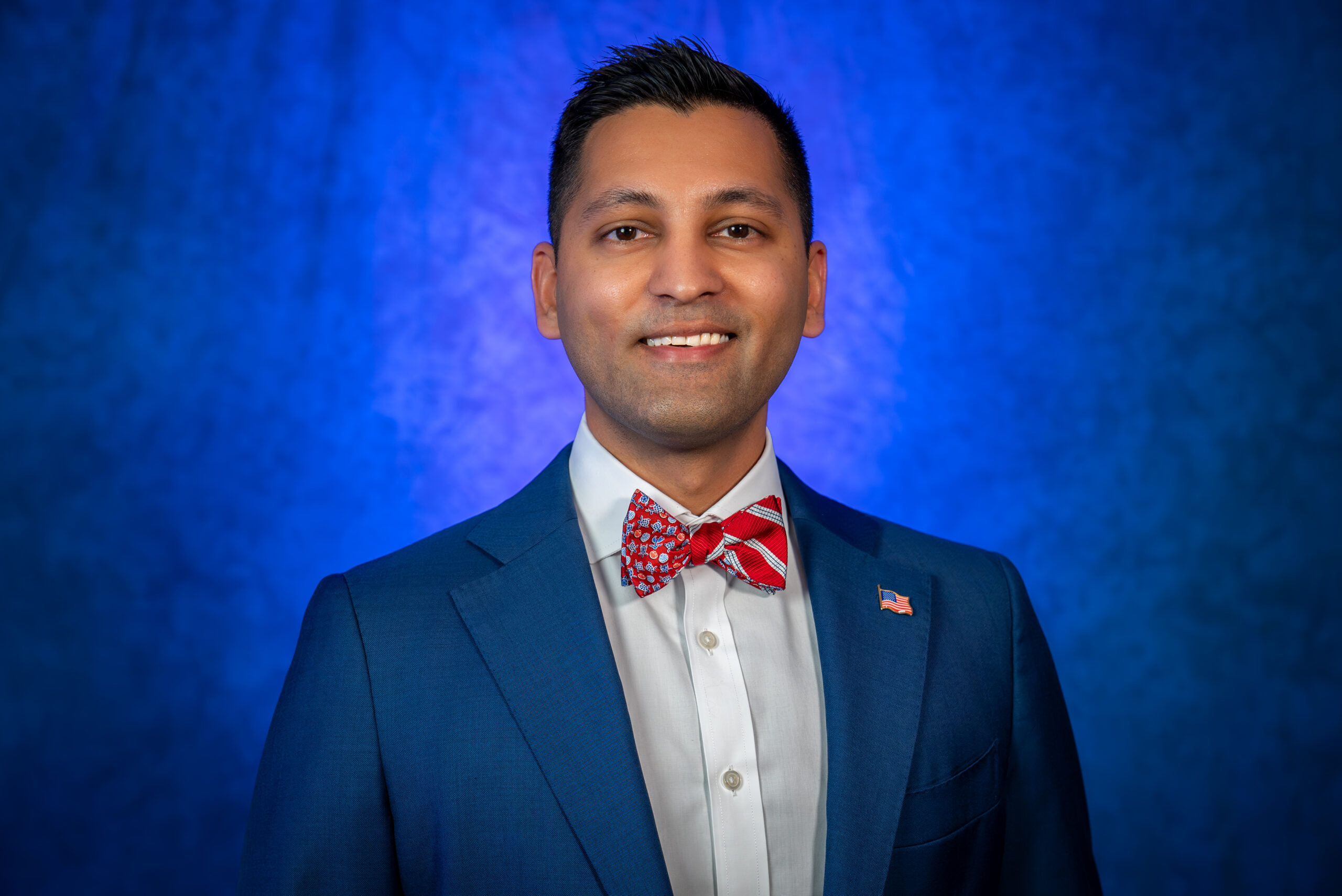
First-term Manatee County Commissioner Tal Siddique has swiftly ascended the local political ranks, and earned the coveted Chair role after one year in elected office.
Siddique, who represents Manatee County’s coastal District 3, takes the gavel from current Chair George Kruse at a time of intense debate over growth, storm recovery, property taxes and the balance of power between local governments and Tallahassee.
Siddique’s district includes Anna Maria Island, the northern end of Longboat Key, and western portions of the City of Bradenton including the downtown area.
There, Siddique said long-standing infrastructure and storm resilience challenges have collided with new development pressures and the aftermath of recent hurricanes. He points to work on decaying water lines, park improvements and storm-related permitting, as well as thousands of recovery permits processed, as examples of how local government can deliver tangible results that residents see every day.
As Chair, he said his priorities include pursuing meaningful property tax relief, continuing the county’s push for “sustainable and sensible” development, and defending home rule in the face of state laws that he argues limit local authority on land use and growth management.
He also says he wants to build on recent changes that expanded public input and made the board more transparent, while using technology to make county government easier to understand and more accessible.
“I am very excited for next year,” Siddique said. “I am going to give it my all to do the best job that I possibly can for Manatee County.”
We spoke to Siddique about his time in office and his priorities going forward.
Florida Politics: Describe your background before politics.
Siddique: My background is in the technology industry, specifically, the defense industry. I spent my career working as a software engineer and a project manager for both the private sector and then later for the Air Force as a civilian. I ran for office when I was 29 during a wave of change in ‘24, and here I am now I’m Chair of that board.

FP: Why did you decide to run for elected office?
Siddique: First, I wanted to see more young people involved, in particular at the local level in government because I felt that’s an area in politics that people don’t really focus on. Yet, it has such a massive impact on your day-to-day life. You know what’s going on in Congress or in Tallahassee is, I’m sure they’re doing good things up there, but the decisions I make have a much shorter runway for impact for our residents.
Second, I just love my community and I wanted to make a difference. I started by volunteering for the Salvation Army to help feed the homeless and the community, and with all the free time ahead working remote I felt like just finding other ways to give back. I eventually made my way into local politics, got involved on development issues and decided to make a run for it because I felt we needed a change.
FP: As Chair, what are your main priorities for the coming year?
Siddique: You know, for me, it’s delivering on the promise to residents to provide some form of property tax relief. We just had a very important strategic planning meeting this last week. Actually it’s the first of its kind in Manatee County history. We’re looking to develop a five-year strategic plan and one thing I heard from the board was that we want to pursue a meaningful tax cut next year. Irrespective of what DOGE is doing and what the state is doing with property tax elimination. This board has always made nominal efforts to provide relief to residents for property taxes, but the reality is it hasn’t been enough. Last year you could barely buy a soy latte for the amount of millage cut that we made. We want to do something more meaningful, and I think at the strategic planning one of our commissioners said, at least a half a mil, whereas typically we’ve done point .01 mill or something to that effect. So next year you can expect us to have a workshop on that.
FP: Manatee County has been vocal on state legislation like SB 180. What stands out to you on that front?
Siddique: Senate Bill 180 and the lawsuit is over what we feel is state overreach. We joined a lawsuit with Orange County and a number of other cities, I think about 23 other cities, to declare unconstitutional what we feel is restrictive in burdensome language in SB 180. We’re still fighting it, so I’m hopeful we’ll prevail on that.
I think the bill SB 180 does a lot of great things for emergency management, don’t get me wrong, but there’s that one section that still remains. That is if you’re a county that declared a state of emergency following the hurricane season, then you cannot pass more restrictive or burdensome amendments to your Comprehensive Plan or Land Development Code. Effectively, that’s been weaponized by developers against municipalities. You know, we’re being sued over impact fee increases, we’re being sued over important policies we want to implement.
So to make a short story of it, the lawsuit against SB 180 in the fight for home rule matters because we want to see sustainable development in our community, and today because of at least that piece of the legislation we can’t do it.
FP: Why did Manatee County join the lawsuit over SB 180?
Siddique: To understand SB 180 has to remember there is a senate SB 250. Long story short, since 2023 Manatee County has been prevented from implementing updates to its land development code and comprehensive plan. Why that matters is because we, prior boards but this board in particular, have tried to find a better balance with growth and quality of life. Unfortunately because of these bills have claimed that counties like ours are preventing people from rebuilding their homes, which is simply not true. We have been prevented since 2023 from passing meaningful reform to our code, and we’re just fed up with it.
We had a wave of Commissioners come in on a platform of promoting smart development in our county, and we just decided enough is enough. We need to protect our wetlands. We want to see growth, but not see it destroy what makes our community so special. So we decided to join a lawsuit in the hopes of seeing meaningful reform take place.
FP: State leaders are talking about cutting or even eliminating some property taxes. How is Manatee County responding?
Siddique: We just we just voted on the budget for FY ‘26 and ‘27, so if the state votes to eliminate property taxes for Homestead properties, which seems to be the prevailing concept, then Manatee County would probably hold an emergency session to see what we need to do to amend the budgets we’ve already passed.
As far as overall revenues it’s really hard to say how much we might be impacted until we see what comes on the ballot, but what we can at least say is that Manatee County was the eighth-least reliant on property taxes. About 8% of our revenue comes from Homestead property taxes, or about $415 million or so, out of just a little over $1 billion budget. That’s a significant sum, but we’ll just have to plan and see what comes of it. I think from our perspective, we’re not going to wait for Tallahassee to tell us what that outlook looks like. I promised my board that the first workshop I have next year is to discuss property tax relief and millage changes for next year. That might be sometime in February.
FP: You came into office right after major storms hit your district in 2024. How did that shape your first year?
Siddique: I came in right after Helene and Milton decimated our district, and that was not something I expected. To make a long story short, I ran my campaign focusing on development on ethics and focusing on our infrastructure, and when I’m in office now, I have to certainly get up to speed on FEMA national flood insurance program. I have to console and talk to residents that, you know, have lost their homes that they’ve had for generations. That was a challenge. And just having to help people through permitting, guide them, and just help deal with the aftermath was definitely something I didn’t expect. But I think we have made a lot of strides, we’ve made a lot of progress in the year since I’ve been a Commissioner. We’re back to normal, which is incredible.
FP: What are some of the biggest needs in your district, and what have you focused on so far?
Siddique: My district has roughly 80,000 people, it hasn’t really seen a lot of growth but it has felt the impact of growth in the rest of the county. With two barrier islands, plus west Bradenton and a little bit of south and east Bradenton, managing our infrastructure has been a big priority.
The waterline on Manatee Avenue, that’s one of two water lines that supplies water to the islands, fell. It just fell into the water, and I didn’t feel that there was much accountability for that. And so when I came into office I told staff, ‘We need to get moving on this right away.’ And now we’re actually starting construction on repairing and burying that waterline, which is going to be incredible for us just to fix the infrastructure that’s not working and deliver healthy, safe, clean drinking water to our community. That and lots of little things like making sure our parks are providing top-notch service, fixing potholes, and yes being thoughtful about the development that’s coming to our county. Those are just some sampling of things that I feel have made a difference in our community.
FP: How do you think about Manatee County’s relationship with Tallahassee, especially given vetoes, state reviews and the lawsuit?
Siddique: I think we’ll continue to have great leadership in Tallahassee with Senate President-Elect Jim Boyd, State Affairs Committee Chair Will Robinson, and some good talent in the pipeline with Michael Owen and Bill Conerly. I think we have great relationships with them, frankly. I think the challenge is more of a cultural issue, you know, with Tallahassee and municipal governments that I don’t know how you change unless you just become very vocal as counties, and I think this debate over SB 180 and and property taxes has really woken residents up to the fact that Tallahassee can accomplish great things for our state, but they can often come at a cost to autonomy at the local level.

Welcome back to Diagnosis, a vertical that focuses on the crossroads of health care policy and politics.
— It’s a trend —
Florida’s Safety Net Hospitals say the newest round of Graduate Medical Education data confirms a report from earlier this year showing the hospitals that provide the state’s most complex care are also training the most doctors.
The new update from the Safety Net Hospital Alliance of Florida shows its members once again outpacing the rest of the state in residency Match Rates, program performance and physician retention.
It’s an extension of the findings from the Alliance’s 2020-24 Florida Hospital GME Match Rates & Quality report, which found that Safety Net systems are not only filling nearly all their residency slots, but doing so at rates above both the statewide and national averages.
This year’s numbers reinforce those findings.
According to the Alliance, Safety Net Hospitals draw nearly half of all new residents choosing to train in the state. Their combined Match Rate reached 100% after the supplemental match, and their newer GME programs continue to post perfect fills year after year — a sign, the group argues, that program quality matters more than program age.
“This 2025 data proves, once and for all, that Safety Net Hospitals set the pace for training the next generation of Florida’s doctors. Safety Net Hospitals comprise only 14% of hospitals, yet almost 50% of the new doctors are choosing our hospitals to complete their training,” said Safety Net Hospitals President & COO Lindy Kennedy.
”This is because medical school graduates seek out high-quality programs when considering where to do their training. For Florida families, that means more communities gaining access to well-trained, compassionate doctors.”
Statewide trends are moving in the same direction. Since 2020, Florida has increased the number of new doctors in training by nearly 50%, expanded GME slots by more than 40%, and increased the number of hospitals administering GME from 58 to 65.
“Excellence in care and excellence in training go hand in hand, and that is why our hospitals consistently lead in both. Every physician we train represents another step toward ensuring every Florida family continues to have access to outstanding care close to home,” Safety Net Hospitals CEO Justin Senior said.

— Tick Tock —
As the calendar ticks toward the Dec. 31 expiration of the enhanced Affordable Care Act premium tax credits, Florida health advocates are sounding increasingly alarmed about what they describe as a slow-moving but entirely predictable coverage shock.
Multiple recent reports point to the same conclusion: Florida has the most to lose if Congress allows the subsidies to lapse. Roughly 4.7 million Floridians are enrolled in ACA marketplace plans — more than any other state — and about a quarter of all non-elderly residents rely on the marketplace for coverage.

Analysts warn that premiums could spike dramatically without the enhanced credits, with some estimates projecting average increases of more than 100% for subsidized enrollees. That kind of jump would price out as many as 1.4 million Floridians, according to Florida Voices for Health, and leave many others making trade-offs between health care and basic necessities.
Carriers, meanwhile, have signaled steep rate increases if federal support ends, which could trigger a classic “death spiral.” As younger people are priced out, the pool of insured Floridians shrinks, raising average risk and, by extension, premiums for those who maintain coverage.
Florida’s lack of Medicaid expansion leaves many of those priced out of marketplace plans without a fallback option. With the deadline now weeks away, stakeholders are urging Congress to extend the credits before the state tumbles off what they say is a preventable coverage cliff.
Floridians can estimate how much their premiums would increase if the credits aren’t extended via KFF’s calculator, which accounts for required contribution caps released by the IRS for 2026 and updated federal poverty guidelines.

— Cracks in the infrastructure —
A new national analysis warns that the country’s unpaid family caregiver network is nearing a breaking point, with Florida landing in the middle of the pack for overall burden but still facing steep pressure points.
The report on the “invisible infrastructure,” released by Seniorly, finds that 38 million Americans provide an average of 3.9 hours of unpaid eldercare each day, up sharply from a decade ago. The trend is driven by rising life expectancy, the rapid growth of the 85-plus population, projected to more than double by 2050, and the escalating cost of home- and community-based services.

Florida ranked No. 28 for overall caregiver strain, but the state still posted some red flags. It had the worst ratio in the nation of residents receiving Medicaid home-based services to those stuck on waiting lists and one of the highest shares of multigenerational households. This structure lends itself to constant caregiving.
Adult day care is comparatively affordable, with a median cost of $85 per day. Still, annual home health costs roughly 1.24 times higher than the median income of senior households, showing how paid support is out of reach for many Florida seniors.
The study also highlights the toll on caregivers themselves: higher rates of depression and deteriorating health, reduced work hours, and lost wages and benefits. The financial impacts are estimated to exceed $1 trillion a year nationwide, according to an analysis by the nonprofit National Partnership for Women & Families.
— Power leader —
Simply Healthcare’s Medicaid Plan President Dana Gryniuk was recently named one of the South Florida Business Journal’s 2025 Power Leaders in Health Care. She oversees the Florida-based Medicaid plan’s delivery of patient-centered and whole-person care to more than 675,000 Medicaid and Florida Healthy Kids members.

Gryniuk is instrumental in crafting the evolving landscape of health policy and care delivery for Floridians. Through her leadership, Simply Healthcare consistently launches innovative initiatives that expand access to care and positively transform lives. Recently, these efforts have included the Florida Self-Sufficiency Council, statewide health literacy efforts and enhanced mental health support services at Wolfson Children’s Hospital, among numerous other impactful projects.
Testifying before the Florida House Health Care Budget Subcommittee on Tuesday, November 18, as part of a panel of Medicaid providers, Gryniuk underscored Simply Healthcare’s core philosophy of empowering Floridians to be proactive in their health and well-being.
“We like to empower our members in their health care journey,” she said. “We want to educate them on the options that they have being served by a Managed Care Plan — whether it’s value-added benefits, whether it’s wraparound services. Is it food insecurity? Are they looking for employment? We want to be able to help mom, dad, grandma or any legal guardian in empowering them to have a better health care experience.”

— Holiday cheer —
The Tampa General Hospital Foundation is teaming up once again with jewelry designer Kendra Scott for a holiday-season fundraiser benefiting Muma Children’s Hospital.
This year, a young patient got the opportunity to design her own line to help others.
Charlize Davis, now 10, survived a devastating house fire last year and has spent the months since undergoing ongoing procedures at Muma Children’s Hospital at TGH. Her mother describes the hospital as the family’s “anchor” through a long and challenging recovery.
“The exceptional medical care, paired with the love, kindness and remarkable encouragement from the doctors, nurses and staff at Muma Children’s Hospital, transformed an unbearably dark time into one filled with hope,” Jamie Davis said.

Charlize returns to the hospital monthly for procedures that she’ll need for a few years and is known for her courage and positivity. She was invited to Scott’s shop at Hyde Park Village in Tampa to design personalized pendants as part of the Kendra Gives Back program. She created the Brave Heart Collection by Charlize, which her mom said reflects Charlize’s spirit.
“Creating this collection is her way of giving back, celebrating the hospital that continues to change her life, and helping other children receive the same level of care,” Davis said.
“Despite everything she has been through, Charlize remains the same loving child who sings and dances in the hallways, hugs everyone she meets, and believes every day is full of rainbows. That joy shines through every colorful piece in this collection — a little girl with a huge heart and extraordinary resilience.”
Kendra Scott will host an in-store fundraiser benefiting Muma Children’s Hospital from 5-7 p.m. on Tuesday, Dec. 9, at its Hyde Park location, with 20% of sales supporting the Child Life Fund, which provides toys, games and enrichment activities for pediatric patients.
Both the Brave Heart Collection and the TGH Blue Collection are available online. Shoppers can also use code GIVEBACK-TGH2025 at kendrascott.com from Dec. 9-18 to direct 20% of their purchase to Muma Children’s Hospital.

— ICYMI —
“Activists have right to leaflet within 5 feet of Clearwater abortion clinic, appeals court says” via Liv Caputo of Florida Phoenix — Anti-abortion activists have the right to hand leaflets to women in the driveway of a Clearwater abortion clinic, a federal appeals court ruled Thursday. In a 2-to-1 decision, the U.S. Court of Appeals for the 11th Circuit tossed a trial judge’s decision preventing the Florida Preborn Rescue organization from entering within 5 feet of the Bread and Roses Women’s Health Center’s driveway. Instead, the lower court must pause the Clearwater ordinance preventing the group — and any other pedestrians — from entering the center’s “buffer zone” — a 38-foot stretch of public sidewalk, 28 feet of which cross the clinic’s driveway. “The Ordinance seriously burdens Florida Preborn’s speech … by restricting the sidewalk counselors’ ability to distribute leaflets to patients as they arrive at the clinic,” the majority opinion reads.
“Bills would expand health care providers’ right to sue under 2023 medical conscience objection law” via Christine Sexton of Florida Phoenix — Health care providers and insurers in Florida could opt out of providing or paying for health care services, such as abortion, that violate their conscience and under a 2023 state law, they cannot be sued in court for denying the care based on their beliefs. A pair of Republicans have filed bills that would allow health care providers and insurance companies to file lawsuits seeking damages, injunctive relief, and attorney fees for adverse actions taken against them for exercising their medical conscience rights. Rep. Dean Black sponsors HB 551; Sen. Clay Yarborough is offering the identical Senate companion bill, SB 670. “Well, I think in this situation, the concern is that a provider — a doctor, a nurse, a lab tech — whatever, is being compelled to perform a service that violates their conscience. … So, think, you know, being forced to perform transgender surgery or an abortion, something like that,” Black said.

“State’s federal Medicaid payment undermines Ron DeSantis claim about Hope Florida donation” via Jeffrey Schweers of the Orlando Sentinel — Florida’s $10 million diversion from a Medicaid fraud settlement to the Governor’s favored Hope Florida charity is facing new scrutiny after state payment records show Florida repaid the federal government based on the full $67 million settlement, contradicting earlier claims that the $10 million wasn’t Medicaid money. DeSantis had called the donation a discretionary “cherry on the top,” but the state’s 57% federal pass-through indicates otherwise. “Not only did we lose $10 million, but we are still paying the feds back for it,” said Rep. Alex Andrade, who led the Legislature’s probe and argues the entire settlement “was Medicaid money.” The repayment revelation deepens a scandal that sparked investigations, fueled criticism of Casey DeSantis’ Hope Florida network, and raised allegations that Medicaid funds were steered into political fights.
“Florida’s health department eyes changes to childhood immunizations” via Katelyn Ferral of the Tampa Bay Times — State health officials will meet Dec. 12 in Panama City Beach to begin rolling back childhood immunization requirements, three months after DeSantis and Surgeon General Joseph Ladapo announced plans to end all vaccine mandates. The Department of Health will review administrative-code vaccine rules, including chickenpox, hepatitis B, Hib and pneumococcal shots, which the agency can change without legislators. Other long-required vaccines, such as polio and mumps, are written into statute and cannot be removed without a bill and none has been filed. Florida would become the first state to scale back school vaccine mandates, even as kindergarten vaccination rates fall and health experts warn of increased risk to vulnerable children. DeSantis and Ladapo frame the move as a protection of personal freedom.
— RULES —
The Board of Osteopathic Medicine’s final rule regarding physician assistant fees (64B15-6.013) goes into effect on Dec. 15. More here.
The Board of Medicine’s final rule regarding physician assistant fees (64B15-6.019) goes into effect on Dec. 15. More here.
The Board of Pharmacy’s final rule regarding pharmacist licensure and pharmacist technician registration by endorsement goes into effect Dec. 14. More here.
The Board of Clinical Social Work, Marriage and Family Therapy and Mental Health Counseling’s final rule regarding application for licensure endorsement goes into effect Dec. 14. More here.

— PENCIL IT IN —
Dec. 9
Happy birthday to Rep. Webster Barnaby!
9 a.m. — The EDR Social Services Estimating Conference meets to review KidCare expenditures. Room 117, Knott Building, the Capitol.
10 a.m. — The Senate Health Policy Committee meets to consider SB 312 on patient-directed medical orders and hear the Department of Health’s presentation on the Cancer Connect Collaborative’s Annual Report and the Cancer Innovation Fund. Room 412, Knott Building, the Capitol.
12:30 p.m. — The House Health Professions & Programs Subcommittee meets to consider bills, including the Social Work Licensure Interstate Compact and Dental Therapy. Members will also hear a briefing from Dr. Almut Winterstein of UF’s Consortium for Medical Marijuana Clinical Outcomes Research. Room 102, House Office Building, the Capitol.
3 p.m. — The House Human Services Subcommittee convenes for a series of briefings on quality guardianship, DOEA investigations, and the Auditor General’s findings related to the Office of Public and Professional Guardians. DOEA Secretary Michelle Branham is scheduled to present. Room 314, House Office Building, the Capitol.
Dec. 10
Happy birthday to Rep. Alex Rizo!
1 p.m. — The House Health Care Facilities & Systems Subcommittee receives updates from AHCA on nursing home resident satisfaction and patient safety culture, as well as Medicaid managed care outcomes related to maternal health and infant mortality. Room 404, House Office Building, the Capitol.
Dec. 11
9 a.m. — The House Health Care Budget Subcommittee meets for a presentation on the Department of Health’s use of artificial intelligence, including the Medical Quality Assurance Enforcement Licensure Information (ELI) System. Room 314, House Office Building, the Capitol.
12:30 p.m. — The House Health & Human Services Committee considers HB 355 and hosts a panel discussion on AI in health programs, with leaders from Cleveland Clinic Florida, FAHP, Lakeview Center, DCF, the National Health Law Program and FSU’s College of Nursing. Room 17, House Office Building, the Capitol.
Dec. 18
Happy birthday to Rep. Rita Harris!
Dec. 19
Happy birthday to Sen. Jonathan Martin!
10 a.m. — The EDR Self-Insurance Estimating Conference meets to review State Employees’ Health Insurance enrollment. Room 117, Knott Building, the Capitol.


Max Mara takes its next resort collection to Shanghai

The personal shopper’s odyssey: From ally of the powerful, to dresser to the stars, to an accessible profession

Buccaneers were lifeless in loss to the Saints
-

 Politics8 years ago
Congress rolls out ‘Better Deal,’ new economic agenda
-
Entertainment8 years ago
New Season 8 Walking Dead trailer flashes forward in time
-
Politics8 years ago
Poll: Virginia governor’s race in dead heat
-
Entertainment8 years ago
The final 6 ‘Game of Thrones’ episodes might feel like a full season
-
Entertainment8 years ago
Meet Superman’s grandfather in new trailer for Krypton
-
Politics8 years ago
Illinois’ financial crisis could bring the state to a halt
-
Business8 years ago
6 Stunning new co-working spaces around the globe
-
Tech8 years ago
Hulu hires Google marketing veteran Kelly Campbell as CMO