Connect with us

Business

The office needs to be designed like an ‘experience,’ says Gensler’s Ray Yuen

Published

on


The corporate world’s return to the office is in full swing. Employees across global companies like Amazon, JPMorgan and Goldman Sachs have been called back to the office five days a week. In early December, Instagram became the latest firm to announce a return-to-office mandate, with CEO Adam Mosseri justifying the move to boost employee “cooperation” and “creativity”.

Yet, many workers have dreaded the return to physical offices, and argued that hybrid work allows for flexibility without losing productivity. This presents a new post-pandemic challenge for workplace designers, who must now build attractive spaces to draw employees back to the office, said Ray Yuen, the office managing director at architectural firm Gensler.

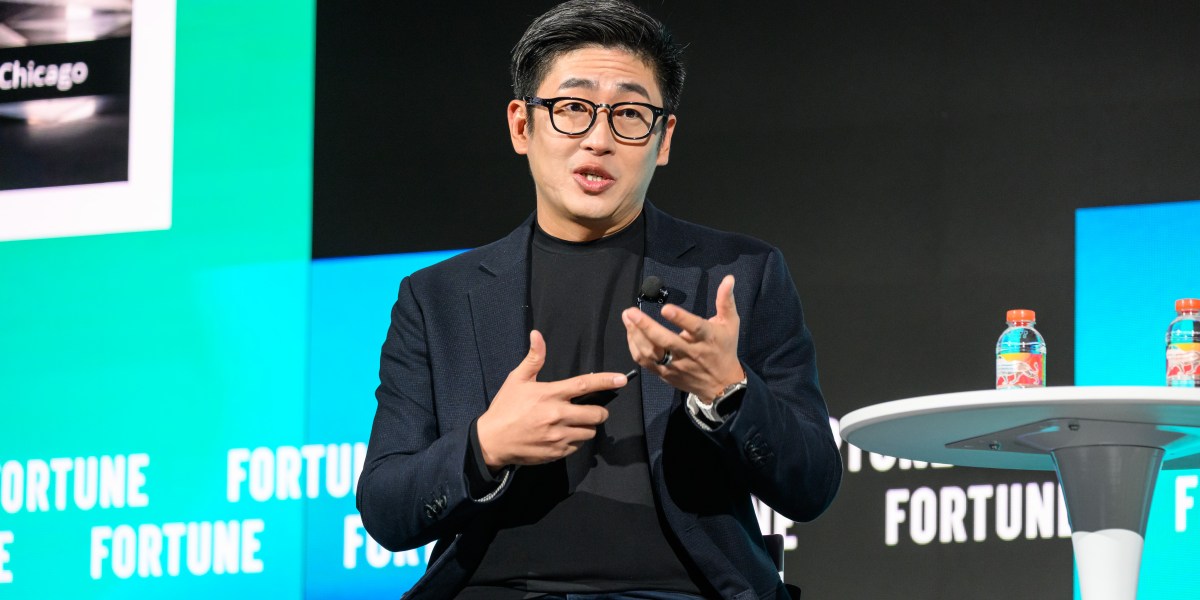
“We’re no longer just designing workplaces, we’re actually designing experiences,” said Yuen, at the Fortune Brainstorm Design forum in Macau on Dec. 2. “You’ve really got to make the campus or the workplace more than work, and that’s the fun part of it.”

Citing results from a 2025 survey by his firm, Yuen said that when asked what makes for good workplaces, employees increasingly named factors such as food and wellness. 

“They didn’t even mention anything about work—everybody just picked the stuff that we really want as human beings,” he added.

As such, workplace designers like Yuen need to think about how to reimagine modern offices. He pointed to a project Gensler worked on in Tokyo, Japan, for a company where 50% of its staff members had been working from home.

“We designed it [their office] with 15 different food offerings, including trying to bring Blue Bottle in. We ended up [also] designing a secret [vinyl] bar,” said Yuen.

Companies have also been seeking more transformable workspaces, Yuen added, and interior designers have responded by replacing built-in spaces with modular, removable furniture. “[This way,] you can transform a space when you need to, from an F&B [space] for the staff, to an events space or a happy hour space for your clients.”

The user needs for spaces are also becoming more complex, Yuen said. Airports, for instance, no longer serve as meagre transit hubs but are also places where travelers can work or rest.

Now, airports have “a lot more outdoor-indoor space [and] natural light, past the actual check-in area. Airport [experiences] used to be just you checking in, and sitting there, waiting,” the designer said. “It’s a destination, it’s no longer just a [place of] transit.”

As with other fields, artificial intelligence is also rewriting the playbook for designers.

Yuen recounted how some clients have pulled up visuals on AI image generators like Google’s Nano Banana Pro, before asking: “If they can do it in a second, why can’t design firms do it quicker?”

Many designers traditionally regard time and craftsmanship as core tenets of design, but AI is pushing them to change the way they work, Yuen said. Clients now want “immediate response, immediate gratification,” he continued.

“With AI, we’re now almost like a creator [of] all these art pieces, and we try to select what is suitable—that’s the only way we can manage that need from clients on speed and time,” said Yuen.


Source link

Continue Reading

Business

Nintendo’s 98% staff retention rate means the average employee has been there 15 years

Published

on


Good morning. When experienced employees leave–whether they get laid off, or jump ship for a better opportunity–they take their years, if not decades, of experience with them. Over time, the company loses that institutional knowledge.

Nintendo, the Japanese video game giant, is an example. Its Japanese employees spend an average of 15 years at the company, which boasts a yearly retention rate of 98%. That’s not just better than the layoff-prone video game industry, it’s better than most of Japan. The average Japanese worker spends 11 years at their company; in the U.S., that number is closer to four.

“The people who first made Nintendo’s hits are still working at the company,” Keza MacDonald, the author of Super Nintendo, a forthcoming book about the developer, told me recently. “For the last 50 years, these people have been passing down knowledge and training up a new generation of Nintendo creatives.” 

Both Nintendo’s business and creative leaders have long tenures at the company. Current president Shuntaro Furakawa joined the company in 1994 as an accountant. Shigeru Miyamoto, the brains behind franchises like “Super Mario” and “The Legend of Zelda,” joined as a staff artist in 1977. 

There is a risk that companies that rely too much on institutional knowledge get stuck in their ways. Yet Nintendo, according to MacDonald, has combined institutional knowledge with fresh ideas to continuously replenish its pipeline of fun games: “It’s not like the oldest guy gets to decide what’s a good idea and what isn’t. Everyone puts ideas in.”

Nintendo has its share of flops, failed experiments, and puzzling business decisions–as does every firm. Yet the company maintains its share of the highly competitive video game industry against bigger, deeper-pocketed rivals like Sony and Microsoft

The few designers who’ve left Nintendo still have fond feelings about their time there. As Lee Schuneman, a former Nintendo game designer and now Efekta Education Group’s chief product officer, told our Brainstorm Design audience this week, “I got to work with some of the most talented game designers in the world, including people like [Shigeru Miyamoto] at Nintendo, and [learn] a whole range of lessons about how to make playful experiences.”

That goodwill may be the result of Nintendo avoiding the industry’s boom-bust churn and valuing the expertise its workforce accumulates.

Nintendo “is still, to this day, making games differently from everyone else,” MacDonald says. You can check out the rest of our mainstage sessions from Brainstorm Design here.—Nicholas Gordon

Contact CEO Daily via Diane Brady at diane.brady@fortune.com

Top news

Netflix to acquire Warner Bros. Discovery studios 

The online streamer and the maker of the  Superman and Harry Potter franchises are expected to announce a sale of Warner’s studios and HBO Max business to Netflix, the WSJ reports. Paramount Skydance chief David Ellison lobbied the White House against the deal even though Netflix offered a richer valuation, according to the New York Post.

“China’s Nvidia” stages IPO

Moore Threads, a maker of GPUs based in Beijing went public today at a valuation of $1.1 billion and its stock rose by 400% on day one.

$10 billion a week on U.S. national debt

The calendar year may have a few weeks left to tick off, but as far as the government’s budget is concerned, we’re in fiscal 2026. The Treasury has already paid out a 12-figure sum to service the nation’s debt. Unlike the tax and calendar year, the government’s financial calendar runs to the end of September. According to Treasury data, in the nine weeks since, it has spent $104 billion in interest on its $38 trillion borrowing burden. That’s more than $11 billion a week, and already represents 15% of federal spending in the current fiscal year.

Poor labor data may have locked in Fed cut

Analysts may not have necessarily digested this week’s lackluster labor data with glee—but it sure didn’t dampen their spirits either. Wall Street is hoping for a Christmas miracle with a final interest rate cut from the Fed, bringing the base rate down to 3.5% to 3.75%, and recent jobs reports may just have sealed the deal.

U.S. lobbied against E.U. seizing Russian money

American officials urged Europe not to use frozen Russian assets as the basis of loans that would fund Ukraine’s defense against Moscow’s invasion of its Eastern flank. The funds could be used as an incentive to end the war, Washington argued.

January 6 pipe bomb suspect arrested

Brian Cole Jr., 30 of Woodbridge, Virginia, was the subject of a five-year-long investigation by federal officials

Wall Street forecasts S&P will hit 7,500

Analysts are publishing their notoriously unreliable annual stock market forecasts and this year nine investment banks are guessing that the market will rise about 10% in 2026.

The markets

S&P 500 futures were up 0.17%  this morning. The last session closed up 0.11%. STOXX Europe 600 was up 0.18% in early trading. The U.K.’s FTSE 100 was up 0.19% in early trading. Japan’s Nikkei 225 was down 1.05%. China’s CSI 300 was up 0.84%. The South Korea KOSPI was up 1.78%. India’s NIFTY 50 is up 0.55%. Bitcoin fell to $91.4K.

Around the watercooler

How a Texas gas producer plans to exploit the ‘mega trend’ of power plants for AI hyperscalers by Jordan Blum.

Battle for sports betting market heats up as Polymarket announces return to the U.S. by Carlos Garcia.

Nvidia CEO Jensen Huang admits he works 7 days a week, including holidays, in a constant ‘state of anxiety’ out of fear of going bankrupt by Jessica Coacci.

Kim Kardashian shaped Skims into a $5 billion brand—now she wants to help other entrepreneurs mold their skills for success by Emma Hinchliffe.

CEO Daily was compiled and edited by Jim Edwards and Lee Clifford.


Source link

Continue Reading

Business

How a Texas gas producer plans to exploit the ‘mega trend’ of power plants for AI hyperscalers

Published

on


After natural gas producer BKV expanded into the power business, the company went on its IPO roadshow two years ago and was met with suspicion and ridicule about its then-unusual business model. It’s rare—and uncomfortable for shareholders—for oil and gas producers to take over power plants that require very different skillsets. They’re both hydrocarbon industries, but drilling and extracting from the earth and producing electricity require completely different business models and technologies.

“I went to a very large institutional investor and explained our gas-to-power strategy in our business, and I got berated for like 30 minutes about how it was such a foolish thing for me to go into power,” BKV founder and CEO Chris Kalnin told Fortune.

Fast forward to today, and BKV’s stock has spiked 50% since going public in September 2024—rising from a small cap to a mid-market cap value of $2.5 billion. BKV is on the brink of making a deal with a hyperscaler to provide immediate gas-fired power to an AI data center campus and continue, according to analysts, before buying and building more power plants.

“It was a pretty controversial decision for us to buy power. It’s been, honestly, one of our best investments ever,” Kalnin said. “Hyperscalers need more generation. They used to talk about hundreds of megawatts. Now the conversations start with gigawatts. Can you give me gigawatts?”

“We’re going to have to build power plants. If they want gigawatt power, we’re going to have to add more power,” he said.

BKV was founded a decade ago in partnership with Thailand’s Banpu Power—BKV being short for Banpu Kalnin Ventures—so there was some built-in power expertise. After focusing on natural gas production, four years ago BKV started buying up two power plants in Temple, Texas—located between Austin and Dallas—which now provide a total of 1.5 gigawatts of electricity generation capacity—enough to power more than 1.1 million homes, or a major data center campus. There is room to expand.

BKV is in the process of increasing its ownership stake in the joint venture with Banpu from 50% to 75%—slated to close in the first quarter—to double down on the power business and to better disclose the financials to investors, now that BKV is public, Kalnin said.

Tim Rezvan, energy analyst for KeyBanc Capital Markets, said the new AI data center market is naturally finding its way to BKV and its power plants, as opposed to BKV chasing a boom from behind.

“It’s a lot of skill and a little bit of luck on top of that to take that power plant when they did,” Rezvan said. “They’re really in the catbird seat because they control these merchant power plants that can redirect power, in theory, the next day. The market is eagerly waiting to hear what’s going to happen with a potential, behind-the-meter deal with a hyperscaler.”

Despite BKV continuing to grow as a gas producer, Rezvan said the power segment is now a majority of the value of the stock and 90% of what investors want to talk about.

BKV also has one of the most advanced carbon capture and storage programs in the energy sector to deliver the power more cleanly, which may be especially inviting to Big Tech.

“The ability to deliver almost an carbon-neutral natural gas molecule—and then they can tie that in with the big hyperscaler—is a unique suite of services they can offer carbon-conscious consumers of power,” Rezvan said.

Birthplace of shale

An alum of McKinsey, Kalnin first connected to Banpu through that network. Banpu wanted to invest in U.S. shale gas after seeing the U.S. ship cheap natural gas to Asia in the early days of the shale boom.

The industry’s modern drilling and hydraulic fracturing, or fracking, techniques were pioneered in the Barnett Shale near Dallas, but those companies quickly fled the more mature Barnett to Louisiana’s Haynesville Shale, Pennsylvania’s Marcellus Shale and, eventually, West Texas’ oily Permian Basin.

As everyone was moving out of the Barnett, BKV bought in cheaply and, over time, became the dominant player there. “The Barnett was heavily undervalued relative to its risk,” Kalnin said. “The only way you find deep value is you see something that other people don’t see in the fundamental value. And so that’s the origin story of BKV.”

“Basically, all the players left the Barnett in that 2010 timeframe and went to other plays. Those plays have evolved how you fracked, and how you drill, and how you do directional drilling, and how you target [gas] zones. None of that technology was reapplied back to the Barnett,” he said. Now, BKV is taking those advanced drilling and fracking techniques and getting much more value from the Barnett than was believed possible, he said.

A lot of gas goes toward power generation, so Kalnin saw that as a natural extension. Borrowing on his McKinsey background, Kalnin said he sought to identify “mega trends” and take advantage. “It’s the idea of a glacier moving in a direction, and you can’t stop it. The idea is you want to get into that path or get the benefit from that trend. You’re not going to figure out all the nuances, but you’re going to get the direction correct if you think through it deeply.”

That mega trend Kalnin identified was the anticipated growth of U.S. power demand and the underinvestment in the sector after more than two decades of flat demand.

“Natural gas is the baseload of U.S. power, and not just as a bridging fuel, but actually as a core fuel for the future,” Kalnin said. “Most of the research at the time was showing that it was going to be all renewables. I called absolutely BS on that, and I said I’m going to double down on gas.”

Kalnin admittedly did not foresee the AI data center boom, but he did see the need for more power from population growth and greater electrification and manufacturing.

“We saw the trend,” he said. “And then, of course, the AI train has kicked things into high gear.”

What’s next?

BKV just expanded in the Barnett through a $370 million acquisition from Bedrock Energy Partners, and the company is launching another carbon capture project next year as part of its “Barnett Zero” emissions effort.

But the real focus is on power and attracting a hyperscaler. The pitch is for “closed-loop, net-zero power” from the gas fields and pipelines to the power plants and carbon capture.

“Not only do we have the power side, we can do the pipelines, we can do the gas, we can do the grid connection, we can do the whole thing soup-to-nuts in one company, and, by the way, we can decarbonize it with carbon capture,” Kalnin said.

“I can give somebody a fixed power price for 20 years because we can produce and sell the gas to ourselves and fix the gas price. Think about the ability to do that with a hyperscaler.”

Rezvan agrees. But, if BKV hasn’t signed a major power deal in the next six months or so, investors may start to get antsy.

“There will be some pressure to deliver,” Rezvan said. “The question is, why would a mega-cap tech company partner with a small energy company? The answer is because they have power right now. It’s not a greenfield project that would take many years. They could literally turn around and deliver that power in short order.

“This is a power-starved market. The ability to deliver on short notice is what gets them a deal I believe.”


Source link

Continue Reading

Business

Luxury hotels must have ‘a point of view’ to attract visitors hungry for experiences, says André Fu

Published

on


Travel destinations the world over are struggling with a new kind of traveler: A younger millennial or Gen-Z tourist, hungry for experiences rather than cookie-cutter hotels. 

Today’s tourists are “looking for a point of view,” interior designer André Fu explained at the Fortune Brainstorm Design conference in Macau on Tuesday. In other words, they are looking for a specific atmosphere or design ethos in choosing where to stay or eat.

And, Fu explained, this even extends to the luxury hotel space. “Luxury is not about the fabrics. It’s not about the marble. It’s about feeling. It’s about connection. It’s about the emotion that you get when you’re in a space,” he said.

“When you have that feeling that this is a space that’s designed around you, rather than you being just a particle in that environment—that sense of resonance is so invaluable,” Fu said. “And I guess that level of connection…is what designers are thriving for these days.”

Swire Hotels deputy chairman Toby Smith agreed that travel patterns were changing. “We’re finding that people are extending their trip. They’ve got a business trip, and they might extend the trip by a day or so to really explore the city or the location they happen to be in,” he said. That opens up an opportunity for personalized service, such as hotel staff personally escorting someone staying at the Upper House Shanghai through the city’s historic French Concession district. 

Fu’s first hotel project was the Upper House Hong Kong, a small luxury hotel developed by Swire Hotels, which is under the umbrella of conglomerate Swire Pacific. The property developer is now planning to expand its luxury hotel brand, the Upper House, to several cities in mainland China and East Asia. 

The impetus behind the Upper House and its tagline “Houses not Hotels”, Smith explained, was that younger tourists “were looking for something a little bit more youthful, perhaps a little more dynamic, less stuffy, less formal.” 

Lucas Schifres for Fortune

Upper House hotels are also small, with the Hong Kong property having just over 100 rooms. “It’s very hard to deliver true personalization and luxury for a property that has much more than 100 keys,” Smith said. 

In mid-October, Swire Hotels rebranded its upscale House Collective brand as “The Upper House,” and pledged to open several more properties across the region. The next hotel, Upper House Shenzhen, will open in 2027, and features designs from German architecture firm Büro Ole Scheeren.

Swire will follow Shenzhen with new projects in Xi’an, Tokyo, and Bangkok—which will be the brand’s first branded residences in a project designed by Foster + Partners.

Hotels and hospitality are “increasingly competitive,” Smith explained. “Construction costs are incredibly high, so I think the only way to get value is to build luxury and charge more for it.”

Swire Hotels generated 441 million Hong Kong dollars ($56 million) in revenue for the first six months of 2025, a slight decrease year-on-year. The company cited a slower-than-expected recovery in Hong Kong’s hotel market and mixed performance in mainland China. Overall, Swire Properties generated 8.7 billion Hong Kong dollars ($1.1 billion) for the first half of the year. Swire Properties’s shares are up just over 35% for the year so far. 

Still, Asian tourism—which has long relied on tourists from sources like mainland China, Europe and the U.S.—was starting to diversify. On Tuesday, Smith pointed to the Middle East and India as increasing sources of luxury tourists. 

“We are very confident about our brand,” Smith said. “If we stick to our principles…then we will continue to grow at the pace that we want to grow.”


Source link

Continue Reading

Trending

Copyright © Miami Select.