Connect with us

Business

The next ‘golden age’ of AI investment

Published

on


Fortune just wrapped up its Global Forum in Riyadh, Saudi Arabia, which hosted business and finance leaders to discuss a range of business topics, including—unsurprisingly—the future of artificial intelligence. Speakers included major names such as Qualcomm’s Cristiano Amon, Bridgewater Associates’ Ray Dalio, and Citi’s Jane Fraser, with almost every conversation managing to work some aspect of how AI is reshaping industries.

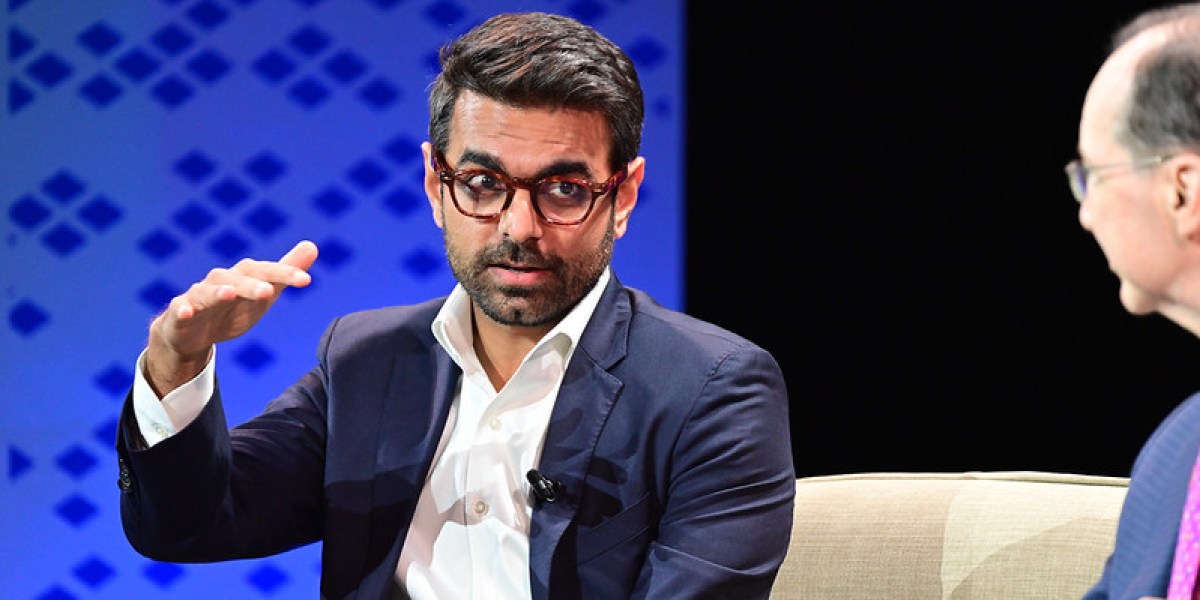
What caught my eye was Andreessen Horowitz’s partner Anjney Midha sharing his perspective on where, amid an explosion of AI startups and simmering fears of a potential bubble, the next wave of investment opportunity might lie. Midha said the new “golden age” of investment opportunities would come in an “explosion of new frontier teams.”

“It was very popular two or three years ago to say there’s only going to be three or four labs and teams that are going to do any real training…and startups will be left to pick the pieces up of tiny niche opportunities here and there,” he said.

But reasoning models have changed the game, Midha said, referring to the new generation of AI systems designed to “reason” problems step by step, mimicking logic and reflection rather than predicting the next word in a sequence. These models can evaluate their own outputs better, break complex tasks into sub-tasks, and learn from feedback, potentially bringing AI closer to complex, real-world problem-solving.

“Reinforcement learning as a new paradigm is working so extraordinarily well, especially on mission-critical problems,” Midha said. “If you can define the reward model correctly, which startups are really good at doing when they embed themselves inside an industry—they go deep, they go vertical, and they end up understanding the customer’s problem end to end—you can build entirely new, multibillion-dollar companies doing full end-to-end reinforcement learning for each industry.”

During the same panel, Midha also expressed concerns about China’s growing dominance in the open-source AI space, calling the technology “China’s game right now,” something that could pose challenges for the U.S. and its allies. He said Western labs were scrambling to catch up, predicting this scramble would result in a wave of open-weight models from U.S. companies.

Despite some of the ongoing debate about an AI industry bubble, the investment surge doesn’t appear to be cooling off.

According to recent data from S&P Global Market Intelligence, venture capital investment in generative AI has surged to unprecedented levels in 2025, with total funding on pace to more than double from last year. Investors have poured more than $73.6 billion into GenAI application startups in the first three quarters of the year, bringing total investment across the GenAI and broader AI ecosystem to $110.17 billion this year. That figure represents an eightfold increase since 2019.

Much of this capital has flowed to large foundation model providers such as OpenAI, Anthropic, and Mistral AI, which continue to command multibillion-dollar rounds and soaring valuations. OpenAI’s $40 billion funding earlier this year remains the single largest deal, while Anthropic’s $13 billion round and Mistral’s €1.7 billion Series C underline the dominance of a handful of major players.

In other news: Fortune’s Cyber 60 list is out! The annual list, created in partnership with Lightspeed Venture Partners, ranks the most promising startups in the cyber security sector. This year’s list has lots of new names developing innovative tools to defend against AI threats, while some of the existing heavy hitters on the list have raised more capital and built out their rosters of customers. Check out the Cyber 60 list here.

Correction: Yesterday’s newsletter mistakenly said that Figma listed its shares on the Nasdaq, when of course, its IPO was on the NYSE. We regret the error.

Beatrice Nolan
X:
@beafreyanolan
Email: bea.nolan@fortune.com

Submit a deal for the Term Sheet newsletter here.

Joey Abrams curated the deals section of today’s newsletter. Subscribe here.

VENTURE DEALS

Fruitist, a Century City, Calif. And San Isidro, Argentina-based superfruit snack brand, raised $150 million in funding. J.P. Morgan Asset Management led the round and was joined by others.

Frontline Wildfire Defense, a San Francisco-based wildfire defense company, raised $48 million in Series A funding. Norwest led the round.

Recess, a Los Angeles, Calif. and New York City-based developer of non-alcoholic beverages designed for relaxation, raised $30 million in Series B funding. CAVU Consumer Partners led the round and was joined by Rocana, Midnight Ventures, Torch Capital, and others.

Reflectiz, a Boston, Mass.-based AI-powered website security company, raised $22 million in Series B funding. Fulcrum Equity Partners led the round and was joined by Capri Ventures, YYM Ventures, AFG Partners, and others.

Kaizen, a New York City-based developer of software designed for public services, raised $21 million in Series A funding. NEA led the round and was joined by 776, Accel, Andreessen Horowitz, and Carpenter Capital.

Arya Health, a New York City-based platform designed to automate scheduling, compliance, and other processes for home health and post-acute care providers, raised $18.2 million in Series A funding. ACME Capital led the round and was joined by Ridge Ventures, Twelve Below, and others.

Emerald AI, a Washington, D.C.-based AI-powered energy consumption platform for data centers, raised $18 million in a seed extension. Lowercarbon Capital led the round and was joined by NVIDIA, Radical Ventures, Salesforce Ventures, National Grid Partners, Amplo Ventures, Earthshot Ventures, and others.

Sweatpals, an Austin, Texas-based in-real-life fitness platform designed to bring people together, raised $12 million in funding. Patron, a16z speedrun, and HartBeat Ventures led the round.

Polygraf AI, an Austin, Texas-based enterprise AI security platform, raised $9.5 million in seed funding. Allegis Capital led the round and was joined by Alumni Ventures DataPower VC, Domino Ventures, and existing investors.

CustoMED, a Ramat Gan, Israel-based platform using AI and 3D printing to generate surgical tools and implants, raised $6 million in seed funding from Longevity Venture Partners, Varana Capital, Flag Capital, and others.

Human Health, a London, U.K.-based precision health platform, raised $5.5 million in funding from LocalGlobe, Airtree, Skip Capital, Aliavia, Scale Ventures, and angel investors.

Marleybones, a London, U.K.-based dog food brand, raised £2.5 million ($3.3 million) in funding. TAW Ventures led the round and was joined by existing investors JamJar Investments, Active Partners, and Animal Health Angels.

PRIVATE EQUITY

Francisco Partners agreed to take Jamf, a Minneapolis, Minn.-based Apple device management and security company for organizations, private for $2.2 billion.

Forward Consumer Partners agreed to acquire a majority stake in Justin’s, a Boulder, Colo.-based nut butters and confections company, from Hormel Foods. Financial terms were not disclosed.

GPT Industries, a portfolio company of Branford Castle Partners, acquired Integrated Rectifier Technologies, an Alberta, Canada-based manufacturer of transformer rectifiers and related products for the cathodic protection industry. Financial terms were not disclosed.

Peak Toolworks, backed by Granite Creek Capital Partners and Canterbury Ventures, acquired Southern Carbide, a Shreveport, La.-based industrial tooling and sharpening company. Financial terms were not disclosed. 

Uncommon Equity acquired HopCat, a Grand Rapids, Mich.-based casual dining chain. Financial terms were not disclosed.

PEOPLE

AE Industrial Partners, a Boca Raton, Fla.-based private equity firm, hired Chris Aguemon and Bill Strobel as Vice Presidents. Previously, Aguemon was with Arlington Capital Partners and Strobel was with Liberty Strategic Capital.

Earlybird Health, a Berlin and Cologne, Germany-based venture capital firm, promoted Dr. Rabab Nasrallah and Dr. Christoph Massner to Partners. 

Windjammer Capital, a Newport Beach, Calif. and Waltham, Mass.-based private equity firm, hired Evan Klebe as Managing Director and Beth Lesniak as Principal. Previously, Klebe was with Beach Point Capital Management and Lesniak was with Norwest Equity Partners.

Wing VC, a Palo Alto, Calif.-based venture capital firm, hired Sunil Potti as a Venture Partner. Previously, he served as General Manager and Vice President of Security at Google Cloud.


Source link

Continue Reading

Business

The 9 most disruptive deals of Trump’s first year back in the White House

Published

on


President Trump lives on deals: “That’s what I do—I do deals,” he once told Bob Woodward. On the one-year anniversary of his second presidency, he’s pushing hard to make his biggest, most disruptive deal ever, one that would bring Greenland under the control of the U.S.—and the global business community is still scrambling to adapt to his approach. Here are nine of Trump’s most unorthodox deals from the past year.

Nine deals that shook the business world

April 2, 2025: Reciprocal tariffs

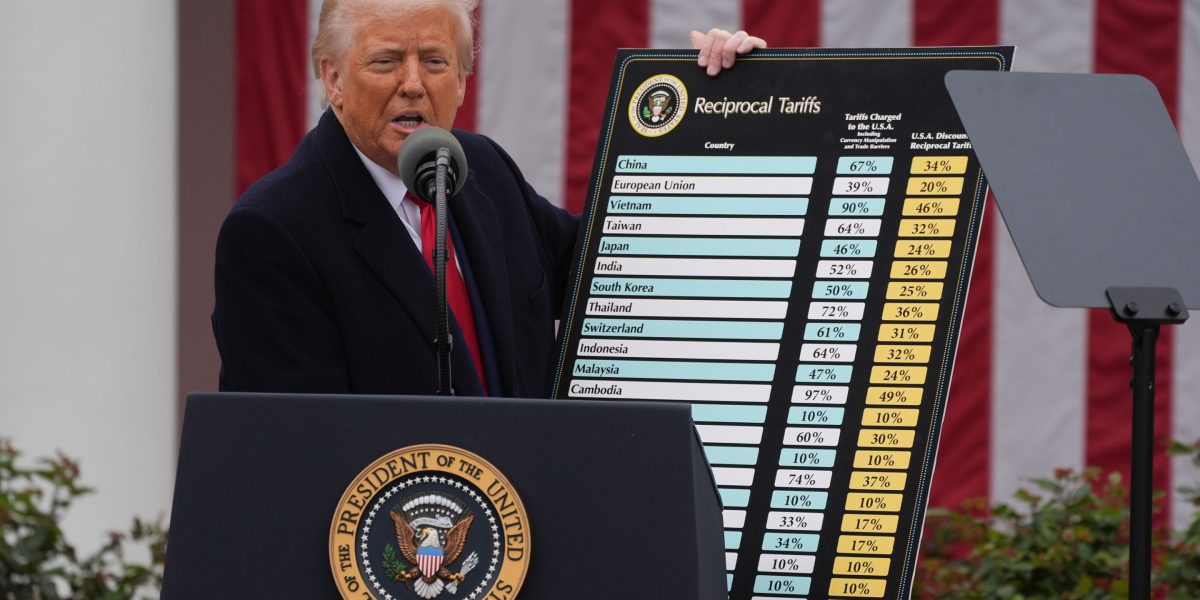
Trump imposes “reciprocal tariffs” on 57 countries, with each tariff understood as an opening bid in a negotiation. Several countries have since made deals. The one-on-one negotiations, unlike the multilateral system of the past 80 years, can be chaotic for companies and economies

June 13: U.S. Steel “Golden Share”

In return for allowing Nippon Steel to buy U.S. Steel, Trump requires that the U.S. receive several powers over the company, including total power over all the board’s independent directors and vetoes over locations of offices and factories. 

July 10: MP Materials

The U.S. pays $400 million for a large equity share in MP and signs a contract to buy all of MP’s rare earth magnets for 10 years. The reason for the equity stake was not disclosed.

July 14: Nvidia, Part 1

JADE GAO—AFP/Getty Images

Trump reverses the U.S. ban on selling Nvidia H20 chips to China in exchange for Nvidia paying the U.S. 15% of the revenue.

July 23: Columbia University
LYA CATTEL/Getty Images

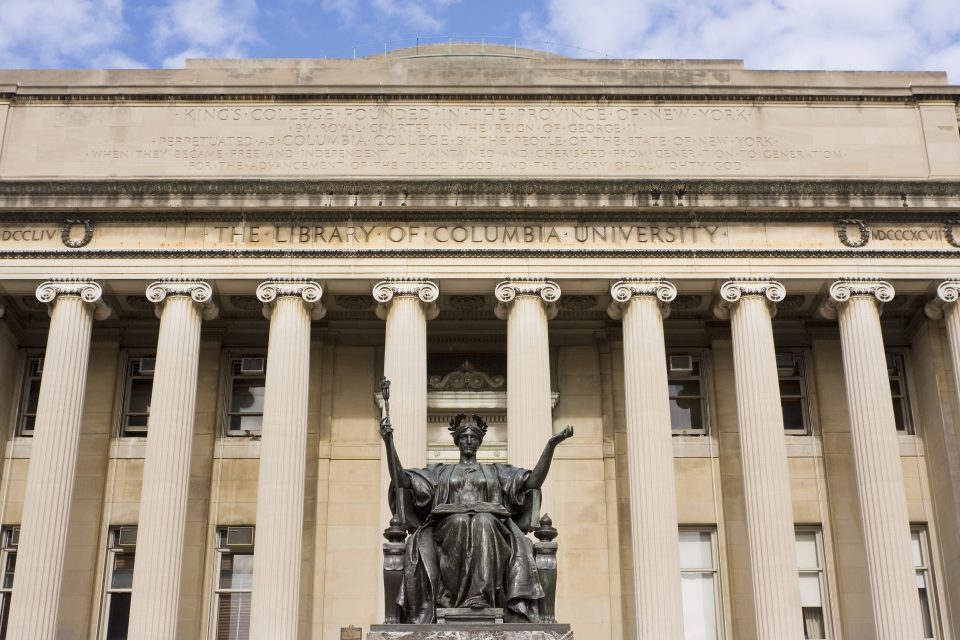
The Trump administration restores $400 million of canceled federal research funding for the university under an unprecedented multipoint deal. For example, Columbia must supply data to the federal government for all applicants, broken down by race, “color,” GPA, and standardized test performance. A few other schools later make similar deals.

August 6: Apple
Bonnie Cash—UPI/Bloomberg/Getty Images

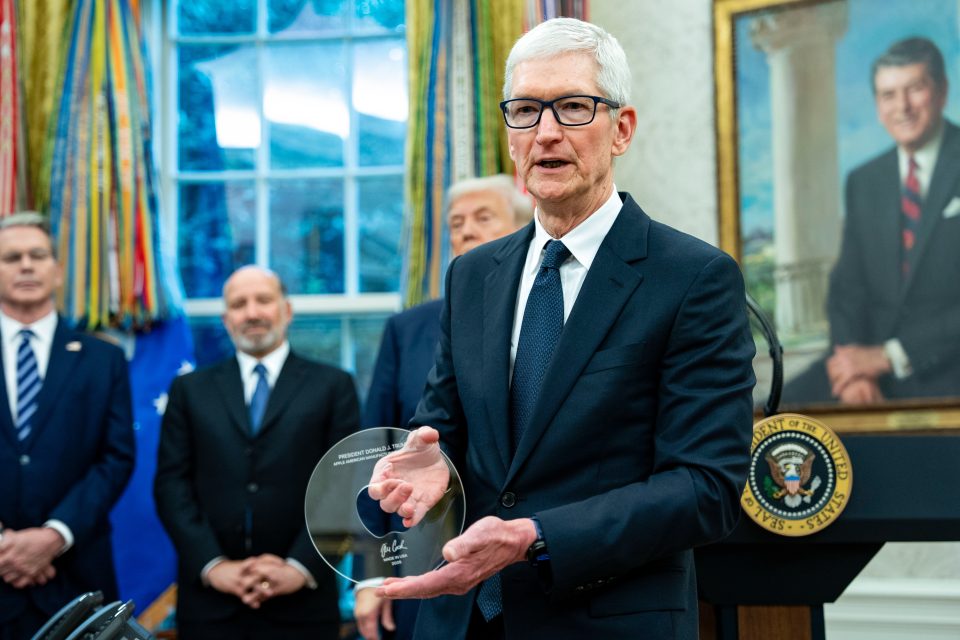
At a public appearance with Trump, CEO Tim Cook announces Apple will invest an additional $100 billion in the U.S. over four years; Trump announces Apple will be exempt from a planned tariff on imported chips that would have doubled the price of iPhones in the U.S.

August 22: Intel
Justin Sullivan—Getty Images

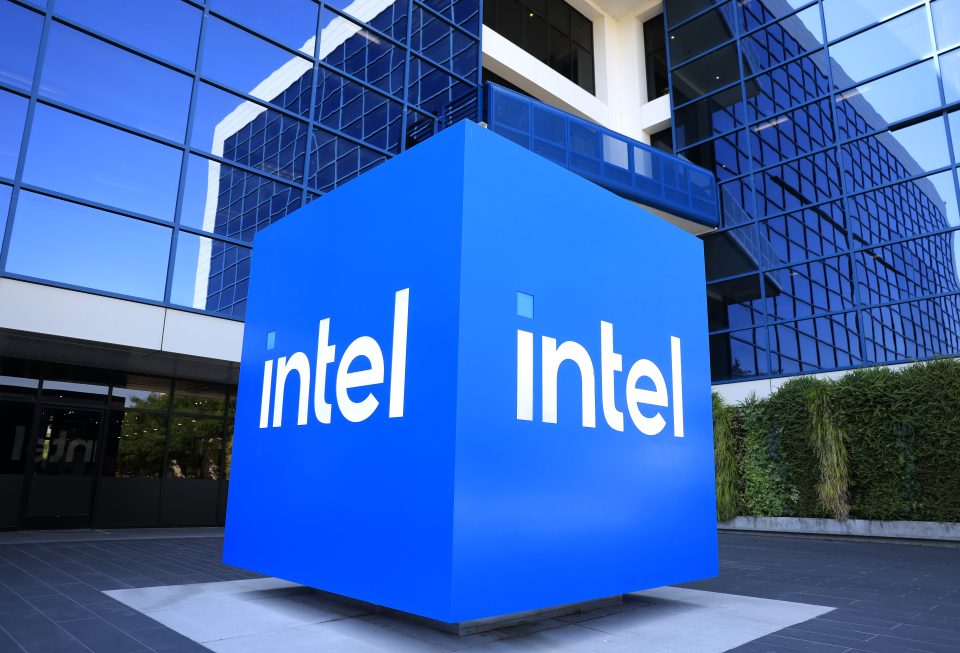
Intel trades the U.S. government a 9.9% equity stake in exchange for $8.9 billion that might already be owed to Intel under the CHIPS and Science Act. The deal is unusual because the company was not in immediate danger or significantly affecting the economy.

December 8: Nvidia, Part 2:

Trump reverses the U.S. ban on selling powerful Nvidia H200 chips in exchange for Nvidia paying the U.S. 25% of the revenue. Both Nvidia deals are unusual because the payments to the U.S., based on exports, appear to be forbidden by the Constitution. 

December 19: Pharma
Alex Wong—Getty Images

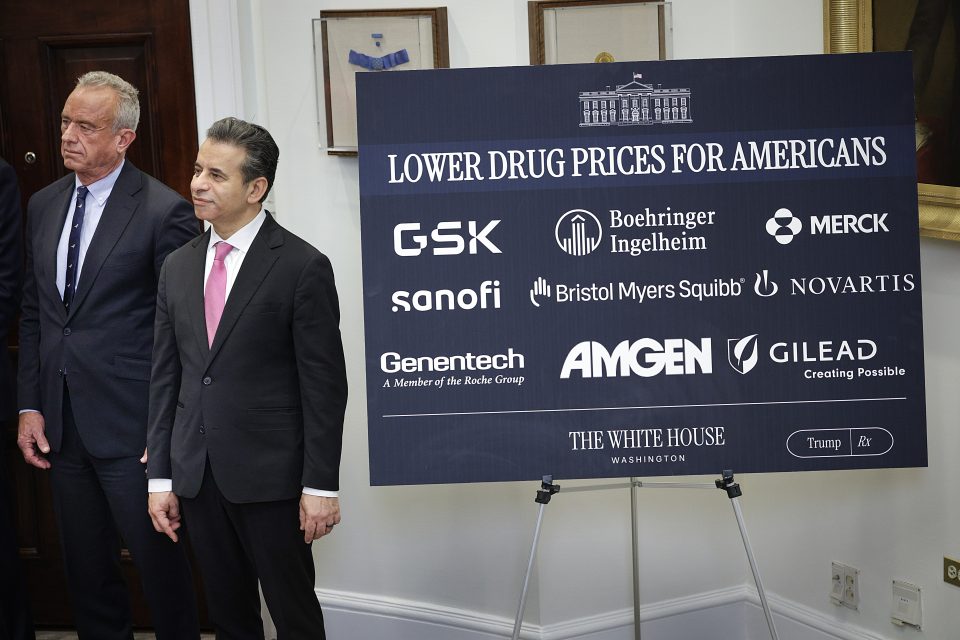
Nine pharmaceutical companies make deals with Trump that are intended to lower drug prices. This is unusual because Trump negotiated separate deals with each company, and the terms have not been released.

All eyes this week will be watching President Trump at the World Economic Forum in Davos, where the president has hinted he’ll announce some high-stakes agreements. Expect the unexpected.

A version of this piece appears in the February/March 2026 issue of Fortune.


Source link

Continue Reading

Business

Microsoft CEO Satya Nadella’s biggest AI bubble warning yet is a challenge to the Fortune 500
Published

on


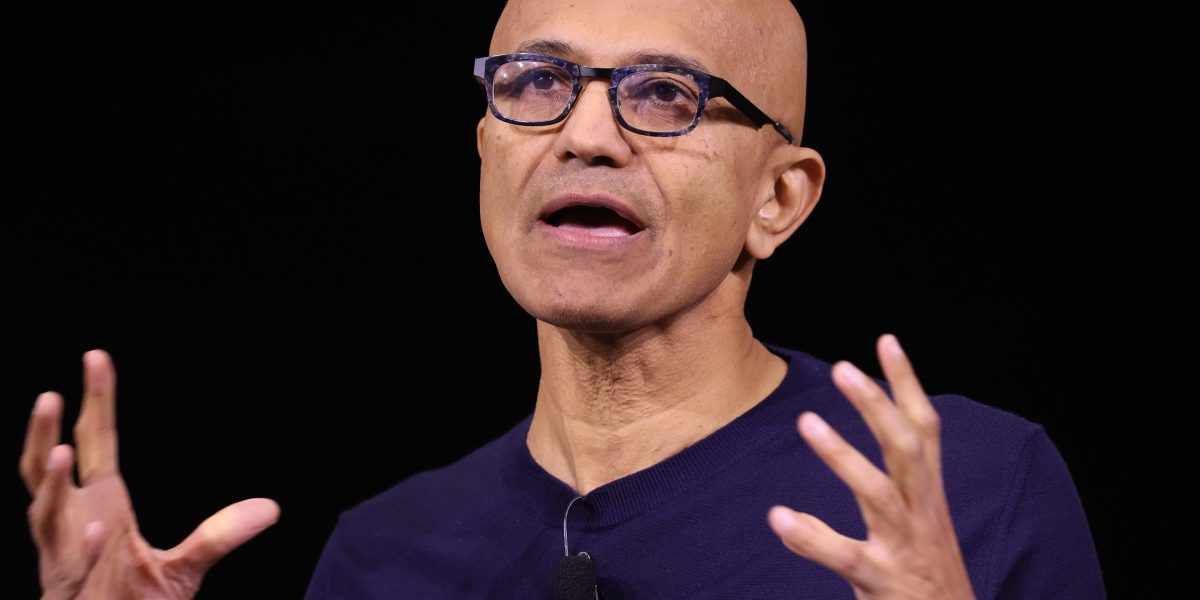
Microsoft CEO Satya Nadella has been leading the charge on artificial intelligence (AI) for years, owing to his long alliance with OpenAI’s Sam Altman and the groundbreaking work from his own AI CEO, Mustafa Suleyman, particularly with the Copilot tool. But Nadella has not spoken often about the fears that rattled Wall Street for much of the back half of 2025: whether AI is a bubble. 

At the World Economic Forum annual meeting in Davos, Switzerland, Nadella sat for a conversation with the Forum’s interim co-chair, BlackRock CEO Larry Fink, explaining that if AI growth spawns solely from investment, then that could be signs of a bubble. “A telltale sign of if it’s a bubble would be if all we are talking about are the tech firms,” Nadella said. “If all we talk about is what’s happening to the technology side then it’s just purely supply side.”

However, Nadella offers a fix to that productivity dilemma, calling on business leaders to adopt a new approach to knowledge work by shifting workflows to match the structural design of AI. “The mindset we as leaders should have is, we need to think about changing the work—the workflow—with the technology.”

Growing pains

This change is not wholly unprecedented, as Nadella pointed out, comparing the current moment to that of the 1980s, when computing revolutionized the workplace and opened up new opportunities for growth and productivity and created a new class of workers. “We invented this entire class of thing called knowledge work, where people started really using computers to amplify what we were trying to achieve using software,” he said. “I think in the context of AI, that same thing is going to happen.”

Nadella argues that AI creates a “complete inversion” of how information moves through a business, replacing slow, hierarchical processes with a view that forces leaders to rethink their organizational structures. “We have an organization, we have departments, we have these specializations, and the information trickles up,” Nadella said. “No, no, it’s actually it flattens the entire information flow. So once you start having that, you have to redesign structurally.”

That shift may be harder for some Fortune 500 companies as structural changes could be accompanied by uncomfortable growing pains. Nadella says that leaner companies will be able to more easily adopt AI because their organizational structures are fresher and more malleable. On the other hand, large companies could take time to adopt new workflows.

Despite widespread adoption of AI, the 29th edition of PwC’s global CEO survey found that only 10% to 12% of companies reported seeing benefits of the technology on the revenue or cost side, while 56% reported getting nothing out of it. It follows up on an even more pessimistic finding about AI returns from August 2025: that 95% of generative AI pilots were failing.

PwC Global Chairman Mohamed Kande spoke to Fortune’s Diane Brady in Davos about the finding that many CEOs are cautious and lack confidence at this stage of the AI adoption cycle. “Somehow AI moves so fast … that people forgot that the adoption of technology, you have to go to the basics,” he explained, with the survey finding that the companies seeing benefits from AI are “putting the foundations in place.” It’s about execution more than it is about technology, he argued, and good management and leadership are really going to matter going forward.

“For large organizations,” Nadella told Fink, “there’s a fundamental challenge: Unless and until your rate of change keeps up with what is possible, you’re going to get schooled by someone small being able to achieve scale because of these tools.”

New entrants have the advantage of “starting fresh” and constructing workflows around AI capabilities, while larger firms will have to contend with the flattening effect AI has on entire departments and specializations. 

To be sure, Nadella says that large organizations have kept an upper hand, especially when it comes to relationships, data, and know-how. However, he maintains that firms must understand how to use those resources to their advantage to change management style, then that could pose a major roadblock.

“The bottom line is, if you don’t translate that with a new production function, then you really will be stuck,” he said.


Source link

Continue Reading

Business

BlackRock’s billionaire CEO warns AI could be capitalism’s next big failure after 30 years of unsustainable inequality after the Cold War

Published

on


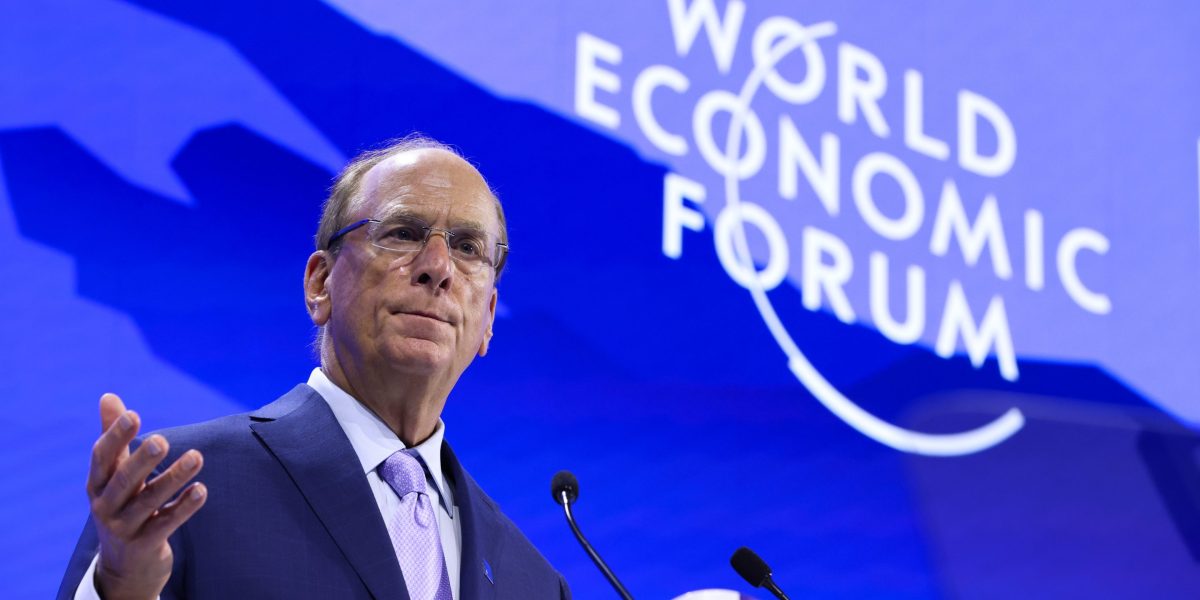
BlackRock CEO Larry Fink opened the World Economic Forum in Davos, Switzerland, with a stark message to the global elite: AI’s unfettered growth risks pummelling the world’s working and professional classes. Beyond that, he warned that it could be capitalism’s next big failure after a 30-year reign after the Cold War that has failed to deliver for the average human being in society.

In his opening remarks on Tuesday at the gathering of thousands of executives and global leaders, the billionaire boss of the world’s largest asset manager—often called one of Wall Street’s “Masters of the Universe”—said that as those in power discuss the future of AI, they risk leaving behind the vast majority of the world, just as they have for much of the last generation.

“Since the fall of the Berlin Wall, more wealth has been created than in any time prior in human history, but in advanced economies, that wealth has accrued to a far narrower share of people than any healthy society can ultimately sustain,” Fink said.

Fink, who has used his annual BlackRock letters and annual appearances at Davos to set the agenda for a more progressive kind of capitalism, even one that is arguably “woke,” making him at times the face of ESG and of stakeholder capitalism, warned that the gains of the tremendous wealth creation since the 1990s have not been equitably shared. And the capitalist ideology driving AI development and implementation forward could come at the expense of the wage-earning majority, he added. 

“Early gains are flowing to the owners of models, owners of data and owners of infrastructure,” Fink said. “The open question: What happens to everyone else if AI does to white-collar workers what globalization did to blue-collar workers? We need to confront that today directly. It is not about the future. The future is now.” 

Fink’s past critiques of capitalism

Fink, who was appointed interim co-chair of the World Economic Forum in August 2025, replacing founder Klaus Schwab, has long espoused the reshaping of capitalism, seeing it as a responsibility of large asset managers like himself. Fink was formerly vociferous about the importance of environmental, social, and corporate governance (ESG) investing, and has argued that climate change is reshaping finance, creating an imperative for executives to reallocate their capital to address the crisis accordingly. In a 2022 letter to investors, published the day before the Davos summit, Fink emphasized a model of “stakeholder capitalism” of a business’s mandate to serve not just shareholders, but employees, consumers, and the public.  

Fink’s new primacy in Davos is the first without Schwab, following allegations that he had expensed more than $1 million, billed to the World Economic Forum, on questionable travel spending, as well as claims of workplace misconduct and research report manipulation. The BlackRock chief emphasized the need for the gathering to demonstrate its legitimacy in part by showing that it’s concerned with more than just swelling growth of companies and countries, but also the economic welfare of its employees and citizens.

“Many of the people most affected by what we talk about here will never come to this conference,” Fink said. “That’s a central tension of this forum. Davos is an elite gathering trying to shape a world that belongs to everyone.”

Though BlackRock announced in early 2025 it would roll back many of the diversity, equity, and inclusion goals it created a few years before, Fink has once again used his spotlight to call on leaders to transform their capitalist sensibilities, this time in how they imagine the AI future.

The cost of the AI boom

Last year capped an explosion of growth in the AI sector, with Morningstar analysts finding a group of 34 AI stocks, including Amazon, Alphabet, and Microsoft, shot up 50.8% in 2025. AI firms and investors have seen their wealth skyrocket in the past year, with Per the Bloomberg Billionaires Index, the median increase in net worth last year was nearly $10 billion among the 50 wealthiest Americans. Google co-founder Larry Page and Sergey Brin, for example, got $101 billion and $92 billion richer, respectively, in 2025.

The BlackRock CEO noted these gains, however, have been reserved for the richest few, alluding to a K-shaped economy of the rich getting richer, while the poor continue to struggle: The bottom half of Americans, in short, are not cashing in on the AI race. Although Fink didn’t get into the politics of utilities setting electricity prices, it seems the poor are actually paying higher bills to support the data centers powering the AI boom. According to Federal Reserve data, the poorer demographic owns about 1% of stock market wealth, translating to about 165 million people owning $628 billion in stock. Conversely, the top 1% of wealthiest households own nearly 50% of corporate equity.

Fink’s framing of the post-Cold War era as one of exploding inequality represents a mainstreaming of a once niche view that has become increasingly mainstream in the 21st century. While the triumph of the west over communism was seen as the ultimate victory for capitalism, as epitomized by Francis Fukuyama’s The End of History and the Last Man, history has in fact continued. The unprecedented rise of China as an economic superpower, through its fusion of socialism and capitalism “with Chinese characteristics,” has complicated the narrative, as has the inequality alluded to by Fink. 

An internal critic of the post-Cold War world order is Andrew Bacevich, a military veteran and historian who likened the collapse  of the Soviet Union in 1989 as “akin to removing the speed limiter from an internal combustion engine.” Bacevich’s 2020 book The Age of Illusions: How America Squandered Its Cold War Victory, was an early articulation of the once niche viewpoint that Fink lent support to on Tuesday.

What AI’s growth means for workers

Similarly, the risks of the AI boom on workers extends beyond who has a stake in the technology industry’s growth. Nobel laureate and “godfather of AI” Geoffrey Hinton has previously warned this explosion of wealth for the few will come at the expense of white-collar workers, who will be displaced by the technology.

“What’s actually going to happen is rich people are going to use AI to replace workers,” Hinton said in September. “It’s going to create massive unemployment and a huge rise in profits. It will make a few people much richer and most people poorer. That’s not AI’s fault, that is the capitalist system.”

Some companies have already leaned into culling headcount to grow profits, including enterprise-software firm IgniteTech. CEO Eric Vaughan laid off nearly 80% of his staff in early 2023, according to figures reviewed by Fortune. Vaughan said the reductions happened during an inflection point in the tech industry, where failure to efficiently adopt AI could be fatal for a company. He’s since rehired for all of those roles, and he would make the same choice again today, he told Fortune.

According to Fink, sustaining a white-collar workforce will depend on the world’s most powerful people creating an actionable plan that will defy the critiques of capitalism that has, so far, stood to predominantly benefit them.

“Now with abstractions about the jobs of tomorrow, but with a credible plan for broad participation in these gains, this is going to be the test,” Fink said. “Capitalism can evolve to turn more people into owners of growth, instead of spectators watching it happen.”

This story was originally featured on Fortune.com


Source link

Continue Reading

Trending

Copyright © Miami Select.