Connect with us

Politics

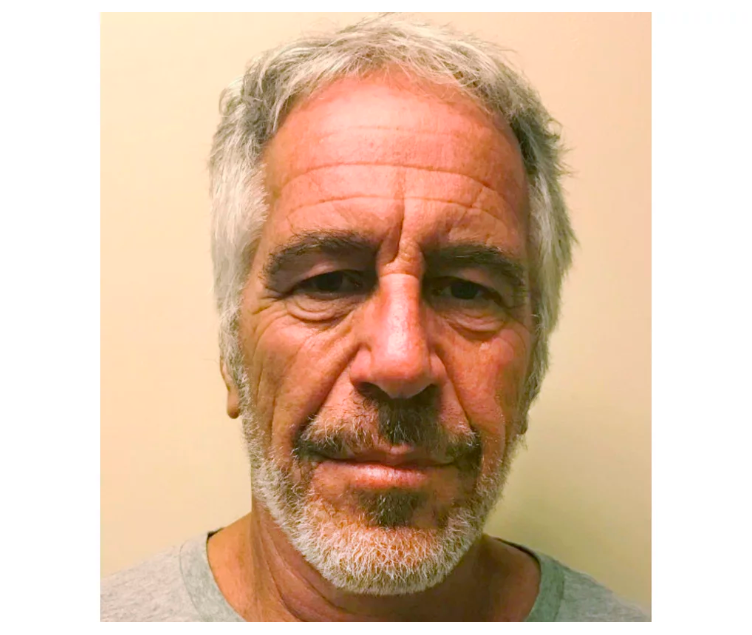
The House is looking into the Jeffrey Epstein investigation. Here’s what could happen next
Published

on


A key House committee is looking into the investigation of the late Jeffrey Epstein for sex trafficking crimes, working to subpoena President Donald Trump’s Department of Justice for files in the case as well as hold a deposition of Epstein’s former girlfriend, Ghislaine Maxwell.

The Republican-led House Oversight and Government Reform Committee acted just before House Speaker Mike Johnson sent lawmakers home early for a monthlong break from Washington. The committee’s moves are evidence of the mounting pressure for disclosure in a case that Trump has unsuccessfully urged his supporters to move past. But they were also just the start of what can be a drawn out process.

Here’s what could happen next in the House inquiry as lawmakers seek answers in a case that has sparked rampant speculation since Epstein’s death in 2019 and more recently caused many in the Trump administration to renege on promises for a complete accounting.

Subpoena for the Epstein files

Democrats, joined by three Republicans, were able to successfully initiate the subpoena from a subcommittee just as the House was leaving Washington for its August recess. But it was just the start of negotiations over the subpoena.

The subcommittee agreed to redact the names and personal information of any victims, but besides that, their demand for information is quite broad, encompassing “un-redacted Epstein files.”

As the parameters of the subpoena are drafted, Democrats are demanding that it be fulfilled within 30 days from when it is served to Attorney General Pam Bondi. They have also proposed a list of document demands, including the prosecutorial decisions surrounding Epstein, documents related to his death, and communication from any president or executive official regarding the matter.

Ultimately, Republicans who control the committee will have more power over the scope of the subpoena, but the fact that it was approved with a strong bipartisan vote gives it some heft.

The committee chairman, Rep. James Comer, said he told the speaker that “Republicans on the Oversight Committee were going to move to be more aggressive in trying to get transparency with the Epstein files. So, we did that, and I think that’s what the American people want.”

Will Congress depose Ghislaine Maxwell?
Comer has said that he is hoping that staff from the committee can interview Maxwell under oath on Aug. 11 at or near the federal prison in Florida where she is serving a lengthy sentence for child sex trafficking.

In a congressional deposition, the subject typically has an attorney present to help them answer — or not answer — questions while maintaining their civil rights. Subjects also have the ability to decline to answer questions if it could be used against them in a criminal case, though in this instance that might not matter because Maxwell has already been convicted of many of the things she will likely be asked about.

Maxwell has the ability to negotiate some of the terms of the deposition, and she already conducted 1 1/2 days of interviews with Justice Department officials this past week.

Democrats, however, warn that Maxwell is not to be trusted.

“We should understand that this is a very complex witness and someone that has caused great harm and not a good person to a lot of people,” Rep. Robert Garcia, the top Democrat on the oversight committee, told reporters this week.

The House wants to subpoena others
Committee Republicans also initiated a motion to subpoena a host of other people, including former President Bill Clinton, former Sen. Hillary Clinton as well as the former attorneys general dating back to Alberto Gonzales, who served under George W. Bush.

It’s not clear how this sweeping list of proposed subpoenas will actually play out, but Comer has said, “We’re going to move quickly on that.”

How will Pam Bondi comply?
Trump is no stranger to fighting against congressional investigations and subpoenas. And as with most subpoenas, the Justice Department can negotiate the terms of how it fulfills the subpoena. It can also make legal arguments against handing over certain information.

Joshua A. Levy, who teaches on congressional investigations at Georgetown Law School and is a partner at Levy Firestone Muse, said that the results of the subpoena “depend on whether the administration wants to work through the traditional accommodation process with the House and reach a resolution or if one or both sides becomes entrenched in its position.”

____

Republished with permission of the Associated Press.


Post Views: 0


Source link

Continue Reading

Politics

Keep Florida for Floridians and make Florida more affordable for full-time residents

Published

on


Floridians are under siege. Property insurance rates have skyrocketed. Property taxes are rising. And meanwhile, out-of-state investors, hedge funds and part-time residents are profiting while the very people who call Florida home 365 days a year are being left behind.

The rental market has spiraled out of control as full-time residents of Florida are having a difficult time purchasing a home due to insanely high insurance rates and property taxes.

Since 2020, mortgage rates, homeowners insurance premiums and housing costs have surged, placing unprecedented pressure on Florida homeowners. Then, President Donald Trump got elected and interest rates are coming down. Thank you, President Trump!

It’s time to put Florida homeowners first!

That’s why we are proposing the Florida Property Tax Offset Act — a bold, commonsense solution that delivers real relief to full-time Florida residents while strengthening our housing market, holding government and the insurance companies accountable and making Florida more affordable.

How it works

If you are a full-time Florida resident and you insure your primary home in Florida, you should be rewarded — not punished — for doing the right thing.

Under our proposal, for every $1 you pay in qualified homeowners insurance premiums, you will receive a $1 reduction in your annual property tax bill, up to a cap based on your home’s value.

Example: If your insurance premium is $4,200 and your property tax bill is $5,000, you would receive a $4,200 offset and owe just $800 — plus a required minimum contribution.

Eligibility requirements

To protect against abuse and keep the focus on true residents, the following criteria apply:

— You must have established Florida residency for at least 10 years.

— You must live in the home for 12 months per year, eliminating the six month plus one day permanent residency program.

— It must be a non-revenue generating property.

— No rental, business, or short-term income use allowed (Airbnb, VRBO, etc.).

— The home may be a primary residence, retirement home or vacation home only if used exclusively for personal purposes.

— It would cap the taxed value of the home at the purchase price and there will never be an increase in the taxable value of the home.

— Vacant land is not eligible.

Why now?

Florida is at a tipping point. Homeownership is becoming unaffordable. Rising insurance premiums and rising property taxes are pricing people out of the market. Investors are buying homes to flip or rent, driving up prices and depleting inventory.

Without bold action, we risk becoming a state of short-term rentals and seasonal visitors — not thriving communities.

The Florida Property Tax Offset Act encourages homeownership, takes pressure off the rental market, and rewards long-term stability. It also keeps more spending power in the hands of Floridians, stimulates local economies, takes pressure off of the rental communities by making home ownership more affordable and can even contribute to more stable mortgage rates through consistent demand.

Florida first — not tourist first

This is about more than just taxes, it’s about our identity and our future. Do we want to be a state of revolving-door investors and short-term guests? Or do we want to protect the families, veterans, retirees and workers who live here year-round, invest in their neighborhoods, rebuild after every storm and, most importantly, contribute to the Florida economy 12 months a year?

This is a win-win for Florida residents and insurance companies. It also creates the checks and balances between the state, the consumer and the insurance companies.

The Florida Property Tax Offset Act is a smart, conservative and fiscally sound step to preserve the Florida Dream — not just for the wealthy, but for the working class, the middle class and the next generation.

Let’s reward those who live in Florida full time, spend money in Florida, and serve the great state of Florida full time — and keep Florida. This plan will ensure that our state becomes more affordable for all Floridians.

Florida can lead the nation by proving that affordability, fiscal responsibility, and homeowner protection are not mutually exclusive. The Florida Property Tax Offset Act restores balance — and puts Floridians first!

___

Julio Gonzalez is the founder of the Gonzalez Family Office and CEO of Engineered Tax Services, the nation’s largest specialty tax engineering firm. Rep. Meg Weinberger is a Representative for House District 94, a wife, mother, a small-business owner and an advocate for animal welfare and affordable homeownership.


Source link

Continue Reading

Politics

Florida could lead AI data centers … just not the way Tallahassee thinks

Published

on


Florida is having a loud debate about AI data centers. Power prices. Water use. Land. Transmission lines. Who pays. Who benefits?

It is a familiar fight. And like many familiar fights, it may already be aimed at the wrong target.

In Tallahassee, the question is where to put AI data centers. In Jacksonville, Tampa, Orlando, and Miami, the question is whether the grid can handle them. Florida Power & Light and Duke Energy are part of the conversation. So are ratepayers.

Those are fair concerns. But they are not the biggest question Florida should be asking.

The bigger question is beyond whether the future of AI data centers needs to be built on Florida soil at all. Perhaps Florida has something better to offer the data center discussion, and it’s beyond our soil. That sounds like science fiction. It is not.

The real limit on AI today is not talent or software. It is physics.

Every AI model runs on chips that turn electricity into computation. Physics tells us something unavoidable. Almost all of that electricity eventually becomes heat. The more powerful the model, the more heat it produces. On Earth, heat is the enemy.

It must be removed continuously; otherwise, systems fail. That means massive cooling equipment, significant water demand, and substantial electricity consumption to remove heat from machines. It also means more power plants, more transmission lines, and more stress on already crowded grids.

In Florida, that stress shows up directly in conversations about FPL and Duke. New generation takes years to build. Grid upgrades are expensive. And those costs ultimately flow back to customers.   There is also another physical reality layered on top of all of this.

Hurricanes.

Every large data center built in Florida must assume power interruptions, grid instability, flooding risk, wind hardening, backup generation, and fuel logistics during storms. Cooling systems depend on electricity that may not be available when hurricanes make landfall. Even short interruptions can damage sensitive equipment.

Storm hardening adds cost. Backup systems add complexity. And every hurricane season reminds us that Florida’s grid, no matter how well run by FPL or Duke, is exposed to forces no zoning decision can eliminate.

So every new data center raises the same worry. Will regular customers subsidize big tech? Will neighborhoods bear the risks? Will the grid hold up during the next major storm?

Florida is not alone in facing these limits.

But Florida has something most states do not.

A launchpad.

In space, the physics change. Solar energy is available almost all the time. More importantly, heat behaves differently. Instead of fighting to move heat through air and water, systems can radiate heat directly into the cold vacuum of space. Cooling becomes simpler, cheaper, and far more efficient.

And there are no hurricanes.

No flooding.

No wind damage.

No storm-related outages.

No long recovery cycles.

Picture what that future looks like.

Small, modular data centers orbit the Earth as satellites. Solar panels collect sunlight while Florida sleeps. AI systems running overhead while communities below board up windows and prepare for storms.

New computing power arrives by rocket, not by bulldozer.

This is why orbital data centers are no longer a fringe idea. As AI demand grows every few years, grid upgrades take a decade, and climate risk increases, physics starts to favor space over land.

Recently, an AI model was trained in orbit using advanced computer chips. The model itself was not the point. The location was. It showed that high-powered computing does not have to live where power politics, weather risk, and local permitting collide.

Once you see that, Florida’s current debate starts to feel incomplete.

We are arguing about where to site AI data centers, assuming they must be placed here in the first place. Florida’s real advantage has never been cheap land or cheap power. If that were the case, Texas or the Midwest would already own this space.

Florida’s advantage is access to orbit.

The Space Coast, from Cape Canaveral to Merritt Island, is the busiest launch corridor in the world. Rockets launch so often that they barely make the news. Space infrastructure already supports daily life, from GPS to communications to weather forecasting.

This infrastructure was not built for AI.

AI is simply discovering it.

In a future where data centers can be launched rather than built, Florida does not compete with other states on land use or electricity prices.

It competes on physics, resilience, and access to space.

That is a very different game.

The most important places in Florida’s AI story may not be office parks in Orlando or industrial sites outside Tampa. There may be communities along the Space Coast that help launch, service, and manage the next generation of digital infrastructure.

Orbital data centers will not replace land-based ones overnight. But they will shape investment decisions this decade. They reduce exposure to grid failures, water shortages, and hurricane risk while easing pressure on utilities like FPL and Duke.

History shows how this works. When systems hit hard limits, technology does not argue. It finds another path. Shipping containers reshaped trade. Satellites changed navigation.

The internet rewrote the media. AI infrastructure is next.

Elon Musk often says, “The future should look like the future.”

Right now, Florida is still arguing about plugging into the past.

The future of AI data centers will not be decided only in zoning meetings, rate hearings, or hurricane preparedness plans.

It will be decided on the Space Coast.

Because the future should look like the future.

And in Florida, that future is launched, not plugged in.

___

Jeff Brandes is a former Florida State Senator known for his leadership in transportation innovation, criminal justice reform, property insurance modernization, and technology-forward public policy. He is the founder and president of the Florida Policy Project and a national voice on autonomous mobility, infrastructure modernization, and the future of transportation in Florida.


Source link

Continue Reading

Politics

Bedrock, we have a problem

Published

on


William Mattox.

A funny thing happened in the Legislature last week. While the House was holding an “AI Week” to talk about all sorts of futuristic possibilities straight out of “The Jetsons,” the Senate Appropriations Committee passed a school choice “glitch bill” that seems better suited for the Stone Age of “The Flintstones.”

To its credit, the Senate wants to address a problem that has arisen in Florida’s highly popular school choice programs — namely, tracking students as they move from one mode of education to another during the school year.

Thankfully, such mid-year movements don’t occur very often. But when they do, they can throw a wrench in things because Florida’s public school computers don’t talk with our state’s scholarship program computers.

Thus, when a mid-year schooling change takes place — due to a family emergency, a bullying situation or some other reason — there’s a chance a student could end up being counted twice (once by each system).

Now, the seemingly obvious solution to this “double counting” problem would be to fix the computers and create a single point of entry for every Florida K-12 student to be registered in the state. Then, as students move from one mode of schooling to another, it would be easy to track them (and to ensure that the dollars for their education follow them wherever they go).

The Senate “glitch bill” sponsor acknowledges this. But instead of getting the techies involved, he wants Florida parents to start filing paperwork — every month! — confirming that their child is still in the scholarship program and wishes to remain there. And get this — if parents slip up and miss a deadline, their child would not receive any education funding for that month.

Bedrock, we have a problem.

Now, maybe someone in the Stone Age would find it reasonable to require parents to submit monthly attestations that they are still doing what they did last month. And maybe in the town of Bedrock it would seem fair to tell taxpayers that they can’t have any of the dollars they’ve paid into the K-12 system unless they jump through monthly hoops and barrels.

But here in the Digital Age, the Senate sponsor’s proposed remedy seems very draconian.

Which is a great shame. Because no one denies that “double counting” is a problem. And no one denies that the Senate sponsor is well meaning.

The only question is whether we need a “solution” that seems straight out of Bedrock. Or a true remedy that shows greater respect for Digital Age parents living in a world with AI.

___

William Mattox is the senior director of the Marshall Center for Education Freedom at The James Madison Institute.


Source link

Continue Reading

Trending

Copyright © Miami Select.