Connect with us

Business

The Hello Alice lawsuit could have high stakes for corporate diversity
Published

on


When Elizabeth Gore received an email two years ago informing her that America First Legal (AFL) was bringing a class-action lawsuit against her company, Hello Alice, she thought it was spam. 

AFL is a conservative activist group that was cofounded in 2021 by Stephen Miller, one of President Donald Trump’s closest allies and a deputy chief of staff in Trump’s second term. According to its website, AFL exists to “oppose lawless government overreach and fight to restore the rule of law in the United States.”

Gore couldn’t fathom why Miller’s organization would take an interest in her company, a business-to-business platform that serves mom-and-pop companies, offering them, for example, a data-backed assessment of their financial fitness, and potential access to a Hello Alice credit card and other forms of capital. She sees Hello Alice as part of a patchwork of companies, government agencies, and nonprofits safeguarding one of the main paths to the American Dream itself.  

But the message wasn’t spam. America First Legal alleged that when Hello Alice made a $25,000 grant available to Black-owned commercial vehicle businesses, it violated a Civil Rights Act law from 1866 that bans racial discrimination in contracts. 

The AFL email kicked off a long, emotionally draining legal battle that has consumed Gore and her cofounder, Carolyn Rodz, ever since, Gore explains, even as Hello Alice has continued to grow. Though the battle is playing out far from the national spotlight, it’s providing a testing ground for legal arguments that might help companies defend their diversity-oriented programs against claims of reverse racism.  

A $25,000 two-year battle

The program in question was sponsored by Progressive, the insurance company, a codefendant in the suit, along with Circular Board, Hello Alice’s parent. The legal challenge was brought on behalf of Nathan Roberts, a white man in Ohio who owns a company called Freedom Truck Dispatch.  

Last year, the tussle briefly appeared to be over: A federal judge in the Northern District of Ohio agreed to dismiss the case because the plaintiffs failed to show that Roberts would have won the grant if the competition for it had been race-neutral. In legal terms, he didn’t have “standing” to bring the case, a finding related to a couple of specifics about the situation. (For one, Roberts didn’t apply for the grant during the application window and sued the company only after the window closed.) 

But America First Legal appealed that decision, and in late July the lawsuit came before the Sixth Circuit appellate court in Cincinnati, where AFL again argued its client suffered an injury because he wasn’t able to apply for the grant. 

Now, based on the discussion before a three-judge panel at the Sixth Circuit, it appears that the Hello Alice lawsuit will solidify a reliable, if unsexy tool that companies can use to defend against claims of reverse racism in anti-DEI campaigns: arcane rules and technicalities. 

For years, corporations have used procedural grounds to evade charges of discrimination in employment-related lawsuits brought by people of color, women, LGBTQ+ employees, and others. The Hello Alice case may show that companies can successfully protect themselves against politically motivated anti-DEI lawsuits the same way. 

“We were really gratified by the court’s questions,” Neal Katyal, a prominent attorney who leads the Supreme Court and appellate practice at the Washington, D.C., law firm Milbank, and is representing Hello Alice, told Fortune. Indeed, many of those questions definitively zeroed in on procedural issues. (The court asked, for example, what about Hello Alice’s terms and conditions prevented AFL’s client from applying for the grant.) “They obviously had read everything and asked exactly the right questions. And we very much look forward to the Court’s resolution of this case.”

Issues like these could help defendants scuttle cases before the two sides even approach larger questions, including: Was the federal contract law in question ever meant to help address reverse discrimination? (For the record, Hello Alice argues it was not.) And is giving money away as a grant a form of free speech, similar to making political donations? (The 11th Circuit Court has rejected that argument in a separate case, but the matter hasn’t reached the Supreme Court.)  

The outcome of the Hello Alice case may also signal to businesses that they don’t need to preemptively roll back programs for marginalized groups out of fear. 

AFL did not immediately respond to a request for comment. Fortune attempted to reach Freedom Truck Dispatch, but found a phone number listed for the company was out of service.

A push for inclusion

Since Hello Alice got off the ground a decade ago, Gore says, the company has served 1.6 million small businesses, helping them secure loans and benefit from a wealth of information and resources. “We have all the financial planning software they need to build their business plans,” Gore explains. 

The cofounders also spend part of their time advocating for small-business owners and raising funds for philanthropic grants. To date, Hello Alice has issued $60 million in small grants across the U.S., according to Gore. “Part of our commitment since day one was to ensure that small businesses who have some kind of barrier to entry, that we dig in and ensure they’re part of the platform,” she says. The company has helped veterans, for example, and women who’ve been in the care economy, both groups of people who may not have the credit histories needed to launch a company.

Hello Alice is facing off against a movement that has lately gained momentum. Conservative activists who assert that corporate diversity, equity, and inclusion efforts are a form of reverse discrimination have been emboldened by support from the judiciary system and the White House. In 2023, the Supreme Court decision in the Students for Fair Admissions (SFFA) case banned colleges from considering race as part of their admissions process, a shift that sent companies scrambling to figure out what the new law meant in the private sector. Separately, President Trump issued executive orders this year that banned certain types of DEI at companies with federal contracts and warned that his administration would investigate private sector firms discovered to be the most “egregious” offenders of DEI.

Whether the Hello Alice case will answer larger questions about DEI’s legality remains to be seen. “Initially, this case presented the big question: Can affirmative action be permissible in the corporate setting?” Katyal explained. “But the trial court said that the plaintiffs didn’t even get to ask that question. They weren’t allowed to because they didn’t meet the legal requirements to be able to bring a case in federal court.” Now, says Katyal, the question before the Sixth Circuit is, “Can someone try and complain about a program to give grants to minority-owned businesses when they can’t even allege they would have gotten the grants anyway?” 

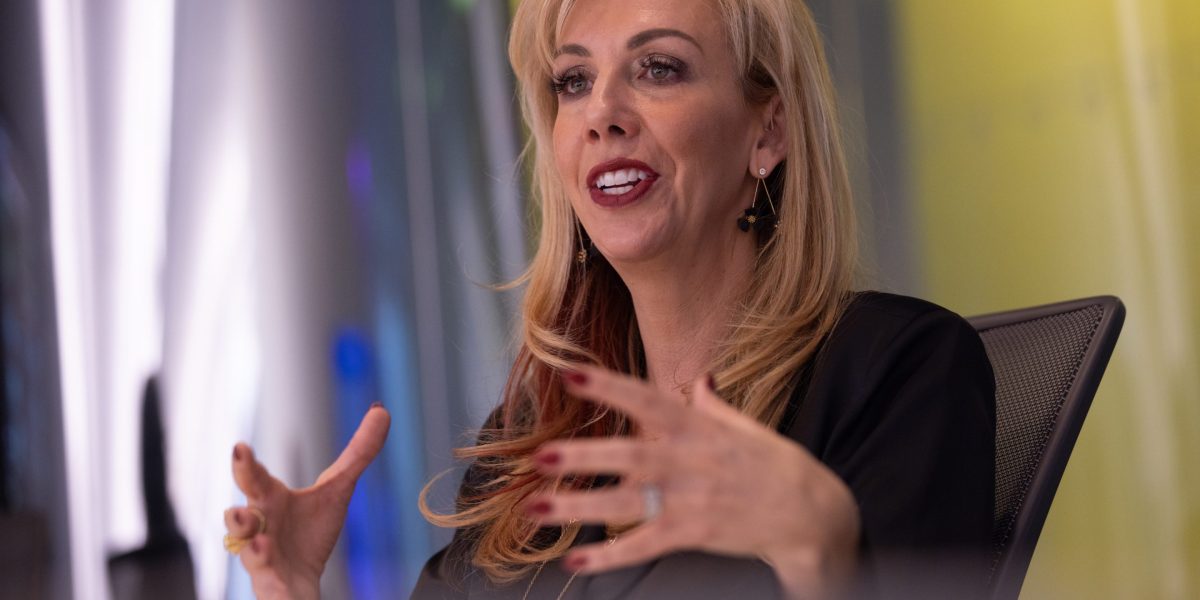
Gore and attorney Neal Katyal outside the courthouse in Cincinnati where a panel from the Sixth Circuit Court of Appeals heard arguments in Hello Alice’s case in July.

Courtesy of Hello Alice

As the legal battle has played out for Hello Alice, Gore has found support from friends and clients across the political spectrum. “We’re based in Houston, Texas, and [there’s a large] amount of folks who you would think would be against us, and they weren’t,” she said, adding, “Think traditional white male biker companies and trucking companies.” 

Gore says the business owners who have discussed the issue with her—whether they identify as Republican or Democrat—don’t think the government should be telling businesses how to deploy their money. That’s what her legal team believes, too: Private businesses should have the freedom to run or reject affirmative action programs like the grants for Black businesses. Whether such DEI initiatives are good for a company, morally justified, or, as AFL claims, racist, should be debated in a boardroom and not in a federal court. And there is nothing inherently illegal about a private company offering a grant dedicated to a minority population. 

Playing offense

Lately, many companies have rolled back cohort-specific DEI programs just to avoid the kinds of costly headaches that Hello Alice has faced. Kenji Yoshino, a constitutional law professor at NYU School of Law and director of its Meltzer Center for Diversity, Inclusion, and Belonging, believes that’s the right approach for our times. 

Yoshino explains that his center has been “beating the drum on moving from cohorts to content.” That is, he suggests companies make programs such as diversity-focused fellowships in the workplace available to anyone who wants to apply, without changing the ultimate mission of the fellowship. “That really allows a company to do an end run around the SFFA decision,” he says.  

At the same time, he applauds Gore for sticking with her program for Black business owners and preparing to advance not only the technical argument in the lawsuit—showing that the white male trucker doesn’t have the grounds to sue—but perhaps much more. Beyond questions about the original intention behind Section 1981, or whether these grants constitute a contract, there’s that more complicated question about First Amendment rights that has yet to reach the country’s highest court. 

If Gore or another business owner can get the law to say that they are merely expressing their views with DEI grant programs, says Yoshino, “that would be the biggest win of all.”

Finding levity

Sticking with this lawsuit has not been an easy decision. When it first hit, Hello Alice was in the middle of a Series C raise, and Silicon Valley Bank, its second-biggest investor, had just collapsed. Hello Alice also had to disclose the lawsuit to other investors, “and there was this fear factor around AFL,” says Gore. “So that capital flew out the door.” But there was a lot at stake, she adds. If AFL were to prove that grants for minority-owned businesses violated Section 1981, millions of dollars for American small businesses could be lost. So far, the cost of fighting the lawsuit has surpassed $1 million.

The night before the Sixth Circuit oral arguments, she had dinner at a restaurant near the courthouse in Cincinnati. It turned out that the restaurant, Frankie’s, was a Hello Alice customer. For Gore, it was a reminder of the importance of her work. In heavy times, she says, “it gave me levity.”

An earlier version of this story incorrectly identified Elizabeth Gore’s cofounder, Carolyn Rodz.


Source link

Continue Reading

Business

The ‘Mister Rogers’ of Corporate America shows Gen Z how to handle toxic bosses

Published

on


After two decades of climbing the corporate ladder at companies ranging from ABC, ESPN, and Charter Communications (commonly known as Spectrum), Timm Chiusano quit it all to become a content creator. 

He wasn’t just walking away from high titles, but a high salary, too. In his peak years, Chiusano made $600,000 to $800,000 annually. But in June of 2024, after giving a 12-week notice, he “responsibility fired himself” from his corporate job as VP of production and creative services at Charter.

He did it all to help others navigate the challenges of a workplace, and appreciate the most mundane parts of life on TikTok.

@timmchiusano

most people are posting their 2024 recaps; these are a few of my favorite moments from the year that was, but i need to start reintroducing myself too i dont have a college degree, no one in my life knew that until i was 35 when i eventually got my foot in the door in my early 20’s after a few years of substitute teaching and part time jobs, i thought for sure i had found the career path of my dreams in live sports production i didn’t think i had a chance of surviving that first college football season but i busted my ass, stuck around and got promoted 5 times in 5 years then i met a girl in Las Vegas, got married in 7 months, and freaked out about my career that had me travelling 36 weeks a year i had to find a more stable “desk job”, i was scared shitless that i was pigeonholed and the travel would eventually destroy my marriage i crafted a narative for espn arguing they needed me on their marketing team because of my unique perspective coming from the production side i got rejected, but kept trying and a year i got that job the 7 years with espn were incredible, but also exhausting and raised all kinds of questions about corporate america, toxic situations, and capitalism in general why was i borderline heart attack stressed so often when i could see that my ideas were literally generating 2,000 times the money that i was getting paid? in 2012 i had a kid and in 2013 i got the biggest job of my career to reinvent how to produce 20,000 commercials a year for small business it took 12 rounds of interviews, a drug test i somehow passed, and a background check that finally made me tell my wife of 8 years that i didnt have a college degree they brought me in the thursday before my first day and told me what i told grace in that clip the next decade was an insane blur; i saw everything one would ever see in their career from the perspective of an executive at a fortune 100 i started making tiktoks, kinda blacked out at some point in 2019 and responsibly fired myself in 2024 to see what i might be capable of on my own with all the skills i picked up along my career journey now the mission is pay what i know forward, and see if i can become the mr rogers of corporate america cc: @grace beverley @Ryan Holiday @Subway Oracle

♬ original sound – timm chiusano

What started as short-video vlogs on just about anything in 2020 (reviews on protein bars, sushi, and sneakers) later transitioned to videos on growing up, and dealing with life’s challenges, like coming to terms when you have a toxic boss. Today, his platform on TikTok has over 1 million followers

With the help of going viral from his “loop” format where videos end and seamlessly circle back to the beginning, he began making more videos as a side-hustle on top of his day-to-day tasks in the office.

“How can I get people to be smarter and more comfortable about their careers in ways that are gonna help on a day-to-day basis?” Chiusano told Fortune.

Today, he could go by many titles: former vice president at a Fortune 100 company, motivational speaker, dad, content creator, or as he labels himself, the Mister Rogers of Corporate America. 

Just as the late public television icon helped kids navigate the complexities of childhood, Chiusano wants to help young adults think about how to approach their careers and their potential to make an impact. 

“Mister Rogers is the greatest of all time in his space. I will never get to that level of impact. But it’s an easy way to describe what I’m trying to do, and it consistently gives me a goal to strive for,” he said. “There are some parallels here with the quirkiness.”

Firing himself after 25 years in the corporate world

Even with years in corporate, Chiusano doesn’t resemble the look of a typical buttoned-up executive. Today, he has more of a relaxed Brooklyn dad attire, with a sleeve of tattoos and a confidence to blend in with any trendy middle aged man in Soho. During our interview, he showed off one of the first tattoos he got: two businessmen shaking hands, a reference to Radiohead’s OK Computer album.

“This is a dope ass Monday in your 40s,” began one of his videos.

It consisted of Chiusano doing everyday things such as eating leftovers, going to the gym, training for the NYC marathon, taking out the trash, dropping his daughter off at school, a rehearsal for a Ted Talk, eating lunch with his wife, and brand deal meetings. Though the content sounds pretty normal, that’s the point. 

“The reason why I fired myself in the first place was to be here,” he says in the video while picking his daughter up from school.

Today, Chiusano spends his days making content on navigating workplace culture, public speaking, brand deals, brand partnerships, executive coaching, writing a book, and the most important job: being a dad to his 13-year-old daughter Evelyn.

“I’m basically flat [in salary] to where I was, and this is everything I could ever want in the world,” he said. “The ability to send my kid to the school she’s been going to, eat sushi takeout almost as much as I’d like, and do nice things for my wife.”

In fact, when sitting inside one of his favorite New York City spots, Lure Fishbar, he keeps getting stopped by regulars who know him by name. He points out that one of his favorite interviews he filmed here was with legendary filmmaker Ken Burns.

Advice to Gen Z

In a time where Gen Z has been steering to more unconventional paths, like content creation or skill trades rather than just a 9-to-5 office job, Chiusano opens up a lens to what life looks like when deciding to be present rather than always looking for what’s next—a mistake he said he made in his 20s. 

Instead, he wants to teach the younger generation to build skills for as long as you can, but “if you are unhappy, that’s a very different conversation.”

“I think some people will make themselves more unhappy because they feel like that’s what’s expected of a situation,” he said.

“I would love to be able to empower your generation more, to be like somebody’s gonna have to be the head of HR at that super random company to put cool standards and practices in place for better work-life balance for the employees.” 


Source link

Continue Reading

Business

Mark Zuckerberg says the ‘most important thing’ he built at Harvard was a prank website

Published

on


For Mark Zuckerberg, the most significant creation from his two years at Harvard University wasn’t the precursor to a global social network, but a prank website that nearly got him expelled.

The Meta CEO said in a 2017 commencement address at his alma mater that the controversial site, Facemash, was “the most important thing I built in my time here” for one simple reason: it led him to his wife, Priscilla Chan.

“Without Facemash I wouldn’t have met Priscilla, and she’s the most important person in my life,” Zuckerberg said during the speech.

In 2003, Zuckerberg, then a sophomore, created Facemash by hacking into Harvard’s online student directories and using the photos to create a site where users could rank students’ attractiveness. The site went viral, but it was quickly shut down by the university. Zuckerberg was called before Harvard’s Administrative Board, facing accusations of breaching security, violating copyrights, and infringing on individual privacy.

“Everyone thought I was going to get kicked out,” Zuckerberg recalled in his speech. “My parents came to help me pack. My friends threw me a going-away party.”

It was at this party, thrown by friends who believed his expulsion was imminent, where he met Chan, another Harvard undergraduate. “We met in line for the bathroom in the Pfoho Belltower, and in what must be one of the all time romantic lines, I said: ‘I’m going to get kicked out in three days, so we need to go on a date quickly,’” Zuckerberg said.

Chan, who described her now-husband to The New Yorker as “this nerdy guy who was just a little bit out there,” went on the date with him. Zuckerberg did not get expelled from Harvard after all, but he did famously drop out the following year to focus on building Facebook.

While the 2010 film The Social Network portrayed Facemash as a critical stepping stone to the creation of Facebook, Zuckerberg himself has downplayed its technical or conceptual importance.

“And, you know, that movie made it seem like Facemash was so important to creating Facebook. It wasn’t,” he said during his commencement speech. But he did confirm that the series of events it set in motion—the administrative hearing, the “going-away” party, the line for the bathroom—ultimately connected him with the mother of his three children.

Chan, for her part, went on to graduate from Harvard in 2007, taught science, and then attended medical school at the University of California, San Francisco, becoming a pediatrician.

She and Zuckerberg got married in 2012, and in 2015, they co-founded the Chan Zuckerberg Initiative, a philanthropic organization focused on leveraging technology to address major world challenges in health, education, and science. Chan serves as co-CEO of the initiative, which has pledged to give away 99% of the couple’s shares in Meta Platforms to fund its work.

You can watch the entirety of Zuckerberg’s Harvard commencement speech below:

For this story, Fortune journalists used generative AI as a research tool. An editor verified the accuracy of the information before publishing. 


Source link

Continue Reading

Business

Senate Dems’ plan to fix Obamacare premiums adds nearly $300 billion to deficit, CRFB says

Published

on


The Committee for a Responsible Federal Budget (CRFB) is a nonpartisan watchdog that regularly estimates how much the U.S. Congress is adding to the $38 trillion national debt.

With enhanced Affordable Care Act (ACA) subsidies due to expire within days, some Senate Democrats are scrambling to protect millions of Americans from getting the unpleasant holiday gift of spiking health insurance premiums. The CRFB says there’s just one problem with the plan: It’s not funded.

“With the national debt as large as the economy and interest payments costing $1 trillion annually, it is absurd to suggest adding hundreds of billions more to the debt,” CRFB President Maya MacGuineas wrote in a statement on Friday afternoon.

The proposal, backed by members of the Senate Democratic caucus, would fully extend the enhanced ACA subsidies for three years, from 2026 through 2028, with no additional income limits on who can qualify. Those subsidies, originally boosted during the pandemic and later renewed, were designed to lower premiums and prevent coverage losses for middle‑ and lower‑income households purchasing insurance on the ACA exchanges.

CRFB estimated that even this three‑year extension alone would add roughly $300 billion to federal deficits over the next decade, largely because the federal government would continue to shoulder a larger share of premium costs while enrollment and subsidy amounts remain elevated. If Congress ultimately moves to make the enhanced subsidies permanent—as many advocates have urged—the total cost could swell to nearly $550 billion in additional borrowing over the next decade.

Reversing recent guardrails

MacGuineas called the Senate bill “far worse than even a debt-financed extension” as it would roll back several “program integrity” measures that were enacted as part of a 2025 reconciliation law and were intended to tighten oversight of ACA subsidies. On top of that, it would be funded by borrowing even more. “This is a bad idea made worse,” MacGuineas added.

The watchdog group’s central critique is that the new Senate plan does not attempt to offset its costs through spending cuts or new revenue and, in their view, goes beyond a simple extension by expanding the underlying subsidy structure.

The legislation would permanently repeal restrictions that eliminated subsidies for certain groups enrolling during special enrollment periods and would scrap rules requiring full repayment of excess advance subsidies and stricter verification of eligibility and tax reconciliation. The bill would also nullify portions of a 2025 federal regulation that loosened limits on the actuarial value of exchange plans and altered how subsidies are calculated, effectively reshaping how generous plans can be and how federal support is determined. CRFB warned these reversals would increase costs further while weakening safeguards designed to reduce misuse and error in the subsidy system.

MacGuineas said that any subsidy extension should be paired with broader reforms to curb health spending and reduce overall borrowing. In her view, lawmakers are missing a chance to redesign ACA support in a way that lowers premiums while also improving the long‑term budget outlook.

The debate over ACA subsidies recently contributed to a government funding standoff, and CRFB argued that the new Senate bill reflects a political compromise that prioritizes short‑term relief over long‑term fiscal responsibility.

“After a pointless government shutdown over this issue, it is beyond disappointing that this is the preferred solution to such an important issue,” MacGuineas wrote.

The off-year elections cast the government shutdown and cost-of-living arguments in a different light. Democrats made stunning gains and almost flipped a deep-red district in Tennessee as politicians from the far left and center coalesced around “affordability.”

Senate Minority Leader Chuck Schumer is reportedly smelling blood in the water and doubling down on the theme heading into the pivotal midterm elections of 2026. President Donald Trump is scheduled to visit Pennsylvania soon to discuss pocketbook anxieties. But he is repeating predecessor Joe Biden’s habit of dismissing inflation, despite widespread evidence to the contrary.

“We fixed inflation, and we fixed almost everything,” Trump said in a Tuesday cabinet meeting, in which he also dismissed affordability as a “hoax” pushed by Democrats.​

Lawmakers on both sides of the aisle now face a politically fraught choice: allow premiums to jump sharply—including in swing states like Pennsylvania where ACA enrollees face double‑digit increases—or pass an expensive subsidy extension that would, as CRFB calculates, explode the deficit without addressing underlying health care costs.


Source link

Continue Reading

Trending

Copyright © Miami Select.