The reaction was swift. On October 1, in the late afternoon, Shein and Société des Grands Magasins announced an agreement to establish permanent bricks-and-mortar retail spaces on the sixth floor of BHV Marais in November, followed by five Galeries Lafayette stores in Angers, Dijon, Grenoble, Limoges and Reims. A striking announcement: the project is a world first and brings together two of the oldest names in global fashion retail.
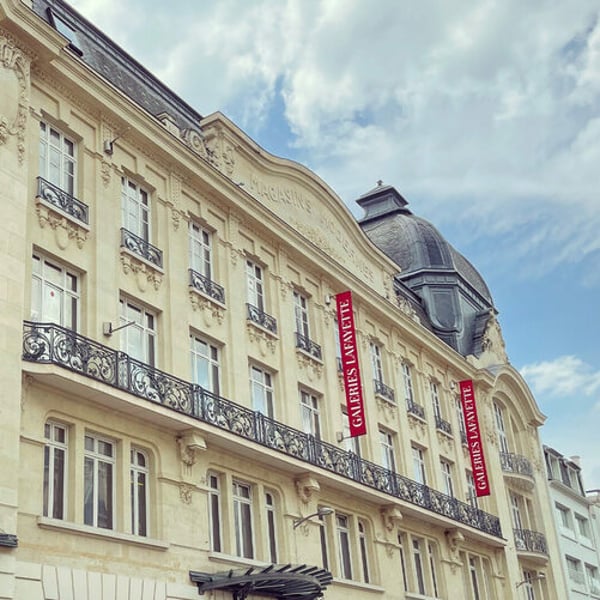
Galeries Lafayette store in Reims – SGM
However, although the retail property company chaired by Frédéric Merlin oversees these stores, the Galeries Lafayette group retains a say over their image and operations. And within minutes of the Asian ultra-fast-fashion giant and its new French partner making their announcement, the group, whose executive board is chaired by Nicolas Houzé, a descendant of the founders of the Parisian department stores, made its position perfectly clear: “Galeries Lafayette refuses to allow Shein to set up shop in the five affiliated stores in SGM’s French network”.
In an interview with the daily Le Parisien, the head of the SGM group, which has seven affiliated Galeries Lafayette stores in the regions and shopping centres in its portfolio, said he was pleased to have concluded an exclusive partnership with Shein, which he says is “a way to create buzz.”
Indeed, the National Clothing Federation, which represents independent retailers, quickly criticised the decision: “After Pimkie, it is now BHV, a veritable Parisian institution since 1860, and Galeries Lafayette in the regions, turning to ultra-fast fashion, confirming an alarming lack of imagination and professionalism: these retail chains, which in the past have contributed so much to France’s influence and creativity, are today choosing to associate themselves with what is most questionable in the fashion sector.”
While Shein and SGM might have expected this response from trade federations that have long voiced their opposition to the Singapore-based platform’s model, the Galeries Lafayette group’s reaction could have far more serious implications for the agreement.
The group said in a press release: “Galeries Lafayette wishes to express its profound disagreement with this decision in view of the positioning and practices of this ultra-fast-fashion brand, which run counter to its offering and values. It also contravenes the contractual terms of affiliation that bind the SGM group to Galeries Lafayette. The company has informed the SGM group and its chairman, Frédéric Merlin, of its position. Galeries Lafayette will prevent this decision from being implemented.”
The French group, which did not mention BHV in its statement, did not specify the measures it intended to take to counter this project. Nonetheless, SGM remains tied to the Galeries Lafayette group, whether via the central buying office or through the private labels distributed in the affiliated stores.
This article is an automatic translation. Click here to read the original article.
Estee Lauder was sued by a self-described “disruptive” startup that accused the cosmetics giant of effectively putting it out of business by stealing technology to boost sales from jet-setting travellers in hotels.
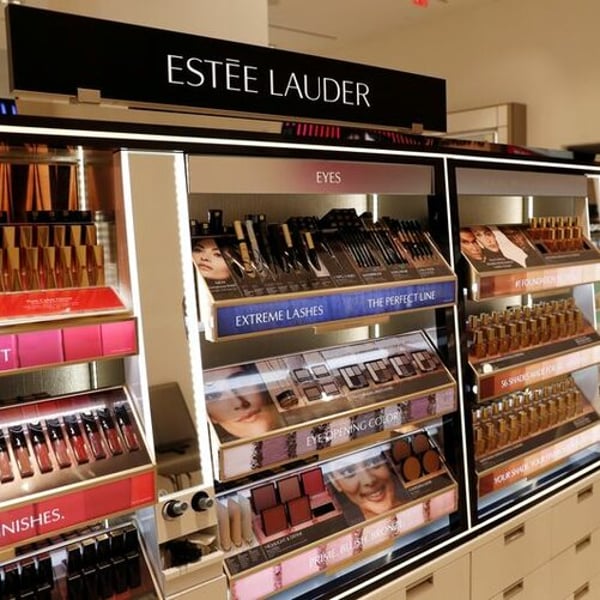
Nomi has accused Estee Lauder of stealing its technology – Bloomberg
In a complaint filed on Friday night in Manhattan federal court, Nomi Beauty said Estee Lauder has been “driving literally billions in new revenue” to itself after abandoning contracts in 2018 and 2020, including means to determine consumers’ actual preferences for cosmetics instead of their stated preferences.
Nomi- the name is a homophone for “know me,” as in the customer- said its “secret sauce” was intended to help the parent of Clinique and MAC lipstick generate more revenue from luxury hotel duty-free shops and in-room purchases, and become less dependent on traditional retail stores. Rather than honour its contracts or follow through on discussions to purchase Nomi outright, Estee Lauder allegedly starved Nomi’s hotel partners of products, while rolling out competing programs in China, Costa Rica, Malaysia, the UK and the US.
These programs “rely on the very same trade secrets Nomi had been educating Lauder about for years,” the complaint said. Nomi is seeking unspecified compensatory, punitive, and triple damages. Estee Lauder did not immediately respond to requests for comment.
“Nomi’s stolen innovations brought Estee Lauder into the information age, and Estee Lauder continues to profit from them wildly,” Nomi’s lawyer Matthew Schwartz said in an email. Both companies are based in New York.
Since last February, Estee Lauder has pursued a “Beauty Reimagined” strategy, including prestige launches and a streamlining of its supply chain, to revive sliding sales. The strategy also called for up to 7,000 job cuts.
Long reserved for women or military dress, brooches adorned men’s chests during Milan Fashion Week, a throwback to a bygone era but with jewellery now signalling individuality, not just status.
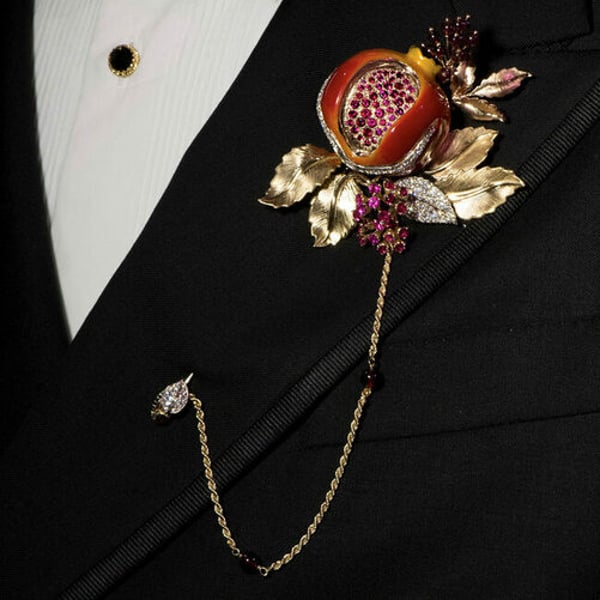
A brooch by Dolce & Gabbana – Aleksej Shelikhov- Facebook
From huge flowers or watch brooches at Dolce & Gabbana to pins at Armani, the bling passed from hands to jackets during the fall/winter 2026/2027 shows in the Italian city.
“I like these small details, people have to pay attention to them,” said reggaeton star Rauw Alejandro, in the front row at Prada.
Chinese buyer John Chen, 45, sported a gold brooch in the shape of a triangle, the Milanese brand’s logo, on a green sweater just below his neck. “I started wearing brooches about five years ago. I like to play with them” to personalise outfits, he told AFP.
In Armani’s refined yet relaxed collection, some men sported a tie pin on their jacket lapel, while male and female models wore matching sparkling brooches. At designer Rowen Rose, a large orange stone was used to fasten a green or yellow scarf to a matching sweater.
“It gives an extra touch. It’s a good accessory- it’s become very masculine,” said Fabio Annese, a 26-year-old Milanese interior designer sporting a heart-shaped brooch at Dolce & Gabbana.
Known for its extravagant style, D&G has been selling brooches for men since entering the jewellery world in 2015, and they are “still important in more formal collections,” a spokesperson said. Among their offerings are crosses, crowns, scarabs, and flowers in gold and embellished with diamonds, the last costing a cool 7,500 euros (around $8,800).
The trend is in many ways a return to the past. In Europe, until the 18th century, the “most important” jewellery was worn by men, explained Emanuela Scarpellini, professor of contemporary history at the University of Milan.
Wealthy and powerful men used it as a sign of their status, the glittering accessories often signalling membership of a noble family or a religious order, or military rank. It was only with the rise of the middle-classes and businessmen in the 19th century that came “the idea that men should dedicate themselves to work, with a more sober attitude,” Scarpellini said at the launch of a new Milan exhibition.
“The Gentlemen,” on show at the Palazzo Morando until September, reveals how men’s jewellery since then usually served a purpose, such as watches, cufflinks and tie pins. Nowadays “there’s a new freedom,” as with clothing, said exhibition curator Mara Cappelletti, a professor of jewellery history.
“There are fewer jewellery pieces with a function, and more with a freer choice,” she told AFP. “Many of the objects men wear today were not designed for a male audience,” she said, adding that many were vintage. “The brooch has never been so popular.”
Cappelletti noted that the trend was boosted by singers and actors wearing a lot of jewellery, noting a photograph of Italian singer Achille Lauro sporting a huge white gold and diamond sculpted piece on his chest, with matching earrings. All provided by the jeweller Damiani, which sponsors the pop star.
Global beauty business Sephora has announced a strategic, omni-channel partnership with Korean beauty and health retailer CJ Olive Young to bring a wide range of K Beauty products to its global customers.
CJ Olive Young aims to bring K Beauty to global shoppers – Olive Young
The partnership will debut this autumn with omni-channel partnerships set for the US, Canada, Hong Kong SAR, and Southeast Asia (Singapore, Malaysia, Thailand), Sephora announced in a press release on Tuesday. In 2027, the business will bring the tie-up to the Middle East, the UK, and Australia.
“Korean beauty is one of the most innovative, fastest growing, and desirable categories in beauty right now,” said Sephora’s global chief merchandising officer Priya Venkatesh in a press release. “Sephora was the first major retailer to debut K Beauty brands to North American consumers in 2010, and our portfolio has grown into a global business. We are thrilled to partner with leading Korean beauty retailer Olive Young, bringing their expertly curated assortment of Korean beauty brands to our beauty fans globally. Their differentiated assortment, coupled with Sephora’s unique point of view on the beauty shopping experience, will bring an unrivalled and inspiring offer for all beauty lovers who are keen to explore the most sought-after Korean beauty products.”
Sephora shoppers will be able to browse a dedicated zone curated by CJ Olive Young comprising popular Korean health and beauty brands. The business’ beauty advisor will also offer guidance and assistance to customers to help them find their desired products.
“We are pleased to enter this partnership with Sephora as we continue to advance our global expansion strategy,” said CJ Olive Young’s chief strategy officer Youngah Lee. “As global interest in K-beauty continues to accelerate, we see this collaboration as a meaningful opportunity to work together in expanding the reach of Korean brands in key international markets.”






 Politics8 years ago