Connect with us

Sports

The Footballers Who Have Generated the Highest Cumulative Transfer Fees in History
Published

on


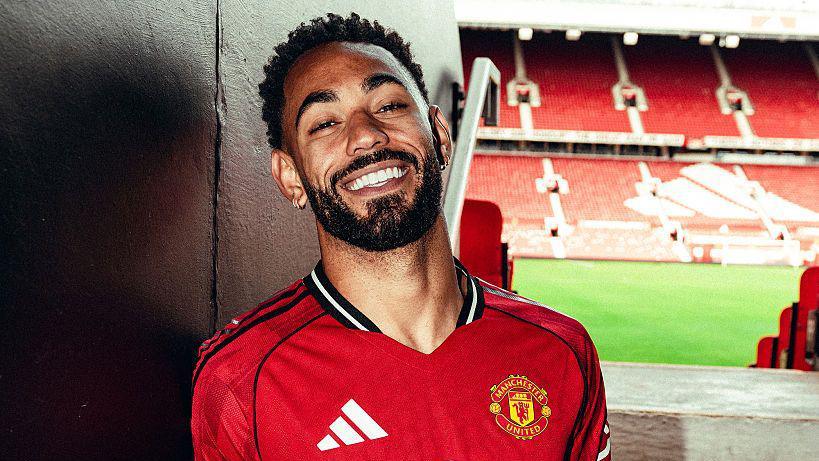
Matheus Cunha has racked up high transfer fees

Alexander Isak, Joao Felix, and Matheus Cunha enter the top 10 transfer fees all-time

Blockbuster deals in the summer of 2025 have shaken up the all-time leaderboard for cumulative transfer fees, ushering in new faces and redrawing the map of the world’s most expensive footballing careers. Sportingpedia’s latest analysis revisits the players who have generated the highest total transfer fees in history – spotlighting the impact of this year’s historic moves and tracking every step of the journeys that led these stars to the summit. Perhaps the most intriguing finding of the report is the arrival of three newcomers in the top 10: Alexander Isak, João Félix, and Matheus Cunha. The Swedish striker now occupies fourth position, just behind Cristiano Ronaldo, while his compatriot and new teammate at Al-Nassr, Joao Felix has risen up to sixth. Manchester United’s new number 10 rounds up the ranking at tenth spot.

Key Takeaways:

  • Alexander Isak, João Félix, and Matheus Cunha are the newest members of the top 10
  • Isak’s €145 million move to Liverpool has elevated him to 4th place in the all-time ranking
  • Neymar remains the only player to break the €400 million barrier in career transfer fees
  • After joining Cristiano Ronaldo at Al-Nassr in July 2025, João Félix has surpassed €225 million in transfer fees
  • Matheus Cunha’s €74.2 million transfer from Wolverhampton Wanderers to Manchester United in June 2025 has catapulted him into the top 10
  • Manchester United and Al-Nassr are the only teams with multiple players in the ranking

Footballers who have generated the highest cumulative transfer fees in history
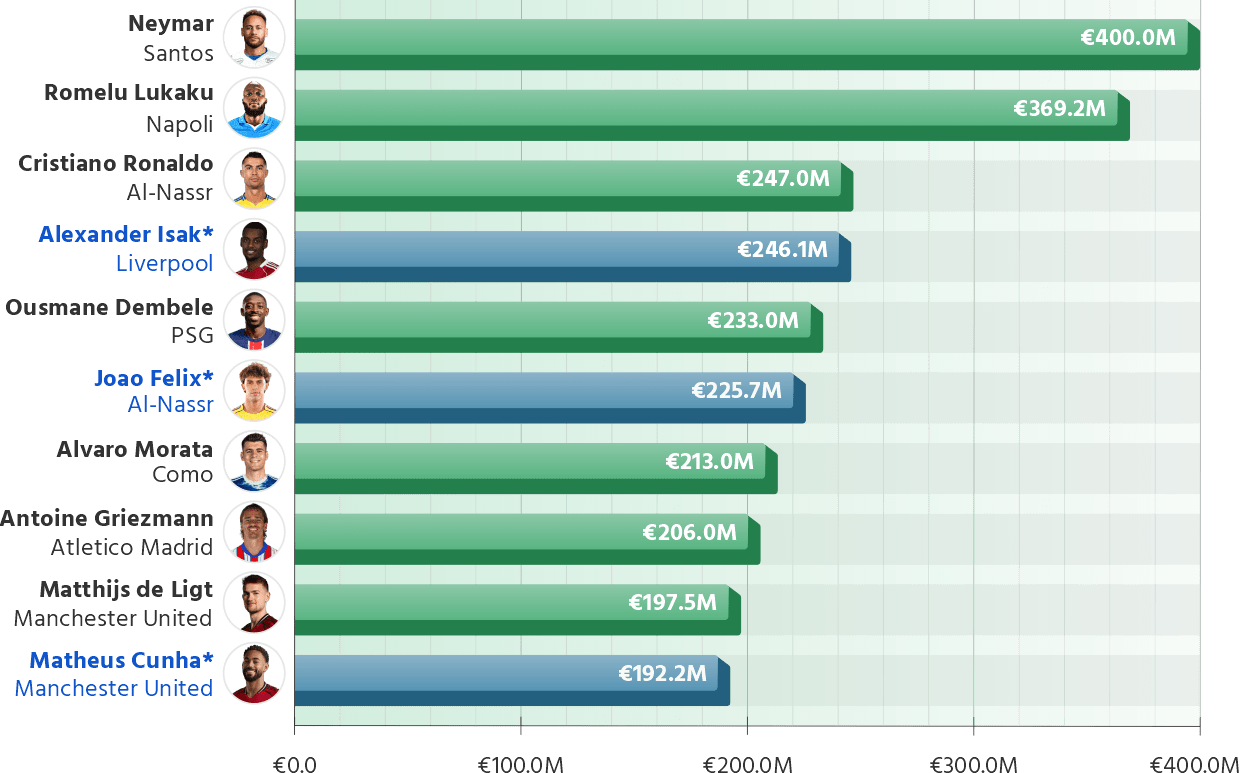
Footballers who have generated the highest cumulative transfer fees in history

*2025 entries

Data Source: Transfermarkt

Neymar Remains Unmatched

Neymar still reigns supreme atop the all-time ranking, having amassed a staggering €400 million in total transfer fees. His journey began with an €88 million move from Santos to Barcelona in 2013, followed by the record-shattering €222 million switch to PSG in 2017, and was further boosted by his €90 million transfer to Al-Hilal in August 2023. No other player has yet come close to matching his cumulative tally.

Lukaku’s Perpetual Motion

Romelu Lukaku holds onto second place, with a remarkable €369.2 million generated from nine transfers – a total boosted by his permanent €30 million move to Napoli in August 2024. Lukaku’s career has spanned Anderlecht, Chelsea (twice), West Brom, Everton, Manchester United, Inter, Roma, and now Napoli, making him one of the most travelled strikers of the modern era.

Ronaldo’s Enduring Value

Cristiano Ronaldo, now 40 and playing for Al-Nassr, has accumulated €247 million in transfer fees across four paid moves. From his initial €19 million jump from Sporting to Manchester United in 2003, then to Real Madrid for €94 million in 2009 and Juventus for €117 million in 2018, Ronaldo’s career-long value is only limited by the fact that his most recent switch to Saudi Arabia in December 2022 was a free transfer.

Isak Joins the Elite

The 2025 summer transfer window propelled Alexander Isak into the historical top four. Liverpool’s €145 million acquisition of the Swede from Newcastle United on September 1, 2025, took his career total to €246.1 million. Isak’s path runs from AIK to Borussia Dortmund, Real Sociedad, Newcastle, and now Anfield – a meteoric rise that makes him the youngest player in this elite bracket.

Dembélé, Félix, Morata

Ousmane Dembélé sits fifth, his €233 million total built across high-profile switches from Rennes to Dortmund for €35 million in 2016, then to Barcelona for €150 million in 2017 (including add-ons), and his most recent free transfer to PSG in 2023.

João Félix’s €30 million summer transfer to Al-Nassr in July 2025 raised his cumulative tally to €225.7 million, with previous stops at Benfica, Atlético Madrid, Chelsea (loan), Barcelona (loan), and a permanent return to Chelsea in 2024.

Álvaro Morata is another familiar name, with €213 million in combined fees spanning Real Madrid, Juventus, Chelsea, Atlético Madrid, AC Milan, and most recently Como in the summer of 2025 (following a loan to Galatasaray).

Griezmann, de Ligt, Cunha

Antoine Griezmann is seventh all-time, his €206 million generated from four transfers, most notably his high-value moves from Real Sociedad to Atlético for €30 million in 2014, then Barcelona for €120 million in 2019, and back to Atlético for €20 million in 2022 (plus a €22 million buy-back adjustment in 2023).

Manchester United’s Matthijs de Ligt, occupies eighth, with €197.5 million after his €50 million switch from Bayern Munich in August 2024.

Matheus Cunha is the latest entrant, breaking into the top ten after Manchester United spent €74.2 million to acquire him from Wolverhampton Wanderers this summer – taking his career total to €192.2 million. Cunha’s journey includes spells at Coritiba, Sion, RB Leipzig, Hertha Berlin, Atlético Madrid, and Wolves before arriving at Old Trafford.

Among the top ten, half are well into their thirties, with Cristiano Ronaldo now being forty, while Alexander Isak, Ousmane Dembélé, João Félix, and Manchester United’s Matthijs de Ligt and Matheus Cunha are all between 25 and 28 years of age, affording them ample opportunity for further high-profile transfers and potential rise within the all-time rankings.


SportingPedia covers the latest news and predictions in the sports industry. Here you can also find extensive guides for betting on SoccerNFLNBANHLTennisHorses as well as reviews of the most trusted betting sites.


Source link

Continue Reading

Sports

How Sports Betting Has Changed Fan Conversations

Published

on


Sports have always been a powerful medium for connecting people, creating excitement, and sparking conversations. Fans gather in stadiums, watch games together, and debate every aspect of a match, from tactics to players’ performances. Over time, sports discussions have evolved, and one of the most significant changes in recent years has been the rise of sports betting. What once was a niche activity has now become a central part of the conversation, both in person and online. As more states legalize sports betting and new technologies such as crypto betting sites emerge, fans are increasingly discussing odds, bets, and wagering strategies just as much as the games themselves.

ALT: A neon sign displaying RACE & SPORTS BOOK in bright colors

Betting has always been a part of sports culture, but the digital age has drastically changed the way fans engage with it. Platforms offering crypto betting sites have made placing bets easier, faster, and more secure than ever before. Cryptocurrencies like Bitcoin are now commonly used for transactions, appealing to younger, tech-savvy fans who are also looking for an anonymous and streamlined betting experience. This shift toward digital platforms has not only made sports betting more accessible but has also changed the nature of how fans interact with the sports they love.

The Rise of Sports Betting Platforms

The rise of sports betting platforms has fundamentally altered how fans approach their favourite sports. With the proliferation of online sportsbooks, the days of placing a bet at a physical betting shop are quickly fading. Instead, fans can now place wagers from the comfort of their homes, using nothing more than their smartphones. This convenience has led to an explosion of interest in betting on a range of sports, from football and basketball to niche markets like esports and horse racing.

Betting has become more integrated into fans’ daily routines. Many fans no longer view betting as a separate activity; it’s now an extension of the sports experience. Fans are discussing predictions, betting odds, and potential outcomes on social media platforms, podcasts, and forums. Betting has become part of the conversation before, during, and after the game.

With cryptocurrencies adding another layer of convenience, these platforms are further eliminating friction. Crypto betting sites offer fast and anonymous transactions, which appeal to both seasoned bettors and newcomers. The use of cryptocurrencies also opens up global betting markets, making it easier for fans worldwide to get involved.

The Social Side of Sports Betting

As sports betting becomes more mainstream, it is increasingly woven into fan culture and social interactions. Social media platforms like Twitter, Instagram, and Reddit are filled with discussions about bets, odds, and winning strategies. What was once a personal activity for some has turned into a shared experience that connects fans across the world. Sports betting has enhanced the competitive spirit of fandom, making game outcomes and player performances even more consequential to fans who have placed a wager.

Online sports betting has also made it easier for fans to track the success or failure of their bets in real time. Live betting allows fans to place wagers during the game, further engaging them and making every moment feel like a stake in the outcome. This has encouraged more in-depth conversations during live events, with fans not only discussing the game itself but also analyzing and predicting betting outcomes as the game unfolds.

This social interaction extends beyond online platforms. Fans now discuss their bets with friends and family, just as they would talk about their favourite players or teams. The lines between sports enthusiasts and bettors have become increasingly blurred, with both groups now sharing common ground in discussions about their favourite games.

The Influence of Sportsbook Promotions

One of the driving forces behind the rise of sports betting has been the aggressive marketing of sportsbooks and their promotions. From welcome bonuses to free bets, online platforms have found ways to incentivize new users and keep existing bettors engaged. These promotions have added another layer to fan conversations, with people constantly discussing which sportsbooks offer the best odds or the most attractive bonuses.

Arsenal fans, for example, might chat with friends about not only the upcoming match against Tottenham Hotspur but also about the odds and potential profits available on their favourite sportsbook. This dynamic has created a new dimension to fan conversations, where odds and promotions now play an integral role alongside team analysis and player performance.

The Impact of Crypto on the Sports Betting Scene

The integration of cryptocurrency into sports betting has been a game-changer for the industry. Digital currencies like Bitcoin, Ethereum, and Litecoin have brought new possibilities to the world of betting. Crypto betting sites offer faster, more secure transactions compared to traditional payment methods. Since blockchain technology ensures transparency and anonymity, it appeals to a wide range of bettors, particularly those who prefer a more private betting experience.

Cryptocurrency has also enabled bettors to bypass traditional banking systems, which can sometimes impose delays or fees. Fans now have the ability to place and receive bets almost instantaneously, which has greatly increased the appeal of sports betting platforms. This shift has been particularly attractive to younger generations who are more comfortable using digital currencies and who see the benefits of using decentralized systems for their transactions.

The rise of crypto in the sports betting world has led to greater innovation. Many platforms are now experimenting with new betting models and exploring ways to use cryptocurrencies to enhance the user experience. As this trend grows, it’s likely that sports betting will continue to become an even more integral part of fan culture.

The Changing Relationship Between Fans and Betting

As betting becomes more integrated into the sports fan experience, it is clear that the relationship between fans and sports betting is evolving. For some, placing a bet adds excitement and engagement to the sport they love, while for others, it’s an opportunity to earn money while enjoying the action. Regardless of the reason, one thing is clear: sports betting has become an undeniable part of modern sports culture.

Fans are now more informed about betting odds, market trends, and the intricacies of placing successful bets. Sportsbooks are offering more resources and educational tools to help new bettors get started. For those who are new to betting, they can rely on expert analysis, tips, and guides to improve their strategies and understand the game in a new way.

Conclusion

The rise of online casinos and sports betting has changed the way fans engage with sports. What was once a casual hobby has now become an integral part of the sports fan experience. From betting on matches to discussing odds and predictions, sports betting has altered the conversations fans have with one another. With the rise of crypto betting sites and live betting options, the future of sports betting looks bright, offering more convenience, faster transactions, and a deeper connection between fans and the games they love. As sports betting continues to evolve, it will undoubtedly remain a central part of fan culture and the broader sports entertainment industry.


Source link

Continue Reading

Sports

Dale Mabry campus emerges as leading Rays stadium site

Published

on


RAYS – HCC

The Tampa Bay Rays are one step closer to calling Tampa their new home. Team leaders and Hillsborough College approved a non-binding memorandum of understanding that allows formal negotiations to begin. The agreement focuses on redeveloping roughly 113 acres of the Dale Mabry Campus into a modern stadium district.

Redevelopment Plan Covers Stadium and Mixed-Use District

The proposal outlines a multi-phase project including a new ballpark, hotels, housing, retail, and new academic facilities for the college. Supporters say the plan could reshape Tampa’s sports corridor and strengthen the city’s identity as a major sports hub.

Supporters See a Transformative Opportunity

Tampa resident Sergio Castillo praised the project during the public meeting. He said the stadium cluster could boost the city’s profile and fan experience. Castillo noted the proximity to Raymond James Stadium and Amalie Arena, calling the location ideal for sports fans. Supporters also highlighted the campus’ closeness to Tampa International Airport, which adds to the site’s appeal.

St. Petersburg Voices Concern Over Potential Loss

Across the bay, the reaction was far more cautious. Author Peter Golenbock said the move would hurt St. Petersburg’s identity as a major league city. He doubts many Pinellas County residents would regularly travel to Tampa for games. Golenbock recalled how the Rays helped revitalize Central Avenue and fears losing that momentum.

Key Terms of the Memorandum

The agreement does not finalize financing, design, or construction timelines. Instead, it grants both sides 180 days of exclusive negotiations to reach binding contracts. Hillsborough College would retain a portion of the land known as the “College District.” The Rays would lease the remaining acreage for at least 99 years and control the stadium and surrounding development. The mixed-use district could include hotels, retail, multifamily housing, sports facilities, and commercial buildings. The Rays would have exclusive control over the mixed-use development during and after construction.

College Operations Will Be Protected During Construction

Both parties must agree on construction plans. The memorandum requires stadium work to minimize disruption to college operations. Temporary facilities may be built to support academic programs during construction.

Next Steps in a High-Stakes Stadium Race

The deal is not final, but it marks the clearest step yet toward a Tampa stadium. The Rays and Hillsborough College aim to complete a formal agreement within six months. If successful, the project could reshape Tampa’s sports landscape for decades.


Source link

Continue Reading

Sports

Morocco’s world-class hosting reaffirms AFCON as one of football’s greatest tournaments

Published

on


Morocco’s head coach Walid Regragui shakes hands with Morocco’s Prince Moulay Rachid as FIFA President Gianni Infantino (R) looks on duirng presentation ceremony at the end of the Africa Cup of Nations (CAN) final football match between Senegal and Morocco at the Prince Moulay Abdellah Stadium in Rabat on January 18, 2026. (Photo by FRANCK FIFE / AFP)

Yes, the 2025 Africa Cup of Nations (AFCON) had its flaws with controversial officiating but none of that changes the bigger truth that Morocco staged a tournament that celebrated African football.

The 2025 Africa Cup of Nations (AFCON) will be remembered as one of the finest editions in the tournament’s long and proud history.

The month-long football spectacle went far beyond goals and tactics as it became a celebration of African culture, unity, and sporting excellence.

From state-of-the-art infrastructure and seamless transportation to passionate crowds and unforgettable matches, AFCON 2025 reaffirmed why the competition remains one of the most compelling international tournaments in world football.

Despite late controversy surrounding the final, the overall success of the tournament should not be overshadowed. Instead, Morocco’s hosting has set a new benchmark for African football and reinforced AFCON’s growing global relevance.

AFCON 2025 transcended football

It was a cultural festival as six historical Moroccan cities hosted 24 African nations, welcoming fans from across the continent and the global African diaspora.

Cities such as Rabat, Casablanca, Marrakech, Fez, Tangier, and Agadir came alive with music, colour, and celebration.

Stadiums were packed, fan zones buzzed with activity, and local businesses flourished as visitors immersed themselves in Moroccan hospitality.

Morocco supporters watch at the Rabat Fanzone the Africa Cup of Nations (CAN) Group A football match between Morocco and Mali at Prince Moulay Abdellah Stadium in Rabat on December 26, 2025. (Photo by Abdel Majid BZIOUAT / AFP)

What stood out most was how seamlessly Morocco combined football with cultural identity, from traditional cuisine to music and street festivals, AFCON 2025 felt like a showcase of African pride, not just a sporting competition.

A new standard for African development

One of the most impressive aspects of AFCON 2025 was Morocco’s infrastructure and they demonstrated why they are viewed as one of Africa’s most capable sporting hosts.

The rail network connecting Fez, Rabat, Casablanca, and Marrakech made travel between host cities efficient and affordable.

Fans could attend matches in different cities without the logistical chaos that has plagued previous tournaments.

Even cities like Tangier and Agadir, though geographically distant, were well integrated into the tournament thanks to Morocco’s modern transport system.

At the heart of Morocco’s footballing vision lies the Mohamed VI Football Complex, a facility widely regarded as one of the best training centres in the world with 10 world-class training pitches amongst other facilities.

It was no surprise that Nigeria midfielder Alex Iwobi, a former England youth international, compared the Mohamed VI Complex to England’s St George’s Park in Staffordshire.

In addition, the complex served as a blueprint for how African football infrastructure should be developed and it is no exaggeration to conclude that Morocco delivered an organisational standard comparable to major FIFA tournaments.

Algeria’s goalkeeper #23 Luca Zidane and Nigeria’s forward #09 Victor Osimhen shake hands after the Africa Cup of Nations (CAN) quarter-final football match between Algeria and Nigeria at the Grand stadium in Marrakesh on January 10, 2026. (Photo by SEBASTIEN BOZON / AFP)

African football excellence takes centre stage

Back to the pitch, the 2025 Africa Cup of Nations delivered thrilling football action from start to finish, with Morocco waiting until the second half to score two goals against Comoros and Senegal’s hard-fought win against the hosts in the final game.

With four African coaches – Walid Regragui (Morocco), Pape Thiaw (Senegal), Eric Chelle (Nigeria), and Hossam Hassan (Egypt)- guiding their teams into the last four, the tournament showcased Africa’s tactical sophistication, depth of talent, and competitive balance.

https://www.tiktok.com/@sportstalkmedianetwork/photo/7595140885092814102?is_from_webapp=1&sender_device=pc&web_id=7514033588422067734

A total of 121 goals were scored in the tournament which further asserted the rise of the continent’s explosive forwards like Brahim Diaz, Victor Osimhen, Mohamed Salah, Amad Diallo, Ademola Lookman and Sadio Mane.

Similarly, the impact of goalkeepers who showed the world that they can’t be ignored, from Edouard Mendy who made a historic penalty save in Sunday’s final to Stanley Nwabali who made two penalty saves in the third-place match against Egypt and Yassine Bounou’s brilliance as the tournament’s best shot-stopper.

AFCON 2025 shouldn’t be defined by final stain

Several irregularities marred Sunday’s final match between Senegal and Morocco at the Prince Moulaye Abdellah Stadium but it would be grossly unfair to allow these moments define the success of the 35th edition of the Africa Cup of Nations.

In comparison to the World Cup, the Euros and the UEFA Champions League, there have been controversial finals but the controversial incidents do not erase weeks of planning, world-class action and fans’ unity.

Sunday’s events – the controversial disallowed Senegal goal and the disputed penalty call – should prompt a deeper reflection and better officiating standards, and not overshadow Morocco’s organisational success.


Source link

Continue Reading

Trending

Copyright © Miami Select.