Connect with us

Business

The Fed delivers a rare ‘hawkish cut’ as Powell tries to steady a softening job market

Published

on


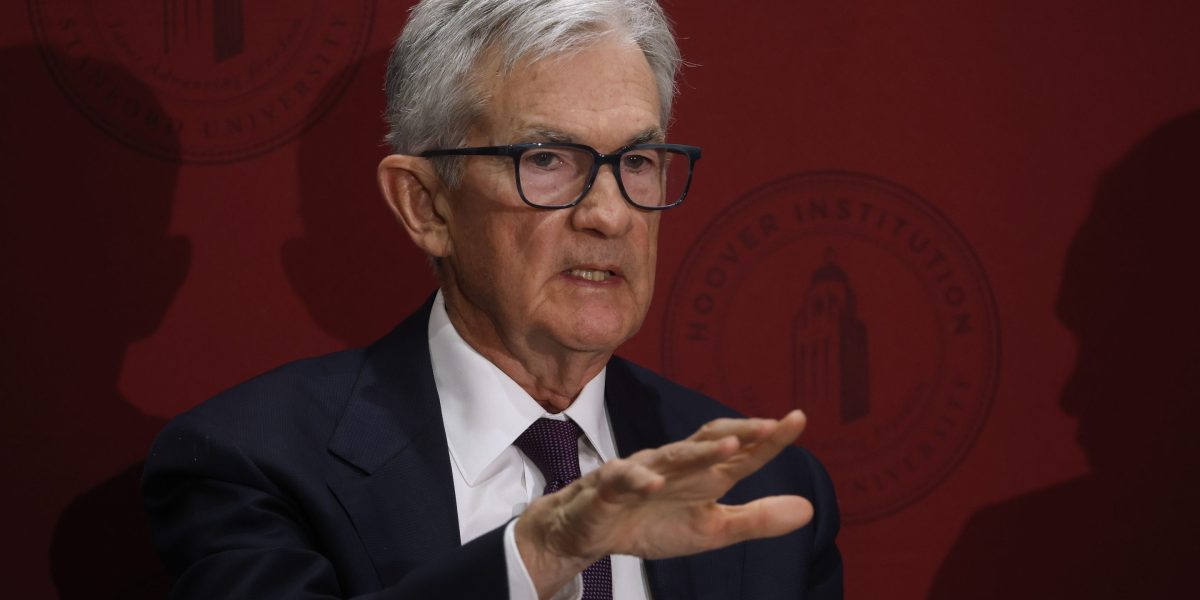
The Federal Reserve cut rates for a third straight meeting on Wednesday in what analysts call a “hawkish” move: an attempt to support a softening labor market while signaling reluctance to keep cutting.

The move was widely anticipated, but the tone was not. Officials paired it with with firmer language about the “extent and timing” of additional adjustments, phrasing that, in what economists call Fed-speak, raises the bar for further cuts and underscores the committee’s unease about inflation, which the statement noted has “moved up” and “remains somewhat elevated.”

The decision also exposed the widening fractures inside the central bank toward the end of Chair Jerome Powell’s term. Three officials dissented, but in opposite directions: Stephen Miran pushed for a larger 50-basis-point cut, while Austan Goolsbee and Jeffrey Schmid argued the Fed should hold rates steady. It’s the rare meeting where hawks and doves both object, a scenario analysts had warned was increasingly probable as disagreements sharpened over how quickly the labor market is cooling, and how much restraint inflation still requires.

The December meeting also carries unusual weight because it may be the final one in which Powell still has his authority as Fed chair. His term expires in May, but President Donald Trump has already vowed to announce a successor early in 2026, effectively creating a “shadow chair” before Powell leaves. 

“Feels like in a way the last Powell Fed meeting,” Bloomberg’s Conor Sen wrote on X. Powell is slated to speak at the conference shortly after the announcement. 

Labor market concerns drove the cut

Wednesday’s decision was justified primarily by weakening conditions in the job market. Hiring has slowed markedly since the summer, while unemployment has ticked up and businesses across industries have begun signaling greater caution, even though the layoffs themselves have not yet surged in the official data.

Private-sector signals have flashed more urgency. ADP’s November report showed employers shedding a net 32,000 jobs, the sharpest decline in more than two years. Nearly all of those losses came from small businesses, which cut 120,000 positions, while medium and large firms kept adding workers. Economists view that pattern as a warning sign: small businesses are the most sensitive to rising costs and weakening demand, and they often pivot first when conditions deteriorate. 

The government’s long-delayed JOLTS report, released Tuesday, added another layer. Job openings in October rose modestly, but remained far below last year’s levels; the quit rate fell to 1.8%, the lowest since early 2021; and hiring remained stuck at 3.2%, consistent with what economists and Powell himself have called a “low hire, low fire” labor market. Companies aren’t slashing staff outright—but they aren’t expanding either. That’s enough to worry economists.

“Low hiring on its own is bad news,” top economist and Fed-watcher Claudia Sahm told Fortune. “It puts upward pressure on unemployment, and that’s the dynamic the Fed is trying to get ahead of.”

A deliberately cautious message

The Fed sought to balance labor-market concerns with the political sensitivity of cutting rates while inflation is still elevated.

Fed officials will want more flexibility than signalling the cutting cycle is open-ended. Unemployment remains low by historical standards; consumption has been resilient among high-income households; and financial markets have surged on expectations of easier policy next year. Powell has warned markets over-read his intentions this year.

Still, Powell cannot declare victory or signal a pause with confidence. The November jobs report arrives just days after the meeting, and he will want flexibility in case that comes out worse than expected, so he doesn’t look “flat-footed,” Sahm said. 

The limits of preemption

For the Fed, the goal is to smooth out the cycle—to cut early enough to prevent a deeper downturn without abandoning the fight against inflation, still sticky at 2.8%, higher than the Fed’s preferred rate of 2%. Sahm, who helped design the Fed’s framework for interpreting labor-market inflection points, argues timing is crucial.

“If the Fed waits to cut until they see clear deterioration, they’ve waited too long,” she said. Initial jobless claims remain low, she noted, but they are not predictive. As a lagging indicator, they tend to spike only after a recession has begun.

The central bank’s challenge now is to navigate between those competing risks while markets, the White House, and Congress push for clarity the Fed cannot yet provide.

If the Fed has to continue easing into early 2026, Sahm argues, it will not be a bullish signal.

“If they end up doing a lot more cuts,” she said, “then something has gone wrong.”


Source link

Continue Reading

Business

Gen Z is drinking 20% less than Millennials. Productivity is rising. Coincidence? Not quite

Published

on


For all the noise surrounding alcohol today, one fact rarely enters the conversation: societies with moderate, responsible drinking habits consistently outperform economically. Across OECD economies, decades of analysis confirm this link, showing that responsible consumption supports higher productivity and more resilient growth.

This isn’t just a lifestyle trend — it’s a shift in the fundamentals of growth. Gen Z is drinking differently, Dry January participation continues to rise, and employers are increasingly focused on performance, wellbeing, and sustainable productivity. These cultural shifts map onto a deeper economic trend: moderation is no longer just a personal choice, it’s becoming a structural feature of modern business strategy.

At the same time, global conditions are changing. Demographic shifts, rising health awareness, and evolving consumer expectations are altering the way societies engage with alcohol. The question today is not only how much people drink, but how drinking patterns influence labor markets, healthcare budgets, consumer behavior, and business innovation. In short, moderation has become more than a public health issue — it’s now a lever for economic competitiveness.

Responsible Consumption as an Economic Lever

Globally, we’ve grown accustomed to the idea that the alcohol sector is propelled by volume. But volume-led growth no longer tells the full story. Industry analysis shows that even as volumes fall and more consumers moderate, global alcohol spending continues to rise. Emerging markets now contribute over 65 percent of leading brewers’ profits, and the no-alcohol category has become a market worth tens of billions of dollars, growing at double-digit rates. These dynamics illustrate a shift from volume to value: responsible consumption patterns are not reducing economic value; they’re redirecting it, toward premium formats, adjacent categories, and new job creation.

New reporting from IWSR shows that while sales volumes have softened in some markets, underlying consumer demand remains remarkably stable. In the United States, the average number of drinks per adult per week has hovered between 10 and 12 for decades and is only modestly below its 2021 peak. Rather than a collapse in consumption, the data suggests a shift toward lower-volume, higher-value formats, a move that benefits both public health and profit margins.

Behind this shift is a more intentional consumer. People increasingly ask not only what a product is, but how it aligns with their lifestyle, values, and expectations for transparency. These factors are shaping purchasing behavior, and forcing businesses to innovate in ways that reward responsibility over excess.

A Virtuous Cycle for Growth

While precise quantification is complex, evidence shows that countries with lower rates of harmful drinking experience lower healthcare burdens and fewer workdays lost to alcohol-related issues. These gains feed what economists call a virtuous cycle: healthier societies support stronger economies, and stronger economies enable healthier choices.

Some still see moderation as a threat to the alcohol industry. In reality, it’s a catalyst for smarter, more sustainable growth. Moderation and responsible consumption are part of a broader shift toward value creation that supports societal well-being, investor interest, and business continuity.

A More Inclusive Model of Economic Growth

A more inclusive growth model depends on balance, not the false binary of abstinence versus excess, but a middle ground where informed adults can enjoy products responsibly, underage drinking continues to decline, and companies innovate in ways that reflect both consumer values and public health priorities.

Governments play a key role through evidence-based regulation. Companies contribute by leading on responsible innovation. Consumers participate by making informed choices. Together, these forces are reshaping how economic value and public good coexist.

The Opportunity Ahead

We’re at an inflection point. The economics of alcohol are changing, and so is the definition of growth. As businesses and governments revisit what sustainable prosperity looks like in the decade ahead, moderation will be central to that conversation. It’s not a moral stance or a temporary trend — it’s a data-driven strategy for long-term resilience.

For executives, the message is clear: moderation isn’t a soft signal — it’s a sharp business edge. Those who embrace it early will lead.

The opinions expressed in Fortune.com commentary pieces are solely the views of their authors and do not necessarily reflect the opinions and beliefs of Fortune.


Source link

Continue Reading

Business

Banking on carbon markets 2.0: why financial institutions should engage with carbon credits

Published

on


The global carbon market is at an inflection point as discussions during the recent COP meeting in Brazil demonstrated. 

After years of negotiations over carbon market rules under Article 6 of the Paris Agreement, countries are finally moving on to the implementation phase, with more than 30 countries already developing Article 6 strategies. At the same time, the voluntary market is evolving after a period of intense scrutiny over the quality and integrity of carbon credit projects.

The era of Carbon Markets 2.0 is characterised by high integrity standards and is increasingly recognised as critical to meeting the emission reduction goals of the Paris Agreement.

And this ongoing transition presents enormous opportunities for financial institutions to apply their expertise to professionalise the trade of carbon credits and restore confidence in the market. 

The engagement of banks, insurance companies, asset managers and others can ensure that carbon markets evolve with the same discipline, risk management, and transparency that define mature financial systems while benefitting from new business opportunities.

Carbon markets 2.0

Carbon markets are an untapped opportunity to deliver climate action at speed and scale. Based on solutions available now, they allow industries to take action on emissions for which there is currently no or limited solution, complementing their decarbonization programs and closing the gap between the net zero we need to achieve and the net zero that is possible now. They also generate debt-free climate finance for emerging and developing economies to support climate-positive growth – all of which is essential for the global transition to net zero.

Despite recent slowdowns in carbon markets, the volume of credit retirements, representing delivered, verifiable climate action, was higher in the first half of 2025 than in any prior first half-year on record. Corporate climate commitments are increasing, driving significant demand for carbon credits to help bridge the gap on the path to meeting net-zero goals.

According to recent market research from the Voluntary Carbon Markets Integrity initiative (VCMI), businesses are now looking for three core qualities in the market to further rebuild their trust: stability, consistency, and transparency – supported by robust infrastructure. These elements are vital to restoring investor confidence and enabling interoperability across markets.

MSCI estimates that the global carbon credit market could grow from $1.4 billion in 2024 to up to $35 billion by 2030 and between $40 billion and $250 billion by 2050. Achieving such growth will rely on institutions equipped with capital, analytical rigour, risk frameworks, and market infrastructure.

Carbon Markets 2.0 will both benefit from and rely on the participation of financial institutions. Now is the time for them to engage, support the growth and professionalism of this nascent market, and, in doing so, benefit from new business opportunities.

The opportunity

Institutional capital has a unique role to play in shaping the carbon market as it grows. Financial institutions can go beyond investing or lending to high-quality projects by helping build the infrastructure that will enable growth at scale. This includes insurance, aggregation platforms, verification services, market-making capacity, and long-term investment vehicles. 

By applying their expertise and understanding of the data and infrastructure required for a functioning, transparent market, financial institutions can help accelerate the integration of carbon credits into the global financial architecture. 

As global efforts to decarbonise intensify, high-integrity carbon markets offer financial institutions a pathway to deliver tangible climate impact, support broader social and nature-positive goals, and unlock new sources of revenue, such as:

  • Leveraging core competencies for market growth, including advisory, lending, project finance, asset management, trading, market access, and risk management solutions.
  • Unlocking new commercial pathways and portfolio diversification beyond existing business models, supporting long-term growth, and facilitating entry into emerging decarbonisation-driven markets.
  • Securing first-mover advantage, helping to shape norms, gain market share, and capture opportunities across advisory, structuring, and product innovation.
  • Deepening client engagement by helping clients navigate carbon markets to add strategic value and strengthen long-term relationships.

Harnessing the opportunity

To make the most of these opportunities, financial institutions should consider engagements in high-integrity carbon markets to signal confidence and foster market stability. Visible participation, such as integrating high-quality carbon credits into institutional climate strategies, can help normalise the voluntary use of carbon credits alongside decarbonisation efforts and demonstrate leadership in climate-aligned financial practices.

Financial institutions can also deliver solutions that reduce market risk and improve project bankability. For instance, de-risking mechanisms like carbon credit insurance can mitigate performance, political, and delivery risks, addressing one of the core challenges holding back investments in carbon projects. 

Additionally, diversified funding structures, including blended finance and concessional capital, can lower the cost of capital and de-risk early-stage startups. Fixed-price offtake agreements with investment-grade buyers and the use of project aggregation platforms can improve cash flow predictability and risk distribution, further enhancing bankability.

By structuring investments into carbon project developers, funds, or the broader market ecosystem, financial institutions can unlock much-needed finance and create an investable pathway for nature and carbon solutions.

For instance, earlier this year JPMorgan Chase struck a long-term offtake agreement for carbon credits tied to CO₂ capture, blending its roles as investor and market facilitator. Standard Chartered is also set to sell jurisdictional forest credits on behalf of the Brazilian state of Acre, while embedding transparency, local consultation, and benefit-sharing into the deal. These examples offer promising precedents in demonstrating that institutions can act not only as financiers but as integrators of high-integrity carbon markets.

The institutions that lead the growth of carbon markets will not only drive climate and nature outcomes but also unlock strategic commercial advantages in an emerging and rapidly evolving asset class.

However, the window to secure first-mover advantage is narrow: carbon markets are now shifting from speculation to implementation. Now is the moment for financial institutions to move from the sidelines and into leadership, helping shape the future of high-integrity carbon markets while capturing the opportunities they offer.

The opinions expressed in Fortune.com commentary pieces are solely the views of their authors and do not necessarily reflect the opinions and beliefs of Fortune.


Source link

Continue Reading

Business

This CEO went back to college at 52, but says successful Gen Zers ‘forge their own path’

Published

on


Being a successful college dropout is worn like a badge of honor for many in the business world. After all, some of the wealthiest leaders—Mark Zuckerberg, Bill Gates, and Larry Ellison—never finished their degrees, and they’re proud of it.

Lauren Antonoff once wore that badge, too. After her apartment burned down as a student at University of California, Berkeley, and she missed finishing her diploma, she still managed to break into tech, spending nearly two decades at Microsoft and later serving as a senior executive at GoDaddy. After building a career without the credential she was supposed to have, Antonoff took pride in proving she didn’t need it.

But after 25 years in the industry, Antonoff became burdened by what she felt was “unfinished business.” So in 2022, during a rare career break, she was back in a UC Berkeley lecture hall—this time as a 52-year-old peer among classmates half her age. Antonoff’s schedule was filled with courses in rhetoric, political science, and even biotech.

Going back to school wasn’t ultimately revolutionary for her career, she admitted to Fortune, but it did sharpen her perspective on adaptivity and staying focused on long-term goals—even when life takes unexpected turns.

“There are probably some people who approach college from like, ‘I’m going to do the assignment and do what I’m told,’” she told Fortune. “But the students I think that really thrive are the ones who forge their own path.”

Now, as CEO of Life360—the family location app worth more than $5 billion—she sees clear parallels between navigating a classroom and navigating the C-suite.

“That’s a lot of what CEOs do is look at the range of possibilities, figure out what the options are, and pick a path,” she added. “And pick a path knowing that you can’t know the future, knowing that you don’t get to know if you’re right until after and being the ones to shoulder that responsibility.”

Forging your own path can sometimes be somewhat of a privilege and can take time, Antonoff admitted. But, she said, small steps can create momentum. 

“I’m a big believer in finding your way in the world,” Antonoff said. “That’s not just about getting a job; if you don’t have a job, start something. If you don’t have a job, go volunteer someplace. In my experience, being active and working on problems that you’re interested in—one thing leads to another.”

The secret to reach the ‘highest levels of success’

Growing up, Antonoff thought she knew exactly where her career was heading: civil rights law. At UC Berkeley, she planned to study rhetoric and political science and then make the jump to law school.

But after buying her first MacBook to write papers, she found an unexpected fascination in technology—and began asking questions. That curiosity led her to the Berkeley Mac User group, where she realized tech might be more than just a hobby.

Her advice for Gen Z echoes that early pivot.

“Do what you love,” she said. “I think it’s very hard to reach the highest levels of success if you don’t have the energy and the passion. I think when you are excited about something, it sort of fuels those creative juices and those insights that allow you to chart the future and bring people along with you.”

In December 2022, Antonoff finally walked across the stage and added one long-awaited line to her résumé: B.A., UC Berkeley. By the following May, she had been named COO of Life360—and within two years, CEO.


Source link

Continue Reading

Trending

Copyright © Miami Select.