Connect with us

Fashion

The denim industry faces challenges of sustainable pigments and dyes
Published

on


Published


November 27, 2025

Dyeing and finishing are the stages that generate the largest share of the textile industry’s carbon impact (36%), ahead of spinning. The challenge of eco-responsibility is therefore particularly acute in the world of denim, where specialists are pursuing responsible alternatives to indigo and other chemical pigments.

Chloris at Denim Première Vision – MG/FNW

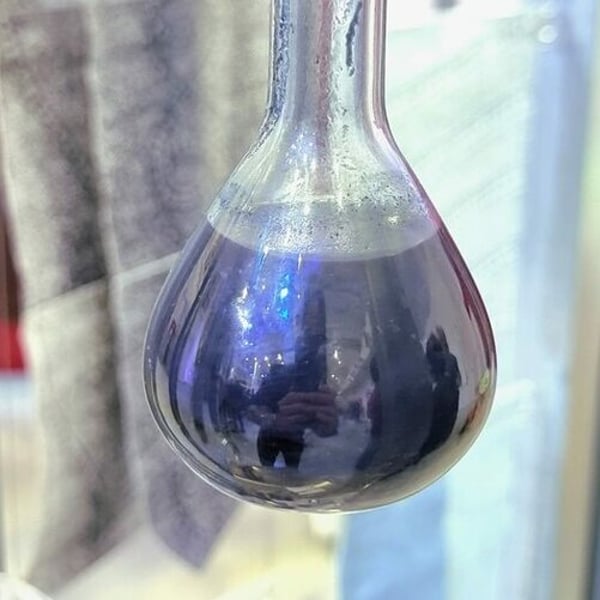
For its first appearance at the Denim Première Vision show, which opened on November 26 in Milan in a collegial, businesslike atmosphere, U.S. company Chloris set out to pre-empt any doubts. “It’s not indigo, but Classean Blue, named after the German scientist who discovered this compound in 1890,” founder Lei Seun explained to FashionNetwork.com.

Last year, the company launched its first industrial production unit in China, dedicated to a pigment obtained by fermenting waste from the sugar and maize industries. The natural pigment is said to reduce carbon impact by 65% and heat consumption by 50% compared with a chemical colourant.

“Developing new technologies has become part of our DNA,” said Andrea Venier, director of Officina 39.

For the past 20 years, the 50-year-old Italian company has been refining alternatives to existing processes, notably its proprietary Recycrom process, which transforms pre- and post-consumer textile waste into coloured powder, without resorting to chemical synthesis. Around 100 kilos of material could be used to colour 5,000 tonnes of fabric, or 6,000 pairs of trousers.

Impatient brands

The company also highlights Zero PP, its alternative to potassium permanganate (known as “PP”), used to create faded effects, replacing it with laser- and ozone-based processes. “One problem we face is that when you launch something new, brands now expect you to move quickly to industrial scale. But these new processes need time to scale up,” noted the executive.

This view is shared by French designer Emily Gubbay, a graduate of Central Saint Martins in London, whose process for recovering indigo from denim, called Infinity Blue, is attracting attention.

“It’s an entirely natural process that works on end-of-life garments, but can also be used for fading, as it does not damage the material,” she explained, adding that the core process is said to take 30 minutes.

Jeans faded using the Infinity Blue process at Denim PV
Jeans faded using the Infinity Blue process at Denim PV – MG/FNW

To develop the process, Infinity Blue is currently seeking partners, with Emily Gubbay believing the solution belongs with dyeing specialists. “Many brands are interested, but want this pigment now. There’s still a long way to go to reach that stage. We need an industrial partner, and that could be a yarn-dyeing specialist.”

Brands’ impatience with new solutions is also noted by Lucia D’Angelo Maddaleno, export manager at Montega Chemical Solutions. “For years now, there has been growing demand for mineral pigments and natural dyes from brands,” said the specialist, whose company has focused for 40 years on treatments for textiles, particularly apparel.

“An opportunity to stand out”

To support the shift towards more responsible finishes, Montega particularly promotes the use of a chlorine activator as an alternative to caustic soda, which is still used to achieve certain particularly aggressive wash effects. “If you launch a brand with the ambition of using natural dyeing, you have to be aware of the limits it imposes,” said the export manager, citing issues of colour fastness and the consistency of shades across an entire length of fabric.

A vial of indigo collected via Infinity Blue at the Denim PV stand
A vial of indigo collected via Infinity Blue at the Denim PV stand – MG/FNW

The denim industry’s ambition to move towards greater responsibility is not new. Fifteen years after the harmful practice of sandblasting was called into question, manufacturers are nevertheless seeing these ambitions tested by economic realities.

“The market is going through a difficult time, and this is true in every country we go to,” noted Venier, whose customers supply major global denim brands. “However, some brands continue to show their willingness to change their approach, and sometimes even see this as an opportunity to stand out from competitors.”

“More than ever, brands need to understand what we do, how we do it, and what benefits they can derive from a product like ours,” explained Seun. “Our move to industrial scale allows us to match the prices of conventional pigments, and our product can be used in existing indigo dyeing machines. It has taken time, but that’s at least what it takes to convince brands to step out of their comfort zone,” summed up the specialist, who sees evolving Western regulations as a further incentive to adopt new forms of dyeing.

This article is an automatic translation.
Click here to read the original article.

Copyright © 2025 FashionNetwork.com All rights reserved.


Source link

Continue Reading

Fashion

IKEA plans to double India investment to more than $2.20 billion over five years

Published

on


By

Reuters

Published


January 20, 2026

Sweden’s IKEA will more than double its investment in India to over 200 billion rupees ($2.20 billion) in the next five years as the furniture retailer plans to open more stores and increase sourcing locally, a top executive said on Monday.

IKEA logo is seen in this illustration taken, February 11, 2025 – REUTERS/Dado Ruvic/Illustration/File Photo

IKEA, which opened its first India store in 2018 in the southern city of Hyderabad, will begin accepting online orders in four other ⁠cities where it currently does not have a physical presence, including Chennai and Coimbatore, in Tamil Nadu state.

“(India) is not a large ⁠IKEA country yet… But the belief in India is very strong that it will be one of our top markets,” said Patrik Antoni, CEO of IKEA India, in an interview with Reuters. The retailer’s ‍India sales ‌rose 6% to 18.61 billion rupees in the year ended August 2025, and Antoni ⁠said it plans to quadruple ‌it, including by expanding store count to 30 from six.

The company ‌plans to start online operations before opening a brick-and-mortar store in new cities- a first for IKEA globally- as young consumers shop online more to beat traffic, said Bhavana Jaiswal, country e-commerce integration manager. Its online sales account for over 30% ‍of the total India sales. The retailer aims to raise the share to 40% of total sales. 

IKEA will also double production for domestic stores and exports to 800 ‌million euros ($930 million), ⁠said ​Antoni. The company’s move comes as global brands ramp up export ⁠production in ​India to cut costs, while consumer majors from shoemaker Asics to carmaker VinFast Auto also step up sourcing to meet domestic demand.

U.S. President Donald Trump doubled tariffs ​on imports from India to as much as 50% last year on some goods, forcing many industries to find new clients in ⁠other countries. Antoni, however, said it has not ⁠affected IKEA’s Indian suppliers much, as the brand, which has most of its stores in Europe, ships more to other markets.

© Thomson Reuters 2026 All rights reserved.


Source link

Continue Reading

Fashion

Gaurav Gupta launches first menswear flagship at DLF Emporio, Delhi

Published

on


Published


January 20, 2026

Gaurav Gupta has opened its first flagship store dedicated to menswear. Located in New Delhi’s DLF Emporio, the boutique measures around 2,300 square feet and establishes Gaurav Gupta Man as a core pillar of the Gaurav Gupta brand.

Inside the first ever Gaurav Gupta Man store – Gaurav Gupta

 
The store inside the premium mall was designed by architect Karanbir Duggal in close collaboration with Gaurav Gupta, the brand announced in a press release. Its bold interior resembles a fluid maze, guiding the shopper through curved corridors, past slightly surrealist sculptures, through to rooms filled with the label’s occasion wear in a move to encourage exploration and discovery.
 
“This space reflects how I think about menswear today,” commented Gaurav Gupta about the intent behind the space. “It is fluid, sculptural, and introspective. The store becomes an extension of the Gaurav Gupta Man, where architecture and clothing exist in quiet conversation with one another.”

Gaurav Gupta mixes fashion and art in his new store
Gaurav Gupta mixes fashion and art in his new store – Gaurav Gupta

 
Gaurav Gupta first introduced his men’s offering in 2017 at fashion event GQ Fashion Nights and has dressed celebrities including Ranveer Singh. The new store caters to the label’s growing national and global menswear clientele with a selection of its signature tuxedos, bandhgalas, and ceremonial dress as well as new verticals including kurtas and Nehru jackets, shirts, accessories, bow ties, footwear, and finishing pieces.

“The concept of Shunya informed the way we shaped the space,” said architect Karanbir Duggal. “Emptiness was treated as an active element, allowing the architecture to feel calm, intentional, and deeply immersive rather than visually dense.”
 

Copyright © 2026 FashionNetwork.com All rights reserved.


Source link

Continue Reading

Fashion

Ami Paris opens Seoul flagship, its largest yet

Published

on


Published


January 20, 2026

Ami Paris is continuing its flagship opening programme but instead of Europe, this time it has turned its attention to Asia with a debut in Seoul. It has just opened its new multi-level flagship in the heart of Hannam at 45, Itaewon-ro 55ga-gil, Yongsan-gu.

Ami Paris, Seoul

And it said this “signals a meaningful evolution for the brand’s retail experience: spanning over 425 sq m, it stands as Ami Paris’s largest flagship globally, introducing a Parisian wardrobe and gathering place rooted in the timeless principles of Korean Hanok architecture”.

It added that the space “embraces Seoul’s cool contemporary soul, connecting with a culturally rich neighborhood and a style-attentive crowd who value effortless elegance, art, and discovery”. 

Intended to be more than a traditional boutique, the venue is conceived as an “urban haven and welcoming residence, representing a respectful adaptation to the local context, with a unique sense of intimacy and togetherness”.

It’s certainly an interesting design. Visitors are guided from the street through an underground passage, emerging into the Ami Garden (“a curated oasis of local flora including rowan and maple trees”) before “ascending to the main entrance. This transitional ritual marks a shift from the city’s pace to a serene, breathing space”.

The design concept is based in traditional Hanoks, “creating a cosy atmosphere through a refined interplay of materials: dark oak, granite, and Maljat stone, accented by Ami Paris’s signature elements of beige limewash, gold, champagne gold and mirror finishes”. 

Custom wooden furniture and low-slung seating areas are designed to invite visitors to linger, while bespoke paper lighting, evocative of traditional Hanji, “bathes the interiors in a soft, diffused glow”.

The store also inaugurates an artist residency in collaboration with the Pipe Gallery. Talents “will be invited to engage with the space, ensuring the Ami Paris home remains a dynamic site of cultural conversation”.

At launch, the presentation features the work of Korean-French contemporary artist Chansong Kim.

Copyright © 2026 FashionNetwork.com All rights reserved.


Source link

Continue Reading

Trending

Copyright © Miami Select.