Connect with us

Business

The analyst who once predicted the ‘end of capitalism’ sees Zohran Mamdani’s election as a ‘day of reckoning coming in’—and corporates only have themselves to blame

Published

on


Albert Edwards, the long-standing strategist at Société Générale known for offering the “alternative view” within the institution, believes the recent political success of figures like Zohran Mamdani signal the corporate sector’s self-inflicted backlash against “greedflation.” Edwards, whose career in finance dates back to 1982 and who hasn’t been aligned with the “house view” of his investment bank for many years now, has gained a sort of cult following for his skeptical approach to market narratives, once famously writing a note about how appalled he was by “greedflation,” or record profit margins against the backdrop of post-pandemic inflation. He described it as the “end of capitalism” in 2023, and in conversation with Fortune, absolutely stood by his point.

At that time, Edwards said, inflation was generally being blamed on raw material prices because of the Ukraine war, as well as the labor market, with very few people saying there was profit-driven inflation, but he took a different view: “This is unprecedented,” he noted, pointing out, “when unit costs rise, always, unit margins fall, always, in history.” He said that shouldn’t have happened, and the reason it did was because of so much stimulus from the government that “companies could get away with doing it, using [inflation as] cover.”

The consequence of this money printing and fiscal expenditure was a “bonanza for the corporate sector,” resulting in corporate profit margins soaring “off to infinity” after the pandemic. Edwards noted specific sectors benefited enormously, recalling a St. Louis Fed study that showed corporate profits as a share of national income surging since the inflation spike, a total outlier compared with the rest of the world.

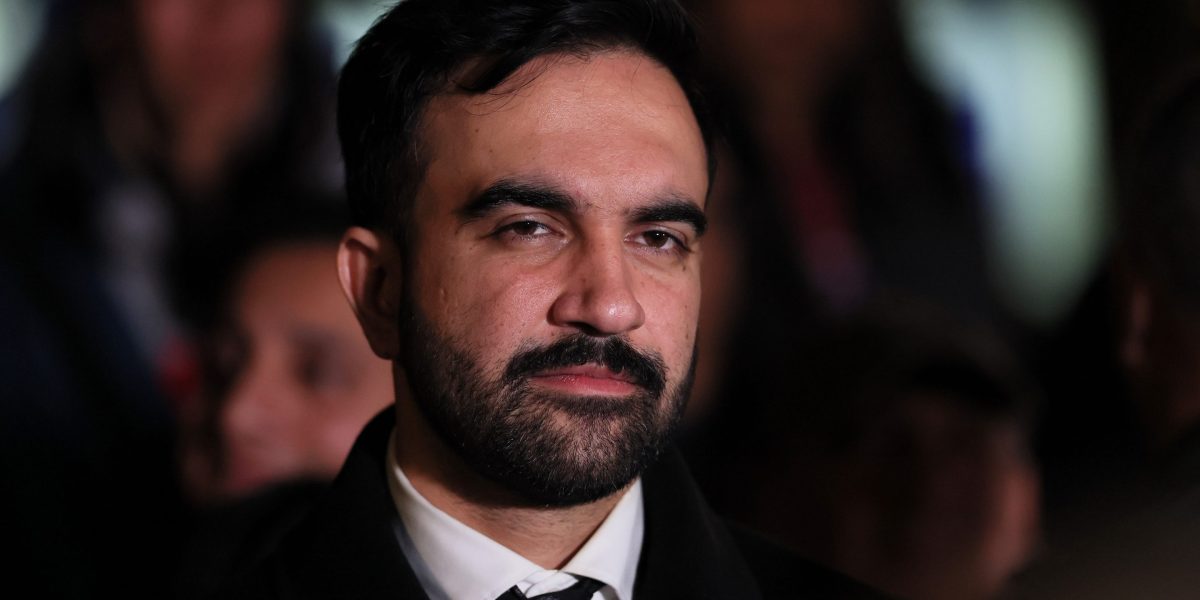
This period of corporate excess laid the groundwork for severe political instability and public outrage, Edwards argued. Just look at the election in New York, he said, which was all about the cost of living. Zohran Mamdani’s election is “an indication that this still is a big issue.” Edwards agreed “affordability” is a major topic of the moment, along with the U.S. housing market: “It stands out as, like, ‘What’s going on?’”

This latest twist in the populist turn isn’t necessarily something to celebrate, Edwards said. As an economist, he said he considers Mamdani’s policies, deriving from his democratic socialist background, such as rent control and price controls, to be “lunacy,” having experienced them himself in the 1970s. Still, dysfunction in capitalism means that society will “come back full circle to this.” The increasing intergenerational strife, driven by young people being shut out of the housing market and out of wealth concentration, has created a primal sense of betrayal, especially among Americans who no longer feel they are better off than their parents.

Edwards was speaking as the first-time homebuyer hit an average age of 40 years old, a stark symbol of how the largely youthful voter base that elected Mamdani is shut out of the market. Sean Dobson, CEO of the Amherst Group, one of America’s largest institutional landlords, recently estimated the same post-COVID economic landscape that so outraged Edwards meant “we’ve probably made housing unaffordable for a whole generation of Americans.”

‘You reap what you sow’

Coming back to his critique of capitalism, Edwards argued Mamdani’s election is “part of the consequence … The corporates, by being excessively greedy, hence ‘greedflation,’ have laid the seeds for their own destruction—and backlash.” Edwards added that “more and more people are identifying corporate excess.”

Speaking about what he called “intergenerational strife,” Edwards said he thinks this is “the first generation where people are not seeing themselves as better off than their parents were.” Everywhere you look in modern capitalism, “young people can’t get on the housing ladder, they see wealth extremely concentrated … It takes the incentivization out of the economy if young people don’t feel they’re participating.”

Edwards’s argument here has some strange bedfellows, as none other than Peter Thiel has been warning about this incentivization problem for years. Mamdani’s election seemed to send a shiver through Silicon Valley’s right-wing contingent, as Chamath Palihapitiya shared Peter Thiel’s 2020 email to Mark Zuckerberg and Marc Andreessen, warning of a “broken generational compact” and reasoning, “if one has no stake in the capitalist system, then one may well turn against it.” In a follow-up interview days later, Thiel told The Free Press, “if you proletarianize the young people, you shouldn’t be surprised if they eventually become communist.”

On the left wing of legal thought, Columbia Law School professor Tim Wu recently told Fortune that he wrote his new book, The Age of Extraction, about a similar feeling. “My understanding of America is that it’s the place where things are supposed to get better,” Wu said, but instead we’re living through a time with “an economy-wide problem” where “everything kind of just creeps. It’s that weird feeling of something you like becoming worse.” He added that American politics right now are “very angry” and marked by “economic resentment” but also a general feeling that “we let things go a little too far” and we “just kind of lost touch with the tradition of broad-based wealth that was the American way.”

On the subject of greedflation, Edwards was philosophical but insisted that what happened in 2023 was a mistake. “Okay, I can understand this is capitalism, this is how it works,” he said about pursuit of the profit motive, “but if the government doesn’t step in” then a backlash is bound to happen. Edwards declined to say whether this was a particularly Democratic or Republican issue, but, he noted, “there’s a reluctance” in American culture to dictate to the corporate sector. At any rate, the consequence of it is “there’s a day of reckoning coming in,” he said.

Edwards, who is also convinced artificial intelligence is in a bubble, said he views his role in this often overly optimistic market as similar to “Caesar’s slave,” referring to the story from antiquity about the Roman emperor ordering someone to follow him around and always whisper in one ear: “You are mortal.” (This is also commonly referred to by the Latin phrase “memento mori.”) Edwards warns while the macro-level excesses might not be visible in aggregate, drilling down reveals “things are pretty crappy under the surface.” The political reaction embodied by Mamdani’s focus on affordability is a clear sign that the economic consequences of corporate greed are now driving mainstream political change.

Edwards concluded there’s a fitting phrase for the dysfunctions of capitalism in the 2020s: “You reap what you sow.”


Source link

Continue Reading

Business

Down Arrow Button Icon

Published

on


China has fulfilled its initial commitment to buy 12 million metric tons of soybeans from the U.S., but it’s not clear if the trade agreement announced in October can withstand President Donald Trump’s ever-shifting trade policy as American farmers are still dealing with high production costs.

Earlier this month, Trump said he would impose 25% tariffs on any country that buys from Iran, which would include China. Then last weekend he threatened to impose 10% tariffs on eight of America’s closest allies in Europe if they continue to oppose his efforts to acquire Greenland.

So the administration’s trade policy continues to change quickly, and Iowa State University agricultural economist Chad Hart said that could undermine the trade agreement with China and jeopardize the commitment by the world’s largest soybean buyer to purchase 25 million metric tons of American soybeans in each of the next three years.

“Those new tariffs — what does that mean for this agreement? Does it throw it out? Is it still binding? That’s sort of the game here now,” Hart said.

Beijing paused any purchase of U.S. soybeans last summer during its trade war with Washington but agreed to resume buying from American soybean farmers after Trump and Chinese leader Xi Jinping met in South Korea and agreed to a truce.

Treasury Secretary Scott Bessent announced the purchasing milestone China has met in an interview with Maria Bartiromo on Fox Business on Tuesday from the sidelines of a major economic forum in Davos, Switzerland, where Bessent met with his Chinese counterpart, Vice President He Lifeng. Bessent said China remains committed.

“He told me that just this week they completed their soybean purchases, and we’re looking forward to next year’s 25 million tons,” Bessent said. “They did everything they said they were going to do.”

Last fall, preliminary data from the Department of Agriculture cast doubts on whether China would live up to the agreement because it was slow to begin purchasing American soybeans and there is a lag before the purchases show up in the official numbers.

On Tuesday, the USDA data showed that China had bought more than 8 million tons of U.S. soybeans by Jan. 8, and its daily reports indicated that China placed several more orders since then, ranging from 132,000 tons to more than 300,000 tons.

China has shifted much of its soybean purchases over to Brazil and Argentina in recent years to diversify its sources and find the cheapest deals. Last year, Brazilian beans accounted for more than 70% of China’s imports, while the U.S. share was down to 21%, World Bank data shows.

Trump is planning to send roughly $12 billion in aid to U.S. farmers to help them withstand the trade war, but farmers say the aid won’t solve all their problems as they continue to deal with the soaring costs of fertilizer, seeds and labor that make it hard to turn a profit right now. Soybean farmers will get $30.88 per acre while corn farmers will receive $44.36 per acre. Another crop hit hard when China stopped buying was sorghum, and those farmers will get $48.11 per acre. The amounts are based on a USDA formula on the cost of production.

That and uncertainty about trade markets and how much farmers will receive for their crops has even some of the most optimistic farmers worried, said Cory Walters, who is an associate professor in the University of Nebraska-Lincoln’s Department of Agricultural Economics. Soybean prices jumped up above $11.50 per bushel after the agreement was announced, but the price has since fallen to about $10.56 per bushel on Tuesday. So prices are close to where they were a year ago and aren’t high enough to cover most farmers’ costs.

“Everything is changing — the land rental market, the fertilizer market, the seed market and it’s all pinching the farmer when they go to do their cash flows. The ability to make a decision is tougher now because of all the uncertainty in the market,” Walters said.

___

This story has been updated to correct that Bessent spoke on Fox Business, not Fox News.

___

Funk reported from Omaha, Nebraska. Associated Press writers Didi Tang and Fatima Hussein contributed from Washington.


Source link

Continue Reading

Business

Wall Street is talking about whether Trump’s Greenland plan will end U.S. ‘primacy’

Published

on


Investors reacted emphatically to President Trump’s insistence that he won’t back down on his plan to take over Greenland: They hate it. The S&P 500 fell 2% yesterday, even though 81% of its companies have beaten their Q4 earnings expectations so far. The dollar fell off a cliff, losing nearly 1% of its value against a basket of foreign currencies. U.S. bond prices weakened modestly. Gold, the safe-haven investment, hit yet another new record high.

The “sell America” trade is in full effect, in other words. S&P futures were up marginally this morning, suggesting that the bloodletting has been put on hold until traders hear what Trump has to say at the World Economic Forum in Davos later today. Trump offered a small ray of hope before he left for Switzerland when he told NewsNation, “We’ll probably be able to work something out.”

The drama has started a global debate about ending America’s “primacy” as the place for investors to hold assets. Increasingly, analysts and economists are talking about hedging against U.S. risk and deploying their capital in markets which are more predictable. The fact that the S&P 500 underperformed last year compared to markets in Asia and Europe is helping make the case. It’s a rerun in 2026, too. The S&P is down 0.71% year-to-date, while the Europe STOXX 600 is up 0.69% and the South Korean KOSPI is up an astonishing 14%.

“Until the US no longer ‘threatens’ with the use of tariffs … the so-called ‘primacy’ of the U.S. remains at risk of further dissolution, and with it an upending of the geopolitical alignments that have upheld markets in recent years,” Macquarie analysts Thierry Wizman and Gareth Berry wrote in a recent note to clients.

Their argument—perhaps one of the most extreme ones that Fortune has ever seen in an investment bank research note—is that when the U.S. goes through a major political convulsion a period of stagnation follows, and thus investors should begin moving their money away from America:

“A line can be traced, for example, from the failure of the U.S. in the Vietnam War and the follow-on decline in U.S, primacy, to the U.S.’s gold reserve depletion, and the subsequent end of the fixed exchange rate system under the Bretton Woods Agreement of 1944. The ‘fiat money’ era that followed was associated with a large decline in the real value of the USD, from 1971 until 1981, as well as a period of inflation and recessions across the 1970s,” they said. 

“We should worry about the USD and its relation to other currencies, too. If the reserve status of the USD does depend on the U.S. role in the world—as guarantor of security and a rules-based order—then the events of the past year, and of the past three weeks, in particular, carry the seeds of a reallocation away from the USD, and the search for alternatives, especially among reserve managers. So far, allocators have only found solace in gold, but they may eventually move toward other fiat currencies, too.”

Wall Street got a glimpse of what this might look like when the Danish retirement savings fund AkademikerPension said yesterday that it would sell its $100 million stake in U.S. bonds by the end of the week.

So far, traders are flinching at Trump’s actions. But we haven’t yet seen the kind of full-scale capital flight away from U.S. assets that might, for instance, raise inflation, interest rates or trigger a recession. But the mere fact that Wall Street is discussing it is significant.

Deutsche Bank’s George Saravelos told clients in a note at the weekend: “Europe owns Greenland, it also owns a lot of Treasuries. We spent most of last year arguing that for all its military and economic strength, the U.S. has one key weakness: it relies on others to pay its bills via large external deficits. Europe, on the other hand, is America’s largest lender: European countries own $8 trillion of US bonds and equities, almost twice as much as the rest of the world combined. In an environment where the geoeconomic stability of the western alliance is being disrupted existentially, it is not clear why Europeans would be as willing to play this part. Danish pension funds were one of the first to repatriate money and reduce their dollar exposure this time last year. With USD exposure still very elevated across Europe, developments over the last few days have potential to further encourage dollar rebalancing.”

This note was internally controversial. Deutsche Bank CEO Christian Sewing had to call U.S. Treasury Secretary Scott Bessent to disavow it.

The CEO does not stand by it but Saravelos’s colleagues may be more sympathetic. Jim Reid and his team, who religiously send an early morning email summarizing market action, did not send their email this morning. The bank told Fortune, “Deutsche Bank Research is independent in their work, therefore views expressed in individual research notes do not necessarily represent the view of the bank’s management.”

In fact, the idea that Europe might move out of U.S. assets is a commonplace inside investment banks right now. At UBS, Paul Donovan told clients earlier this week, “The implications of additional tariffs are more U.S. inflation pressures and a further erosion of the USD’s status as a reserve currency. So far, bond investors do not seem to be taking the threats too seriously.”

This morning he said that the most likely scenario wouldn’t be investors selling U.S. debt but simply refusing to buy new debt, thus reducing the flow of funds that the America is dependent on.

In a tariff war, one under-discussed weapon at Europe’s disposal is its Anti-Coercion Instrument: It has the power to ban U.S. services businesses from the E.U.

“U.S. services exports to the E.U. were $295B in 2024, equivalent to 0.9% of US GDP, suggesting the harm could be much greater if the E.U. pulled this relatively new lever at its disposal than if it responded simply with tariffs, though its economy would be hurt more too,” Pantheon Macroeconomics analysts Samuel Tombs and Oliver Allen told clients.

“In short, nobody would win from a new trade war, but the E.U. has ample scope to harm the U.S. if the Greenland situation escalates,” they said.

Here’s a snapshot of the markets ahead of the opening bell in New York this morning:

  • S&P 500 futures were up 0.19% this morning. The last session closed down 2.06%.
  • STOXX Europe 600 was down 0.4% in early trading.
  • The U.K.’s FTSE 100 was flat in early trading. 
  • Japan’s Nikkei 225 was down 0.41%.
  • China’s CSI 300 was flat. 
  • The South Korea KOSPI was up 0.49%. 
  • India’s NIFTY 50 was down 0.3%. 
  • Bitcoin was down to $89K.


Source link

Continue Reading

Business

Match Group says a ‘readiness paradox’ is crippling Gen Z in dating

Published

on


Gen Z is sometimes criticized for its proclivity toward slang or its approach to the workforce. But this generation is facing challenges very different from those of their elders. The young adults are slowing down their pursuit of the American Dream of finding “the one,” owning a home, and having kids.

But it’s not because Gen Z doesn’t want to find love, according to a report by Match Group and Harris Poll shared exclusively with Fortune. In fact, their survey results from 2,500 randomly selected U.S. adults shows 80% of Gen Z say they believe they’ll find true love, making them the most optimistic generation about finding love. Yet, only 55% of Gen Z feel like they’re actually ready for partnership. 

Therein lies the “readiness paradox,” a phenomenon that paralyzes Gen Z from taking that initial step toward a serious relationship, and subsequently toward marriage and having children. While more than half of Gen Z says they feel lonely despite having online connections, 48% of Gen Z women report feeling additional pressure to enter a relationship for “the right reason,” rather than solely to avoid loneliness. This cycle traps young people in loneliness, which is amplified by social media pressures, like the dread of “hard-launching” a relationship. 

“It makes total sense to be stuck in that paralysis of, I want this, I want a relationship, but I don’t feel ready for it, and so I don’t do it,” Chine Mmegwa, head of strategy, corporate development, and business operations at Match Group, told Fortune. “What they’re afraid of is failing. What they’re afraid of is that the other person on the other side isn’t ready.”

Match Group defines this phenomenon as a “self-reinforcing cycle” in which Gen Zers set a high bar for readiness for a relationship, then feel anxious about being alone, then crave new relationships, believe they’re not ready for it and wait longer, experience more loneliness, and then the cycle repeats. 

And some of this cycle stems from the fact that Gen Z prioritizes investing in personal growth, therapy, and defining success over other generations. Nearly 60% of Gen Z women say therapy is essential to relationship success, according to the Match Group report, and almost 50% say that setting and respecting healthy boundaries is a prime indication of being ready for a romantic relationship. And as a result, they may be more likely to delay dating. 

This report serves as a launchpad for Match Group and other dating app companies to rethink how to best serve Gen Z consumers, some of which had ditched the apps when they did have features they could relate to. But now Tinder has introduced more casual modes for Gen Zers to meet each other, like through its double-date feature and college mode where the generation can meet more people with the same relationship goals in mind.

That’s a step in the right direction for a generation that is reverting back to a desire to meet in real life.

“This is the way Gen Z wants to connect,” Match Group CEO Spencer Rascoff previously said. “They want to vibe their way through meeting people.”

Reprioritizing milestones

Unlike how some other reports about Gen Z love life have portrayed the generation, they’re not rejecting romance. Instead, they’re reshuffling life’s timeline amid economic and social strains. 

Match Group’s report shows nearly half of Gen Z say they’re not ready for relationships now, and 75% aren’t rushing into one. But, again, 80% say they believe they’ll find true love.

“They believe that when they work on themselves, their relationships become stronger,” according to the Match Group report. “And they are more likely to wait until they can put their best selves forward to give themselves the highest chance of relationship success.”

Although that may sound like worrisome news for a company trying to appeal to the latest generation, Mmegwa didn’t shy away from the challenge. 

Gen Z is “still looking to our products to solve real big issues. And they are still looking to our products and to dating to solve the things that are most important to them” she said. “It’s just a question of when and how they will use our products that [is] very different from prior generations.”

This generation also has a very different view of how happy their own parents’ and grandparents’ relationships are: Only 37% described those relationships as happy, and 34% of Gen Z women also feel working through issues from past relationships indicates readiness, according to the report.

Social media’s vicious cycle

Being highly inundated by and invested in social media has also exacerbated the readiness paradox. While 46% of Gen Z “soft-launch” relationships versus 27% overall, 81% see it as an ironclad agreement, and dread backlash from a public failure. 

It’s different from how other generations view making relationships public: “You can also hard launch and then delete the photos the next day, and it’s okay,” Mmegwa said. 

But still, for Gen Z, relationship performance pressure creates a cycle: High readiness bars lead to loneliness, which ultimately leads to them pursuing lower-stakes or casual relationships that rarely escalate into something more serious.

Instagram exacerbates the stall. While 46% of Gen Z “soft-launch” relationships versus 27% overall, 81% who hard-launch see it as an ironclad commitment, dreading public failure. Mmegwa highlighted this generational shift: “You can also hard launch and then delete the photos the next day, and it’s okay.” This “performance pressure” creates a cycle: High readiness bars lead to loneliness (over 50% feel it despite online ties), prompting low-stakes connections that rarely escalate.​

“For us, the focus is on how we bring people together and encourage them to return to in-person connections,” Hinge CEO Jackie Jantos previously told Fortune. Hinge is part of Match Group, along with Tinder, Match, and OkCupid.

How Match Group plans to address the readiness paradox

Match Group is planning to meet Gen Z where they are: They’ll keep introducing “low-pressure” tools, like Tinder’s Double Dating feature and College Mode.

“The idea here is really around helping our users have the power to control what they’re looking for in a given moment and be able to find that more easily,” Cleo Long, Tinder’s senior director of global product marketing, previously told Fortune.

Using the report as a roadmap for new product plans, future features could include features like readiness signals, Mmegwa said, and more curated matches will be important. 

“It’s no longer a speed and volume game,” she said. “It’s [about] truly making our algorithms help you know yourself better, and then help you know the person on the other side of the connection better.”



Source link

Continue Reading

Trending

Copyright © Miami Select.