Connect with us

Business

The AI investing boom gets its posterboy: Meet Leopold Aschenbrenner

Published

on


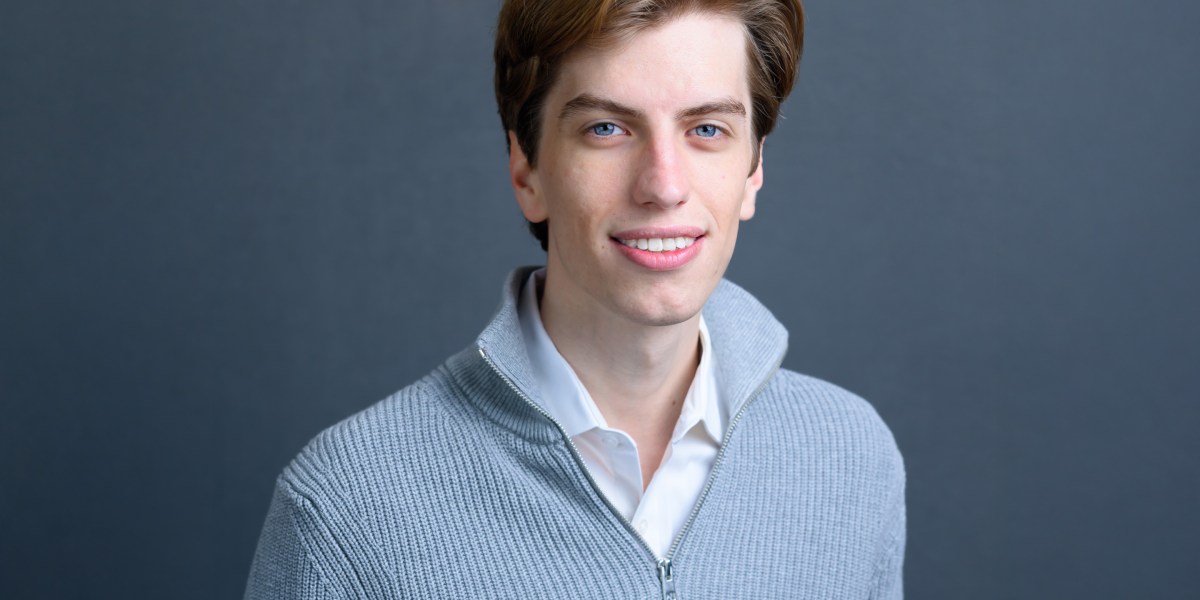
Leopold Aschenbrenner begins his monograph Situational Awareness: The Decade Ahead with one striking line: “You can see the future first in San Francisco.” 

What follows are 165 pages about what the future of AI will look like, drawn with clarity and theoretical forcefulness. The essay went viral and a new Silicon Valley wunderkind was born.

The fresh-faced 23-year-old—who had been fired from OpenAI and who began his career at FTX’s doomed philanthropy arm—was catapulted to new heights: He now runs a hedge fund managing more than $1.5 billion.

It’s a remarkable story in its own right. And as my colleague Sharon Goldman reported in a recent profile of the German-born Aschenbrenner, the story is all the more notable for the ways in which it’s clearly a sign of the times, and the divisive reactions the young AI researcher attracted. 

As Goldman writes: 

To some, Aschenbrenner is a rare genius who saw the moment—the coming of humanlike artificial general intelligence, China’s accelerating AI race, and the vast fortunes awaiting those who move first—more clearly than anyone else. To others, including several former OpenAI colleagues, he’s a lucky novice with no finance track record, repackaging hype into a hedge fund pitch. 

But why a hedge fund, and not a VC firm (this is Silicon Valley, not Greenwich, Connecticut, after all)? That was my first question, and I’m not the only one. Goldman garnered some insight from an LP who spoke on the condition of anonymity: 

Another investor in Situational Awareness LP, who manages a leading hedge fund, told Fortune that he was struck by Aschenbrenner’s answer when asked why he was starting a hedge fund focused on AI rather than a VC fund, which seemed like the most obvious choice.

“He said that AGI was going to be so impactful to the global economy that the only way to fully capitalize on it was to express investment ideas in the most liquid markets in the world,” he said. “I am a bit stunned by how fast they have come up the learning curve … They are way more sophisticated on AI investing than anyone else I speak to in the public markets.“ 

It’s a story worth reading, not only for its uncommonly interesting central figure—even for AI—but for the ways in which it touches on the intellectual subcultures surrounding tech, from effective altruism to rationalists. Read the whole story here.

See you tomorrow,

Allie Garfinkle
X:
@agarfinks
Email: alexandra.garfinkle@fortune.com
Submit a deal for the Term Sheet newsletter here.

Joey Abrams curated the deals section of today’s newsletter. Subscribe here.

Venture Deals

Starship Technologies, a San Francisco-based autonomous delivery company, raised $50 million in Series C funding. Plural led the round and was joined by Karma.vc, Latitude, and others.

Campfire, a San Francisco-based AI-native ERP, raised $65 million in Series B funding. Accel and Ribit co-led the round and were joined by Foundation Capital and Y Combinator.

Wild Bioscience, an Oxford, U.K.-based crop resilience company, raised $60 million in Series A funding. The Ellison Institute of Technology led the round and was joined by existing investors Oxford Science Enterprises, Braavos Capital, and the University of Oxford.

Viven, a Santa Clara, Calif.-based developer of digital AI twins for employees, raised $35 million in seed funding from Khosla Ventures, Foundation Capital, FPV Ventures, Operator Collective, and others.

Prisma Photonics, a Tel Aviv, Israel-based large-scale infrastructure monitoring company, raised $30 million in Series D funding. Protego Ventures led the round and was joined by Adara Ventures and others.

MatrixSpace, a Burlington, Mass.-based developer of portable AI-enhanced radar counter drone sensing technology, raised $20 million in Series B funding. The Raptor Group and OTB Ventures led the round and were joined by L3Harris and others.

Aboon, a New York City-based AI-powered 401k platform for financial advisors, raised $17.5 million in seed funding. Bain Capital Ventures led the round and was joined by Altai Ventures, Runyon, and others.

LuxQuanta, a Barcelona, Spain-based quantum security company, raised €8 million ($9.3 million) in Series A funding. Big Sur Ventures led the round and was joined by others.

Trove AI, a San Francisco, Calif.-based developer of an AI teammate for private equity, raised $7.1 million in seed funding. Menlo Ventures led the round and was joined by Khosla Ventures.

Provision, a Toronto, Ontario-based developer of an AI copilot for construction estimators, raised $7 million in seed funding. Cercano Management led the round and was joined by Y Combinator, One Way Ventures, and others.

Matters.AI, a Wilmington, Del. and Bangalore, India-based developer of an AI security engineer for data, raised $6.3 million in funding across seed and pre-seed rounds. Kaalari Capital and Endiya Partners led the seed round and were joined by Better Capital, Carya Venture Partners, and others. Better Capital and Carya Venture Partners led the pre-seed round.

Woz, a San Francisco-based AI-powered app-building platform, raised $6 million in seed funding. Cervin Ventures led the round and was joined by Burst Capital, Y Combinator, Untapped Ventures, and others.

cto.new, a London, U.K.-based AI code agent, raised $5.7 million in pre-seed and seed funding from Kindred Ventures, PROfounders Capital, Wonder Ventures, and Entrepreneurs First

Aragorn AI, a Plano, Texas-based employee data platform, raised $4.3 million in seed funding. LiveOak Ventures led the round and was joined by Dallas Venture Capital.

SLNG, a London, U.K.-based global speech AI infrastructure platform, raised $3.9 million in pre-seed funding. Earlybird VC led the round.

Ploy, a London, U.K.-based cybersecurity startup, raised £2.5 million ($3.4 million) in funding. Osney Capital led the round and was joined by others.

Private Equity

Lone Star Funds agreed to take Hillenbrand, a Batesville, Ind.-based processing equipment and systems provider, private for approximately $3.8 billion.

Accel-KKR acquired a majority stake in Phocas Software, a Sydney, Australia-based business intelligence and financial planning & analysis company. Financial terms were not disclosed.

ARCHIMED acquired DermaPharm, a Fårup, Denmark-based developer of suncare, skincare, and haircare products. Financial terms were not disclosed.

Bonterra, backed by Apax Partners, acquired OneCause, a Carmel, Ind.-based developer of fundraising software. Financial terms were not disclosed.

Learning Pool, a portfolio company of Marlin Equity Partners, acquired WorkRamp, a San Francisco-based learning management system for mid-market companies. Financial terms were not disclosed.

Northrim Horizon acquired a majority stake in Solutions360 USA, a Mesa, Ariz.-based business management software provider. Financial terms were not disclosed.

Exits

S&P Global agreed to acquire With Intelligence, a London, U.K.-based investment intelligence platform, from Motive Partners, for $1.8 billion in cash.

Funds + Funds of Funds

AAF Management, a Washington, D.C. and Abu Dhabi-based venture capital firm, raised $55 million for a new fund focused on pre-seed, seed, and Series A technology companies.


Source link

Continue Reading

Business

Borrowing by AI companies represents a ‘mounting potential threat to the financial system’: Zandi

Published

on


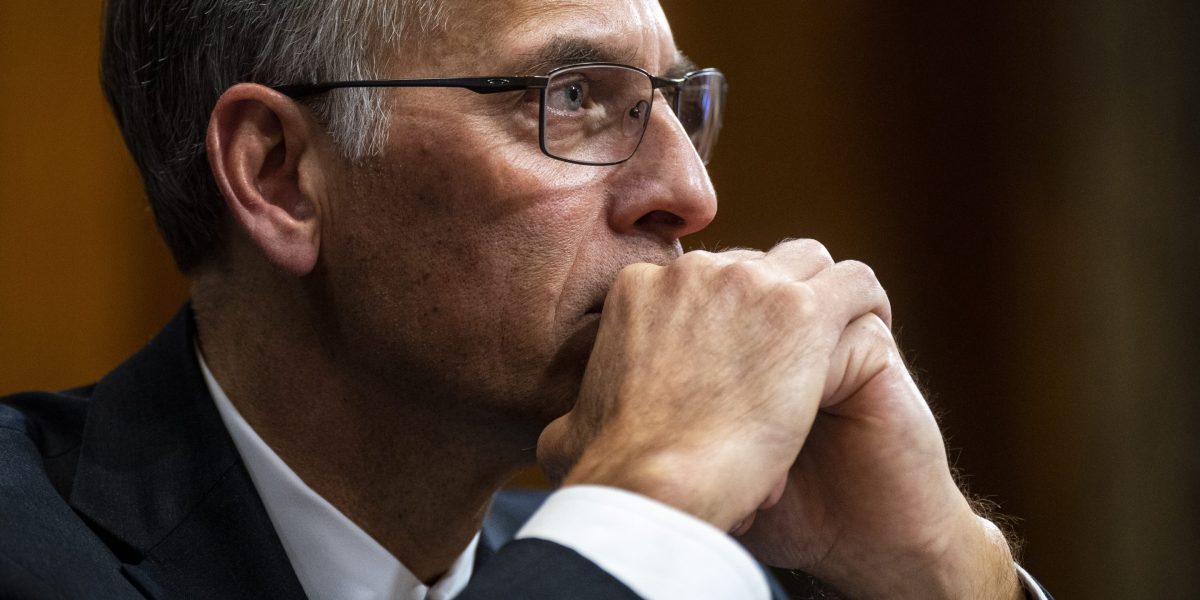
Tech companies are issuing more debt now than before the dot-com crash as a rapid infrastructure buildout unfolds in the AI boom, Moody’s Analytics Chief Economist Mark Zandi said in a LinkedInpost on Sunday.

Even after adjusting for inflation, big tech companies are issuing more bonds than during the late 1990s. And the companies aren’t just refinancing existing debt—they’re taking on additional debt.

“While the increasingly aggressive (and creative) borrowing by AI companies won’t be their downfall, if they do fall short of investors’ expectations and their stock prices suffer, their debts could quickly become a problem,” Zandi wrote. 

“Borrowing by AI companies should be on the radar screen as a mounting potential threat to the financial system and broader economy.”

The 10 largest AI companies, including Meta, Amazon, Nvidia and Alphabet, will issue more than $120 billion this year, Zandi said in a LinkedIn analysis last week.

And this time is different from dot-com era debt issuance, as internet companies back then didn’t have a lot of debt, he pointed out. Instead, they were funded by stocks and venture capital.

“That’s not the case with the AI boom,” Zandi added.

Even though hyperscalers like Amazon, Google, Meta, and Microsoft could pay for the AI buildout with their profits, bond issuance is the “cheapest and cleanest” way to finance an infrastructure buildout of this scale, which will likely last more than a decade and be worth trillions of dollars, Shay Boloor, chief market strategist at Futurum Equities, told Fortune.

“These companies are a lot more comfortable issuing 10- to 40-year papers, for example, at very low spreads, because the market now views them as quasi-utility names—because they’re building all this infrastructure—not just a pure tech company anymore,” Boloor said.

He added that in the previous six months, tech companies have shown “proof in the pudding” that future demand for AI is booming.

Despite AI bubble concerns, Nvidia delivered a strong earnings report for its third quarter last month, saying its AI data center revenue increased by 66% from last year. 

Still, critics warn that the buildout may not keep up with how rapidly AI is developing.

Computer hardware, which makes up most AI data centers’ cost, may be more susceptible to becoming obsolete and replaced by more advanced technology during the AI boom as opposed to wireless and internet buildouts, much of which still runs today, George Calhoun, professor and director of the Hanlon Financial Systems Center at Stevens Institute of Technology, told Fortune.

“The cycle of innovation in the chip industry is much faster than for wireless technology or fiber optics,” he said explained. “There is a real risk that much of that hardware may become competitively disadvantaged by newer technologies in a much shorter timeframe,” before being fully paid off.

At the same time, big players in the AI boom—namely OpenAI—do not have the profits currently to cushion their massive investments at the moment, increasing their risk, Calhoun said.

“If OpenAI fails, the snowball effect of that is gonna be substantial,” Futuruum Equities’ Boloor said. Though larger tech companies won’t likely be impacted much by a potential OpenAI bust, companies that largely rely on its business like Oracle could, he added.

Still, Boloor is optimistic about the AI buildout, saying the main bottleneck for its success is U.S. energy capacity.

“I think that the risk is that trillions of dollars of AI capacity gets built faster than the North American grid can support it, which could slow realization,” he warned. 


Source link

Continue Reading

Business

International deals race forward to end China’s hold on critical minerals since US can’t do it alone

Published

on


Pini Althaus saw the signs. In 2023, he left the company he founded, USA Rare Earth, to develop critical minerals mining and processing projects in central Asia, after realizing that the U.S. will need all the international help it can get to end China’s supply chain dominance.

“I realized we only have a handful of large critical minerals projects that were going into production between now and 2030,” Althaus, chairman and CEO of Cove Capital, told Fortune. “I understood that we’re going to have to supplement the United States critical minerals supply chain with materials coming in from our allied and friendly countries.”

Over a series of decades, China built up its stranglehold on much of the world’s critical minerals supply chains, including the 17 rare earths, used to make virtually all kinds of high-performance magnets and parts for vehicles, computers, power generation, military defense, and more. The rest of the world deferred to Beijing in exchange for cheap prices.

Amid an ongoing tariff war with the U.S.—and a temporary truce—the Trump administration is racing to build up domestic mining and processing capabilities, while also developing the global partnerships necessary to eventually undermine China, which controls 90% of the world’s rare earths refining.

In October, Trump inked a deal with Australia for both countries to invest $3 billion in critical minerals projects by mid-2026. Australia is home to the largest publicly traded critical minerals miner in the world, Lynas Rare Earths. Trump then signed a series of bilateral critical minerals deals in eastern and southeastern Asia, including Japan, Malaysia, Thailand, Indonesia, and Cambodia. The U.S. also has new deals with Ukraine, Argentina, the Democratic Republic of Congo, Rwanda, Kazakhstan, and more.

Althaus is specifically developing mining and processing facilities for tungsten—a heat-resistant metal used in electronics and military equipment—and rare earths in Kazakhstan and Uzbekistan. He sees the most potential in former Soviet Union nations in central Asia.

“The Soviets spent many decades exploring and developing mines. Many of their databases have been left and are quite meticulous,” Althaus said. “This gives companies looking to develop projects in central Asia a jumpstart compared to what would be here in the United States, where most of the opportunities are greenfield—very early stages, very high risk, and very little appetite for investment.”

In November, the Ex-Im Bank offered Cove Capital a $900 million financing letter of interest for the $1.1 billion Kazakh tungsten projects. A separate letter of interest was received from the U.S. International Development Finance Corporation.

Jeff Dickerson, principal advisor for Rystad Energy research firm, said only a long-term, coordinated effort—essentially a “wartime” approach—both domestically and with international partnerships can lead to success. But it cannot be done without new projects with foreign allies. “The challenge is that the U.S. doesn’t have a strong pipeline of mature mineral projects that are shovel ready,” he said. 

“The cycle of China extracting concessions on the back of mineral geopolitics and weakening the U.S. strategic negotiating position will likely continue without a coordinated, long-term response during the current moment of heightened attention to critical minerals,” Dickerson said, questioning whether the U.S. will maintain a concerted focus for years to come.

New emphasis

The Trump administration is increasingly making financial partnerships with critical minerals developers—even becoming a majority shareholder of U.S. rare earths miner MP Materials—and offering deals for floor-pricing mechanisms to offset China’s recurring dumping practices that aim to eliminate competition.

A native Australian turned New Yorker, Althaus is, naturally, a big fan of this approach. Chinese price dumping has crippled global competition and scared away potential investors, he said.

“By providing a price floor, it removes the question marks; it removes the instability; it removes the most significant risk in funding a project that’s about to go into production,” Althaus said. “It creates a predictability where you can take geology all the way through to profitability. I think there should be a global effort to create transparent markets and prices for the key critical minerals.”

Critical minerals are increasingly included in U.S. negotiations for all foreign deals. In the tariff agreement with Indonesia, for instance, the Asian nation agreed to lift export bans on nickel. The White House leveraged its military support for Ukraine by demanding the rights to its critical minerals in return. And the recent U.S. bailout of Argentina included a partnership on critical minerals mining.

In addition to its strategic defense location, rare earths are even a reason Trump continues to show interest in annexing Greenland from Denmark.

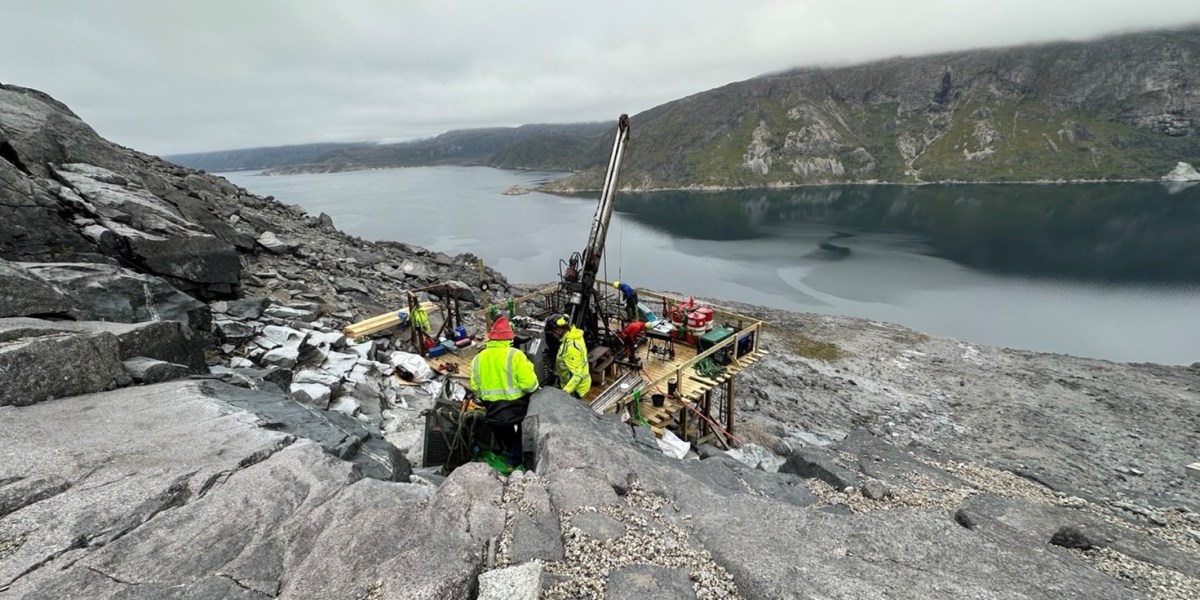
Veteran geologist Greg Barnes, who founded the massive Tanbreez mining project, which remains in development, briefed Trump at the White House during his first presidential term. This year, Critical Metals acquired 92.5% ownership of the Tanbreez project.

Critical Metals CEO Tony Sage is keen to supply the U.S. with desired rare earths, and the company recently received a letter of intent for a $120 million Ex-Im Bank loan. The goal is to start construction by the end of 2026.

“There’s an absolute need to make sure that more than 50% of the supply of these heavy rare earths come from outside of China—mined and processed outside of China,” Sage told Fortune.

Regardless of any long-shot annexation bids, Sage said Greenland can and should be a key ally to the U.S. for critical minerals. “They definitely don’t want to be part of the U.S., but I think they’ll be pro-U.S.,” he said.

For his part, Althaus said he sees all the international deals as progress, and not as competition for his Cove Capital.

“I think it’s a positive, and I think we’ll start to see a lot more happen in the coming months in terms of the U.S. and collaboration with other countries.”


Source link

Continue Reading

Business

Amazon’s new Alexa aims to detangle chaos in the household, like whether someone fed the dog

Published

on


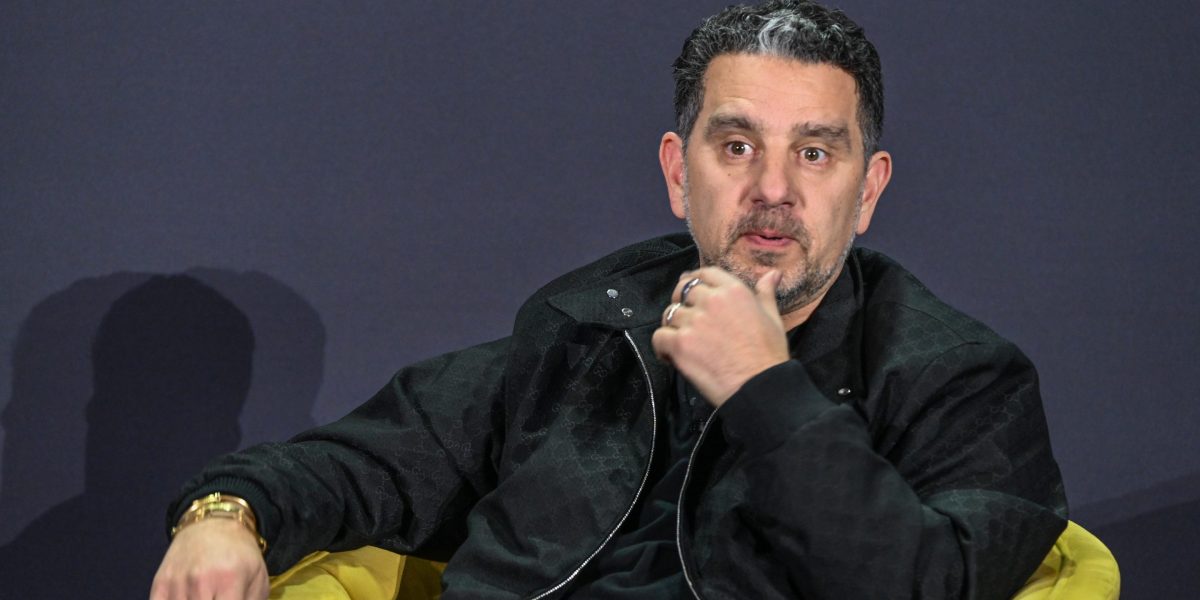
It’s 10 p.m. after a long day when you walk in the door and wonder aloud: “Did anyone feed the dog? Who fed the dog,” Panos Panay says he calls out to his family of six.

Turns out, nobody fed the dog and so all the kids “scatter to their corners,” he told Fortune’s Brainstorm AI audience in San Francisco on Monday. 

The senior vice president of devices and services at Amazon says the new generative AI-powered Alexa+, which runs on Echo hardware and can integrate with other devices like Amazon’s Ring security cameras, aims to ease the constant mental load in a household: remembering whether the pets ate, restaurants each family member pitched and saw vetoed, and regular grocery orders. The idea is to have “ambient” artificial intelligence around your house so that devices can assist in tasks, chores, and other household command center issues, said Panay.

The new Alexa+ is much more conversational, Panay said, and you no longer have to pronounce everything perfectly and discretely in order for it (or her, as Panay refers to the virtual assistant) to understand you.

“She’s the best DJ on the planet, in my opinion,” said Panay. “You have a personal shopper, you have a butler, you have a personal assistant, you have your home manager. Different people use Alexa for different things, and now she’s pretty much supercharged,” Panay said.

In addition to confirming that the dogs have not been fed, Panay said he used Alexa+ on Sunday night to head off another age-old debate: where the family should go for dinner. Both dinner decisions and pet chores are “classic fight[s] in my house,” Panay told the Brainstorm AI audience.

His youngest had previously suggested a few restaurants she wanted to visit for a quick bite and hadn’t yet been to, and Panay asked Alexa to remind them which ones his daughter suggested specifically. It was a sushi joint and she enjoyed it, Panay said. That type of ambient listening and assistance with debate is the point, he said, and stops people needing to pull out their phones and start typing and scrolling for information.   

From there, Panay said Alexa can also take more concrete actions like making a reservation on dining platform OpenTable, ordering delivery on nights in, getting an Uber, and handling home issues such as telling you how many packages were delivered or the number of guests who stopped by. Panay said Amazon has more than 150 partners to aid in these integrations, although there is work ahead to get more partners on board, he added.  

Thus far, Alexa+ has been rolled out to early-access users and this week the product is available to those on a lengthy waitlist, said Panay, and it’s been boosted by Amazon’s advertising. This week, the product is being released to anyone with an Echo device. The business monetization model involves “flywheels” from Amazon’s $2.4 trillion retail ecosystem, particularly around shopping for clothes, groceries, and other consumer items. “If you’re shopping on the grocery list and order groceries often enough, Alexa knows what you’re doing, and ultimately, can just order ahead of time for you moving forward,” he said.

Ultimately, Panay envisions users wanting “your assistant everywhere you go” because “the more it understands about you, the more informed it is, the better it can serve your needs.” And while Panay said there will be continued innovation from Amazon in this space, he refused to reveal any specific products. He said Amazon has a “lab full of ideas,” but most won’t make it out of that lab. 


Source link

Continue Reading

Trending

Copyright © Miami Select.