
Fashion
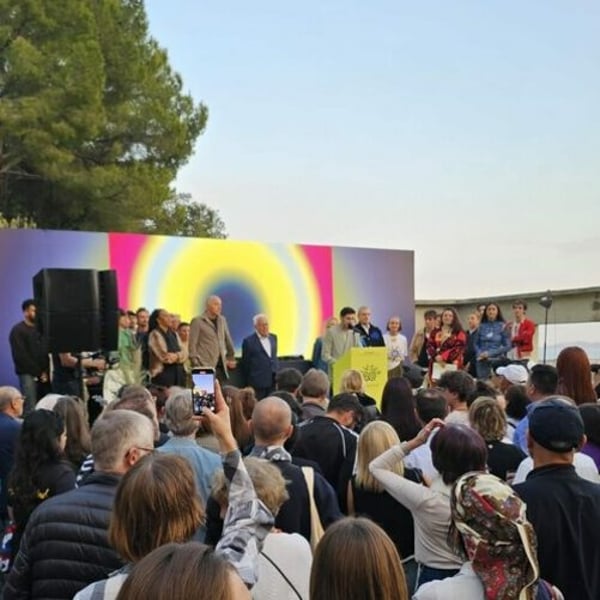
The 40th Festival de Hyères opened on Thursday, buoyed by palpable enthusiasm

Published
December 18, 2025
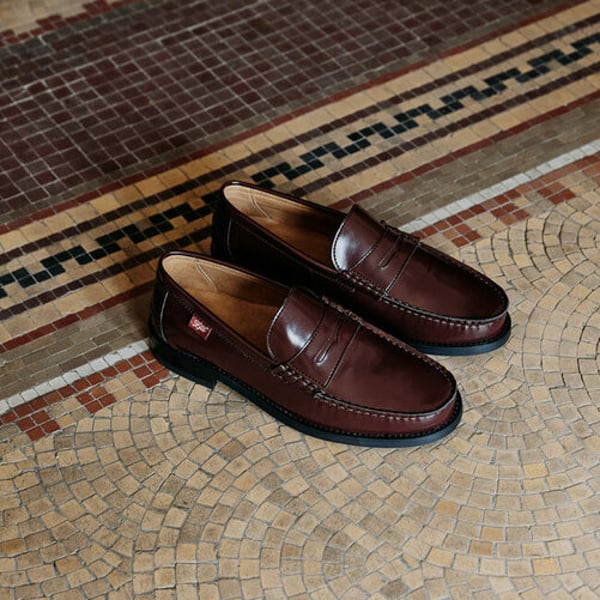
French eco-conscious footwear brand Zeta has expanded its range to include smart shoes with its latest collection, Saudade, which it is showcasing at its pop-up at 3, rue Sainte-Croix-de-la-Bretonnerie, in Paris’s Marais, from November 5 until December 29, 2025.
This move is very recent and, in its first two months, the new product category accounted for 20% of sales. It has also increased the number of Zeta’s manufacturing partners, with the brand producing exclusively in Portugal. It now works with five factories: two dedicated to trainers and three to shoes (loafers, ballet flats, and smart shoes). The brand also plans to include sandals in its next summer collection.
Portuguese at heart
When Laure Babin talks about Portugal, her long-standing attachment to the country is clear. This bond has been forged over the course of the Zeta adventure. Today, the entrepreneur and designer travels there several times a year, and the manufacturers have become ‘friends’. She is also supported in the creative process by a professional based in Portugal. The brand’s latest collection, entitled ‘Saudade’ (‘nostalgia’ in Portuguese), is inspired by the country’s time-honoured craftsmanship.

Zeta’s creative approach is complemented by collaborations- for example with ready-to-wear label Émoi Émoi in 2024. Laure Babin also plans to announce a new collaborative release soon. Her dream partnership is to work with Flotte and develop rain-ready versions of the brand’s shoes. The brand also boasts a ready-to-wear range of essentials and recycled fleece jackets.
From grape pomace to coffee grounds
This stronger presence in Portugal is linked to the brand’s sustainability commitments, which have set it apart through the use of materials derived from agricultural waste. It began with grape pomace (for leather), then maize (for textiles), before collaborating with Nespresso on coffee grounds in 2022. After eight months’ work with a Portuguese manufacturer, the brand secured exclusive rights to the material for one year, before its availability was opened up to other market players. In 2023, the brand decided to move into leather made from olive pomace, the name given to the waste from oil production.

With these commitments, Zeta hopes to secure B Corp certification and entreprise à mission status in 2026, as it prepares its applications. Securing these labels would mark a major step forward for this Bordeaux-based brand, founded in 2020 by Laure Babin, then a master’s student in management at IAE Bordeaux. Incubated at the Cité Numérique de Bègles in Nouvelle-Aquitaine during its first year of activity, the start-up was launched thanks to a crowdfunding campaign, enabling it to sell 3,000 pairs of shoes. Today, Zeta has grown, and is driven by a team of eight, regularly supported by freelancers.
Footwear, an important lever for sustainable action
Why shoes? The answer is simple: footwear is typically polluting and universally consumed. It therefore represents a powerful lever for sustainable action. More than five years after its founding, the eco-conscious label is distributed in France, Italy, the US, and Asia through a network of 70 retailers. Born as a DNVB, Zeta was able to move into wholesale from its first year, with the support of the Cité du Vin in Bordeaux, which still sells its shoes. While the post-Covid era brought a new lease of life to physical retail, Zeta is now reinvesting in digital, at a time when the market is tightening.

Even so, its Paris pop-up is an opportunity to test a direct presence in the French capital- favourable ground for its development, since Zeta’s target is urban 30- to 35-year-olds in the CSP+ bracket. ‘The response has been very positive so far,’ says Laure Babin. The pop-up enables the brand to meet its customers and reach an international clientele, showcasing its bestsellers and winter collection. This year, for the first time since its creation, the brand faced the issue of dormant stock and took part in Black Friday to clear it.
Protecting sustainable European businesses
‘We’re well established in the trainers sector,’ says Laure Babin, despite an ‘uncertain’ climate marked by falling purchasing power and unfair competition. Zeta has joined the complaint against Shein brought by the Fédération Française du Prêt-à-Porter Féminin (FFPAPF). This competitive pressure is particularly tough for the label, which intends to keep production in Portugal.

At the end of 2024, the company organised its first fundraising round and raised €600,000, from its community but also from figures such as William Hauvette (founder of Asphalte), Philippe Berland (former CEO of La Redoute), and some of the founders of the green bank Green-Got. A crucial boost to accelerate its operations.
For the 2025 financial year, which ended last August, the company achieved annual growth of 20%, despite profitability challenges. Sales momentum is set to accelerate in the current financial year, reaching +70% by August 2026.
This article is an automatic translation.
Click here to read the original article.
Copyright © 2025 FashionNetwork.com All rights reserved.
Published
December 18, 2025
In February, the French low-impact clothing brand Faguo will launch several thousand T-shirts and a sweatshirt produced by Losanje, a specialist in the industrialisation of upcycling for clothing and accessories.
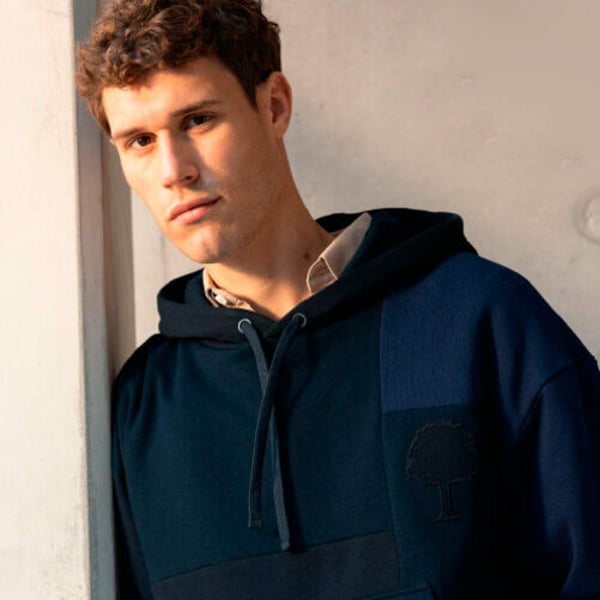
For this series, Faguo has opted to produce Lugny T-shirts, featuring the brand’s tree logo on the chest, along with the Dirac hooded sweatshirt. The former, available in blue and dark green, is priced at €60, while the latter, in blue, costs €105. The pieces were made from garments collected at sorting centres in France and across Europe, then cut and assembled by Faguo’s teams.
“We felt it was important to choose our iconic pieces for this collaboration, to help shift perceptions of upcycling,” Anaïs Barry, Losanje’s marketing and communications director, tells FashionNetwork.com. “Our aim is always to dress people with the smallest possible environmental impact. With upcycling, we reduce that impact by a further 90% compared with a standard Faguo garment. But we’re also counting on the pieces appealing in their own right as products.”
For Losanje, the stakes are high. The French company, whose aim is to prove that upcycling can be an industrial alternative to producing new clothes, has delivered what could be, in Europe and worldwide, the first 100% upcycled collection produced in several thousand unique pieces, according to Simon Peyronnaud, president and co-founder of Losanje.
“We’ve already released drops with brands such as Miu Miu and Marine Serre, collaborations that involved dozens or hundreds of pieces,” explains the executive. “This time, we’re looking at genuine repeatability. It’s been a highly instructive collaboration, and one we have high expectations for, to demonstrate that we can source existing materials here at home rather than from cotton fields.”

Losanje claims to have reused over 320 tonnes of textile products in five years via upcycling, through collaborations with the SNCF, La Poste, the Comité Paris 2024 and Roland-Garros, among others. To support its growth, the company recently inaugurated a new factory in Nevers, in the Nièvre department.
“We’re moving from a 700-square-metre industrial workshop to a real 2,500-square-metre factory, purpose-built to take us to the next level,” explains Simon Peyronnaud, whose company currently employs 25 people. He hints at several ongoing projects with brands and groups keen to invest in an upcycled offering.
This article is an automatic translation.
Click here to read the original article.
Copyright © 2025 FashionNetwork.com All rights reserved.


North Korea stole a record amount of crypto—again: report estimates its hackers’ 2025 haul at $2 billion

Kylie Jenner Shows Off Figure in Backless Feather Dress

Zara turns to AI to generate fashion imagery using real-life models
-

 Politics8 years ago
Congress rolls out ‘Better Deal,’ new economic agenda
-
Entertainment8 years ago
New Season 8 Walking Dead trailer flashes forward in time
-
Politics8 years ago
Poll: Virginia governor’s race in dead heat
-
Entertainment8 years ago
The final 6 ‘Game of Thrones’ episodes might feel like a full season
-
Entertainment8 years ago
Meet Superman’s grandfather in new trailer for Krypton
-
Politics8 years ago
Illinois’ financial crisis could bring the state to a halt
-
Business8 years ago
6 Stunning new co-working spaces around the globe
-
Tech8 years ago
Hulu hires Google marketing veteran Kelly Campbell as CMO