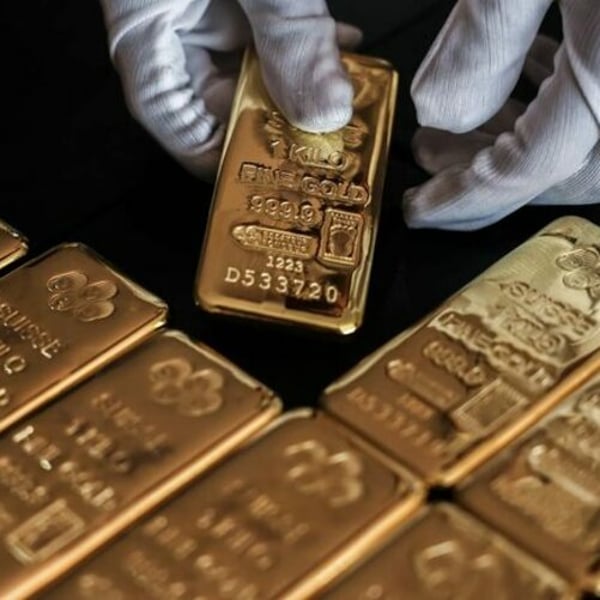
Thais are poised to buy more gold for a fifth straight year, as a rally in the local currency makes the bullion cheaper, complicating efforts by the central bank to curb the precious metal’s influence on the baht.
Bloomberg
With gold prices climbing to new highs, more Thais are turning to the yellow metal for higher returns and as a safe haven against mounting global and domestic political uncertainties, said Nuttapong Hirunyasiri, managing director of MTS Gold Group, one of Thailand’s largest bullion dealers.
Thai gold demand, excluding central bank purchase, is set to climb 10% this year to 53.7 tons, according to the Thai Futures Exchange. Demand in the first half jumped 21% to 20.7 tons, World Gold Council data show.
“Thai people love to buy gold,” Nuttapong said. “Even though prices continue to rise, many people keep buying. We are seeing activities on both sides — buying and selling.”
Thailand’s affinity for gold is both cultural and historic, with the metal commonly offered at Buddhist temples and many considering it as a traditional form of saving and passing down wealth. Demand soared 13% last year, and Thailand is the only country in the world to have posted four straight years of growth through the Covid pandemic, YLG Bullion International Co. said, citing WGC data.
The baht’s 7% rally this year to its highest level since 2021 is among the reasons driving local gold demand, said Jitti Tangsithpakdi, president of Thailand’s Gold Traders Association.
The Bank of Thailand has attributed baht’s surge partly to the rally in gold and vowed to rein in any wild swings. Thailand’s business and tourism groups have urged authorities to take steps to temper the gains as it hurts the country’s exports and tourism earnings.
The baht typically gets a boost when Thais sell gold, which is highly valued as an investment, as the dollar proceeds get converted into the local currency. It also has a much closer link to gold than other emerging Asian currencies.
Concerned about gold’s outsized influence, Thai central bank officials said they are working with the Finance Ministry to address currency moves that deviate from fundamentals.
But market players, including Jitti, downplayed the link, arguing that the baht’s gains stem more from a weaker dollar and optimism over a new government.
‘De-dollarization is also prompting people to turn to gold,” said Tipa Nawawattanasub, chief executive of YLG Bullion Futures Co. “Profit-taking in gold prices may be part of many reasons for the baht strength. But it’s not the major factor.”
Any attempts to wean Thais away from gold may prove difficult given the broader weakness in the Thai financial markets, where stocks are weak and government bond yields are at multi-year lows. With the outlook for gold prices still bullish, MTS Gold’s Nuttapong sees more Thais diving into gold.
“The sky is the limit for gold prices,” Nuttapong said. “The geopolitical problems as well as US President Donald Trump’s policies have fueled uncertainties and driven demand for gold.”
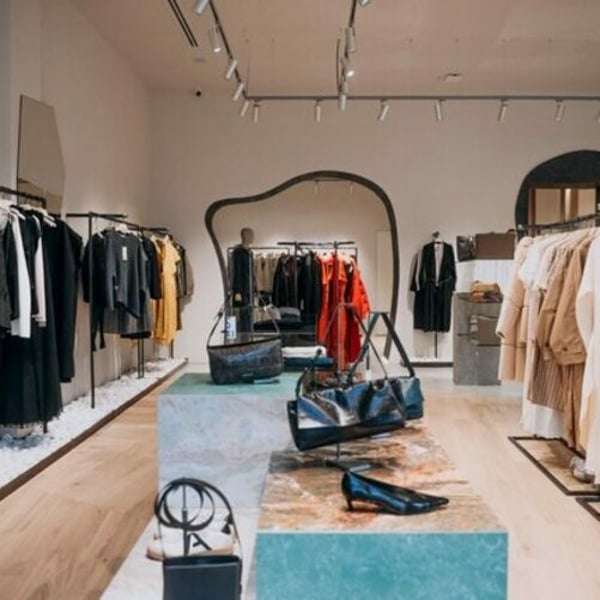
Spanish fashion brand Adolfo Domínguez continues to expand into new markets. Having recently entered countries such as Argentina and Lebanon, Adolfo Domínguez now makes its debut in Georgia with the opening of a new outlet store in the capital.
Interior of the brand’s new outlet boutique in Tbilisi – Adolfo Domínguez
Located on Gamarjveba Street in Tbilisi, the store has been designed in line with the brand’s classic concept, featuring a sophisticated, minimalist aesthetic. It offers a wide selection from Adolfo Domínguez’s womenswear collections and accessories at reduced prices.
With this opening, the Galician brand strengthens its presence across Eastern Europe and Western Asia, following the launch of two points of sale in Beirut last September. The brand has also expanded this year into international markets such as Argentina and Andorra, opening two standalone stores as part of its global expansion strategy.
At the close of its most recent financial year, the company operated a global retail network of 371 points of sale across 51 countries, and was also present in 31 markets through its e-commerce platform.
Founded in the 1970s by designer Adolfo Domínguez and chaired since 2020 by businesswoman Adriana Domínguez, the company reported revenues of €24.1 million in the first quarter of the current financial year, driven particularly by strong international sales.
This article is an automatic translation. Click here to read the original article.
On Tuesday, a board member for French-Italian eyewear/optics giant EssilorLuxottica said that Meta holds a stake of at least 3% in the group, owner among others of the Ray-Ban brand, with which Meta is collaborating.
The Ray-Ban and Meta logos featured at the EssilorLuxottica stand at the VivaTech trade show in Paris – (Reuters – Benoit Tessier)
The fact that Meta has a stake in EssilorLuxottica had been reported by several sources in the past, but it hadn’t until now been confirmed by either group. Meta and EssilorLuxottica are collaborating closely on the Ray-Ban Meta connected glasses.
José Gonzalo, executive director of French public investment bank Bpifrance and a member of the EssilorLuxottica board, said that the Meta stake could grow. “[Meta] holds at least 3% [of EssilorLuxottica],” said Gonzalo, adding that the figure could possibly rise up to 5%, though it is more likely it will be closer to the bottom end of the 3-5% range. “Nothing is stopping [Meta] from growing [its stake],” said Gonzalo.
Contacted by Reuters, Meta declined to comment for the time being, while EssilorLuxottica was not available for comments.
Gonzalo also said that Meta isn’t currently seeking to sit on EssilorLuxottica’s board. “They aren’t on the board, and haven’t asked to be represented on it,” he stated.
(Reporting by Mathieu Rosemain, with Elisa Anzolin and Tassilo Hummel; French version by Coralie Lamarque, edited by Kate Entringer)
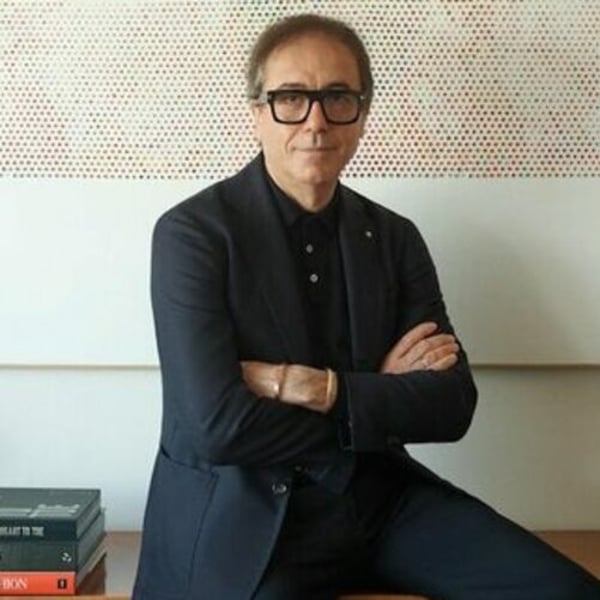
Italian luxury ready-to-wear and knitwear label Fabiana Filippi, founded in 1985, has made a major change to its shareholding structure. The family of Giacomo Filippi Coccetta, Fabiana Filippi’s co-founder and president, has sold its entire stake in the label to Ventisettetredici S.r.l., a company owned by the family of Giacomo’s brother Mario, the label’s CEO and co-founder.
Mario Filippi Coccetta – Fabiana Filippi
“The operation is part of the company’s evolution process. The company’s strategic and operational activities will continue to develop in line with the current business plan,” said Fabiana Filippi in a press release, adding that “the decision is the result of a shared evaluation and a desire to ensure greater stability to the ownership structure in the medium to long term.”
In the press release, Mario Filippi Coccetta thanked Giacomo’s family for their contribution to the company’s growth and for helping strengthen its competitive position. Fabiana Filippi is determined to continue to invest in its DNA and to consolidate its distinctive identity, with an emphasis on product quality and manufacturing excellence, the company added.
Fabiana Filippi, founded in Giano dell’Umbria, near Perugia, is distributed via some 700 stores in over 60 countries, and operates monobrand stores in fashion capitals like Milan, London and Paris. In 1990, Fabiana Filippi started to manufacture its branded knitwear. Ready-to-wear was added in 2000, and later accessories. According to financial press sources, Fabiana Filippi S.p.A.’s revenue in 2024, the latest available figure, was approximately €53.6 million, down 26.75% from the approximately €73.2 million recorded in 2023. In 2024, the company recorded a loss of approximately €5 million.
The label is named after Fabiana, the daughter of Giacomo and Donatella Filippi Coccetta (the latter was until now in charge of product development). In September, Fabiana, 40, left the family business to enter the beauty sector, founding luxury skincare brand F2O.