Connect with us

Fashion

Textile waste: African nations denounce fast fashion’s interference in a UN project

Published

on


Published


November 5, 2025

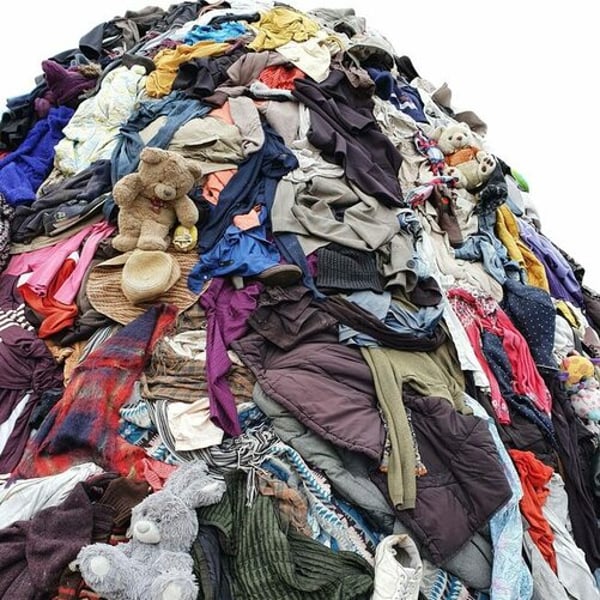
Several African organisations, supported by European, Asian and American experts, have sent a letter to the United Nations Environment Programme (UNEP) warning about the reliability of the data underpinning its global textile circularity projects. They also denounce the credence given to actors “subservient” to the fast fashion giants.

Shutterstock

It is, in fact, the evidence base of UNEP’s “Circularity and Trade in Used Textiles” project that is being called into question. Signed by organisations from Ghana, Togo, Kenya and Pakistan, the open letter casts doubt on the validity of key data, described as “unverified”. The signatories emphasise that data reliability is crucial to this forthcoming framework, which aims, among other things, to define the boundary between garments suitable for reuse in the second-hand market and textile waste.

The UNEP project aims to identify key policy, financing, investment and regulatory priorities for trade reforms and funding options to advance a sustainable, circular textile value chain. However, the signatories of the open letter criticise the recent consultation phase as rushed and skewed by the unverified figures it produced.

“What we have seen throughout this consultation process does not correspond to the objectivity expected of a United Nations programme,” said Jeffren Boakye Abrokwah, president of the Ghana Second-Hand Clothing Sellers Association.

“In Ghana, for example, UNEP’s research partner is an NGO that is already running a waste management awareness campaign and is funded by the fast fashion industry… This may have undermined the neutrality of the data collected.”

‘Subservient to the interests of fast fashion’

“UNEP’s willingness to adopt unverified conclusions contradicts its stated commitment to impartiality and undermines public confidence,” lamented Alan Wheeler, chief executive of the UK Textile Recycling Association.

“UNEP’s work risks being seriously compromised if it does not dissociate itself from militant organisations subservient to the interests of fast fashion,” warned Teresiah Wairimu Njenga, president of the Mitumba Consortium Association of Kenya.

The warning issued by the African stakeholders could make waves, given that images of clothing dumps in developing countries have shocked major apparel-consuming nations—countries where second-hand clothes from the West feed a vast resale market, outstripping the primary market in volume.

But the clash between the signatory organisations and UNEP also comes at a time of change for the global used-clothing market. African outlets for Western clothing have recently dwindled in the face of a massive influx of Asian garments into this second-hand market. With textile collection systems saturated, Sweden has, in an exceptional move, authorised the destruction of clothing, while in France collectors have gone on strike to warn that their business model is in jeopardy.

The United Nations Environment Programme estimates that the textile industry loses $500 billion in value, with 95% of discarded textiles being reusable garments. This comes as global clothing production has doubled over the past fifteen years.

This article is an automatic translation.
Click here to read the original article.

Copyright © 2025 FashionNetwork.com All rights reserved.


Source link

Continue Reading

Fashion

Cosmetics giant Unilever finalises business demerger

Published

on


By

AFP

Published


December 5, 2025

The demerger of Unilever‘s ice cream division, to be named ‘The Magnum Ice Cream Company,’ which had been delayed in recent months by the US government shutdown, will finally go ahead on Saturday, the British group announced.

Reuters

Unilever said in a statement on Friday that the admission of the new entity’s shares to listing and trading in Amsterdam, London, and New York, as well as the commencement of trading… is expected to take place on Monday, December 8.

The longest federal government shutdown in US history, from October 1 to November 12, fully or partially affected many parts of the federal government, including the securities regulator, after weeks without an agreement between Donald Trump‘s Republicans and the Democratic opposition.

Unilever, which had previously aimed to complete the demerger by mid-November, warned in October that the US securities regulator (SEC) was “not in a position to declare effective” the registration of the new company’s shares. However, the group said it was “determined to implement in 2025” the separation of a division that also includes the Ben & Jerry’s and Cornetto brands, and which will have its primary listing in Amsterdam.

“The registration statement” for the shares in the US “became effective on Thursday, December 4,” Unilever said in its statement. Known for Dove soaps, Axe deodorants and Knorr soups, the group reported a slight decline in third-quarter sales at the end of October, but beat market expectations.

Under pressure from investors, including the activist fund Trian of US billionaire Nelson Peltz, to improve performance, the group last year unveiled a strategic plan to focus on 30 power brands. It then announced the demerger of its ice cream division and, to boost margins, launched a cost-saving plan involving 7,500 job cuts, nearly 6% of the workforce. Unilever’s shares on the London Stock Exchange were steady on Friday shortly after the market opened, at 4,429 pence.
 

This article is an automatic translation.
Click here to read the original article.

Copyright © 2025 AFP. All rights reserved. All information displayed in this section (dispatches, photographs, logos) are protected by intellectual property rights owned by Agence France-Presse. As a consequence you may not copy, reproduce, modify, transmit, publish, display or in any way commercially exploit any of the contents of this section without the prior written consent of Agence France-Presses.


Source link

Continue Reading

Fashion

Burberry elevates two SVPs to supply chain and customer exec roles

Published

on


Published


December 5, 2025

Burberry has named a new chief operating and supply chain officer as well as a new chief customer officer. They’re both key roles at the recovering luxury giant and both are being promoted from within.

Burberry – Spring-Summer2026 – Womenswear – Royaume-Uni – Londres – ©Launchmetrics/spotlight

Matteo Calonaci becomes chief operating and supply chain officer, moving from his role as senior vice-president of strategy and transformation at the firm. 

In his new role, he’ll be oversee supply chain and planning, strategy and transformation, and data and analytics. He succeeds Klaus Bierbrauer, who’s currently Burberry supply chain and industrial officer. Bierbrauer will be leaving the company following its winter show and a transition period.

Matteo Calonaci - Burberry
Matteo Calonaci – Burberry

Meanwhile, Johnattan Leon steps up as chief customer officer. He’s currently currently Burberry’s senior vice-president of commercial and chief of staff. In his new role he’ll be leading Burberry’s customer, client engagement, customer service and retail excellence teams, while also overseeing its digital, outlet and commercial operations.

Both Calonaci and Leon will join the executive committee, reporting to Company CEO Joshua Schulman.

JohnattanLeon - Burberry
JohnattanLeon – Burberry

Schulman said of the two execs that the appointments “reflect the exceptional talent and leadership we have at Burberry. Both Matteo and Johnattan have been instrumental in strengthening our focus on executional excellence and elevating our customer experience. Their deep understanding of our business, our people, and our customers gives me full confidence that their leadership will help drive [our strategy] Burberry Forward”.

Copyright © 2025 FashionNetwork.com All rights reserved.



Source link

Continue Reading

Fashion

Puneet Gupta steps into fine jewellery

Published

on


Published


December 5, 2025

Traditional and occasion wear designer Puneet Gupta has stepped into the world of fine jewellery with the launch of ‘Deco Luméaura,’ a collection designed to blend heritage and contemporary aesthetics while taking inspiration from the dramatic landscapes of Ladakh.

Hints of Ladakh’s heritage can be seen in this sculptural evening bag – Puneet Gupta

 
“For me, Deco Luméaura is an exploration of transformation- of material, of story, of self,” said Puneet Gupta in a press release. “True luxury isn’t perfect; it is intentional. Every piece is crafted to be lived with and passed on.”

The jewellery collection features cocktail rings, bangles, chokers, necklaces, and statement evening bags made in recycled brass and finished with 24 carat gold. The stones used have been kept natural to highlight their imperfect and unique forms and each piece in the collection has been hammered, polished, and engraved by hand.

An eclectic mix of jewels from the collection
An eclectic mix of jewels from the collection – Puneet Gupta

 
Designed to function as wearable art pieces, the colourful jewellery echoes the geometry of Art Deco while incorporating distinctly South Asian imagery such as camels, butterflies, and tassels. Gupta divides his time between his stores in Hyderabad and Delhi and aims to bring Indian artistry to a global audience while crafting a dialogue between designer and artisan.

Copyright © 2025 FashionNetwork.com All rights reserved.



Source link

Continue Reading

Trending

Copyright © Miami Select.