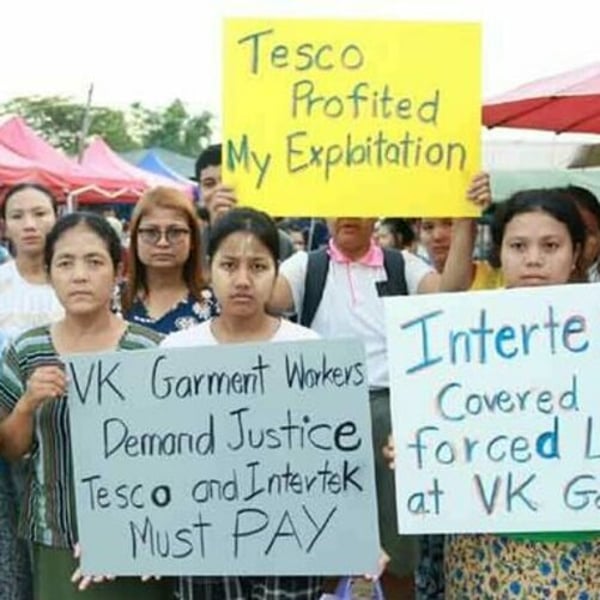
Textile social audit accused of collusion with manufacturers
Although they are supposed to guarantee respect for safety and human rights in the textile industry, some social auditors are said to be complicit in managerial abuses, according to an NGO, which highlights the conflict of interest surrounding certain service providers funded by the audited companies themselves. It’s a well-known pitfall that some brands overlook to avoid tarnishing their image.
Partners for Dignity & Rights
These are the findings of the report “Checking Boxes, Cheating Workers” by the American NGO Partners for Dignity & Rights, formerly known as NESRI (National Economic and Social Rights Initiative). The document highlights industrial auditing as a well-known but little-discussed vector of “social washing” in the textile industry.
In a freely consultable 66-page document, the NGO cites numerous cases, the most prominent being those of the Thai factories Hong Seng Knitting Company and V.K. Garment Co, as well as the Cambodian manufacturer Hulu Garment. Three sites where workers were allegedly victims of wage theft, all without intervention from the dispatched auditors, some of whom even undermined workers’ efforts to assert their rights.
The report denounces a conflict of interest among those involved in the auditing business, a competitive market in which auditors have a vested interest in catering to industrialists. It also highlights that audits are often considered the private property of their financiers, i.e., the clients themselves. This makes the documents inaccessible to workers and NGOs wishing to assess the quality of investigations.
In some cases, the audits even involve fabrications. For instance, a factory where the auditor disguised illegal dismissals by explaining that employees had voluntarily resigned and waived their severance pay. Some actors even create multiple versions of the same audit to conceal certain findings, or divulge confidential information about whistle-blowing workers attempting to denounce their working conditions.
The document points out that the problem affects all supply chains, and that brands cannot feign ignorance of a long-standing issue, particularly in textile sourcing. This silence is maintained out of interest in light of the cost of financing independent and reliable audits funded by the principals themselves.