
Fashion
Textile industry in UK, Germany, France gears up to tackle post-consumer waste as new EU regulation comes into force.

Translated by
Nicola Mira
Published
October 8, 2025
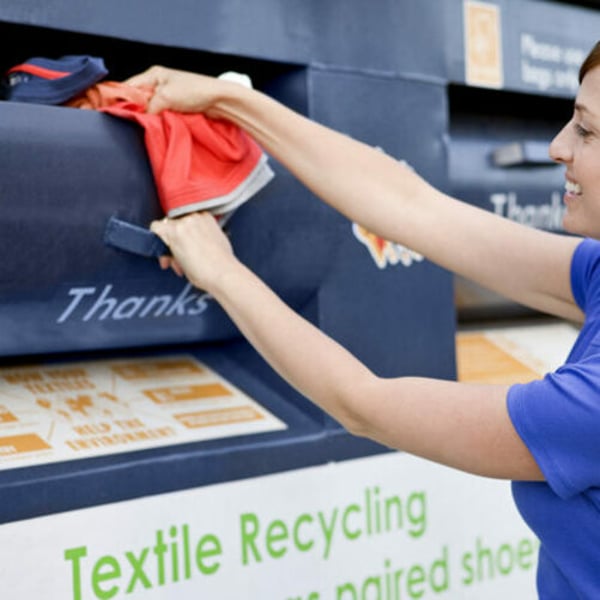
On October 16, the EU’s Extended Producer Responsibility (ERP) regulations for the food and textiles industries will come into force, compelling apparel brands and manufacturers to cover the costs of collecting, sorting and recycling textile waste. This major new development is occurring while European textile waste collectors are struggling to find outlets, and is causing the UK, Germany and France to develop or rethink their respective strategies.
The UK’s Fashion & Textile Association (UKFT) recently presented its National Textile Recycling Infrastructure Plan, a 10-year plan aimed at creating a national network to collect and recycle textiles and clothing. The overall goal is to find the right destination for the three million tons of textiles discarded each year in the country. UKFT will be supported in this effort by the Circular Fashion Innovation Network and by governmental agency UK Research and Innovation.
The plan has identified four priorities: investment in infrastructure, workforce skills development, technology, and market capacity. It highlighted the need for more automated sorting and pre-processing facilities, alongside innovation in fibre-to-fibre recycling and smarter logistics.
“The National Textile Recycling Infrastructure Plan is a call to action,” said Adam Mansell, CEO of UKFT. “By aligning investment, skills and innovation, the UK can cut waste, reduce environmental impact and create new economic value in textiles for decades to come,” he added.
German industry associations team up
Germany’s textiles, apparel and footwear industry associations have collectively announced they are developing their own approach to textile waste collection and recycling in the country. They indicated their first concern is to prioritise separating natural and synthetic materials, in order to address the different challenges posed by these two types of waste. Natural and synthetic fabrics are often blended and they each need to undergo a different kind of recycling process, either chemical or mechanical.

Besides recycling, the German industry associations have set themselves as a priority to closely monitor the textile-apparel market, ensuring that the data gathered can help make consistent plans for products at the end of their useful life. They also highlighted the need to develop structural arrangements for the companies that will be involved, and to provide consumers with appropriate information. A collective effort that will undoubtedly benefit from the expertise of HDE, Germany’s retailers association, and of textiles, apparel and footwear association BTE.
Also part of Germany’s joint industry effort are BIS, the association of footwear and leather apparel producers, Textil+Mode, representing the specialist trades in the textile-apparel sector, and Texoversum, the educational body for the apparel and footwear industries.
France redefines approach
While two of its neighbouring countries are drawing up strategies to deal with textile waste, France, which set up an ad hoc national organisation called Refashion in 2008, is thinking about how the latter should evolve. Some of the long-standing outlets for the French waste collection, sorting and recycling industry have recently all but shut down, saturated as they are with cheap Asian products, and the government is currently rethinking Refashion’s institutional future. The issue is expected to be brought to the Conseil d’État [a governmental body that acts as legal adviser to the executive] before the end of the year, but the industry fears that France’s current political instability will delay any decision on Refashion.

An even greater problem is the fact that the Ministry for Ecology itself has short-circuited industry-level talks. In July, the government announced it would raise state aid on collected waste to €228 per ton in 2026, up from €156 in 2024. The announcement was designed to defuse the conflict between Le Relais, France’s largest waste-collection organisation, and Refashion [which transfers state aid to waste collectors].
Le Relais had recently stopped processing discarded clothes, dumping huge quantities of them outside the stores of several major retailers. The aim was to raise awareness with the general public about the dire straits in which waste collectors find themselves, deprived of their outlets. Refashion, which is funded by levies on brands and importers, meanwhile accused Le Relais of abusing its dominant position.
Copyright © 2025 FashionNetwork.com All rights reserved.


Published
December 5, 2025
Burberry has named a new chief operating and supply chain officer as well as a new chief customer officer. They’re both key roles at the recovering luxury giant and both are being promoted from within.
Matteo Calonaci becomes chief operating and supply chain officer, moving from his role as senior vice-president of strategy and transformation at the firm.
In his new role, he’ll be oversee supply chain and planning, strategy and transformation, and data and analytics. He succeeds Klaus Bierbrauer, who’s currently Burberry supply chain and industrial officer. Bierbrauer will be leaving the company following its winter show and a transition period.

Meanwhile, Johnattan Leon steps up as chief customer officer. He’s currently currently Burberry’s senior vice-president of commercial and chief of staff. In his new role he’ll be leading Burberry’s customer, client engagement, customer service and retail excellence teams, while also overseeing its digital, outlet and commercial operations.
Both Calonaci and Leon will join the executive committee, reporting to Company CEO Joshua Schulman.

Schulman said of the two execs that the appointments “reflect the exceptional talent and leadership we have at Burberry. Both Matteo and Johnattan have been instrumental in strengthening our focus on executional excellence and elevating our customer experience. Their deep understanding of our business, our people, and our customers gives me full confidence that their leadership will help drive [our strategy] Burberry Forward”.
Copyright © 2025 FashionNetwork.com All rights reserved.

Published
December 5, 2025
Traditional and occasion wear designer Puneet Gupta has stepped into the world of fine jewellery with the launch of ‘Deco Luméaura,’ a collection designed to blend heritage and contemporary aesthetics while taking inspiration from the dramatic landscapes of Ladakh.
“For me, Deco Luméaura is an exploration of transformation- of material, of story, of self,” said Puneet Gupta in a press release. “True luxury isn’t perfect; it is intentional. Every piece is crafted to be lived with and passed on.”
The jewellery collection features cocktail rings, bangles, chokers, necklaces, and statement evening bags made in recycled brass and finished with 24 carat gold. The stones used have been kept natural to highlight their imperfect and unique forms and each piece in the collection has been hammered, polished, and engraved by hand.

Designed to function as wearable art pieces, the colourful jewellery echoes the geometry of Art Deco while incorporating distinctly South Asian imagery such as camels, butterflies, and tassels. Gupta divides his time between his stores in Hyderabad and Delhi and aims to bring Indian artistry to a global audience while crafting a dialogue between designer and artisan.
Copyright © 2025 FashionNetwork.com All rights reserved.


Tucker Wetmore’s Song ‘Proving Me Right’ is About Model Bryana Ferringer

‘Bachelor’ Winner Cassie Randolph Marries Brighton Reinhardt

Kanye West and Bianca Censori Travel to South Korea Together
-

 Politics8 years ago
Congress rolls out ‘Better Deal,’ new economic agenda
-
Entertainment8 years ago
New Season 8 Walking Dead trailer flashes forward in time
-
Politics8 years ago
Poll: Virginia governor’s race in dead heat
-
Entertainment8 years ago
The final 6 ‘Game of Thrones’ episodes might feel like a full season
-
Entertainment8 years ago
Meet Superman’s grandfather in new trailer for Krypton
-
Politics8 years ago
Illinois’ financial crisis could bring the state to a halt
-
Business8 years ago
6 Stunning new co-working spaces around the globe
-
Tech8 years ago
Hulu hires Google marketing veteran Kelly Campbell as CMO