Connect with us

Business

Tether launches U.S. stablecoin, appoints former Trump crypto guru Bo Hines as CEO of American expansion

Published

on


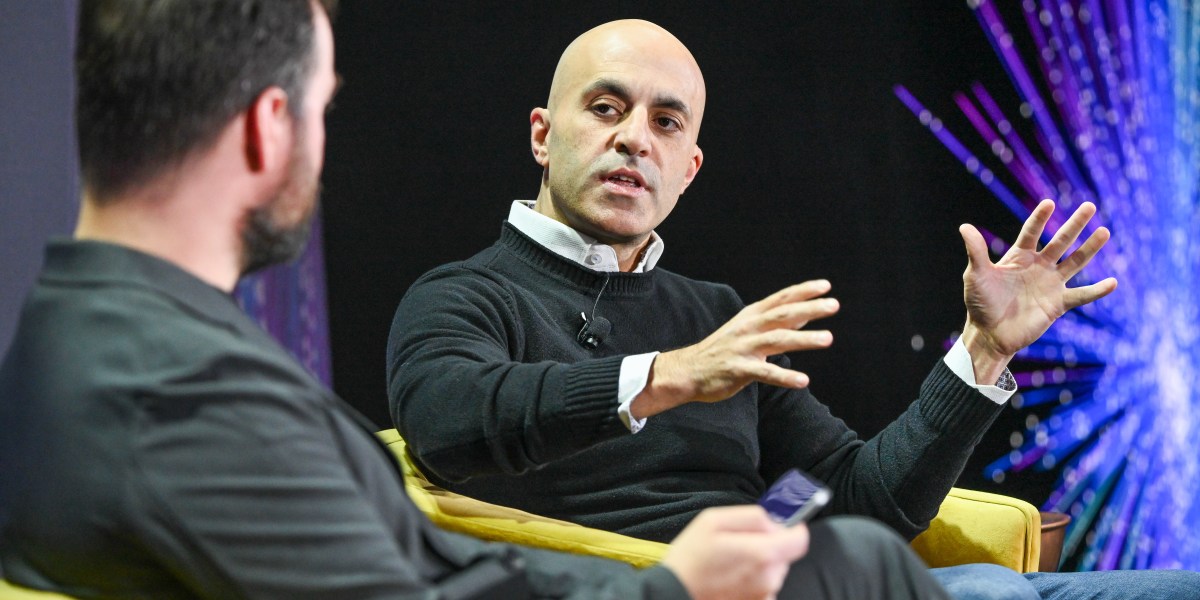
One of crypto’s largest, and most controversial, companies is coming to the U.S. On Friday, at an event hosted at a spy museum in New York City, the stablecoin issuer Tether announced that it was launching a U.S. stablecoin called USAT, a stunning reversal for an operation that just last year appeared to be in the crosshairs of U.S. law enforcement officials.

To launch USAT, Tether has tapped Anchorage Digital, one of the largest crypto custodians that has touted its ability to issue stablecoins compliant with the Genius Act—newly passed legislation in the U.S. that establishes guardrails for the issuance and management of stablecoins. Tether’s longtime partner Cantor Fitzgerald will serve as the custodian to hold the new stablecoin’s reserves.

Tether’s decision to launch a U.S. stablecoin reflects the changing fortunes for the stablecoin giant, which counts Commerce Secretary Howard Lutnick as one of its top advocates. At Friday’s event, the company announced that former top White House crypto official Bo Hines would serve as the project’s CEO.

“We were under a severe pressure from competitors that wanted to create a monopolistic environment in the United States,” said Tether CEO Paolo Ardoino on stage. “The big mistake there was simply to discount the fact that we think Tether is the best product in the market.”

Formally shunned by top politicians, Tether hosted a who’s who from Congress and crypto at its Friday event. U.S. representatives like Bryan Steil (R-Wis.) and Addison McDowell (R-N.C.) were present, along with top crypto venture capitalists like Paradigm managing partner Matt Huang and Multicoin Capital managing partner Kyle Samani.

Tether’s rise

Founded in 2014, Tether is the issuer of an eponymous stablecoin, or a type of cryptocurrency that is pegged one-to-one with an underlying asset, typically the U.S. dollar. As crypto adoption grew, Tether’s USDT became the largest stablecoin in crypto and one of the most widely held cryptocurrencies, with a market cap today of nearly $170 billion. Thanks to its tiny staff of just under 300 staffers and billions of dollars in income earned from the yield of its holdings, Tether is also one of the most profitable companies in the world per employee, according to its unaudited financials.

But despite its success, the secretive company has been a lightning rod for criticism. This includes the opaque way that it has managed the reserves that back its stablecoin, as well as its stablecoin’s role in global illicit finance, where it’s been used for illegal activities from terrorism to money laundering. Tether has strongly rejected the claims, though it has been the target of different law enforcement actions, including a settlement with the New York attorney general and a reported investigation by the U.S. Department of Justice.

Its decision to launch a U.S.-compliant stablecoin comes after Congress passed the Genius Act in July, which paved the way for new challengers, from banks to a crop of new startups, to launch their own tokens. For Tether, which is largely used outside the U.S., the move raises questions as to the utility of its new U.S. offering and what type of traction it will achieve.

More than potential adoption, though, the move reflects Tether’s growing influence in the U.S. with the Trump administration. Lutnick became a cheerleader for the company after his financial firm, Cantor Fitzgerald, started managing the bulk of its reserves. And in August, Tether hired former top Trump crypto official Bo Hines to lead its U.S. expansion. They elevated him to CEO on Friday.

Tether’s main advantage is its massive moat, with the next largest stablecoin, Circle’s USDC, significantly trailing with a market cap of just $72 billion. But with the Genius Act’s establishment of a sanctioned path forward for traditional financial institutions to enter the market, potential users will have a wealth of options from which to choose. Some offerings are beginning to experiment with passing yield back to their users, though Genius prohibits issuers like Tether from sharing its interest earnings with customers.

On Tether’s newly launched website for its U.S. stablecoin USAT, the company said that the main use cases would be for remittances, global payments, and online checkouts.

“We want to dominate, but we want to do that in the U.S.,” said Hines on Friday.

On the new Fortune Crypto Playbook vodcast, Fortune’s senior crypto experts decode the biggest forces shaping crypto today. Watch or listen now


Source link

Continue Reading

Business

Databricks CEO Ali Ghodsi says company will be worth $1 trillion by doing these three things

Published

on


Ali Ghodsi, the CEO and cofounder of data intelligence company Databricks, is betting his privately held startup can be the latest addition to the trillion-dollar valuation club.

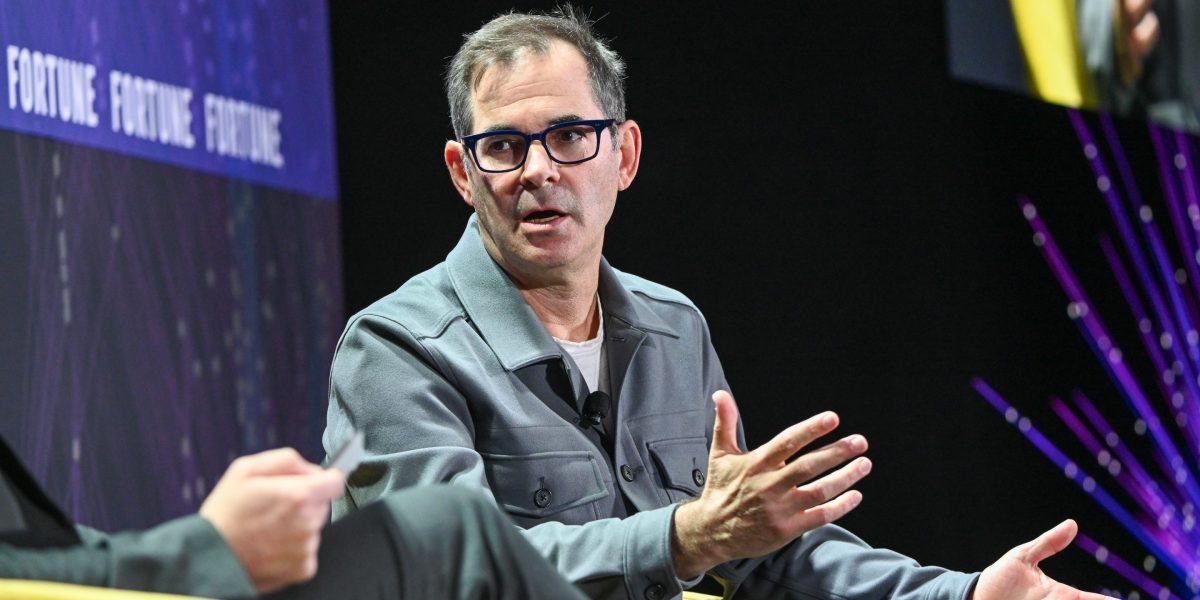
In August, Ghodsi told the Wall Street Journalthat he believed Databricks, which is reportedly in talks toraise funding at a $134 billion valuation, had “a shot to be a trillion-dollar company.” At Fortune’s Brainstorm AI conference in San Francisco on Tuesday, he explained how it would happen, laying out a “trifecta” of growth areas to ignite the company’s next leg of growth.

The first is entering the transactional database market, the traditional territory of large enterprise players like Oracle, which Ghodsi said has remained largely “the same for 40 years.” Earlier this year, Databricks launched a link-based offering called Lakehouse, which aims to combine the capabilities of traditional databases with modern data lake storage, in an attempt to capture some of this market.

The company is also seeing growth driven by the rise of AI-powered coding. “Over 80% of the databases that are being launched on Databricks are not being launched by humans, but by AI agents,” Ghodsi said. As developers use AI tools for “vibe coding”—rapidly building software with natural language commands—those applications automatically need databases, and Ghodsi they’re defaulting to Databricks’ platform.

“That’s just a huge growth factor for us. I think if we just did that, we could maybe get all the way to a trillion,” he said.

The second growth area is Agentbricks, Databricks’ platform for building AI agents that work with proprietary enterprise data.

“It’s a commodity now to have AI that has general knowledge,” Ghodsi said, but “it’s very elusive to get AI that really works and understands that proprietary data that’s inside enterprise.” He pointed to the Royal Bank of Canada, which built AI agents for equity research analysts, as an example. Ghodsi said these agents were able to automatically gather earnings calls and company information to assemble research reports, reducing “many days’ worth of work down to minutes.”

And finally, the third piece to Ghodsi’s puzzle involves building applications on top of this infrastructure, with developers using AI tools to quickly build applications that run on Lakehouse and which are then powered by AI agents. “To get the trifecta is also to have apps on top of this. Now you have apps that are vibe coded with the database, Lakehouse, and with agents,” Ghodsi said. “Those are three new vectors for us.”

Ghodsi did not provide a timeframe for attaining the trillion-dollar goal. Currently, only a handful of companies have achieved the milestone, all of them as publicly traded companies. In the tech industry, only big tech giants like Apple, Microsoft, Nvidia, Alphabet, Amazon, and Meta have managed to cross the trillion-dollar threshold.

To reach this level would require Databricks, which is widely expected to go public sometime in early 2026, to grow its valuation roughly sevenfold from its current reported level. Part of this journey will likely also include the expected IPO, Ghodsi said.

“There are huge advantages and pros and cons. That’s why we’re not super religious about it,” Ghodsi said when asked about a potential IPO. “We will go public at some point. But to us, it’s not a really big deal.”

Could the company IPO next year? Maybe, replied Ghodsi.


Source link

Continue Reading

Business

New contract shows Palantir working on tech platform for another federal agency that works with ICE

Published

on


Palantir, the artificial intelligence and data analytics company, has quietly started working on a tech platform for a federal immigration agency that has referred dozens of individuals to U.S. Immigration and Customs Enforcement for potential enforcement since September.

The U.S. Citizenship and Immigration Services agency—which handles services including citizenship applications, family immigration, adoptions, and work permits for non-citizens—started the contract with Palantir at the end of October, and is paying the data analytics company to implement “Phase 0” of a “vetting of wedding-based schemes,” or “VOWS” platform, according to the federal contract, which was posted to the U.S. government website and reviewed by Fortune.

The contract is small—less than $100,000—and details of what exactly the new platform entails are thin. The contract itself offers few details, apart from the general description of the platform (“vetting of wedding-based schemes”) and an estimate that the completion of the contract would be Dec. 9.Palantir declined to comment on the contract or nature of the work, and USCIS did not respond to requests for comment for this story.

But the contract is notable, nonetheless, as it marks the beginning of a new relationship between USCIS and Palantir, which has had longstanding contracts with ICE, another agency of the Department of Homeland Security, since at least 2011. The description of the contract suggests that the “VOWS” platform may very well be focused on marriage fraud and related to USCIS’ recent stated effort to drill down on duplicity in applications for marriage and family-based petitions, employment authorizations, and parole-related requests.

USCIS has been outspoken about its recent collaboration with ICE. Over nine days in September, USCIS announced that it worked with ICE and the Federal Bureau of Investigation to conduct what it called “Operation Twin Shield” in the Minneapolis-St. Paul area, where immigration officials investigated potential cases of fraud in immigration benefit applications the agency had received. The agency reported that its officers referred 42 cases to ICE over the period. In a statement published to the USCIS website shortly after the operation, USCIS director Joseph Edlow said his agency was “declaring an all-out war on immigration fraud” and that it would “relentlessly pursue everyone involved in undermining the integrity of our immigration system and laws.” 

“Under President Trump, we will leave no stone unturned,” he said.

Earlier this year, USCIS rolled out updates to its policy requirements for marriage-based green cards, which have included more details of relationship evidence and stricter interview requirements.

While Palantir has always been a controversial company—and one that tends to lean into that reputation no less—the new contract with USCIS is likely to lead to more public scrutiny. Backlash over Palantir’s contracts with ICE have intensified this year amid the Trump Administration’s crackdown on immigration and aggressive tactics used by ICE to detain immigrants that have gone viral on social media. Not to mention, Palantir inked a $30 million contract with ICE earlier this year to pilot a system that will track individuals who have elected to self-deport and help ICE with targeting and enforcement prioritization. There has been pushback from current and former employees of the company alike over contracts the company has with ICE and Israel.

In a recent interview at the New York Times DealBook Summit, Karp was asked on stage about Palantir’s work with ICE and later what Karp thought, from a moral standpoint, about families getting separated by ICE. “Of course I don’t like that, right? No one likes that. No American. This is the fairest, least bigoted, most open-minded culture in the world,” Karp said. But he said he cared about two issues politically: immigration and “re-establishing the deterrent capacity of America without being a colonialist neocon view. On those two issues, this president has performed.”


Source link

Continue Reading

Business

CoreWeave CEO: Despite see-sawing stock, IPO was ‘incredibly successful’ amid challenges of tariff timing

Published

on


CoreWeave has been rocked by dizzying stock swings—with its stock currently trading 52% below its post-IPO high—and a frequent target of market commentators, but CEO Michael Intrator says the company’s move to the public markets has been “incredibly successful. And he takes the public’s mixed reaction in stride, given the novelty of CoreWeave’s “neocloud” business which competes with established cloud providers like Amazon AWS and Google Cloud.

“When you introduce new models, introduce a new way of doing business, disrupt what has been a static environment, it’s going to take some people some time,” Intrator said Tuesday at Fortune’s Brainstorm AI conference in San Francisco. But, he added, more people are beginning to understand the CoreWeave’s business model.

“We came out into one of the most challenging environments,” Intrator said of CoreWeave’s March IPO, which occurred very close to President Trump’s “Liberation Day” tariffs in April. “In spite of the incredible headwinds, we’re able to launch a successful IPO.”

CoreWeave, which priced its IPO at $40 per share, has experienced frequent severe up-and-down price swings in the eight months since its public market debut. At its closing price of $90.66 on Tuesday, the stock remains well above its IPO price.

As Fortune reported last month, CoreWeave’s rapid rise has been fueled by an aggressive, debt-heavy strategy to stand up data centers at unprecedented speed for AI customers. And for now, the bet is still paying off. In its third-quarter results released in November, the company said its revenue backlog nearly doubled in a single quarter—to $55.6 billion from $30 billion—reflecting long-term commitments from marquee clients including Meta, OpenAI, and French AI startup Poolside. Both earnings and revenue came in ahead of Wall Street expectations.

But the numbers were not all celebratory. CoreWeave disclosed a further increase in the debt it has taken on to finance its expansion, and it revised its full-year revenue outlook downward—suggesting that, even with historic demand in the pipeline.

With media headlines calling CoreWeave a “ticking time bomb,” with critics calling out insider stock sales, circular financing accusations and an overreliance on Nvidia, Intrator was asked whether he felt CoreWeave was misunderstood.

“Look, we built a company that is challenging one of the most stable businesses that exist—that cloud business, these three massive players,” he said, referring to AWS, Microsoft Azure and Google Cloud.  I feel like it’s incumbent on CoreWeave to introduce a new business model on how the cloud is going to be built and run. And that’s what we’re doing.” 

He repeatedly framed CoreWeave not as a GPU reseller or traditional data-center operator but as a company purpose-built from scratch to deliver high-performance, parallelized computing for AI workloads. That focus, he said, means designing proprietary software that orchestrates GPUs, building and colocating its own infrastructure, and moving “up the stack” through acquisitions such as Weights & Biases and OpenPipe.

Intrator also defended the company’s debt strategy, saying CoreWeave is effectively inventing a new financing model for AI infrastructure. He pointed to the company’s ability to repurpose power sources, rapidly deploy capacity, and finance large-scale clusters as proof it is solving problems incumbents never had to face.

“When I look back at history of the company, it took us a year with with a company investor like Fidelity, before they were like, ‘Oh, I get it,’” he said. “So look, we’ve been public for eight months. I couldn’t be prouder of what the company has accomplished.” 


Source link

Continue Reading

Trending

Copyright © Miami Select.